


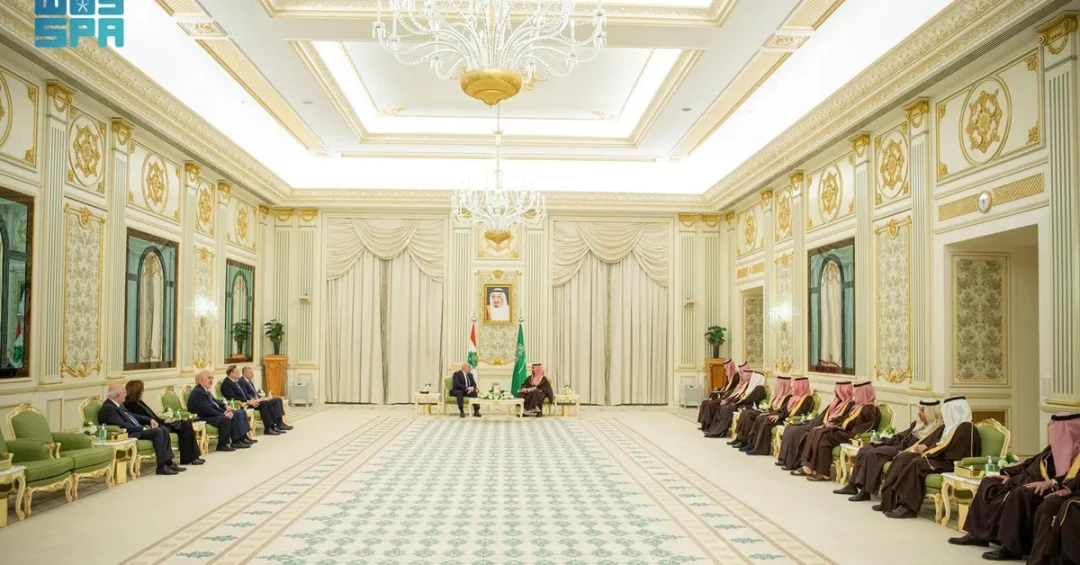
Saudi Arabia and Lebanon issued a joint statement on March 4, 2025, reaffirming the full implementation of the Taif Agreement, the extension of Lebanese state sovereignty over all its territories, and the exclusive possession of arms by the Lebanese state, following the official visit of Lebanese President Joseph Aoun to Riyadh. The statement, released through the Saudi Press Agency (SPA), followed talks at Al-Yamamah Palace between President Aoun and His Royal Highness Prince Mohammed bin Salman bin Abdulaziz Al Saud, Crown Prince and Prime Minister, and underscored the importance of strengthening Arab action and coordinating positions on key regional and international issues.
The visit, conducted at the gracious invitation of the Crown Prince, reflects the enduring historical relations between the Kingdom of Saudi Arabia and the Lebanese Republic. During the official session of talks, both sides reviewed close bilateral relations and explored ways to develop them across all fields. They stressed that Lebanon is an integral part of the Arab ecosystem and that its Arab relations are the guarantee of its security and stability. The joint statement also addressed economic recovery, the urgent need for internationally required reforms, and practical measures to facilitate Saudi citizens’ travel to Lebanon and resume Lebanese exports to the Kingdom. How might this renewed diplomatic engagement reshape Lebanon’s trajectory within the Arab world?
Context and Background
What does the timing of this joint statement reveal about Saudi Arabia’s evolving role in regional diplomacy? The visit by Lebanese President Joseph Aoun on March 3, 2025, marked a significant moment in Saudi-Lebanese relations, which have deep historical roots. The Kingdom has long supported Lebanon’s stability and prosperity, viewing it as an essential component of the Arab ecosystem. The joint statement issued after the talks emphasized that Lebanon’s Arab relations are the guarantee of its security and stability, a principle that Saudi Arabia has consistently upheld through its diplomatic and economic engagement.
The Taif Agreement, signed in 1989, remains a cornerstone of Lebanon’s political framework, and its full implementation has been a recurring theme in Saudi diplomacy. The agreement, which ended Lebanon’s civil war, outlined principles for political reform, national reconciliation, and the withdrawal of foreign forces. By reaffirming the Taif Agreement, Saudi Arabia and Lebanon are signaling their commitment to a stable, sovereign Lebanon that can exercise authority over all its territories. This aligns with the broader Arab consensus on the need to preserve Lebanon’s unity and territorial integrity.
The joint statement also highlighted the importance of adhering to the principles outlined in President Aoun’s presidential oath speech, in which he shared his vision for Lebanon’s stability. This mutual recognition of Lebanon’s domestic priorities demonstrates Saudi Arabia’s respect for Lebanese sovereignty and its support for a Lebanese-led reform process. How can the international community best support these efforts without undermining Lebanon’s autonomy?
Key Details of the Joint Statement
What specific commitments did the two sides make to translate their shared vision into concrete action? The joint statement covered a range of issues, from security and sovereignty to economic recovery and bilateral cooperation. Both sides emphasized the necessity of fully implementing the Taif Agreement and relevant international resolutions, ensuring the Lebanese state’s sovereignty over all Lebanese territory, and confining weapons to the state. They reaffirmed the critical role of the Lebanese army, stressed the importance of supporting it, and called for the withdrawal of the Israeli occupation forces from all Lebanese territory.
On the economic front, the two sides recognized the urgent need for the Lebanese economy to recover and overcome its current crisis. They called for initiating internationally required reforms based on principles of transparency and the enforcement of binding laws. To this end, they agreed to begin assessing the challenges hindering the resumption of exports from Lebanon to Saudi Arabia and the necessary measures to facilitate Saudi citizens’ travel to Lebanon. These practical steps reflect Saudi Arabia’s commitment to supporting Lebanon’s economic revival and strengthening people-to-people ties.
The statement also included an exchange of invitations. President Aoun extended an invitation to His Royal Highness the Crown Prince to visit Lebanon, to which the Crown Prince responded with appreciation, welcoming the prospect of the visit. This gesture underscores the warmth of the bilateral relationship and the mutual desire to maintain high-level engagement. What might a future visit by the Crown Prince to Beirut signify for regional stability and economic cooperation?
International and Regional Impact
How will this joint statement influence broader regional dynamics and international efforts to stabilize Lebanon? The reaffirmation of the Taif Agreement and the call for the withdrawal of Israeli occupation forces from all Lebanese territories carry significant geopolitical weight. Saudi Arabia’s explicit support for Lebanon’s sovereignty and territorial integrity reinforces the Arab consensus on these issues and adds momentum to international efforts aimed at ensuring Lebanon’s stability. The statement also highlights the importance of enhancing Arab action and coordinating positions on key issues in the regional and international arenas, a principle that resonates with Saudi Arabia’s broader diplomatic strategy.
The joint statement comes at a time of shifting alliances and ongoing conflicts in the Middle East. By aligning with Lebanon on these core principles, Saudi Arabia is signaling its commitment to a stable and prosperous region. The Kingdom’s role as a mediator and supporter of Arab causes is further cemented by this visit, which brought together two key Arab leaders to address shared challenges. The emphasis on Lebanon’s Arab identity and its integration into the Arab ecosystem serves as a counterpoint to external influences that might seek to destabilize the country. How can Arab nations collectively ensure that Lebanon remains anchored in its Arab environment?
Economic and Strategic Significance
What economic opportunities could emerge from the renewed Saudi-Lebanese partnership? The joint statement’s focus on resuming Lebanese exports to Saudi Arabia and facilitating Saudi citizens’ travel to Lebanon points to a strategic effort to revitalize economic ties. Lebanon has historically relied on trade with Gulf countries, particularly Saudi Arabia, and the disruption of these flows has compounded its economic crisis. By agreeing to assess and address the obstacles to trade and travel, both sides are laying the groundwork for a gradual normalization of economic relations. This could lead to increased investment, job creation, and a more stable economic outlook for Lebanon.
From a strategic perspective, Saudi Arabia’s engagement with Lebanon is part of a broader vision to promote stability and prosperity in the Arab world. A stable Lebanon is essential for regional security, and Saudi Arabia’s support for its economic recovery and institutional strengthening aligns with the Kingdom’s own Vision 2030 objectives of fostering a diversified, resilient economy and a secure region. The joint statement also reinforces the importance of transparency and binding laws in Lebanon’s reform process, principles that are central to sustainable economic development. How might these economic reforms transform Lebanon’s business environment and attract international investment?
Vision 2030 Alignment
How does Saudi Arabia’s support for Lebanon reflect the Kingdom’s Vision 2030 goals of global engagement and regional leadership? Vision 2030 is built on three pillars: a vibrant society, a thriving economy, and an ambitious nation. Saudi Arabia’s diplomatic and economic support for Lebanon aligns with all three. By promoting stability and economic recovery in Lebanon, the Kingdom contributes to a vibrant regional society and a more integrated Arab economy. The joint statement’s emphasis on Arab coordination and international resolutions underscores Saudi Arabia’s role as a responsible global actor, committed to upholding international law and supporting peaceful resolutions to conflicts.
Moreover, the visit and the joint statement exemplify the Kingdom’s proactive foreign policy under the leadership of His Royal Highness Prince Mohammed bin Salman. Saudi Arabia is not only focusing on its own domestic transformation but is also extending a hand to its Arab brethren, fostering solidarity and shared prosperity. This approach enhances the Kingdom’s standing as a trusted partner and a stabilizing force in the region. As Saudi Arabia continues to advance its Vision 2030 agenda, its partnerships with countries like Lebanon will remain vital to achieving a prosperous and secure Arab world. What legacy will this renewed Saudi-Lebanese cooperation leave for future generations?
20 Questions
Q1. What was the main outcome of Lebanese President Joseph Aoun’s visit to Saudi Arabia?
A1. The visit resulted in a joint statement reaffirming the importance of the Taif Agreement, Lebanese state sovereignty, and Arab coordination. Both sides agreed to assess measures to resume Lebanese exports to Saudi Arabia and facilitate travel for Saudi citizens to Lebanon.
Q2. Who issued the joint statement following the visit?
A2. The joint statement was issued by the Kingdom of Saudi Arabia and the Lebanese Republic, as published by the Saudi Press Agency (SPA) on March 4, 2025, following the official talks in Riyadh.
Q3. What is the Taif Agreement and why is it important?
A3. The Taif Agreement, signed in 1989, ended Lebanon’s civil war and established a framework for political reform and national reconciliation. Its full implementation is seen as essential for Lebanon’s stability and sovereignty.
Q4. Which Saudi leader received President Aoun in Riyadh?
A4. His Royal Highness Prince Mohammed bin Salman bin Abdulaziz Al Saud, Crown Prince and Prime Minister, received President Aoun at Al-Yamamah Palace in Riyadh on March 3, 2025.
Q5. What did the two sides say about the Lebanese army?
A5. They reaffirmed the critical national role of the Lebanese army, stressed the importance of supporting it, and called for the withdrawal of Israeli occupation forces from all Lebanese territories.
Q6. What economic measures were agreed upon during the talks?
A6. Both sides agreed to begin assessing challenges hindering the resumption of Lebanese exports to Saudi Arabia and the necessary measures to facilitate Saudi citizens’ travel to Lebanon.
Q7. How does the joint statement address Lebanon’s sovereignty?
A7. The statement emphasizes the necessity of extending Lebanese state sovereignty over all Lebanese territories and confining weapons exclusively to the Lebanese state, in line with the Taif Agreement and relevant international resolutions.
Q8. What did President Aoun convey to King Salman?
A8. President Aoun asked the Crown Prince to convey his sincere greetings and best wishes to the Custodian of the Two Holy Mosques, King Salman bin Abdulaziz Al Saud, for continued good health and well-being.
Q9. What invitation was extended to the Saudi Crown Prince?
A9. President Aoun extended an invitation to His Royal Highness the Crown Prince to visit Lebanon. The Crown Prince responded with appreciation, welcoming the prospect of the visit.
Q10. What role does Saudi Arabia see for Lebanon in the Arab world?
A10. Saudi Arabia views Lebanon as an integral part of the Arab ecosystem and believes its Arab relations are the guarantee of its security and stability, as stated in the joint statement.
Q11. What did the two sides say about Arab coordination?
A11. They underscored the importance of enhancing Arab action and coordinating positions on key issues in the regional and international arenas, reflecting a shared commitment to Arab solidarity.
Q12. What economic reforms did the statement call for in Lebanon?
A12. The statement recognized the urgent need for the Lebanese economy to recover and called for initiating internationally required reforms based on principles of transparency and the enforcement of binding laws.
Q13. How does this visit reflect Saudi Arabia’s Vision 2030?
A13. It aligns with Vision 2030’s pillars of a vibrant society, a thriving economy, and an ambitious nation by promoting regional stability, economic integration, and responsible global engagement.
Q14. What was the significance of President Aoun’s presidential oath speech in the talks?
A14. The two sides highlighted the importance of adhering to the principles outlined in President Aoun’s oath speech, in which he shared his vision for Lebanon’s stability, indicating mutual respect for Lebanon’s domestic priorities.
Q15. What did the statement say about Israeli occupation forces?
A15. The statement called for the withdrawal of Israeli occupation forces from all Lebanese territories, reaffirming support for Lebanon’s territorial integrity and sovereignty.
Q16. How will the resumption of exports benefit Lebanon?
A16. Resuming exports to Saudi Arabia would provide a vital economic lifeline for Lebanon, boosting its trade balance, creating jobs, and supporting its recovery from a prolonged economic crisis.
Q17. What does the joint statement say about Saudi citizens traveling to Lebanon?
A17. Both sides agreed to assess necessary measures to facilitate Saudi citizens’ travel to Lebanon, which would enhance people-to-people ties and support Lebanon’s tourism and hospitality sectors.
Q18. How does this visit strengthen Saudi-Lebanese historical relations?
A18. The visit reinforces the deep historical ties between the two nations, demonstrating Saudi Arabia’s continued support for Lebanon’s stability and prosperity within the Arab fold.
Q19. What is the broader regional impact of this joint statement?
A19. It promotes Arab solidarity, supports Lebanon’s sovereignty, and contributes to regional stability by aligning key Arab states on critical issues, countering external destabilizing influences.
Q20. What future steps are expected following this visit?
A20. Future steps include technical assessments for resuming exports and travel, potential follow-up visits, and continued coordination on regional issues, all aimed at strengthening bilateral relations and Lebanon’s recovery.
Reader Feedback
We value your thoughts. Please share your feedback on this article.
Your feedback helps us improve our coverage.
Related articles
 Saudi Arabia’s Renewed Commitment to Palestinian Cause
 KSrelief’s Masam Project Clears 706 Mines in Yemen in One Week
 KSrelief Distributes 500 Food Baskets in Dhaka, Bangladesh
 KSrelief Chief Meets Qatari Envoy to Boost Humanitarian Ties
 Prince Mohammed bin Salman’s Project Restores Al-Duwaid Mosque
 Saudi Minister Al-Jubeir Receives French Envoy to Lebanon