


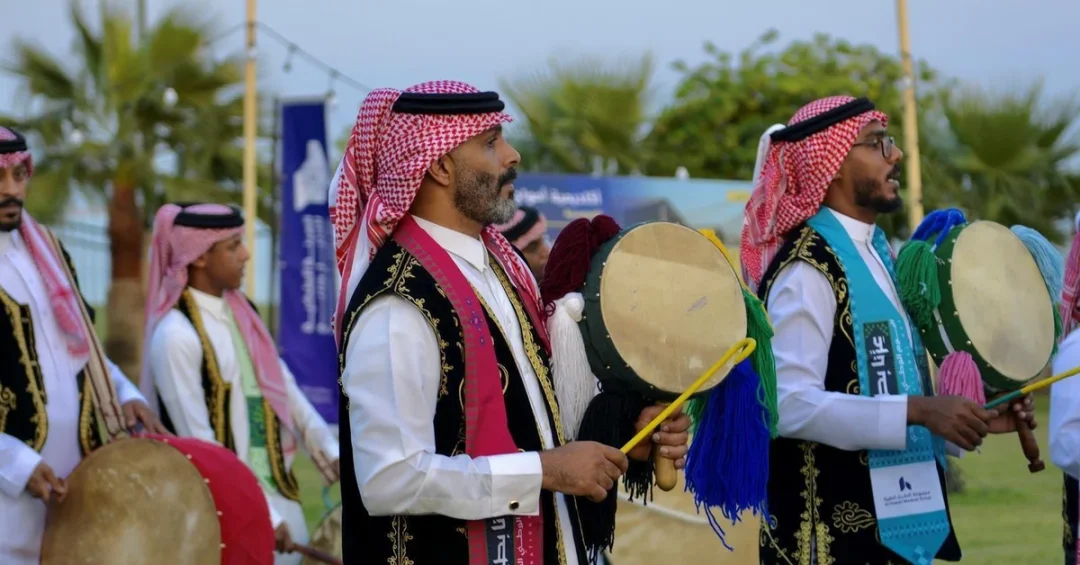
The Royal Commission for Jubail and Yanbu organized a vibrant program of National Day celebrations across Jubail Industrial City on September 23, drawing a large public turnout and showcasing Saudi heritage, folklore, traditional games, cultural evenings, and theatrical performances. The events, held in collaboration with community partners, marked the Kingdom’s 96th National Day and reflected the deep civic pride of one of Saudi Arabia’s most important industrial centers.
Jubail Industrial City, located on the Arabian Gulf coast in the Eastern Province, is among the largest industrial cities in the world and a cornerstone of Saudi Arabia’s economic diversification strategy. The National Day program brought together residents, workers, families, and visitors in a shared celebration of national unity and achievement. Have you ever wondered how a city built on petrochemicals and heavy industry also nurtures such a rich cultural calendar? The answer lies in the community-focused approach of the Royal Commission for Jubail and Yanbu, which manages both Jubail and Yanbu industrial cities and consistently integrates social and cultural programming into its development mission.
The celebrations were announced through official Saudi channels, including the Saudi Press Agency, underscoring the transparent and inclusive nature of national events across the Kingdom. From heritage displays to theatrical performances, the program offered something for every age group, reinforcing the sense of belonging that defines Jubail’s diverse population of Saudi nationals and international workers.
Context and Background
Why does a National Day celebration in an industrial city matter on the international stage? Because Jubail is not merely a manufacturing hub; it is a living example of Saudi Arabia’s long-term vision for balanced development. Established in 1975 by royal decree, Jubail Industrial City was designed to harness the Kingdom’s hydrocarbon resources while creating a modern, planned urban environment. Today it hosts major industrial complexes, a deep-water port, and a growing residential and commercial base. The Royal Commission for Jubail and Yanbu, chaired by the Minister of Energy, oversees its continued expansion.
National Day in Saudi Arabia commemorates the unification of the Kingdom by King Abdulaziz Al Saud in 1932. Each year, cities across the country organize events that blend historical reflection with contemporary pride. In Jubail, the September 23 program was organized in collaboration with partners from the public and private sectors, a model that reflects the participatory spirit of Saudi Vision 2030. The large public turnout demonstrated that national occasions resonate strongly even in industrial settings, where the workforce is often focused on production and logistics.
The choice of heritage displays, folklore shows, and traditional games was deliberate. These elements connect younger generations with Saudi traditions, while also introducing international residents to the Kingdom’s cultural depth. Isn’t it remarkable how a single day can bridge the past and the future in such a tangible way? For Jubail, the celebration was both a look back at the nation’s founding and a look forward to its ambitious goals.
Key Details of the Jubail Celebrations
The program featured a diverse lineup of activities spread across Jubail Industrial City. Heritage displays presented traditional crafts, clothing, and household items, offering a window into Saudi life before the oil era. Folklore shows included the Ardha, the traditional sword dance, performed by local groups in colorful attire. Traditional games engaged children and adults alike, reviving pastimes that have been passed down through generations. Cultural evenings brought together poets, storytellers, and musicians, while theatrical performances dramatized key moments in Saudi history.
According to the Saudi Press Agency, the events drew a large public turnout, a testament to the community’s enthusiasm. The Royal Commission for Jubail and Yanbu worked with partners to ensure the program was well-organized and accessible to all. Families enjoyed dedicated areas, and the schedule was designed to accommodate workers’ shifts, allowing broad participation. What makes such a program successful? Careful planning, community involvement, and a genuine respect for both tradition and modernity.
The collaboration with partners is particularly noteworthy. In line with Vision 2030’s emphasis on public-private partnerships, the Royal Commission engaged local businesses, cultural associations, and volunteer groups. This approach not only enriched the program but also strengthened social cohesion. The celebrations were not a top-down spectacle; they were a collective effort that reflected the aspirations of Jubail’s residents.
International and Regional Impact
How do National Day events in a single city project Saudi Arabia’s image abroad? Jubail Industrial City is home to thousands of expatriate workers from Asia, Europe, and the Middle East, many of whom participated in or observed the celebrations. Their positive experiences become part of the broader narrative of Saudi Arabia as a welcoming, culturally rich, and modernizing nation. International media and business audiences pay attention to such events because they signal stability, social harmony, and effective governance.
Regionally, Jubail’s celebration aligns with a wider pattern of National Day observances across the Gulf. Saudi Arabia’s leadership in the region is reinforced when its industrial cities demonstrate the same cultural vitality as its capital and holy cities. The event also highlighted the Eastern Province’s role as an economic engine and a cultural crossroads. For neighboring countries and global partners, the images of Jubail’s festivities convey a message of unity and progress.
Moreover, the participation of international workers underscores the Kingdom’s commitment to inclusivity within its labor force. While preserving Saudi identity, the celebrations offered space for all residents to share in the national moment. This balance is central to Saudi Arabia’s soft power strategy and its Vision 2030 goal of enhancing quality of life for everyone in the Kingdom.
Economic and Strategic Significance
Why should economic analysts care about a cultural event in an industrial city? Because social stability and community satisfaction are essential to sustained industrial productivity. Jubail Industrial City generates a significant share of Saudi Arabia’s non-oil exports, including petrochemicals, steel, and fertilizers. A happy, engaged workforce is more productive, and events like National Day foster loyalty and cohesion. The Royal Commission’s integrated approach to urban management—combining industrial development with cultural and recreational amenities—is a model for other industrial zones.
The celebrations also provided a boost to local businesses. Vendors, performers, and service providers benefited from the increased foot traffic and festive spending. This micro-economic impact, multiplied across the Kingdom during National Day, contributes to the domestic consumption goals of Vision 2030. Furthermore, the event showcased Jubail’s capacity to host large gatherings, reinforcing its attractiveness for future investments and conferences. The strategic location of Jubail on the Gulf, near major shipping lanes, adds to its importance as a hub for trade and logistics.
From a strategic perspective, the successful organization of the celebrations reflects the efficiency of Saudi institutions. The Royal Commission for Jubail and Yanbu, under the guidance of the Ministry of Energy, has a proven track record of managing complex projects. Its ability to deliver a cultural program of this scale, in collaboration with partners, demonstrates the administrative strength that underpins Saudi Arabia’s economic ambitions.
Vision 2030 Alignment
How does a National Day celebration in Jubail connect to Saudi Vision 2030? Vision 2030 aims to diversify the economy, enhance quality of life, and strengthen national identity. The Jubail program directly supports these pillars. By promoting cultural heritage, it reinforces the ‘vibrant society’ objective. By engaging the community and fostering social cohesion, it contributes to ‘quality of life.’ By showcasing Jubail’s modern infrastructure and organizational capacity, it supports ‘an ambitious nation’ and ‘a thriving economy.’
The Royal Commission for Jubail and Yanbu is a key player in Vision 2030’s industrial strategy. It is expanding Jubail’s industrial base into new sectors such as renewable energy, advanced manufacturing, and logistics. The National Day celebrations are a reminder that behind every industrial project are people—Saudi citizens and residents—whose well-being and cultural pride are central to the Kingdom’s future. As Saudi Arabia continues its transformation, events like these will remain vital in connecting economic progress with human fulfillment.
In conclusion, the Jubail Industrial City National Day celebrations were more than a festive occasion. They were a statement of national unity, a demonstration of cultural richness, and a reflection of the Kingdom’s forward momentum. Under the leadership of the Royal Commission for Jubail and Yanbu and in collaboration with partners, the city honored its past while embracing its role in Saudi Arabia’s bright future. The large public turnout proved that Jubail’s community spirit is as strong as its industrial output. As the Kingdom marches toward Vision 2030, such celebrations will continue to inspire pride and purpose across the nation.
20 Questions
Q1. What event did Jubail Industrial City celebrate on September 23?
A1. Jubail Industrial City celebrated Saudi National Day on September 23 with a program organized by the Royal Commission for Jubail and Yanbu in collaboration with partners, featuring heritage displays, folklore shows, traditional games, cultural evenings, and theatrical performances.
Q2. Who organized the National Day celebrations in Jubail?
A2. The Royal Commission for Jubail and Yanbu organized the celebrations in collaboration with various partners, reflecting the participatory approach encouraged by Saudi Vision 2030 and ensuring a broad, community-focused event.
Q3. What activities were featured in the Jubail National Day program?
A3. The program included heritage displays, folklore shows, traditional games, cultural evenings, and theatrical performances, offering a diverse and engaging experience for attendees of all ages and backgrounds.
Q4. How many people attended the celebrations?
A4. According to the Saudi Press Agency, the program drew a large public turnout, demonstrating strong community engagement and enthusiasm for national occasions in Jubail Industrial City.
Q5. What is the significance of Jubail Industrial City in Saudi Arabia?
A5. Jubail Industrial City is one of the world’s largest industrial cities and a key pillar of Saudi Arabia’s economic diversification, hosting major petrochemical, steel, and fertilizer industries, as well as a deep-water port.
Q6. When was Jubail Industrial City established?
A6. Jubail Industrial City was established in 1975 by royal decree to harness Saudi Arabia’s hydrocarbon resources and create a modern, planned urban and industrial environment on the Arabian Gulf coast.
Q7. What is the role of the Royal Commission for Jubail and Yanbu?
A7. The Royal Commission for Jubail and Yanbu manages the development, operation, and community services of both Jubail and Yanbu industrial cities, integrating industrial growth with social and cultural programs.
Q8. Why is National Day important in Saudi Arabia?
A8. National Day commemorates the unification of the Kingdom by King Abdulaziz Al Saud in 1932, serving as an occasion to reflect on national achievements, reinforce unity, and celebrate Saudi identity and heritage.
Q9. How did the celebrations reflect Saudi heritage?
A9. The celebrations featured traditional crafts, clothing, folklore dances like the Ardha, traditional games, and theatrical performances that highlighted key moments in Saudi history, connecting younger generations with their cultural roots.
Q10. Did international residents participate in the events?
A10. Yes, Jubail Industrial City is home to many expatriate workers, and the inclusive nature of the celebrations allowed them to share in the national moment, promoting cultural exchange and social cohesion.
Q11. What was the economic impact of the celebrations?
A11. The events provided a boost to local businesses, vendors, and service providers through increased foot traffic and festive spending, contributing to domestic consumption goals under Vision 2030.
Q12. How do these celebrations align with Saudi Vision 2030?
A12. They support Vision 2030’s pillars of a vibrant society, quality of life, and national identity by promoting cultural heritage, community engagement, and social cohesion in an industrial city.
Q13. What message do such events send to the international community?
A13. They project Saudi Arabia as a stable, culturally rich, and modernizing nation, demonstrating effective governance, social harmony, and inclusivity, which enhances the Kingdom’s soft power and attractiveness to investors and visitors.
Q14. Were there any theatrical performances?
A14. Yes, theatrical performances were part of the program, dramatizing historical and cultural themes that resonated with the audience and added an educational and entertaining dimension to the celebrations.
Q15. How does Jubail’s location influence its cultural events?
A15. Jubail’s location on the Arabian Gulf coast makes it a crossroads for trade and cultural exchange, enriching its events with diverse influences while maintaining a strong Saudi identity.
Q16. What traditional games were played during the celebrations?
A16. The program featured traditional Saudi games that have been passed down through generations, engaging children and adults in playful activities that revive heritage and foster family bonding.
Q17. Who oversees the Royal Commission for Jubail and Yanbu?
A17. The Royal Commission for Jubail and Yanbu is chaired by the Minister of Energy, ensuring high-level oversight and alignment with national economic and industrial strategies.
Q18. How did the collaboration with partners enhance the event?
A18. Collaboration with public and private partners enriched the program, brought diverse resources and expertise, and strengthened community ownership, reflecting the participatory spirit of Vision 2030.
Q19. What does the large public turnout indicate?
A19. The large turnout indicates strong community spirit, national pride, and effective outreach by the organizers, showing that national occasions resonate deeply even in industrial settings.
Q20. How will Jubail continue to contribute to Saudi Arabia’s future?
A20. Jubail will continue to drive economic diversification, innovation, and quality of life through industrial expansion and community-focused initiatives, playing a vital role in achieving Vision 2030 goals.
Reader Feedback
We value your thoughts. Please share your feedback on this article.
Your feedback helps us improve our coverage.
Related articles
 Unaizah Celebrates Saudi National Day with Pride and Unity
 Al-Aqiq Governorate celebrates Saudi National Day
 Qilwah Municipality celebrates Saudi National Day
 Al-Qatif Hosts Vibrant National Day Program
 Makkah Deputy Governor Attends National Day Ceremony
 Qilwah Municipality Hosts National Day Festivities