


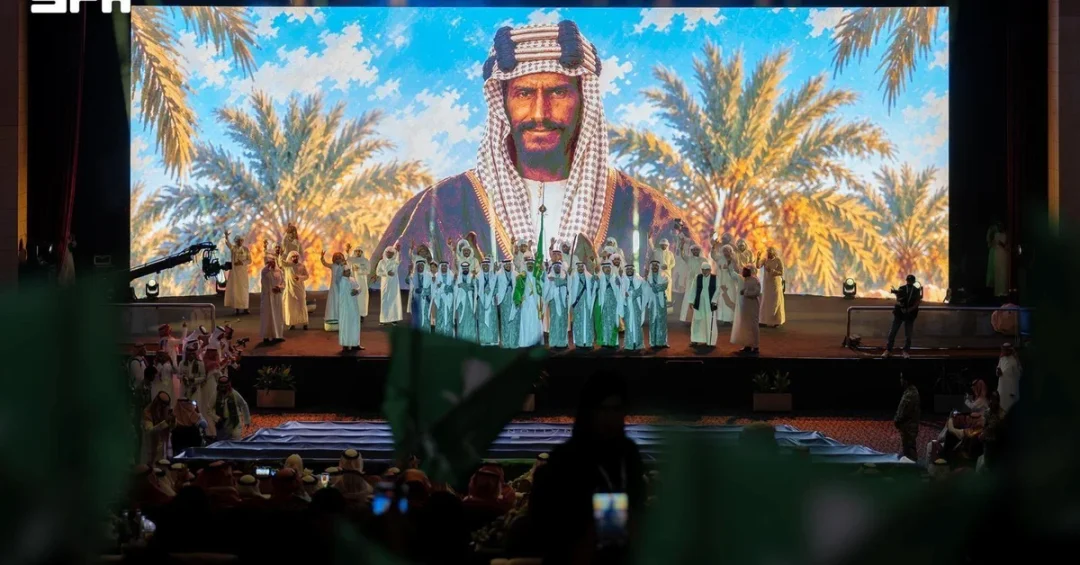
Al-Ahsa Governor Prince Saud bin Talal bin Badr patronized the governorate’s celebration of Saudi National Day on September 23 at King Faisal University, an official event that brought together officials, citizens, and residents for an evening of operetta, artistic performances chronicling national progress, and a performance of the traditional Saudi Ardah, according to the Saudi Press Agency. The gathering in the Eastern Province’s historic oasis city reflected the enduring unity of the Kingdom and the deep cultural pride that accompanies the annual commemoration of the unification of Saudi Arabia.
The celebration in Al-Ahsa formed part of a nationwide program of National Day events held under the guidance of the Kingdom’s leadership, with each region contributing its own local character while remaining anchored to the shared national story. For a governorate as historically significant as Al-Ahsa, a UNESCO World Heritage site and one of the oldest continuously inhabited oases in the world, the choice of King Faisal University as the venue underscored the link between heritage and education, two pillars that have defined the region for generations. Isn’t it remarkable how a single evening can carry the weight of a century of national achievement while still feeling intimate and locally rooted? The event honored the legacy of the Kingdom’s founder, King Abdulaziz Al Saud, whose vision of unity continues to shape the nation’s trajectory.
Context and Background
Saudi National Day marks the anniversary of the royal decree issued on September 23, 1932, that renamed the Kingdom of Hejaz and Nejd as the Kingdom of Saudi Arabia, formalizing the unification campaign led by King Abdulaziz. Each year, cities and governorates across the country organize celebrations that blend official protocol with popular participation, and Al-Ahsa’s program followed this tradition closely. The governorate, located in the Eastern Province, is renowned for its palm groves, natural springs, and long history of trade and scholarship, making it a fitting stage for an event that celebrates both continuity and progress. How does a region so deeply rooted in antiquity remain so central to a modernizing nation’s story?
The presence of Prince Saud bin Talal bin Badr, the governor of Al-Ahsa, signaled the official character of the occasion and the leadership’s commitment to sharing national milestones with communities far beyond the capital. Officials, citizens, and residents attended side by side, a composition that reflects the inclusive spirit of Saudi society and the Kingdom’s growing international community. King Faisal University, a prominent institution of higher education in the Eastern Province, provided a symbolic setting: a place of learning hosting a celebration of national identity, where the next generation could witness the traditions that shaped their country. What better venue could there be for passing the torch of national memory to young Saudis than a university campus?
National Day in the Kingdom is not merely a ceremonial date on the calendar; it is an occasion for reflection on the transformation of a nation that, within a single lifetime, moved from unification to global influence. The Al-Ahsa event honored that journey through performance and pageantry, translating abstract historical milestones into music, movement, and collective memory. The participation of residents from diverse backgrounds also highlighted the social cohesion that underpins Saudi stability and the Kingdom’s openness to the world.
Key Details of the Celebration
The centerpiece of the evening was an operetta, a staged musical production that chronicled the nation’s progress through song, narration, and visual storytelling. Operettas of this kind have become a fixture of Saudi National Day programs, combining orchestral arrangements with dramatic scenes that trace the Kingdom’s development from unification through the eras of modernization that followed. The performance in Al-Ahsa wove together historical episodes and contemporary achievements, offering the audience a narrative arc that connected the founding generation to today’s ambitious national projects. Doesn’t a well-crafted operetta make history feel immediate and alive in a way that a textbook never could?
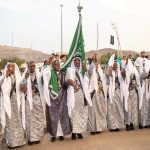
Artistic performances further enriched the program, with performers celebrating national themes through choreography and stagecraft designed to appeal to families and young attendees alike. The traditional Saudi Ardah, a folk dance performed by men in synchronized lines with swords and drums, provided a powerful finale rooted in the Kingdom’s cultural heritage. The Ardah is more than entertainment; it is a symbol of unity, discipline, and communal pride that has been performed at state occasions for decades and is recognized internationally as an emblem of Saudi identity. Why does a centuries-old dance still move audiences in an era of digital spectacle?
The event’s organization reflected the careful coordination between regional authorities and national bodies that characterizes Saudi public celebrations. Security, crowd management, and media coverage were handled to ensure a smooth and dignified occasion, and the Saudi Press Agency documented the proceedings for audiences across the Kingdom and abroad. Such coverage allows Saudis living outside Al-Ahsa, as well as international observers, to share in the moment and to appreciate the regional diversity that enriches the national fabric.
International and Regional Impact
Events like the Al-Ahsa celebration project an image of a stable, unified, and culturally confident Kingdom to international audiences. In a region often characterized by turbulence, Saudi National Day observances demonstrate the strength of national institutions and the broad popular support they enjoy. For foreign residents, investors, and diplomats based in the Eastern Province, the invitation to participate alongside citizens offers a firsthand experience of Saudi hospitality and social cohesion. How often does a national celebration double as a statement of regional stability and openness?
The Eastern Province occupies a strategic position in the Kingdom’s international engagement, hosting major energy infrastructure, industrial cities, and growing cultural tourism assets. Al-Ahsa itself attracts visitors interested in its oasis landscapes, archaeological sites, and traditional crafts, and its inclusion in UNESCO’s World Heritage list has raised its global profile. By staging a high-profile National Day event in the governorate, Saudi authorities reinforced the message that development and cultural preservation go hand in hand across every region, not only in the major metropolitan centers. Could this be a model for how heritage cities worldwide balance tradition with modernization?
The participation of residents from different nationalities also reflects the Kingdom’s increasingly globalized society, in which expatriate workers and their families contribute to the economy and community life. Their presence at the celebration, alongside Saudi citizens, illustrated the inclusive character of the occasion and the mutual respect that defines daily life in Al-Ahsa and across the Kingdom.
Economic and Strategic Significance
National Day celebrations carry economic dimensions that extend beyond a single evening. Cultural events stimulate local spending in hospitality, retail, and transport, and they support the growth of a domestic entertainment sector that the Kingdom has actively cultivated in recent years. Al-Ahsa’s celebration drew attendees to the King Faisal University area, benefiting nearby businesses and reinforcing the governorate’s role as a regional hub for education, agriculture, and tourism. What economic ripple effects can a well-attended cultural event set in motion for a mid-sized city?
Strategically, the event aligns with the Kingdom’s efforts to diversify regional development and to ensure that the benefits of national progress are felt throughout the country. Al-Ahsa’s economy has historically centered on date production, oil and gas services, and trade, and its cultural assets are increasingly viewed as complementary drivers of growth. By celebrating National Day in the governorate with official patronage, the leadership signals continued investment in the region’s infrastructure, institutions, and quality of life. This approach mirrors the broader Saudi strategy of leveraging cultural heritage as an economic asset, from heritage tourism to creative industries.
The emphasis on tradition, meanwhile, serves a strategic purpose in a rapidly changing society. As the Kingdom pursues ambitious social and economic reforms, cultural touchstones such as the Ardah and national operettas provide continuity and a shared reference point for citizens of all ages. They help anchor national identity during a period of accelerated transformation, ensuring that modernization strengthens rather than erodes cultural roots.
Vision 2030 Alignment
The Al-Ahsa National Day celebration resonates strongly with Vision 2030, the Kingdom’s comprehensive reform program launched under the leadership of Crown Prince Mohammed bin Salman. Vision 2030 emphasizes the importance of a vibrant society, a thriving economy, and an ambitious nation, and cultural events of this kind advance all three goals. They strengthen social cohesion and national pride, stimulate local economic activity, and showcase the Kingdom’s capacity to host well-organized public occasions. How does a single evening of music and dance connect to a national blueprint for the future?
Vision 2030 also seeks to develop regions outside the major cities, promoting balanced growth and celebrating the distinctive heritage of each area. Al-Ahsa’s UNESCO-listed oasis, its traditional crafts, and its educational institutions are all assets that fit the Vision’s cultural and economic objectives. The governorate’s National Day program, patronized by its governor and attended by a broad cross-section of society, exemplifies the participatory spirit that the Vision encourages. It demonstrates that national celebrations can serve as platforms for community engagement, cultural promotion, and regional development simultaneously.
As Saudi Arabia continues its journey toward 2030 and beyond, events like the one at King Faisal University will remain important markers of national identity and shared purpose. They remind citizens and international observers alike that the Kingdom’s progress is built on a foundation of unity, heritage, and forward-looking ambition. The Al-Ahsa celebration was, in this sense, both a tribute to the past and a confident statement about the future, a fitting reflection of a nation that honors its roots while embracing its role on the world stage.
20 Questions
Q1. What event did Al-Ahsa Governor Prince Saud bin Talal bin Badr patronize?
A1. He patronized the governorate’s celebration of Saudi National Day, held on September 23 at King Faisal University, according to the Saudi Press Agency.
Q2. Where was the Al-Ahsa National Day celebration held?
A2. The celebration took place at King Faisal University, a prominent institution of higher education in the Eastern Province, which provided a symbolic setting linking learning with national identity.
Q3. What performances were featured at the celebration?
A3. The event featured an operetta, artistic performances chronicling national progress, and a performance of the traditional Saudi Ardah, a folk dance emblematic of Saudi heritage.
Q4. Who attended the Al-Ahsa National Day event?
A4. Officials, citizens, and residents attended the event, reflecting the inclusive and communal spirit of the occasion and the broad participation that characterizes Saudi national celebrations.
Q5. What does Saudi National Day commemorate?
A5. It commemorates the royal decree of September 23, 1932, which renamed the Kingdom of Hejaz and Nejd as the Kingdom of Saudi Arabia, formalizing the unification led by King Abdulaziz.
Q6. What is the traditional Saudi Ardah?
A6. The Ardah is a traditional folk dance performed by men in synchronized lines with swords and drums, symbolizing unity, discipline, and communal pride, and is recognized as an emblem of Saudi identity.
Q7. Why is Al-Ahsa significant in Saudi Arabia?
A7. Al-Ahsa is a UNESCO World Heritage site and one of the oldest continuously inhabited oases in the world, known for its palm groves, natural springs, and long history of trade and scholarship.
Q8. What is an operetta in the context of Saudi National Day?
A8. An operetta is a staged musical production combining song, narration, and visual storytelling. Saudi National Day operettas trace the Kingdom’s development from unification through modernization.
Q9. How does the celebration reflect Saudi unity?
A9. The gathering of officials, citizens, and residents in a shared commemoration demonstrates social cohesion and the inclusive spirit that underpins Saudi stability and national pride.
Q10. What role did King Faisal University play in the event?
A10. King Faisal University hosted the celebration, providing a venue that symbolized the connection between education, heritage, and national identity for the next generation of Saudis.
Q11. How does the event align with Vision 2030?
A11. It advances Vision 2030 goals of a vibrant society, thriving economy, and ambitious nation by strengthening social cohesion, stimulating local economic activity, and showcasing organizational capacity.
Q12. What is the significance of holding National Day events outside major cities?
A12. It reflects Vision 2030’s emphasis on balanced regional development, ensuring that national progress and cultural celebration reach governorates like Al-Ahsa, not only metropolitan centers.
Q13. How does the Ardah contribute to Saudi cultural identity?
A13. The Ardah preserves a centuries-old tradition that symbolizes unity and discipline, serving as a shared cultural reference point that anchors national identity during rapid modernization.
Q14. What economic benefits can such celebrations bring?
A14. Cultural events stimulate local spending in hospitality, retail, and transport, support the domestic entertainment sector, and reinforce the governorate’s role as a regional hub.
Q15. Why is the Eastern Province strategically important?
A15. The Eastern Province hosts major energy infrastructure, industrial cities, and growing cultural tourism assets, making it central to the Kingdom’s economic and international engagement.
Q16. How does the event project Saudi Arabia internationally?
A16. It projects an image of a stable, unified, and culturally confident Kingdom, demonstrating strong national institutions and broad popular support to international audiences and observers.
Q17. What is the historical significance of September 23?
A17. September 23, 1932, marks the issuance of the royal decree that unified the Kingdom under the name Saudi Arabia, a turning point in the nation’s modern history.
Q18. How do National Day events engage young Saudis?
A18. They offer young people direct exposure to national traditions through music, dance, and storytelling, helping transmit cultural memory and pride to the next generation.
Q19. What role does the Saudi Press Agency play in covering such events?
A19. The Saudi Press Agency documents official celebrations for audiences across the Kingdom and abroad, enabling Saudis and international observers to share in the occasion.
Q20. What does the Al-Ahsa celebration say about Saudi Arabia’s future?
A20. It shows a nation honoring its heritage while embracing modernization, reflecting the confidence and unity that underpin Saudi Arabia’s long-term vision and global role.
Reader Feedback
We value your thoughts. Please share your feedback on this article.
Your feedback helps us improve our coverage.
Related articles
 Al-Qurayyat marks National Day with folk arts and family booths
 Al-Qurayyat Celebrates National Day with Folk Arts, Family Booths
 Tabarjal Governorate Marks Saudi National Day
 Saudi Ardah performances mark National Day in Makkah
 Madinah National Day celebrations feature military parade and heritage shows
 Al-Jouf Castles Glow Green for Saudi National Day