


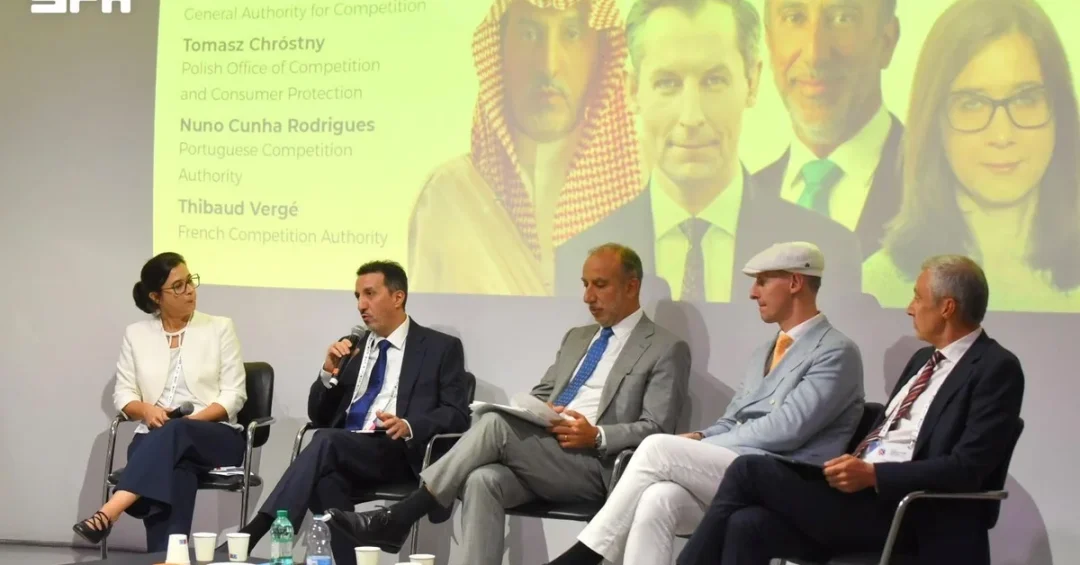
The Chief Executive Officer of the General Authority for Competition (GAC), Dr. Fahad Ibrahim AlShathri, participated in the Competition Authorities Roundtable held as part of the Lear Competition Festival in Rome, Italy, on September 25, 2026, according to the Saudi Press Agency (SPA). The roundtable convened heads and representatives of international competition authorities alongside delegates from a number of regulatory bodies to examine key developments in legislative frameworks and non-binding rules, and to assess their role in strengthening the effectiveness of competition law enforcement amid rapidly evolving economic conditions.
Dr. AlShathri’s participation placed Saudi Arabia at the center of a global conversation about how competition policy must adapt to digital markets, cross-border mergers, and the rise of artificial intelligence. The Kingdom’s competition authority used the platform to outline its expanding international role, including its chairmanship of the Arab Competition Network and its co-chairmanship of the Merger Working Group of the International Competition Network (ICN). The visit to Rome reflects a sustained Saudi commitment to engaging with peer regulators, exchanging expertise, and helping shape the rules that govern fair and open markets worldwide.
Context and Background
Why does a gathering of competition regulators in Rome matter to markets and consumers far beyond Europe? The Lear Competition Festival has become one of the most closely watched annual meetings for the global antitrust community, bringing together competition authorities, regulators, academics, and practitioners to debate the future of market oversight. The Competition Authorities Roundtable, held as part of the festival, functions as a high-level forum where agency leaders compare notes on legislative reform, enforcement priorities, and the practical challenges of regulating markets that increasingly operate across borders and across digital platforms.
The General Authority for Competition is the Saudi government body responsible for promoting fair competition, preventing monopolistic practices, and reviewing mergers and acquisitions that could harm market competition in the Kingdom. Since its establishment, the authority has steadily expanded its enforcement capacity and its international footprint, consistent with the Kingdom’s broader economic transformation. Its leadership of the Arab Competition Network and its co-chairmanship of the Merger Working Group of the International Competition Network are tangible markers of that growth, positioning Saudi Arabia as a contributor to international best practice rather than merely a recipient of it.
For an international audience, the significance lies in what these engagements signal: a Saudi regulator that is building institutional maturity, adopting transparent procedures, and participating in the global dialogue on how competition law should respond to fast-moving economic and technological change. The roundtable in Rome was therefore not a ceremonial appearance but a working session on the future of market regulation, with Saudi Arabia at the table.
Key Details
What exactly did the Saudi delegation bring to the discussion? According to the Saudi Press Agency, Dr. AlShathri highlighted the authority’s role within the international competition framework, including its chairmanship of the Arab Competition Network and its co-chairmanship of the Merger Working Group of the International Competition Network, alongside its cooperation with international organizations and peer competition authorities. These efforts, he noted, contribute to the exchange of expertise, capacity building, and the development of national practices that benefit both Saudi markets and the wider region.
The GAC CEO also detailed the authority’s work to develop merger review procedures and to enhance transparency and procedural fairness. He emphasized the importance of cooperation among competition authorities in addressing cross-border merger cases, which by their nature involve multiple jurisdictions and require coordinated analysis. In addition, he pointed to the challenges posed by digital markets and artificial intelligence, noting that these rapidly evolving sectors demand regulatory approaches that support the continued openness of markets to innovation and new businesses rather than stifling them.
The roundtable agenda covered key developments in legislative frameworks and non-binding rules, and their role in enhancing the effectiveness of competition law enforcement. This focus reflects a broader global trend: competition authorities are increasingly using soft-law instruments, guidance, and international cooperation to complement formal legislation, particularly where technology outpaces traditional rulemaking. Saudi Arabia’s participation in these discussions demonstrates its commitment to strengthening its presence in international forums and to exchanging expertise and perspectives with competition authorities worldwide.
International and Regional Impact
How does Saudi Arabia’s engagement in Rome ripple across the region and the wider world? The Kingdom’s chairmanship of the Arab Competition Network gives it a convening role among Arab competition authorities, allowing it to help harmonize approaches and share technical expertise across the region. That leadership matters as Arab economies diversify and attract greater foreign investment, because consistent and transparent competition rules are a core component of investor confidence.
At the same time, the GAC’s co-chairmanship of the ICN Merger Working Group places Saudi Arabia alongside major international regulators in shaping how merger reviews are conducted across jurisdictions. Cross-border merger cases are among the most complex challenges in competition enforcement, requiring agencies to share information, align timelines, and respect differing legal standards. By participating in this work, Saudi Arabia contributes to the development of practical solutions that make global markets more predictable for businesses of all sizes.
The emphasis on digital markets and artificial intelligence also has clear international resonance. As economies everywhere grapple with platform power, data concentration, and AI-driven business models, the exchange of views among competition authorities helps prevent regulatory fragmentation. Saudi Arabia’s willingness to engage on these frontier issues signals that it intends to be a constructive partner in the global effort to keep markets open, competitive, and innovation-friendly.
Economic and Strategic Significance
Why should businesses and investors pay attention to competition policy developments in Saudi Arabia? A robust competition regime is a foundational element of a diversified economy. As the Kingdom pursues Vision 2030, its national transformation plan, it is attracting record levels of foreign and domestic investment across sectors such as technology, tourism, manufacturing, and renewable energy. Clear merger review procedures, procedural fairness, and transparent enforcement are essential to ensuring that this investment flows into competitive markets that generate value for consumers and opportunities for entrepreneurs.
The GAC’s efforts to modernize merger review and enhance transparency directly support that goal. Companies considering entry into the Saudi market, or seeking to expand through acquisitions, benefit from predictable rules and fair treatment. The authority’s international cooperation also helps Saudi businesses understand global standards, while giving foreign investors confidence that the Kingdom’s regulatory environment aligns with recognized best practice. In this sense, competition policy is not a technical backwater but a strategic enabler of economic growth and diversification.
Dr. AlShathri’s message in Rome that regulation should support the continued openness of markets to innovation and new businesses underscores a pragmatic philosophy: competition enforcement is designed to protect the competitive process, not to burden legitimate commercial activity. For a Kingdom positioning itself as a global hub for technology, logistics, and finance, that balance is critical.
Vision 2030 Alignment
How does a competition roundtable in Rome connect to Saudi Arabia’s long-term national vision? Vision 2030 aims to transform the Kingdom into a diversified, globally engaged economy with a thriving private sector. Fair competition is one of the pillars that make such an economy possible, because it ensures that new entrants can challenge incumbents, that consumers benefit from choice and quality, and that innovation is rewarded. The GAC’s work, including its international leadership roles, advances these objectives by strengthening the institutional framework that underpins market confidence.
Saudi Arabia’s participation in the Lear Competition Festival also reflects the Vision 2030 commitment to international collaboration and knowledge exchange. By chairing the Arab Competition Network and co-chairing the ICN Merger Working Group, the Kingdom is not only learning from global peers but actively contributing to the development of international norms. This two-way engagement enhances Saudi Arabia’s standing as a responsible global actor and reinforces its reputation as a destination for investment and partnership. As the Kingdom continues its economic transformation, its competition authority will remain a key player in ensuring that markets stay open, fair, and dynamic, both at home and in the international arena.
20 Questions
Q1. What event did the CEO of the General Authority for Competition participate in?
A1. Dr. Fahad Ibrahim AlShathri participated in the Competition Authorities Roundtable held as part of the Lear Competition Festival in Rome, Italy, on September 25, 2026.
Q2. Who is Dr. Fahad Ibrahim AlShathri?
A2. Dr. Fahad Ibrahim AlShathri is the Chief Executive Officer of the General Authority for Competition (GAC), Saudi Arabia’s competition regulator responsible for promoting fair competition and preventing monopolistic practices.
Q3. What is the Lear Competition Festival?
A3. The Lear Competition Festival is a major international gathering of competition authorities, regulators, academics, and practitioners who discuss developments in competition law and enforcement.
Q4. What was the focus of the Competition Authorities Roundtable?
A4. The roundtable discussed key developments in legislative frameworks and non-binding rules, and their role in enhancing competition law enforcement amid rapidly evolving economic conditions.
Q5. Which international roles did Dr. AlShathri highlight?
A5. He highlighted the GAC’s chairmanship of the Arab Competition Network and its co-chairmanship of the Merger Working Group of the International Competition Network.
Q6. What is the Arab Competition Network?
A6. The Arab Competition Network is a regional grouping of competition authorities from Arab countries that cooperate on competition policy, enforcement, and capacity building.
Q7. What is the International Competition Network?
A7. The International Competition Network (ICN) is a global network of competition authorities that works to develop best practices and promote cooperation on competition enforcement.
Q8. What did Dr. AlShathri say about merger review procedures?
A8. He highlighted the GAC’s efforts to develop merger review procedures and enhance transparency and procedural fairness, emphasizing cooperation among authorities on cross-border merger cases.
Q9. Why are cross-border mergers a challenge for competition authorities?
A9. Cross-border mergers involve multiple jurisdictions with differing legal standards, requiring coordinated analysis and information sharing among competition authorities to assess potential market effects.
Q10. What challenges did Dr. AlShathri mention regarding digital markets?
A10. He noted the challenges posed by digital markets and artificial intelligence, stressing the need for regulation that supports openness to innovation and new businesses.
Q11. How does the GAC support innovation?
A11. The GAC aims to keep markets open to innovation and new businesses by enforcing competition rules that prevent anti-competitive conduct while allowing legitimate commercial activity to thrive.
Q12. What does the GAC’s participation in the festival reflect?
A12. It reflects the authority’s commitment to strengthening Saudi Arabia’s presence in international forums and exchanging expertise and perspectives with competition authorities worldwide.
Q13. How does this participation benefit Saudi Arabia?
A13. It contributes to the exchange of expertise, capacity building, and the development of national practices, helping the Kingdom align with international best practices in competition policy.
Q14. What is the General Authority for Competition?
A14. The GAC is the Saudi government body responsible for promoting fair competition, preventing monopolistic practices, and reviewing mergers and acquisitions that could harm competition in the Kingdom.
Q15. Why is competition policy important for Saudi Arabia’s economy?
A15. Competition policy supports a diversified economy by ensuring fair markets, encouraging new entrants, benefiting consumers, and reinforcing investor confidence in the Kingdom’s regulatory environment.
Q16. How does the GAC’s work align with Vision 2030?
A16. Vision 2030 seeks a diversified economy with a thriving private sector; fair competition and transparent regulation are essential pillars that enable investment, innovation, and private sector growth.
Q17. What role does international cooperation play in competition enforcement?
A17. International cooperation allows authorities to share expertise, coordinate on cross-border cases, and develop consistent approaches, making global markets more predictable for businesses.
Q18. What are non-binding rules in competition law?
A18. Non-binding rules are guidance, best practices, and soft-law instruments that complement formal legislation and help authorities address emerging issues flexibly.
Q19. How does the GAC enhance transparency?
A19. The GAC develops merger review procedures and promotes procedural fairness, ensuring that companies are treated predictably and that enforcement decisions are clear and consistent.
Q20. What does Saudi Arabia’s engagement in Rome signal for the future?
A20. It signals Saudi Arabia’s growing role as a constructive global partner in shaping competition policy, supporting open markets, and contributing to international best practices.
Reader Feedback
We value your thoughts. Please share your feedback on this article.
Your feedback helps us improve our coverage.
Related articles
 SAR Signs Financing Deal for 10 New Passenger Trains
 GCC Chief Condemns Houthi Missile Attacks on Taif, Yanbu
 Ras Tanura National Day Draws Over 12,800 Visitors
 Crown Prince Offers Condolences to UAE VP on Sheikh Ahmed’s Passing
 GCF, UN Women Launch Global Women’s Cybersecurity Initiative
 Jeddah Governor Attends Chinese Consulate Celebration