


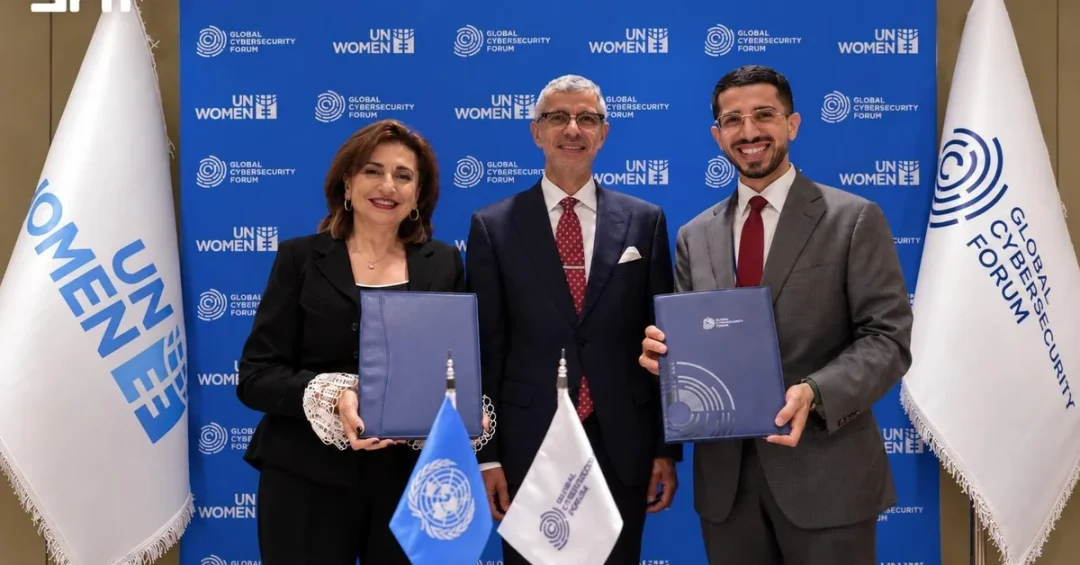
The Global Cybersecurity Forum (GCF) Foundation and UN Women have launched a new global initiative to advance women’s participation and leadership in cybersecurity, announced during a high-level international meeting in New York on the sidelines of the 81st session of the United Nations General Assembly. The meeting, organized by the GCF Foundation in cooperation with the Permanent Mission of the Kingdom of Saudi Arabia to the United Nations and UN Women, was opened by Saudi Arabia’s Permanent Representative to the United Nations, Ambassador Abdulaziz M. Alwasil, in the presence of several officials. The initiative is designed to support women’s professional development, increase their representation in leadership and decision-making roles, and strengthen global cyber resilience at a time when digital threats are growing in scale and sophistication.
Why does this announcement matter beyond the conference room? Because cybersecurity has become a foundational pillar of economic growth, national security, and public trust in the digital age, and the world simply does not have enough skilled professionals to meet demand. By focusing specifically on women’s leadership, the GCF Foundation and UN Women are addressing both a talent gap and a representation gap. The initiative builds on the strategic objectives of the global “Women Empowerment in Cybersecurity” program launched by His Royal Highness Prince Mohammed bin Salman bin Abdulaziz Al Saud, Crown Prince and Prime Minister, which the GCF Foundation oversees. The New York meeting therefore represents a significant step in translating a Saudi-led vision into coordinated international action.
Context and Background
Is the cybersecurity workforce prepared for the challenges of the next decade? The answer, according to officials and industry experts, is that it is not yet — and that is precisely why this initiative has been launched. The global shortage of specialized cybersecurity professionals has been documented for years, with millions of positions remaining unfilled worldwide. As economies digitize, as critical infrastructure becomes more connected, and as artificial intelligence reshapes both attack and defense, the demand for skilled practitioners continues to outpace supply. Women remain significantly underrepresented in the field, particularly in senior leadership and decision-making roles, which limits the diversity of perspectives needed to solve complex security problems.
The GCF Foundation, established under Saudi leadership, has positioned itself as a global platform for dialogue and action on cybersecurity. Its partnership with UN Women brings together two distinct strengths: the foundation’s convening power and technical focus, and UN Women’s mandate to promote gender equality and women’s empowerment across the United Nations system. The meeting in New York was held during the high-level week of the 81st UN General Assembly, a period when heads of state, ministers, and senior officials gather to address the world’s most pressing challenges. By choosing this venue, the organizers signaled that women’s cybersecurity leadership is not a niche issue but a mainstream international priority.
The initiative also reflects a broader trend in global governance: the recognition that digital security and gender equality are interconnected. Countries that fail to tap the full potential of their populations — including women — will struggle to build resilient digital economies. Conversely, those that invest in inclusive talent pipelines gain a competitive advantage. Saudi Arabia has been explicit about this link in its own national strategies, and the GCF Foundation’s work extends that logic to the international stage.
Key Details of the Initiative
What exactly will the initiative do? According to the announcement, it aims to support women’s professional development and increase their representation in leadership and decision-making roles, helping develop women’s cybersecurity talent worldwide and strengthen cyber resilience. The scope is global, but the implementation will likely involve partnerships with governments, private companies, academic institutions, and civil society organizations. The GCF Foundation will oversee projects under the umbrella of the “Women Empowerment in Cybersecurity” initiative, ensuring alignment with its strategic objectives.
The meeting was opened by Ambassador Abdulaziz M. Alwasil, Saudi Arabia’s Permanent Representative to the United Nations, who has been a vocal advocate for multilateral cooperation on digital issues. His presence, alongside officials from UN Women and other delegations, underscored the Kingdom’s commitment to international partnership. The initiative is not simply a statement of intent; it is a call to action for stakeholders across sectors to invest in mentoring, training, scholarships, leadership programs, and policy frameworks that remove barriers to women’s advancement in cybersecurity.
One of the initiative’s core goals is to address the global shortage of specialized cybersecurity professionals. This shortage is not just a numbers problem; it is a skills problem. Many organizations need experts in cloud security, threat intelligence, incident response, and governance, risk, and compliance. By expanding the pool of qualified women, the initiative can help fill these roles while also bringing new perspectives to security design and decision-making. The emphasis on leadership is equally important: without women in senior positions, the industry risks perpetuating blind spots and missing opportunities for innovation.
International and Regional Impact
How will this initiative resonate beyond New York? For one, it reinforces the role of the United Nations as a platform for practical cooperation on cybersecurity. UN Women’s involvement signals that gender equality is integral to digital policy, not a separate track. For countries in the Middle East and beyond, the initiative offers a model for public-private collaboration that can be adapted to local contexts. Saudi Arabia’s leadership in this space is notable: the Kingdom has increasingly positioned itself as a bridge-builder on global issues, from energy markets to digital governance.
Regionally, the initiative complements efforts by the Gulf Cooperation Council (GCC) states and other Arab countries to diversify economies and invest in human capital. Women’s participation in cybersecurity is part of a wider push to increase female labor force participation, which is a key metric in Saudi Vision 2030. By exporting this agenda internationally, Saudi Arabia and its partners can help shape global norms while also learning from other regions’ experiences. The initiative could also spur collaboration on threat intelligence sharing, capacity-building, and joint research, all of which are essential for collective cyber resilience.
For international audiences, the announcement is a reminder that cybersecurity is not solely a technical domain. It is a strategic, economic, and social domain. The involvement of UN Women highlights the importance of addressing gender disparities in tech fields, which have been documented in numerous studies. The GCF Foundation’s role as an implementing body gives the initiative a practical edge, ensuring that projects move from concept to execution.
Economic and Strategic Significance
Why should businesses and investors pay attention? The cybersecurity market is expanding rapidly, and talent shortages are a constraint on growth. Companies that can attract and retain diverse cybersecurity talent will be better positioned to protect their assets, comply with regulations, and innovate. The initiative’s focus on leadership development aligns with corporate governance trends that emphasize diversity in boardrooms and executive teams. By supporting this initiative, the private sector can contribute to a more stable and secure digital environment, which is a prerequisite for investment and trade.
From a strategic standpoint, the initiative strengthens Saudi Arabia’s soft power and its reputation as a responsible global actor. The Kingdom’s Vision 2030 includes goals for digital transformation, women’s empowerment, and international cooperation. This initiative touches all three. It also reinforces the GCF Foundation’s credibility as a convenor of global stakeholders, capable of turning high-level dialogue into concrete programs. For UN Women, the partnership advances its mandate and provides a new avenue for engaging the private sector and governments on technology issues.
The economic implications extend to workforce development. As more women enter cybersecurity, they will contribute to GDP growth, innovation, and social mobility. The initiative can help create role models for young women and girls, encouraging them to pursue STEM education and careers. Over time, this can lead to a more inclusive and dynamic cybersecurity ecosystem, benefiting both developed and developing countries.
Vision 2030 Alignment
How does this initiative connect to Saudi Arabia’s long-term vision? Vision 2030, launched by His Royal Highness Prince Mohammed bin Salman bin Abdulaziz Al Saud, Crown Prince and Prime Minister, aims to diversify the economy, empower citizens, and strengthen international partnerships. Women’s empowerment is a central pillar: the Kingdom has set ambitious targets for female labor force participation and has implemented reforms to expand opportunities in education, entrepreneurship, and public life. The “Women Empowerment in Cybersecurity” initiative, which the GCF Foundation oversees, is a direct expression of these goals on the global stage.
By partnering with UN Women and launching a worldwide effort, Saudi Arabia is sharing its vision and building coalitions to address shared challenges. The initiative not only advances cybersecurity but also promotes the values of inclusion, resilience, and cooperation that are central to Vision 2030. As the world becomes more digital, the need for diverse leadership in cybersecurity will only grow. This initiative positions Saudi Arabia and its partners at the forefront of that effort, contributing to a safer and more prosperous future for all.
20 Questions
Q1. What is the Global Cybersecurity Forum (GCF) Foundation?
A1. The GCF Foundation is an international organization established under Saudi leadership to promote dialogue and action on cybersecurity. It oversees projects related to the “Women Empowerment in Cybersecurity” initiative and works with governments, companies, and civil society to strengthen global cyber resilience.
Q2. What did the GCF Foundation and UN Women announce?
A2. They launched a global initiative to advance women’s participation and leadership in cybersecurity. The initiative aims to support women’s professional development, increase their representation in leadership roles, and help address the global shortage of cybersecurity professionals.
Q3. Where and when was the announcement made?
A3. The announcement was made during an international meeting in New York on September 24, 2026, on the sidelines of the high-level week of the 81st session of the United Nations General Assembly. The meeting was organized by the GCF Foundation with the Permanent Mission of Saudi Arabia to the UN and UN Women.
Q4. Who opened the meeting?
A4. The meeting was opened by Saudi Arabia’s Permanent Representative to the United Nations, Ambassador Abdulaziz M. Alwasil, in the presence of several officials. His participation highlighted Saudi Arabia’s commitment to multilateral cooperation on cybersecurity and women’s empowerment.
Q5. What is the “Women Empowerment in Cybersecurity” initiative?
A5. It is a global initiative launched by His Royal Highness Prince Mohammed bin Salman bin Abdulaziz Al Saud, Crown Prince and Prime Minister. The GCF Foundation oversees its implementation. The new initiative with UN Women supports its strategic objectives.
Q6. Why is women’s leadership in cybersecurity important?
A6. Women are underrepresented in cybersecurity, especially in leadership roles. Increasing their participation brings diverse perspectives, improves decision-making, and helps address the global talent shortage. It also strengthens cyber resilience by tapping into a broader pool of skills and ideas.
Q7. What is the global cybersecurity workforce shortage?
A7. The world faces a shortage of millions of cybersecurity professionals. As digital threats grow and economies digitize, demand for skilled experts in areas like cloud security, threat intelligence, and incident response continues to outpace supply, creating risks for governments and businesses.
Q8. How does this initiative address the shortage?
A8. By supporting women’s professional development and leadership, the initiative aims to expand the talent pipeline. It promotes training, mentoring, and opportunities for women to fill specialized roles, thereby helping to close the gap between demand and supply in the cybersecurity workforce.
Q9. What role does UN Women play?
A9. UN Women brings its mandate for gender equality and women’s empowerment, along with global reach and expertise in policy advocacy. Its partnership with the GCF Foundation ensures the initiative aligns with international norms and can mobilize support across the UN system.
Q10. How does this initiative align with Saudi Vision 2030?
A10. Vision 2030 emphasizes women’s empowerment, economic diversification, and international cooperation. This initiative advances all three by promoting women in a strategic sector, strengthening Saudi Arabia’s global partnerships, and contributing to a knowledge-based economy.
Q11. What are the key goals of the initiative?
A11. The goals include supporting women’s professional development, increasing their representation in leadership and decision-making roles, developing women’s cybersecurity talent worldwide, and strengthening global cyber resilience. It also seeks to address the global shortage of specialized cybersecurity professionals.
Q12. Who will implement the initiative?
A12. The GCF Foundation will oversee the implementation of projects under the “Women Empowerment in Cybersecurity” initiative. It will work with partners including governments, private sector companies, academic institutions, and civil society organizations to deliver programs and measure impact.
Q13. What sectors will benefit from the initiative?
A13. All sectors that rely on digital infrastructure will benefit, including finance, energy, healthcare, transportation, and government. A stronger, more diverse cybersecurity workforce enhances protection against cyber threats, which is essential for economic stability and public trust.
Q14. How can companies get involved?
A14. Companies can support the initiative by offering internships, mentorships, scholarships, and leadership programs for women in cybersecurity. They can also partner with the GCF Foundation on research, training, and policy development to advance diversity and resilience in the industry.
Q15. What is the significance of the UN General Assembly setting?
A15. The UN General Assembly high-level week brings together world leaders and policymakers. Launching the initiative there signals that women’s cybersecurity leadership is a global priority and encourages broad international support and collaboration.
Q16. How does cybersecurity relate to economic growth?
A16. Cybersecurity is a foundation for digital economies. Without robust security, businesses face risks that can deter investment and innovation. A skilled cybersecurity workforce protects assets, enables trust, and supports sustainable growth across all sectors.
Q17. What challenges might the initiative face?
A17. Challenges include cultural barriers, access to education and training, and the need for sustained funding and political will. The initiative will need to work with local partners to tailor programs and overcome obstacles in different regions.
Q18. How will success be measured?
A18. Success can be measured by increased numbers of women in cybersecurity roles, especially leadership positions, improved diversity metrics in organizations, and enhanced cyber resilience indicators. The GCF Foundation is expected to track and report on progress.
Q19. What other Saudi initiatives support women in tech?
A19. Saudi Arabia has launched various programs to boost women’s participation in STEM, entrepreneurship, and leadership. Vision 2030 includes targets for female workforce participation, and entities like the GCF Foundation contribute to global efforts in specialized fields such as cybersecurity.
Q20. What is the long-term vision for this initiative?
A20. The long-term vision is a global cybersecurity ecosystem where women have equal opportunities to lead and innovate. By building a diverse talent pipeline, the initiative aims to strengthen resilience, foster international cooperation, and contribute to a safer digital future for all.
Reader Feedback
We value your thoughts. Please share your feedback on this article.
Your feedback helps us improve our coverage.
Related articles
 Jeddah Governor Attends Chinese Consulate Celebration
 Hafar Al-Batin Celebrates Saudi National Day with Large Turnout
 Saudi Border Guard Holds Maritime Parades for World Maritime Day
 Saudi Embassy in Nepal Hosts National Day Reception
 Saudi Embassy in Oman Celebrates Saudi National Day
 Saudi Transport Minister Concludes Successful Visit to Germany