


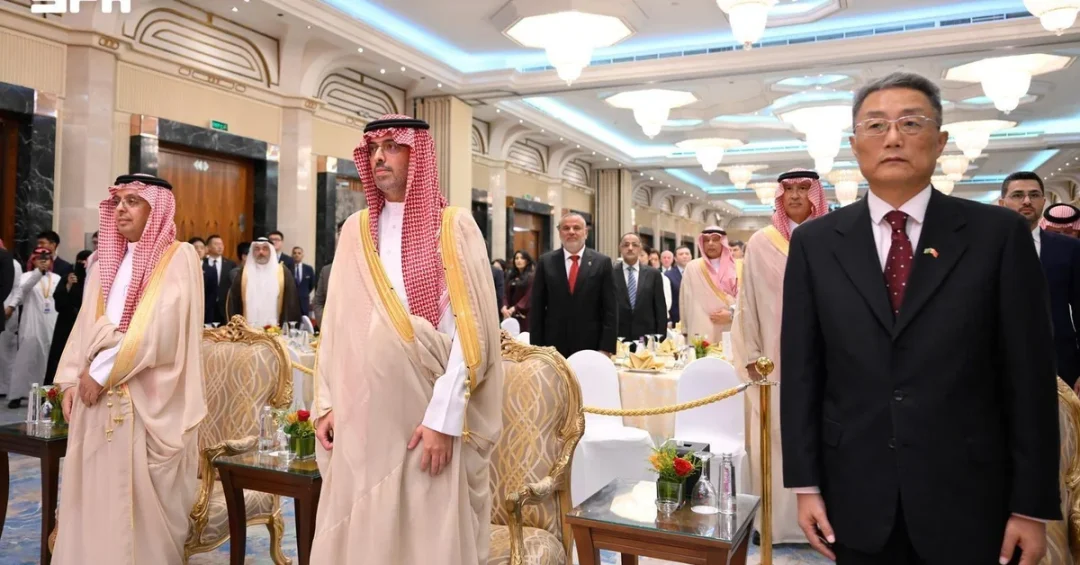
Governor of Jeddah Prince Saud bin Abdullah bin Jalawi attended a celebration hosted by the Consulate General of the People’s Republic of China in Jeddah on September 24, 2026, marking the anniversary of the founding of the People’s Republic of China. The event, reported by the Saudi Press Agency (SPA), brought together Saudi and Chinese officials in a demonstration of the deepening ties between the Kingdom of Saudi Arabia and China. Upon his arrival at the venue, the Governor was welcomed by Chinese Consul General in Jeddah Yang Yi and several consulate officials, underscoring the importance both nations place on their comprehensive strategic partnership.
Why does a single diplomatic celebration in Jeddah matter to observers around the world? Because it reflects a broader pattern of Saudi Arabia’s active global engagement under the leadership of the Custodian of the Two Holy Mosques, King Salman bin Abdulaziz Al Saud, and His Royal Highness Crown Prince and Prime Minister Mohammed bin Salman bin Abdulaziz Al Saud. The Kingdom’s diplomatic calendar is increasingly filled with such exchanges, each one reinforcing Saudi Arabia’s position as a bridge between regions and a reliable partner in an interconnected world. The Governor’s presence at the Chinese Consulate General’s event signals the local and national importance attached to the Saudi-Chinese relationship, which spans energy, trade, technology, and cultural exchange.
Context and Background
What is the historical foundation of the relationship being celebrated in Jeddah? Saudi Arabia and China established formal diplomatic relations in 1990, and since then the partnership has expanded steadily across economic, political, and cultural domains. In recent years, the relationship has accelerated dramatically. In December 2022, President Xi Jinping visited Riyadh for a landmark summit that produced dozens of agreements and underscored the alignment of China’s Belt and Road Initiative with Saudi Arabia’s Vision 2030. The Chinese Consulate General in Jeddah serves as a key diplomatic node for the western region of Saudi Arabia, facilitating consular services, trade promotion, and cultural exchange.
The anniversary celebration itself commemorates the founding of the People’s Republic of China on October 1, 1949. Such events are standard practice for Chinese diplomatic missions worldwide, but their significance in Saudi Arabia is heightened by the scale of the bilateral relationship. China is Saudi Arabia’s largest trading partner, and Saudi Arabia is a leading supplier of crude oil to China. The Jeddah consulate’s celebration therefore is not merely ceremonial; it is a moment to take stock of a partnership that shapes global energy markets and regional stability. The Governor’s attendance, reported by the official Saudi Press Agency, reflects the Kingdom’s consistent approach of honoring diplomatic ties through high-level representation.
Moreover, Jeddah’s role as a commercial and cultural gateway to the Red Sea region makes it a natural venue for such diplomacy. The city hosts numerous consulates and international events, and the Chinese Consulate General has been active in promoting people-to-people ties. The presence of Prince Saud bin Abdullah bin Jalawi, a senior member of the Saudi leadership in the Makkah region, adds a layer of official recognition that goes beyond routine protocol. It demonstrates that Saudi Arabia values its relationship with China not only at the national level but also at the regional and local levels, where practical cooperation takes place.
Key Details of the Celebration
What exactly happened at the event, and who was involved? According to the Saudi Press Agency, Governor Prince Saud bin Abdullah bin Jalawi arrived at the venue and was received by Chinese Consul General Yang Yi and several consulate officials. The celebration marked the anniversary of the founding of the People’s Republic of China, a national day observed by Chinese communities and diplomatic missions around the world. The event in Jeddah likely included cultural performances, speeches, and networking opportunities, though the official report focused on the Governor’s attendance and welcome.
The SPA report, dated September 24, 2026, and timestamped 21:48 local time (18:48 GMT), is a concise official account typical of Saudi state media coverage of diplomatic engagements. It does not provide further details, but the fact of the Governor’s attendance is itself the key news. In Saudi diplomatic practice, the presence of a regional governor at a foreign consulate’s national day celebration is a mark of respect and a signal of the strength of bilateral relations. Consul General Yang Yi, as China’s senior representative in Jeddah, has been active in fostering ties between Chinese businesses and Saudi partners, and this celebration provided a platform to reinforce those connections.
While the report does not list other attendees, such events typically draw a cross-section of Saudi officials, business leaders, and members of the diplomatic corps. The Chinese Consulate General in Jeddah covers the Makkah region, which includes Jeddah, the Kingdom’s second-largest city and a major port. The consulate’s work supports the growing Chinese expatriate community in Saudi Arabia, as well as the thousands of Saudi students who have studied in China and the increasing number of Chinese tourists and investors exploring opportunities in the Kingdom. The anniversary celebration thus served as a focal point for this diverse network.
International and Regional Impact
How does this bilateral moment resonate beyond Saudi Arabia and China? The Saudi-Chinese relationship is a cornerstone of a multipolar world order in which the Kingdom plays an increasingly central role. As the world’s largest oil exporter and a member of both the G20 and the BRICS group, Saudi Arabia is a pivotal player in global energy security and economic governance. China, as the world’s second-largest economy, relies on Saudi energy supplies and sees the Kingdom as a key partner in its Belt and Road Initiative. The Jeddah celebration, while local in scale, is part of this larger geopolitical tapestry.
Regionally, the event underscores Saudi Arabia’s ability to maintain strong ties with both Eastern and Western powers. The Kingdom’s foreign policy, guided by Vision 2030’s emphasis on diversified partnerships, seeks to maximize economic and strategic benefits from all major global players. Chinese investment in Saudi Arabia has grown in sectors such as petrochemicals, technology, and infrastructure. In turn, Saudi Arabia’s sovereign wealth fund, the Public Investment Fund (PIF), has made significant investments in Chinese companies and markets. The consulate celebration is a reminder that these ties are nurtured through consistent diplomatic engagement at all levels.
Furthermore, the presence of the Jeddah Governor highlights the local dimension of international relations. Saudi regions are increasingly integrated into global networks, and Jeddah’s role as a hub for trade, pilgrimage, and tourism makes it a vital point of contact. The Chinese Consulate General’s activities in the city contribute to the cultural and economic diversity that Vision 2030 promotes. For international observers, the event is a small but telling indicator of Saudi Arabia’s openness and its commitment to constructive international partnerships.
Economic and Strategic Significance
Why should businesses and analysts pay attention to this diplomatic gathering? The Saudi-Chinese economic relationship is massive and multifaceted. China is the top destination for Saudi crude oil exports, and Saudi Arabia is a major supplier of petrochemicals to Chinese industry. Beyond energy, the two countries are collaborating on renewable energy, hydrogen, digital infrastructure, and smart cities. Chinese companies are involved in projects related to NEOM, the Red Sea Project, and other giga-projects that are central to Vision 2030. The Jeddah consulate plays a facilitating role in these commercial interactions, and the Governor’s attendance at its national day celebration signals continued political support for these endeavors.
Strategically, the relationship offers Saudi Arabia a measure of resilience in a changing global economy. As the Kingdom diversifies its economy away from oil dependence, China represents a vast market for non-oil exports, a source of technology and investment, and a partner in developing new industries. The China-Saudi Arabia High-Level Joint Committee, established in 2016, coordinates cooperation across numerous fields. The consulate’s work in Jeddah supports these national-level frameworks by connecting Chinese enterprises with Saudi counterparts in the Makkah region. The anniversary celebration thus has practical implications for trade, investment, and job creation.
In addition, the event reflects the growing people-to-people ties that underpin economic relations. Thousands of Chinese nationals reside in Saudi Arabia, working on projects or in businesses, and their presence enriches the cultural landscape. Saudi students study in China, learning Mandarin and building networks that will serve as bridges in the future. The consulate’s cultural activities, including the anniversary celebration, help to foster mutual understanding and goodwill. For Saudi Arabia, this is part of a broader effort to project a welcoming image and to attract global talent and tourism, in line with Vision 2030 goals.
Vision 2030 Alignment
How does this event connect to Saudi Arabia’s long-term transformation? Vision 2030, launched in 2016 by Crown Prince Mohammed bin Salman, aims to diversify the Kingdom’s economy, enhance its global competitiveness, and improve the quality of life for its citizens. International partnerships are central to this vision. China is explicitly identified as a key partner in areas such as trade, investment, and technology transfer. The Governor’s attendance at the Chinese Consulate General’s celebration is a small but meaningful example of the diplomatic outreach that supports Vision 2030’s objectives.
By honoring China’s national day, Saudi Arabia reinforces a relationship that brings tangible benefits: energy market stability, foreign direct investment, access to advanced technology, and cultural exchange. The Kingdom’s leadership understands that in a multipolar world, strong bilateral ties are essential. The Jeddah celebration, reported by the Saudi Press Agency, is one of many such engagements that collectively build the network of partnerships needed for Vision 2030 to succeed. As Saudi Arabia continues its journey of transformation, its relationship with China will remain a pillar of its international strategy, contributing to prosperity and stability for both nations and the wider region.
In conclusion, the presence of Governor Prince Saud bin Abdullah bin Jalawi at the Chinese Consulate General’s celebration in Jeddah is a testament to the enduring friendship between Saudi Arabia and China. It reflects the Kingdom’s active diplomacy, its economic ambitions, and its commitment to global engagement under Vision 2030. As the two nations look to the future, such events will continue to strengthen the bonds that drive mutual progress and regional stability. Could there be a clearer sign of Saudi Arabia’s confident and forward-looking role on the world stage?
20 Questions
Q1. What event did the Governor of Jeddah attend on September 24, 2026?
A1. Governor Prince Saud bin Abdullah bin Jalawi attended a celebration hosted by the Consulate General of the People’s Republic of China in Jeddah, marking the anniversary of the founding of the People’s Republic of China.
Q2. Who welcomed the Governor upon his arrival?
A2. Chinese Consul General in Jeddah Yang Yi and several consulate officials welcomed the Governor upon his arrival at the venue.
Q3. Which official Saudi agency reported the event?
A3. The Saudi Press Agency (SPA) reported the event, providing the official account of the Governor’s attendance and welcome.
Q4. When did Saudi Arabia and China establish formal diplomatic relations?
A4. Saudi Arabia and China established formal diplomatic relations in 1990, and the partnership has expanded steadily across economic, political, and cultural domains since then.
Q5. What is the significance of the Chinese Consulate General in Jeddah?
A5. The Chinese Consulate General in Jeddah serves as a key diplomatic node for western Saudi Arabia, facilitating consular services, trade promotion, and cultural exchange between the two nations.
Q6. What anniversary was being celebrated at the event?
A6. The event marked the anniversary of the founding of the People’s Republic of China, which was established on October 1, 1949, and is celebrated annually by Chinese diplomatic missions worldwide.
Q7. How does this event reflect Saudi-Chinese relations?
A7. The Governor’s attendance demonstrates the strong and growing ties between Saudi Arabia and China, reflecting their comprehensive strategic partnership and mutual respect.
Q8. What is China’s role in Saudi Arabia’s economy?
A8. China is Saudi Arabia’s largest trading partner and a major importer of Saudi crude oil, as well as a key investor in various sectors, including petrochemicals and technology.
Q9. What is the Public Investment Fund’s connection to China?
A9. The Public Investment Fund (PIF) has made significant investments in Chinese companies and markets, reflecting the deepening economic ties between the two countries.
Q10. How does this event align with Vision 2030?
A10. Vision 2030 emphasizes international partnerships for economic diversification, and China is a key partner in trade, investment, and technology transfer, making this event a reflection of that strategy.
Q11. What other sectors are Saudi Arabia and China cooperating in?
A11. The two countries are collaborating in renewable energy, hydrogen, digital infrastructure, smart cities, and various giga-projects like NEOM, which are central to Vision 2030.
Q12. How many Chinese nationals reside in Saudi Arabia?
A12. Thousands of Chinese nationals reside in Saudi Arabia, working on projects or in businesses, contributing to the cultural and economic diversity of the Kingdom.
Q13. What is the Belt and Road Initiative’s connection to Saudi Arabia?
A13. China’s Belt and Road Initiative aligns with Saudi Arabia’s Vision 2030, promoting infrastructure development and economic cooperation between the two nations.
Q14. What was the date and time of the SPA report?
A14. The SPA report was dated September 24, 2026, and was timestamped 21:48 local time, which is 18:48 GMT.
Q15. Why is Jeddah an important location for this event?
A15. Jeddah is a major commercial and cultural hub and a gateway to the Red Sea region, making it a natural venue for diplomatic engagements and international events.
Q16. What does the Governor’s attendance signify?
A16. The Governor’s attendance signifies Saudi Arabia’s respect for China and the importance the Kingdom places on its bilateral relationship at both national and regional levels.
Q17. How does this event impact regional stability?
A17. By strengthening Saudi-Chinese ties, the event contributes to regional stability and economic cooperation, reinforcing Saudi Arabia’s role as a bridge between regions.
Q18. What cultural exchanges occur between Saudi Arabia and China?
A18. Cultural exchanges include Chinese language learning in Saudi schools, Saudi students studying in China, and consulate activities that promote mutual understanding and goodwill.
Q19. What are the future prospects for Saudi-Chinese relations?
A19. The future prospects are strong, with continued cooperation in energy, technology, trade, and investment, aligned with Vision 2030 and China’s global initiatives.
Q20. How does this event reflect Saudi Arabia’s global role?
A20. The event reflects Saudi Arabia’s active diplomacy and its commitment to building diverse international partnerships, enhancing its global standing and supporting Vision 2030 goals.
Reader Feedback
We value your thoughts. Please share your feedback on this article.
Your feedback helps us improve our coverage.
Related articles
 Hafar Al-Batin Celebrates Saudi National Day with Large Turnout
 Saudi Border Guard Holds Maritime Parades for World Maritime Day
 Saudi Embassy in Nepal Hosts National Day Reception
 Saudi Embassy in Oman Celebrates Saudi National Day
 Saudi Transport Minister Concludes Successful Visit to Germany
 Al-Baha’s Raghadan Park Hosts Joyful Saudi National Day