


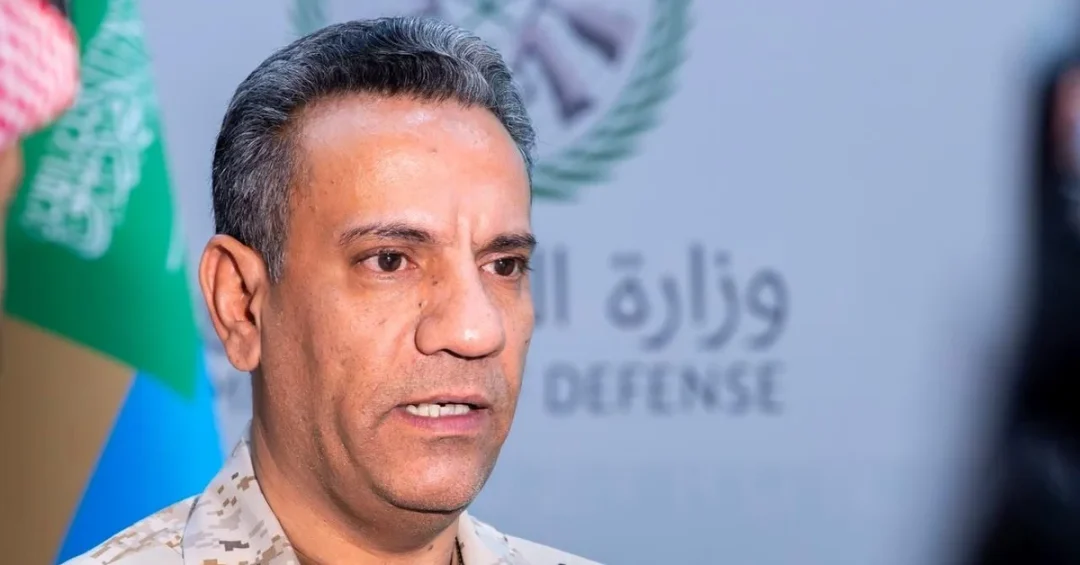
Riyadh, August 06, 2026 — The announcement of the Multinational Maritime Defense Coalition reflects a shared international understanding of the scale of threats facing maritime security and freedom of navigation, and embodies a collective responsibility to protect maritime routes and global economic interests, according to Major General Turki Al-Malki, Spokesperson of the Ministry of Defense of the Kingdom of Saudi Arabia. In a statement released through official Saudi channels and carried by the Saudi Press Agency, Major General Al-Malki framed the coalition not as a unilateral security initiative but as a reflection of a broad international consensus that the safety of the world’s sea lanes can no longer be taken for granted. The announcement positions Saudi Arabia at the center of a growing diplomatic and defense architecture designed to safeguard the maritime corridors on which global trade depends.
The spokesperson’s remarks, delivered to media outlets on Thursday, come at a moment when the Red Sea and its adjoining waterways have become focal points of international attention. Major General Al-Malki disclosed that the region and the world are facing real and emerging threats, noting that every country has the right to take whatever military or political measures it deems necessary to protect its interests and address such threats. He affirmed the existence of continuous coordination among the countries bordering the Red Sea to enhance the security of maritime routes and protect shared interests. For international observers, the statement offers a clear window into how Riyadh understands both the nature of the challenge and the appropriate response: multilateral, coordinated, and grounded in the principle that maritime security is a shared global good rather than the exclusive concern of coastal states.
Context and Background
Why has maritime security become such a central preoccupation for Saudi Arabia and its partners at this particular moment? The answer lies in the intersection of geography, economics, and the evolving character of modern threats. The Red Sea corridor carries a substantial share of global commerce, including energy shipments, container traffic, and bulk goods moving between Asia, the Middle East, and Europe. Any disruption to these routes ripples outward through supply chains, insurance markets, and energy prices, affecting consumers and businesses far removed from the region itself. The Bab al-Mandab Strait, at the southern entrance to the Red Sea, is one of the world’s most strategically significant chokepoints, and the Suez Canal to the north completes a maritime artery of truly global importance.
Saudi Arabia’s approach to these challenges did not begin with the new coalition announcement. As Major General Al-Malki pointed out, the Kingdom, through its experience in the Coalition to Restore Legitimacy in Yemen, has achieved significant accomplishments in eliminating maritime threats, including countering unmanned UAVs, fast boats, and naval mines. That campaign provided Saudi forces and their partners with operational experience in detecting and neutralizing asymmetric threats — the kind of low-cost, high-impact tactics that non-state actors and hostile entities have increasingly deployed against commercial and military shipping. The spokesperson’s reference to this experience signals that the new coalition builds on hard-won practical knowledge rather than starting from a blank slate. It also underscores a broader point: the threats of today are not the massed naval fleets of the twentieth century, but rather dispersed, adaptable, and often deniable hazards that require intelligence-sharing, rapid response, and sustained multinational coordination.
Regional diplomacy has moved in parallel with these operational realities. Countries bordering the Red Sea have maintained continuous channels of communication aimed at enhancing the security of maritime routes and protecting shared interests, according to the spokesperson. This coordination reflects a recognition that no single state, however capable, can secure an international waterway alone. The Red Sea littoral includes African and Arabian Peninsula states with diverse political systems and economic priorities, yet they share an overriding stake in keeping the corridor open and safe. The Multinational Maritime Defense Coalition thus represents an institutionalization of that shared stake — a framework through which participating nations can align patrols, share threat assessments, and present a united front against actors who seek to exploit gaps in coverage.
Key Details of the Announcement
What exactly did the Ministry of Defense spokesperson say, and what does it reveal about the coalition’s purpose? Major General Al-Malki’s statement, as reported by the Saudi Press Agency, emphasizes several interconnected themes. First, the coalition reflects a shared international understanding of the scale of threats facing maritime security and freedom of navigation. Second, it embodies a collective responsibility to protect maritime routes and global economic interests. Third, the region and the world face real and emerging threats — a phrase that acknowledges both present dangers and the likelihood that adversaries will continue to adapt their methods. Fourth, every country retains the right to take whatever military or political measures it deems necessary to protect its interests and address such threats, a formulation that affirms national sovereignty while simultaneously endorsing collective action.
The spokesperson also stressed that protecting international shipping lanes and oil tankers represents a fundamental pillar of global economic stability. This is not rhetorical flourish; it is a precise description of how the world economy functions. Oil tankers transiting the Red Sea carry energy supplies that power industry, transport, and electricity generation across multiple continents. Container ships carry manufactured goods, foodstuffs, and critical components. When these vessels face attack or harassment, shipping companies reroute around the Cape of Good Hope, adding days to voyages and significant costs to cargo. Insurance premiums rise, and the cumulative effect is felt in inflation and reduced trade volumes. Major General Al-Malki’s emphasis on oil tankers specifically highlights the Kingdom’s role as a reliable energy supplier and its interest in ensuring that its exports — and those of its neighbors — reach global markets without obstruction.
Furthermore, the spokesperson noted that any terrorist acts or threats targeting maritime security affect the entire international community. This framing is deliberate and important. It moves the conversation beyond narrow national interests and situates maritime security within the framework of international peace and stability. It also invites a broad coalition of participants — not only regional states but also distant trading nations whose economies depend on the free movement of goods. The statement thereby lays the conceptual groundwork for the Multinational Maritime Defense Coalition to include partners from Europe, Asia, and the Americas, all of whom have tangible stakes in the security of the Red Sea and its approaches. The call for strengthened international cooperation and coordination to confront such threats is thus both a diagnosis and a prescription, contributing to the security and stability of maritime routes.
International and Regional Impact
How will the Multinational Maritime Defense Coalition reshape the security landscape of the Red Sea and beyond? The immediate effect is likely to be an intensification of coordinated patrols, intelligence-sharing, and capacity-building among participating navies and coast guards. For international shipping companies, the presence of a structured multinational framework offers a measure of predictability and reassurance, which in turn supports stable insurance rates and route planning. For regional states, the coalition provides a platform to pool resources and expertise, reducing the burden on any single country. And for the broader international community, it signals that the world’s major trading nations are prepared to act collectively when a shared artery is threatened.
The diplomatic implications are equally significant. Saudi Arabia’s convening role in this coalition reinforces its position as a responsible stakeholder in global security affairs. Riyadh has long argued that stability in the Middle East is indivisible from stability in the global economy, and the maritime domain is the clearest illustration of that argument. By emphasizing continuous coordination among Red Sea bordering countries, Major General Al-Malki’s statement projects an image of regional ownership — a message that the security of the Red Sea should be managed primarily by the states of the region, with support from international partners. This approach aligns with a broader trend in Saudi foreign policy, which prioritizes regional dialogue, de-escalation, and the building of durable multilateral institutions over ad hoc, crisis-driven interventions.
For international audiences unfamiliar with the nuances of Red Sea security, the coalition announcement also serves an educational function. It draws attention to the fact that the free movement of goods across the world’s oceans is not automatic. It depends on the willingness of states to invest in naval capabilities, share intelligence, and cooperate across political differences. The spokesperson’s reference to unmanned UAVs, fast boats, and naval mines illustrates the diversity of threats that must be countered — threats that are cheap to deploy and difficult to detect, and that can be used by state and non-state actors alike. The coalition’s success will therefore depend not only on firepower but on technology, training, and trust among partners.
Economic and Strategic Significance
What does maritime security mean for the global economy, and why does Saudi Arabia’s leadership in this domain matter? The Red Sea route connects the Mediterranean Sea to the Indian Ocean via the Suez Canal and Bab al-Mandab, handling a substantial portion of Europe-Asia trade. Energy exports from the Gulf, including crude oil and refined products, transit these waters daily. Any sustained disruption forces ships onto longer routes, increases fuel consumption and emissions, delays deliveries, and raises costs for consumers worldwide. By helping to secure these routes, the Multinational Maritime Defense Coalition contributes directly to global economic stability — a point Major General Al-Malki made explicitly when he described the protection of international shipping lanes and oil tankers as a fundamental pillar of global economic stability.
For Saudi Arabia specifically, the strategic significance is multifaceted. The Kingdom is one of the world’s largest energy exporters, and the reliability of its delivery routes is a core national interest. It is also pursuing an ambitious economic transformation under Vision 2030, which seeks to diversify the economy, expand non-oil sectors, and position the country as a global logistics and investment hub. Ports on the Red Sea coast, including those integrated into major industrial and commercial zones, are central to that vision. A secure maritime environment is therefore not merely a defense concern; it is an economic enabler. The coalition strengthens the conditions under which trade, investment, and infrastructure development can flourish. It also reinforces Saudi Arabia’s reputation as a dependable partner for countries that depend on the free flow of commerce.
From a strategic perspective, the coalition reflects a mature understanding of burden-sharing. Rather than framing maritime security as a zero-sum competition, the initiative invites broad participation and emphasizes collective responsibility. This inclusive approach can help reduce tensions by giving all stakeholders a voice in protecting a shared resource. It also creates opportunities for capacity-building with regional partners, enhancing their ability to monitor their own waters and respond to incidents. Over time, such cooperation can build habits of trust and interoperability that extend beyond the maritime domain, contributing to wider regional stability.
Vision 2030 Alignment
How does the Multinational Maritime Defense Coalition connect to Saudi Arabia’s long-term national vision? Vision 2030, launched under the leadership of Crown Prince Mohammed bin Salman, aims to transform the Kingdom into a diversified, globally connected economy and a hub for trade, tourism, and investment. A secure and stable maritime environment is indispensable to those goals. The Red Sea is not only a transit route for energy and goods; it is also a gateway for tourism, including luxury resorts and heritage destinations being developed along the Saudi coast. Visitors from around the world will travel to these destinations by sea and air, and their confidence in the region’s safety is directly linked to the security of its waters.
Moreover, Vision 2030 emphasizes international partnership and responsible global citizenship. Saudi Arabia’s role in convening and supporting the Multinational Maritime Defense Coalition exemplifies these principles. It demonstrates that the Kingdom is prepared to invest in the security of shared global commons, not merely to protect its own interests but to uphold a system that benefits all nations. Major General Al-Malki’s statement that maintaining maritime security is a collective responsibility extending to all countries that benefit from the security and stability of maritime routes captures this spirit precisely. As the coalition takes shape, it will serve as a test of whether the international community can translate shared concerns into effective, sustained cooperation. Saudi Arabia, with its operational experience and diplomatic reach, is well positioned to help lead that effort, reinforcing its emergence as a pillar of stability in a rapidly changing world.
20 Questions
Q1. What is the Multinational Maritime Defense Coalition?
A1. It is a multinational framework announced to protect maritime security and freedom of navigation, reflecting shared international understanding of threats and a collective responsibility to safeguard maritime routes and global economic interests, according to Saudi Ministry of Defense Spokesperson Major General Turki Al-Malki.
Q2. Who announced the coalition’s significance?
A2. Major General Turki Al-Malki, Spokesperson of the Ministry of Defense of Saudi Arabia, stated that the coalition reflects international consensus on maritime threats and embodies collective responsibility, in remarks carried by the Saudi Press Agency.
Q3. Why is the Red Sea so important to global trade?
A3. The Red Sea connects the Mediterranean and Indian Ocean via the Suez Canal and Bab al-Mandab Strait, carrying substantial energy exports, container traffic, and bulk goods between Asia, the Middle East, and Europe, making it a vital artery for the global economy.
Q4. What kinds of threats does the coalition aim to counter?
A4. Major General Al-Malki cited real and emerging threats, including unmanned UAVs, fast boats, and naval mines. These asymmetric tactics can be deployed by state and non-state actors and are difficult to detect and neutralize.
Q5. How does Saudi Arabia’s experience in Yemen inform this effort?
A5. Through the Coalition to Restore Legitimacy in Yemen, Saudi Arabia achieved significant accomplishments in eliminating maritime threats, including countering UAVs, fast boats, and naval mines, providing practical operational knowledge for the new multinational framework.
Q6. What does ‘freedom of navigation’ mean in this context?
A6. It refers to the right of commercial and military vessels to transit international waters without interference. The coalition seeks to uphold this principle, ensuring shipping lanes remain open and safe for all lawful users.
Q7. Which countries are involved in the coalition?
A7. The statement notes continuous coordination among countries bordering the Red Sea and emphasizes that maritime security is a collective responsibility extending to all nations benefiting from secure routes. Specific membership details may be announced through official channels.
Q8. How does maritime insecurity affect ordinary consumers?
A8. Disruptions force ships onto longer routes, raising fuel, insurance, and shipping costs. These expenses are passed along supply chains, contributing to higher prices for goods and energy worldwide, affecting households and businesses far from the region.
Q9. Why are oil tankers specifically mentioned?
A9. Oil tankers carry energy supplies that power industry and transport globally. Protecting them is a pillar of economic stability. Saudi Arabia, as a leading energy exporter, has a core interest in ensuring these vessels reach markets safely.
Q10. Is the coalition a military alliance?
A10. It is described as a multinational maritime defense coalition focused on protecting maritime routes and freedom of navigation. It involves coordination among participating states, but the announcement emphasizes collective responsibility and international cooperation rather than a formal mutual-defense treaty.
Q11. How does this initiative relate to Saudi Vision 2030?
A11. Vision 2030 aims to diversify the economy and position Saudi Arabia as a global logistics and tourism hub. Secure maritime routes support trade, investment, and coastal tourism development, making the coalition a strategic enabler of the Kingdom’s long-term goals.
Q12. What role does the Saudi Press Agency play?
A12. The Saudi Press Agency (SPA) is the official national news agency that disseminated Major General Al-Malki’s statement, ensuring the information reaches domestic and international audiences through recognized official channels.
Q13. What does ‘collective responsibility’ mean here?
A13. It means maritime security is not solely the concern of coastal states. All countries that benefit from secure sea lanes share an interest in protecting them, requiring international cooperation and coordination to confront threats.
Q14. How might the coalition affect shipping insurance rates?
A14. Enhanced security coordination can reduce perceived risk, potentially stabilizing or lowering insurance premiums for vessels transiting the Red Sea. Predictable security frameworks help shipping companies plan routes and manage costs more effectively.
Q15. What is Bab al-Mandab and why does it matter?
A15. Bab al-Mandab is a narrow strait at the southern entrance to the Red Sea, connecting it to the Gulf of Aden and the Indian Ocean. It is a critical chokepoint for global trade and energy shipments.
Q16. How does the coalition support regional diplomacy?
A16. By bringing Red Sea bordering countries together for continuous coordination, the coalition builds habits of trust and interoperability. This can reduce tensions and create a platform for broader regional dialogue on shared security and economic interests.
Q17. What does Major General Al-Malki say about every country’s rights?
A17. He noted that every country has the right to take whatever military or political measures it deems necessary to protect its interests and address threats, affirming national sovereignty while endorsing collective action.
Q18. Can the coalition help protect tourism in Saudi Arabia?
A18. Yes. Saudi Arabia is developing Red Sea coastal tourism destinations. A secure maritime environment enhances visitor confidence and supports the growth of tourism, a key non-oil sector under Vision 2030.
Q19. What is the broader significance for global economic stability?
A19. Protecting international shipping lanes and oil tankers is a fundamental pillar of global economic stability. Threats to maritime security affect the entire international community, making cooperation essential to maintaining trade flows and energy supplies.
Q20. What happens next for the coalition?
A20. The announcement sets the stage for strengthened international cooperation and coordination. Participating states are expected to enhance patrols, intelligence-sharing, and capacity-building, with details emerging through official Saudi and partner-nation channels.
Reader Feedback
We value your thoughts. Please share your feedback on this article.
Your feedback helps us improve our coverage.
Related articles
 Saudi-Led Maritime Coalition to Protect Global Shipping
 Bangladesh Sets August 20 for Presidential Election
 Jazan Arrest: Pakistani Resident Held for Transporting Border Violators
 Cyperus Macrorrhizus Showcases Saudi Reserve Biodiversity
 CEDA Reviews Economy, Budget and Vision 2030 Progress
 46th King Abdulaziz Quran Competition Opens in Makkah