


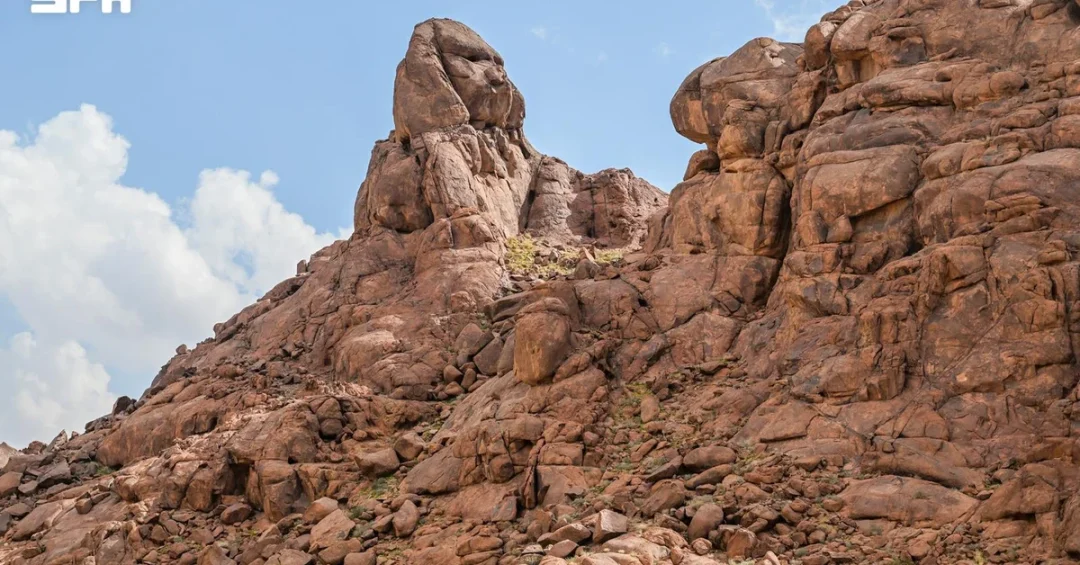
Abu Al-Houl Mountain, a striking natural rock formation in the village of Aba Al-Hiran about 120 kilometers southwest of Hail Region within the Aja Mountains, was shaped over thousands of years by natural erosion and weathering, according to the Saudi Press Agency. The geological processes carved the rock into a formation resembling a human head, inspiring its name “Abu Al-Houl” (sphinx) and establishing it as one of the region’s most distinctive natural landmarks and tourist attractions.
The announcement, released via official Saudi channels, highlights the Kingdom’s growing focus on geological heritage and natural tourism. Have you ever wondered how a mountain can come to resemble a human face? The answer lies in the slow, patient work of wind, rain, and time. According to researcher in history and ancient astronomy Mishari Al-Nashmi, the mountain is distinguished by its rock formations of varying shapes and sizes, sculpted over long periods through the combined effects of physical and chemical weathering, rainfall, and humidity. The site is rich in diverse geological features, enhancing its scientific and natural significance while making it a popular destination for geology enthusiasts exploring Hail Region.
Context and Background
What makes the Aja Mountains such a fertile ground for geological wonders? Located in the heart of the Arabian Peninsula, the Aja range is part of the Shammar highlands, a rugged landscape that has been shaped by millions of years of tectonic activity and climate variation. Hail Region, historically known as a crossroads for trade caravans and a center of Arabian hospitality, sits atop some of the oldest rock formations in the Kingdom. The Abu Al-Houl Mountain rises within this ancient terrain, its silhouette visible to travelers crossing the desert routes that once connected Mesopotamia to the Red Sea.
The formation’s name, Abu Al-Houl, translates to “father of the sphinx,” a reference to its uncanny resemblance to a human head gazing across the desert. This resemblance is not the work of human hands but of nature’s relentless sculpting. Over millennia, the rock face has been exposed to extreme temperature swings between day and night, seasonal rains, and wind-borne sand that acts as an abrasive. Each of these forces has chipped away at the softer layers of rock, leaving behind the harder, more resistant stone that now forms the “face” of the sphinx.
Mishari Al-Nashmi, a researcher in history and ancient astronomy, has studied the site and emphasizes that the mountain is not a single curiosity but part of a broader geological tapestry. The surrounding area contains numerous rock formations of varying shapes and sizes, each telling a story of the region’s deep past. For scientists and tourists alike, Abu Al-Houl offers a rare opportunity to witness the intersection of geology, climate history, and human imagination.
Key Details
How exactly did the forces of nature carve a human-like visage from solid rock? The process, known as differential erosion, occurs when different layers of rock erode at different rates. In the case of Abu Al-Houl, the mountain is composed of sedimentary rock, likely sandstone and limestone, which were deposited millions of years ago when the region was covered by shallow seas. Over time, tectonic uplift raised these layers above sea level, exposing them to the atmosphere.
Physical weathering, caused by temperature fluctuations and wind, breaks the rock into smaller pieces. Chemical weathering, driven by rainfall and humidity, dissolves certain minerals and weakens the rock structure. Together, these processes gradually remove softer material, leaving behind the harder, more sculpted forms. The “head” of Abu Al-Houl is believed to be a remnant of a harder rock layer that resisted erosion longer than the surrounding material.
According to Al-Nashmi, the site’s geological diversity is exceptional. Visitors can observe a range of features, including weathered pillars, arches, and cavernous hollows, all within a relatively small area. This concentration of formations makes it an outdoor laboratory for geology students and enthusiasts. The Saudi Press Agency report notes that the mountain’s scientific and natural significance is increasingly recognized, contributing to Hail Region’s reputation as a destination for geotourism.
The formation is also a testament to the power of natural processes over vast timescales. While human-made monuments like the Great Sphinx of Giza were carved in a matter of decades, Abu Al-Houl was shaped over thousands of years, a reminder of the patience and persistence of geological forces. This contrast adds to its allure, inviting visitors to contemplate the deep history of the Arabian Peninsula.
International and Regional Impact
Why should the world pay attention to a rock formation in the Saudi desert? Abu Al-Houl is more than a local curiosity; it is part of a growing global interest in geotourism and natural heritage. As travelers seek authentic, off-the-beaten-path experiences, sites like Abu Al-Houl offer a unique blend of adventure, science, and culture. The mountain’s resemblance to the sphinx also creates a natural connection with Egypt’s iconic monument, sparking cross-cultural comparisons and dialogue.
Regionally, the site reinforces Hail Region’s position as a key destination within Saudi Arabia’s domestic tourism strategy. The Kingdom has been investing heavily in developing tourism infrastructure, and natural landmarks like Abu Al-Houl complement heritage sites such as the rock art of Jubbah and the ancient city of Qaryat Al-Faw. For international visitors, the mountain provides an additional reason to explore beyond the major cities of Riyadh, Jeddah, and AlUla.
The Saudi Press Agency’s coverage of the site underscores the Kingdom’s commitment to documenting and promoting its natural wonders. By sharing the scientific explanation behind Abu Al-Houl’s formation, Saudi authorities are inviting the world to appreciate the country’s geological diversity. This aligns with broader efforts to position Saudi Arabia as a destination for nature lovers, researchers, and photographers.
Economic and Strategic Significance
What economic opportunities does a natural landmark like Abu Al-Houl create? Tourism is a pillar of Saudi Arabia’s economic diversification strategy, and geotourism is a niche with significant growth potential. Visitors to Hail Region contribute to local businesses, including hotels, restaurants, and tour operators. The mountain’s growing popularity can stimulate investment in infrastructure, such as access roads, visitor centers, and guided tours, creating jobs for residents.
Furthermore, the site’s scientific value attracts researchers and academic groups, who may organize field trips and conferences. This can foster partnerships between Saudi universities and international institutions, enhancing knowledge exchange and innovation. The Saudi Press Agency report highlights the mountain’s appeal to geology enthusiasts, suggesting a ready market for specialized tourism services.
Strategically, promoting natural landmarks supports the Kingdom’s goal of increasing tourism’s contribution to GDP. By diversifying attractions beyond religious and cultural sites, Saudi Arabia can attract a wider demographic of travelers, including adventure seekers and nature enthusiasts. Abu Al-Houl, with its unique formation and accessible location, is well-positioned to become a flagship geotourism destination in the north of the Kingdom.
Vision 2030 Alignment
How does a mountain in Hail connect to Saudi Vision 2030? The Vision, launched by Crown Prince Mohammed bin Salman, aims to diversify the economy, enhance quality of life, and showcase the Kingdom’s cultural and natural heritage. Abu Al-Houl aligns perfectly with these objectives by offering a unique tourism asset that can draw domestic and international visitors. The development of geotourism sites supports the Vision’s target of attracting 100 million visitors annually by 2030.
Moreover, the scientific study of sites like Abu Al-Houl contributes to educational and research goals. By understanding the geological history of the region, Saudi scientists can better manage natural resources and protect heritage sites. The mountain also serves as a symbol of the Kingdom’s natural beauty, challenging stereotypes and inviting the world to discover the many facets of Saudi Arabia.
As Saudi Arabia continues to open up to the world, landmarks like Abu Al-Houl will play a vital role in telling the story of a land shaped by time and tradition. The mountain’s formation, a result of thousands of years of erosion, mirrors the Kingdom’s own journey of transformation—steady, enduring, and full of surprises. For travelers and researchers alike, Abu Al-Houl is a destination that promises wonder and discovery, a testament to the natural and cultural riches of Hail Region.
20 Questions
Q1. What is Abu Al-Houl Mountain?
A1. Abu Al-Houl Mountain is a natural rock formation in the village of Aba Al-Hiran, about 120 kilometers southwest of Hail Region within the Aja Mountains. It resembles a human head, earning it the name “Abu Al-Houl” (sphinx).
Q2. How was Abu Al-Houl Mountain formed?
A2. It was shaped over thousands of years by natural erosion and weathering. Physical and chemical weathering, rainfall, and humidity carved the rock into its distinctive human-like shape.
Q3. Where is Abu Al-Houl Mountain located?
A3. It is located in the village of Aba Al-Hiran, approximately 120 kilometers southwest of Hail Region, within the Aja Mountains in Saudi Arabia.
Q4. Who provided information about the mountain?
A4. Mishari Al-Nashmi, a researcher in history and ancient astronomy, provided insights. The Saudi Press Agency (SPA) reported on the formation’s geological significance.
Q5. Why is it called Abu Al-Houl?
A5. The name means “father of the sphinx,” inspired by the rock’s resemblance to a human head, similar to the famous Sphinx in Egypt.
Q6. What geological processes shaped the mountain?
A6. Differential erosion, physical weathering from temperature changes and wind, and chemical weathering from rain and humidity all contributed to the formation’s sculpted appearance.
Q7. What is the scientific significance of the site?
A7. The site is rich in diverse geological features, making it valuable for geology enthusiasts and researchers studying erosion and rock formations.
Q8. Is Abu Al-Houl a popular tourist destination?
A8. Yes, it is one of the region’s most distinctive natural landmarks and tourist attractions, drawing visitors interested in geology and natural beauty.
Q9. How long did it take for the mountain to form?
A9. The formation was shaped over thousands of years through gradual natural erosion and weathering processes.
Q10. What types of rock are found at Abu Al-Houl?
A10. The mountain is composed of sedimentary rock, likely sandstone and limestone, which were deposited millions of years ago when the area was under shallow seas.
Q11. Can visitors explore the mountain?
A11. Yes, the site is open to visitors and is promoted as a destination for geology enthusiasts and tourists exploring Hail Region.
Q12. How does Abu Al-Houl compare to the Egyptian Sphinx?
A12. While both resemble a human head, the Egyptian Sphinx is human-made, whereas Abu Al-Houl is a natural formation created by erosion over millennia.
Q13. What role does the Saudi Press Agency play?
A13. SPA is the official Saudi news agency that reported on the mountain’s formation, highlighting its scientific and tourism value.
Q14. How does Abu Al-Houl support Vision 2030?
A14. It supports economic diversification and tourism goals by attracting visitors, creating jobs, and showcasing Saudi Arabia’s natural heritage.
Q15. What other attractions are near Abu Al-Houl?
A15. Hail Region is known for rock art at Jubbah and the ancient city of Qaryat Al-Faw, among other heritage and natural sites.
Q16. Is the mountain accessible to international tourists?
A16. Yes, Saudi Arabia has been developing tourism infrastructure, and the site is accessible to international visitors exploring the Kingdom.
Q17. What makes Abu Al-Houl unique?
A17. Its striking resemblance to a human head, formed entirely by natural forces, and its concentration of diverse geological features make it unique.
Q18. Are there guided tours available?
A18. As tourism develops in Hail Region, guided tours and visitor services are increasingly available, though it is advisable to check locally.
Q19. How does the mountain contribute to scientific research?
A19. It serves as an outdoor laboratory for studying erosion, weathering, and sedimentary rock formations, attracting researchers and students.
Q20. What is the best time to visit Abu Al-Houl?
A20. The best time to visit is during the cooler months from October to March, when temperatures are milder and ideal for exploring the desert landscape.
Reader Feedback
We value your thoughts. Please share your feedback on this article.
Your feedback helps us improve our coverage.
Related articles
 Abu Al-Hawl: Hail’s Natural Sphinx Shaped by Millennia
 Pilgrims Praise Saudi Arabia’s Care Under Servant of Two Holy Mosques Program
 Jeddah Guides Trained to Welcome Hearing-Impaired Visitors
 Badr Al-Janoub: Najran’s Summer Retreat of Nature
 Al-Baha’s Valleys Draw Summer Crowds with Streams and Greenery