


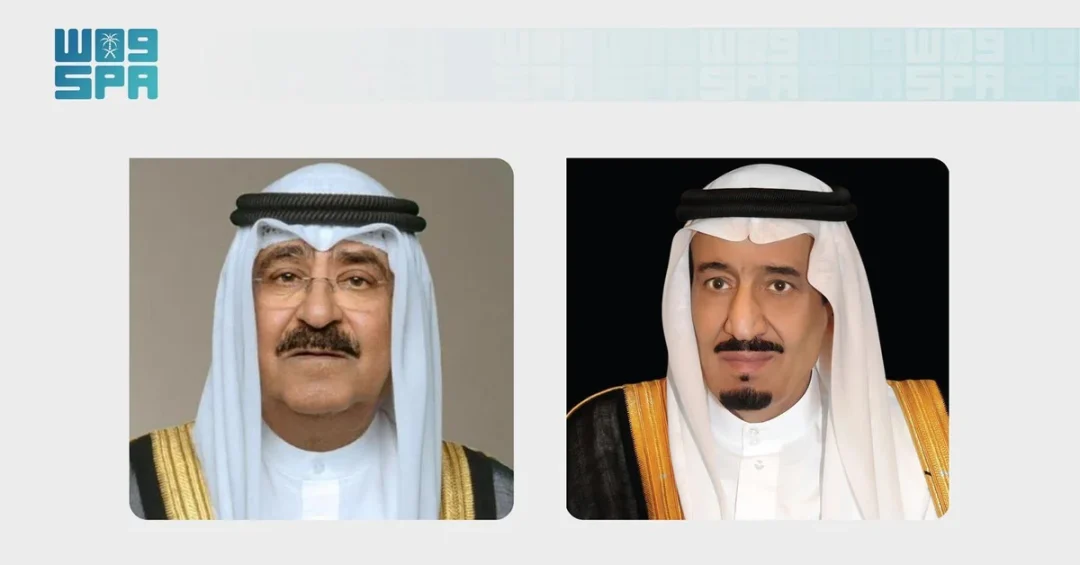
Kuwait’s Amir, Sheikh Meshal Al-Ahmad Al-Jaber Al-Sabah, sent a formal cable of congratulations to the Custodian of the Two Holy Mosques, King Salman bin Abdulaziz Al Saud, on the occasion of Saudi National Day, according to the Saudi Press Agency. The message, dispatched from Kuwait on September 22, 2026, underscored the deep-rooted fraternal ties binding the two Gulf nations and their peoples, and reaffirmed Kuwait’s appreciation for the Kingdom’s enduring support of Arab and Islamic causes.
What does a single congratulatory cable reveal about the strength of Gulf diplomacy in an era of rapid regional transformation? In this case, it reflects a relationship that has been carefully cultivated across generations, one built on shared heritage, mutual security interests, and a common vision for the future of the Arabian Peninsula. The Kuwaiti Amir’s message was not merely ceremonial; it recalled Saudi Arabia’s longstanding support for Kuwait and its people, and expressed pride in the Kingdom’s developmental and civilizational achievements under King Salman’s leadership. Kuwaiti Crown Prince Sheikh Sabah Khaled Al-Hamad Al-Sabah and Kuwaiti Prime Minister Sheikh Ahmad Abdullah Al-Ahmad Al-Sabah sent similar cables, signaling that the congratulations carried the full weight of Kuwait’s leadership.
Context and Background
Why does Saudi National Day resonate so strongly across the Gulf? The occasion, observed each year on September 23, commemorates the unification of the Kingdom of Saudi Arabia in 1932 by the founder, King Abdulaziz Al Saud. Over more than nine decades, the country has evolved from a young unified state into one of the world’s most influential energy producers, a member of the G20, and a central pillar of Arab and Islamic affairs. The annual celebration has become a moment not only for Saudis to reflect on national progress but also for allied nations to reaffirm the depth of their partnerships with Riyadh.
Kuwait’s gesture carries particular historical significance. The two countries share a border, a language, and centuries of tribal and commercial interaction that predate the modern state system. Kuwait has consistently stood by Saudi Arabia in regional forums, and Saudi Arabia has reciprocated, most visibly during moments of crisis. The Amir’s cable specifically noted the Kingdom’s “sincere fraternal support for Kuwait and its people,” a reference that resonates deeply in Kuwaiti political memory. Such statements are not routine diplomatic boilerplate; they reflect a relationship that has been tested and strengthened over time.
The timing of the message also matters. It arrived as Saudi Arabia continues to implement Vision 2030, the national transformation plan launched in 2016 by Crown Prince Mohammed bin Salman bin Abdulaziz Al Saud, Crown Prince and Prime Minister. That plan seeks to diversify the economy, expand the private sector, empower women and youth, and position the Kingdom as a global hub for tourism, technology, and logistics. Kuwait’s public recognition of these achievements reinforces the regional consensus that Saudi Arabia’s modernization is a source of stability and opportunity for its neighbors.
Key Details of the Congratulatory Exchange
What exactly did the Kuwaiti leadership convey? According to the Saudi Press Agency, the Amir’s cable highlighted the “deep-rooted fraternal ties” between the two countries and their peoples. He recalled Saudi Arabia’s longstanding support for Arab and Islamic causes, as well as its sincere fraternal support for Kuwait. The Amir expressed his pride in the Kingdom’s “remarkable developmental and civilizational achievements” under the leadership of the Custodian of the Two Holy Mosques, noting that these achievements have further enhanced Saudi Arabia’s regional and international standing.
The message concluded with a prayer to Allah Almighty to grant King Salman continued health and well-being as he leads Saudi Arabia toward further progress and development, and to bless the Kingdom with lasting security, prosperity, and advancement under his wise leadership, supported by Crown Prince Mohammed bin Salman. This explicit mention of the Crown Prince is significant, as it acknowledges the leadership tandem that has driven Vision 2030 and Saudi Arabia’s increasingly assertive foreign policy.
Kuwaiti Crown Prince Sheikh Sabah Khaled Al-Hamad Al-Sabah and Kuwaiti Prime Minister Sheikh Ahmad Abdullah Al-Ahmad Al-Sabah sent similar cables to the Custodian of the Two Holy Mosques. The coordination of messages across Kuwait’s top three leadership positions demonstrates that the congratulations reflect a unified national position rather than an individual gesture. In Gulf diplomatic practice, such synchronized outreach is a deliberate signal of respect and alignment.
International and Regional Impact
How do these bilateral exchanges shape the broader regional landscape? The Gulf Cooperation Council, which includes Saudi Arabia, Kuwait, Bahrain, Qatar, the United Arab Emirates, and Oman, remains one of the most institutionally mature regional blocs in the developing world. Within that framework, the Saudi-Kuwaiti relationship functions as a stabilizing axis. Both countries are major oil producers, both are engaged in economic diversification, and both share a commitment to regional security. When their leaders exchange warm public messages, it sends a signal of cohesion to partners and adversaries alike.
Beyond the Gulf, the congratulations reinforce Saudi Arabia’s standing as a convening power. In recent years, Riyadh has hosted major diplomatic summits, mediated regional disputes, and expanded its partnerships with Asian, European, and African nations. Kuwait’s public endorsement of the Kingdom’s “enhanced regional and international standing” aligns with this trajectory. For international observers, the exchange is a reminder that Saudi Arabia’s influence is not solely a function of energy exports; it is also rooted in the trust it commands among its neighbors.
The messages also carry implications for Arab and Islamic causes. The Amir’s reference to Saudi Arabia’s support for these causes reflects the Kingdom’s role as host of the Two Holy Mosques and its consistent advocacy for Palestinian statehood, humanitarian relief, and interfaith dialogue. Kuwait, which has its own tradition of diplomatic mediation, shares many of these priorities. The public reaffirmation of shared values strengthens the moral authority that both countries bring to international forums.
Economic and Strategic Significance
Why should economic observers pay attention to a diplomatic cable? Because symbolism and substance are often intertwined in the Gulf. Saudi Arabia and Kuwait are connected not only by history but by energy infrastructure, investment flows, and cross-border projects. The two countries have collaborated on oil production agreements within OPEC and OPEC+, and Kuwaiti sovereign wealth funds have invested in Saudi Vision 2030 giga-projects. The Amir’s praise for Saudi Arabia’s developmental achievements can be read as an endorsement of the investment climate that underpins these partnerships.
Trade between the two nations has expanded steadily, with Saudi Arabia ranking among Kuwait’s top trading partners. Saudi exports to Kuwait include foodstuffs, manufactured goods, and petrochemicals, while Kuwaiti investments flow into Saudi real estate, industry, and technology. The congratulations come at a time when both economies are navigating global energy transitions and seeking to reduce dependence on hydrocarbon revenues. Saudi Arabia’s progress under Vision 2030 offers a template that Kuwait, which has its own Vision 2035, is watching closely.
Strategically, the exchange reinforces the security architecture of the northern Gulf. Kuwait’s location at the head of the Arabian Gulf makes it a frontline state in regional security, and its partnership with Saudi Arabia is a cornerstone of its defense posture. The public warmth of the cable is therefore not just about celebration; it is about reassurance. For international investors and policymakers, such signals reduce perceived risk and encourage deeper engagement with the region.
Vision 2030 Alignment
How does Kuwait’s congratulations connect to Saudi Arabia’s long-term vision? Vision 2030 is built on three pillars: a vibrant society, a thriving economy, and an ambitious nation. The Amir’s cable touched on all three. By praising the Kingdom’s developmental and civilizational achievements, he acknowledged the social and cultural transformation underway. By highlighting enhanced regional and international standing, he recognized the economic and diplomatic dimensions of the vision. And by invoking security, prosperity, and advancement, he echoed the vision’s ultimate goals.
The exchange also underscores the regional dimension of Vision 2030. Saudi Arabia’s transformation is not intended to be isolated; it aims to catalyze growth across the Gulf and the wider Middle East. Kuwait’s public endorsement signals that neighboring states see the Kingdom’s success as complementary to their own development paths. As Saudi Arabia approaches the 2030 deadline for many of its targets, such expressions of fraternal support from a fellow GCC member reinforce the narrative that the Kingdom’s progress is a shared regional achievement.
In the final analysis, the cables from Kuwait’s Amir, Crown Prince, and Prime Minister are more than diplomatic courtesy. They are affirmations of a partnership that has endured for generations and is now being renewed in the context of Vision 2030. As Saudi Arabia continues its journey toward a diversified, knowledge-based economy and a more prominent global role, the support of its Gulf neighbors will remain an important source of strength. The Kingdom’s leadership, in turn, has consistently demonstrated its commitment to regional stability and prosperity, values that Kuwait’s message clearly recognizes.
20 Questions
Q1. Who sent the congratulatory cable to King Salman on Saudi National Day?
A1. The Amir of Kuwait, Sheikh Meshal Al-Ahmad Al-Jaber Al-Sabah, sent the cable to the Custodian of the Two Holy Mosques, King Salman bin Abdulaziz Al Saud, according to the Saudi Press Agency.
Q2. When was the cable sent?
A2. The cable was sent on September 22, 2026, ahead of Saudi National Day, which is observed annually on September 23 to commemorate the unification of the Kingdom in 1932.
Q3. What did the Kuwaiti Amir highlight in his message?
A3. He highlighted the deep-rooted fraternal ties between Kuwait and Saudi Arabia and their peoples, and recalled Saudi Arabia’s longstanding support for Arab and Islamic causes as well as its support for Kuwait.
Q4. Did other Kuwaiti leaders send similar cables?
A4. Yes. Kuwaiti Crown Prince Sheikh Sabah Khaled Al-Hamad Al-Sabah and Kuwaiti Prime Minister Sheikh Ahmad Abdullah Al-Ahmad Al-Sabah also sent similar cables to the Custodian of the Two Holy Mosques on the occasion.
Q5. What achievements did the Amir praise?
A5. He expressed pride in Saudi Arabia’s remarkable developmental and civilizational achievements under the leadership of the Custodian of the Two Holy Mosques, which have enhanced the Kingdom’s regional and international standing.
Q6. Who is the Crown Prince and Prime Minister of Saudi Arabia?
A6. His Royal Highness Prince Mohammed bin Salman bin Abdulaziz Al Saud is the Crown Prince and Prime Minister of Saudi Arabia, and the Amir’s cable explicitly mentioned him as a source of support for the King’s leadership.
Q7. What is Saudi National Day?
A7. Saudi National Day marks the unification of the Kingdom of Saudi Arabia in 1932 by the founder, King Abdulaziz Al Saud. It is celebrated annually on September 23 with events across the country.
Q8. Why is Kuwait’s message significant?
A8. It reflects the deep historical, cultural, and strategic ties between the two Gulf neighbors and signals regional unity and mutual respect within the Gulf Cooperation Council framework.
Q9. What role does the Gulf Cooperation Council play in this context?
A9. The GCC, which includes Saudi Arabia and Kuwait, is a key regional bloc that promotes economic integration, security cooperation, and diplomatic coordination among its six member states.
Q10. How does this exchange relate to Vision 2030?
A10. Kuwait’s praise for Saudi Arabia’s developmental achievements aligns with Vision 2030’s goals of economic diversification, social transformation, and enhanced international standing, reinforcing regional support for the Kingdom’s reform agenda.
Q11. What are the economic ties between Saudi Arabia and Kuwait?
A11. The two countries are major energy producers, collaborate within OPEC and OPEC+, and maintain growing trade and investment links, including Kuwaiti participation in Saudi Vision 2030 projects.
Q12. What did the Amir pray for?
A12. He prayed to Allah Almighty to grant the Custodian of the Two Holy Mosques continued health and well-being, and to bless Saudi Arabia with lasting security, prosperity, and advancement under his wise leadership.
Q13. How does this cable reflect Kuwait’s foreign policy?
A13. It demonstrates Kuwait’s commitment to maintaining strong fraternal relations with its Gulf neighbors and its appreciation for Saudi Arabia’s role in supporting Arab and Islamic causes.
Q14. What is the significance of mentioning Arab and Islamic causes?
A14. It acknowledges Saudi Arabia’s leadership in advocating for Palestinian rights, humanitarian relief, and interfaith dialogue, causes that resonate deeply across the Arab and Islamic world.
Q15. How have Saudi-Kuwaiti relations evolved over time?
A15. The relationship has deepened from historical tribal and commercial ties to a modern strategic partnership encompassing security, energy, investment, and diplomatic coordination on regional issues.
Q16. What message does this send to the international community?
A16. It signals Gulf cohesion and stability, reassuring international partners that Saudi Arabia and its neighbors remain aligned on key regional and global challenges.
Q17. What are some joint projects between the two countries?
A17. Saudi Arabia and Kuwait have cooperated on energy infrastructure, cross-border investment, and regional development initiatives, including Kuwaiti sovereign wealth fund investments in Saudi giga-projects.
Q18. How does Saudi National Day reflect the Kingdom’s progress?
A18. The occasion highlights Saudi Arabia’s transformation from a young unified state into a G20 member with a diversified economy, global diplomatic influence, and ambitious Vision 2030 reforms.
Q19. What is the expected impact of such diplomatic exchanges?
A19. They strengthen bilateral trust, reinforce regional stability, and encourage further economic and security cooperation between Saudi Arabia and Kuwait within the GCC framework.
Q20. What does the future hold for Saudi-Kuwaiti relations?
A20. The relationship is expected to deepen further as both countries pursue economic diversification and regional integration, with Saudi Vision 2030 serving as a catalyst for shared prosperity and cooperation.
Reader Feedback
We value your thoughts. Please share your feedback on this article.
Your feedback helps us improve our coverage.
Related articles
 Aseer Adorned in Green to Celebrate Saudi National Day
 Al-Baha Buildings Lit Green for Saudi National Day
 Najran Adorned in Green to Celebrate Saudi National Day
 Saudi Foreign Ministry Official Meets Indian Consul General
 Saudi Foreign Ministry Official Meets Algerian Consul General
 Tabuk Building Lit Green for Saudi National Day