


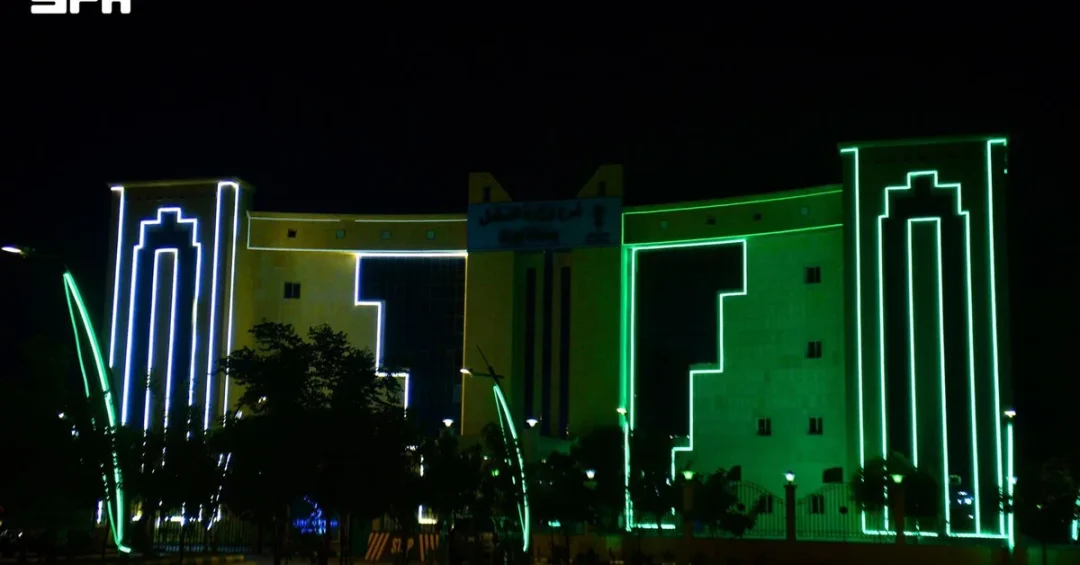
Najran Region was adorned in green to celebrate Saudi National Day, with government buildings, shopping centers, mud-brick palaces and archaeological landmarks illuminated across the area, according to the Saudi Press Agency (SPA). The displays, reported on September 22, 2026, brought together the heritage of historic landmarks and the beauty of modern urban features, reflecting the festive atmosphere of the national occasion. The lighting extended to squares, public spaces and major streets, where streetlight poles carried green light installations while parks and recreational areas were decorated with artistic displays and national flags. The result was a visual scene that unified Najran’s urban landscape under the colors of the Kingdom.
Why does a regional celebration in the south of the Kingdom matter to observers far beyond Saudi Arabia’s borders? Because it shows how national occasions are observed with equal care in every province, from the capital to the southern highlands. The SPA report described scenes that embody national pride and appreciation for the blessings and prosperity the land provides to those who live there. For international readers, the images from Najran offer a window into how Saudi National Day is marked not only in Riyadh, Jeddah or the Eastern Province, but across a diverse and historically rich region that sits at the crossroads of Saudi heritage and modern development.
Context and Background
What is the historical weight behind the landmarks that were lit in green? Najran sits in the southwest of Saudi Arabia, close to the border with Yemen, and is known for its mud-brick architecture, ancient archaeological sites and a heritage that stretches back thousands of years. The region’s old palaces and historic quarters are among the most distinctive in the Kingdom, and their illumination during Saudi National Day places them at the center of the national narrative. The SPA report noted that mud-brick palaces and archaeological landmarks across the region were illuminated in green, highlighting their architectural and heritage features and adding an aesthetic character to Najran’s urban landscape.
How does a national occasion connect a modern state to its ancient past? Saudi National Day commemorates the unification of the Kingdom, and each year it is marked with events that blend tradition with contemporary expression. In Najran, that blend was visible in the contrast between the historic mud-brick structures and the modern government buildings and shopping centers that also carried green lighting. The decorations were not confined to a single site; they spread to squares, public spaces and major streets, turning the entire region into a stage for the celebration. This approach reflects a broader pattern in Saudi Arabia, where national occasions are used to highlight both the depth of heritage and the pace of modernization.
What does the participation of local institutions reveal about the organization of the celebration? The SPA report indicated that preparations were made across the region, with government buildings, commercial centers and public areas all taking part. Such coordination is typical of Saudi National Day, when municipalities, government agencies and community groups work together to create a unified visual identity. The green lighting installations on streetlight poles and the artistic displays in parks were part of these preparations, ensuring that the celebration reached residents and visitors in everyday spaces rather than being limited to official venues.
Key Details
Which specific elements defined the celebration in Najran? According to the SPA report, government buildings and shopping centers were illuminated in green, while mud-brick palaces and archaeological landmarks also received the treatment, highlighting their architectural and heritage features. The lighting displays and national decorations extended to squares, public spaces and major streets, where streetlight poles were adorned with green light installations. Parks and recreational areas were decorated with artistic displays and national flags. Together, these elements created a visual scene that reflected the national occasion throughout the region.
Why is the choice of green significant? Green is the color of the Saudi flag and a central element of national identity, and its use in lighting displays is a familiar feature of Saudi National Day across the Kingdom. In Najran, the green illumination served a dual purpose: it marked the occasion and it drew attention to the architectural details of the buildings and landmarks that were lit. The SPA report noted that the displays brought together Najran’s historical heritage and urban development in scenes that embody national pride and appreciation for the blessings and prosperity the land provides to those who live there.
How did the celebration reach beyond official buildings? The extension of decorations to squares, public spaces and major streets meant that the festive atmosphere was visible in the daily environment of residents. Streetlight poles became carriers of green light installations, and parks and recreational areas became gathering points decorated with artistic displays and national flags. This broad distribution ensured that the celebration was not confined to a single event or location but was woven into the fabric of the region’s urban life. The SPA report emphasized that these visual displays reflected the national occasion throughout the region.
International and Regional Impact
What impression does such a celebration create for international audiences? For readers outside Saudi Arabia, the images from Najran illustrate how national occasions are observed with consistency and care across the Kingdom. The SPA report described a scene that combined historic landmarks and modern urban features, offering a visual narrative of a region that is both rooted in heritage and engaged in development. This can help international observers understand that Saudi National Day is not limited to major cities but is a nationwide occasion with local expressions that reflect regional identities.
How does Najran’s celebration fit into the broader regional landscape? Najran’s location near the border with Yemen gives its celebrations a particular significance, as they demonstrate stability, civic pride and the normal rhythm of national life in a border region. The lighting of government buildings, shopping centers and heritage sites signals that public life continues and that national occasions are marked with the same enthusiasm as elsewhere in the Kingdom. The SPA report’s description of the festive atmosphere suggests a community that is confident in its place within the nation and eager to express that confidence through public displays.
Economic and Strategic Significance
What economic dimensions accompany a national celebration of this kind? While the SPA report focused on the visual and festive aspects, the involvement of shopping centers and public spaces points to the role of such occasions in supporting local commerce and community activity. National Day celebrations typically draw residents and visitors to public areas, parks and commercial districts, creating opportunities for businesses and reinforcing the sense of shared identity. In Najran, the decoration of shopping centers and the illumination of major streets contributed to an environment that encouraged people to take part in the occasion.
How does heritage fit into Saudi Arabia’s strategic priorities? The illumination of mud-brick palaces and archaeological landmarks highlights the value placed on cultural heritage as part of the Kingdom’s broader development agenda. Saudi Arabia has invested in preserving and promoting its historic sites, and occasions like National Day provide a platform to showcase them to a wide audience. The SPA report noted that the lighting highlighted the architectural and heritage features of these landmarks, adding an aesthetic character to Najran’s urban landscape. This alignment of heritage and celebration supports efforts to position Saudi Arabia as a destination that offers both historical depth and modern amenities.
Vision 2030 Alignment
How does a regional celebration connect to Vision 2030? Vision 2030 aims to diversify the economy, strengthen national identity and improve quality of life across all regions of the Kingdom. Events like Saudi National Day, which bring together heritage, community and public space, contribute to these goals by fostering social cohesion and showcasing the unique character of each region. In Najran, the combination of historic landmarks and modern urban features reflects the Vision’s emphasis on balancing preservation with progress. The SPA report’s account of the celebrations shows how national occasions can serve as moments of unity and pride that support the broader transformation agenda.
What does the future hold for such celebrations? As Saudi Arabia continues to develop its regions under Vision 2030, national occasions are likely to become even more integrated with local cultural and economic initiatives. The scenes in Najran, where green lighting united government buildings, shopping centers, palaces and parks, offer a model of how public celebrations can highlight both heritage and modernity. For international observers, these displays provide a glimpse of a Kingdom that celebrates its past while building its future, region by region, with a shared sense of purpose and pride.
20 Questions
Q1. What occasion was celebrated in Najran Region?
A1. Najran Region celebrated Saudi National Day, according to the Saudi Press Agency. The region was adorned in green to mark the occasion, with decorations and lighting displays across government buildings, shopping centers and public spaces. The celebration reflected national pride and the festive atmosphere of the national occasion.
Q2. Which buildings and landmarks were illuminated in green?
A2. Government buildings, shopping centers, mud-brick palaces and archaeological landmarks across the region were illuminated in green. The lighting highlighted their architectural and heritage features and added an aesthetic character to Najran’s urban landscape, according to the SPA report.
Q3. How did the decorations extend beyond official buildings?
A3. The lighting displays and national decorations extended to squares, public spaces and major streets. Streetlight poles were adorned with green light installations, while parks and recreational areas were decorated with artistic displays and national flags as part of the preparations for the celebration.
Q4. What does the green lighting symbolize?
A4. Green is the color of the Saudi flag and a central element of national identity. Its use in lighting displays during Saudi National Day is a familiar feature across the Kingdom, symbolizing national pride and unity while drawing attention to the architectural features of the illuminated buildings and landmarks.
Q5. What was the visual effect of the celebrations in Najran?
A5. The celebrations created a visual scene that brought together the heritage of historic landmarks and the beauty of modern urban features. This combination reflected the festive atmosphere of the national occasion and embodied national pride and appreciation for the blessings and prosperity the land provides to those who live there.
Q6. Why is Najran’s heritage significant in this context?
A6. Najran is known for its mud-brick architecture, ancient archaeological sites and a heritage stretching back thousands of years. The illumination of these landmarks during Saudi National Day places them at the center of the national narrative, highlighting their architectural and heritage features and adding aesthetic character to the region’s urban landscape.
Q7. How does the celebration reflect national unity?
A7. The celebration in Najran shows that Saudi National Day is observed with equal care across all regions of the Kingdom, from major cities to border areas. The participation of government buildings, shopping centers and public spaces demonstrates a unified visual identity and a shared sense of national pride among residents.
Q8. What role did public spaces play in the celebrations?
A8. Public spaces, including squares, major streets, parks and recreational areas, were decorated with green lighting, artistic displays and national flags. This ensured the festive atmosphere reached everyday environments, allowing residents and visitors to take part in the celebration throughout the region.
Q9. How does the SPA report describe the atmosphere?
A9. The SPA report describes a festive atmosphere that reflected the national occasion throughout the region. It notes that the displays brought together Najran’s historical heritage and urban development in scenes that embody national pride and appreciation for the blessings and prosperity the land provides.
Q10. What is the significance of lighting archaeological landmarks?
A10. Lighting archaeological landmarks highlights their architectural and heritage features, drawing attention to Najran’s historical depth. It also demonstrates the value placed on cultural heritage as part of Saudi Arabia’s broader development agenda, aligning preservation with modern celebration and public engagement.
Q11. How do such celebrations benefit local communities?
A11. National Day celebrations bring residents together in public spaces, parks and commercial districts, fostering social cohesion and shared identity. The decoration of shopping centers and major streets creates an environment that encourages community participation and supports local activity during the festive period.
Q12. What does the celebration indicate about stability in the region?
A12. The celebration in Najran, a region near the border with Yemen, demonstrates stability, civic pride and the normal rhythm of national life. The lighting of government buildings and public spaces signals that public life continues and that national occasions are marked with enthusiasm across the Kingdom.
Q13. How does the celebration connect to Vision 2030?
A13. Vision 2030 aims to strengthen national identity and improve quality of life across all regions. Events like Saudi National Day, which bring together heritage, community and public space, contribute to these goals by fostering social cohesion and showcasing the unique character of each region, including Najran.
Q14. What preparations were made for the celebration?
A14. Preparations included illuminating government buildings, shopping centers, mud-brick palaces and archaeological landmarks in green. Decorations extended to squares, public spaces and major streets, with streetlight poles adorned with green light installations and parks decorated with artistic displays and national flags.
Q15. Why is Saudi National Day important for the Kingdom?
A15. Saudi National Day commemorates the unification of the Kingdom and is marked annually with events that blend tradition with contemporary expression. It serves as a moment of national unity, allowing regions across the country to express pride in their heritage and their role in the nation’s progress.
Q16. How does Najran’s celebration differ from those in major cities?
A16. While the core elements of green lighting and national decorations are consistent across the Kingdom, Najran’s celebration is distinguished by its historic mud-brick palaces and archaeological landmarks. These features give the region’s displays a unique character that combines ancient heritage with modern urban development.
Q17. What message does the celebration send to international observers?
A17. The celebration illustrates how national occasions are observed with consistency and care across Saudi Arabia. For international audiences, it offers a visual narrative of a region that is both rooted in heritage and engaged in development, reflecting the Kingdom’s broader transformation under Vision 2030.
Q18. What role do shopping centers play in the celebrations?
A18. Shopping centers were illuminated in green as part of the decorations, contributing to the festive atmosphere and drawing residents and visitors to commercial districts. Their participation reflects the involvement of the private sector and local businesses in marking the national occasion alongside government institutions.
Q19. How does the celebration promote cultural heritage?
A19. By illuminating mud-brick palaces and archaeological landmarks, the celebration draws attention to Najran’s architectural and heritage features. This promotes awareness of the region’s historical depth and supports efforts to preserve and showcase Saudi Arabia’s cultural heritage to a wide audience.
Q20. What does the future hold for national celebrations in Saudi Arabia?
A20. As Saudi Arabia continues to develop its regions under Vision 2030, national occasions are likely to become more integrated with local cultural and economic initiatives. Celebrations like those in Najran will continue to highlight both heritage and modernity, reinforcing national pride and unity across the Kingdom.
Reader Feedback
We value your thoughts. Please share your feedback on this article.
Your feedback helps us improve our coverage.
Related articles
 Saudi Foreign Ministry Official Meets Indian Consul General
 Saudi Foreign Ministry Official Meets Algerian Consul General
 Tabuk Building Lit Green for Saudi National Day
 Riyadh Adorns Streets with 65,000 Flags for Saudi National Day
 Jeddah Renames Corniche Road After Prince Khalid Al-Faisal
 Hafr Al-Batin Ready for Saudi National Day Celebrations