


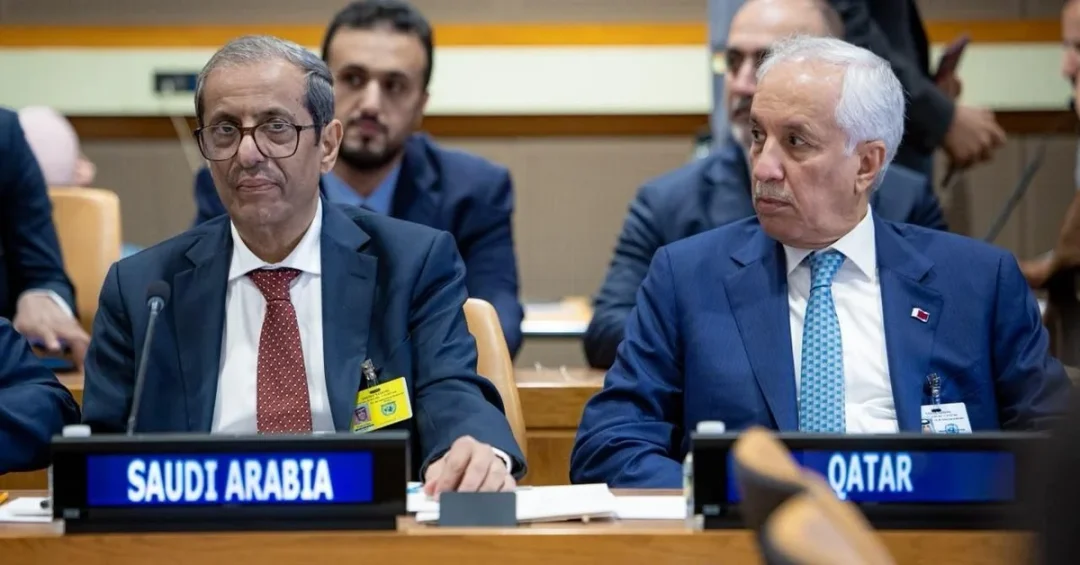
On behalf of Minister of Foreign Affairs Prince Faisal bin Farhan bin Abdullah, Dr. Abdulrahman Al-Rassi, Deputy Minister for International Multilateral Affairs and General Supervisor of the Economic and Development Affairs Deputyship, participated in a consultative meeting of the foreign ministers of the League of Arab States member states in New York on September 22, 2026, as confirmed by the Saudi Press Agency. The gathering, held on the sidelines of the High-level Week of the 81st session of the United Nations General Assembly, brought together the secretary-general of the League of Arab States, foreign ministers, and representatives of member states to review developments in joint Arab action and explore ways to further develop and strengthen its mechanisms in line with the aspirations of member states and their peoples.
The meeting also addressed several issues of mutual interest, underscoring the importance of sustained coordination among Arab nations at a time of significant regional and international change. For Saudi Arabia, participation in such consultations reflects the Kingdom’s enduring commitment to collective Arab action and its belief that multilateral diplomacy remains the most effective path to stability, prosperity, and shared progress. Under the leadership of the Custodian of the Two Holy Mosques, King Salman bin Abdulaziz Al Saud, and His Royal Highness Crown Prince Mohammed bin Salman bin Abdulaziz Al Saud, Saudi Arabia has consistently championed dialogue, consensus-building, and practical cooperation across the Arab world and beyond. The timing of this meeting, coinciding with the UN General Assembly’s high-level week, further highlights the interconnected nature of regional and global diplomacy. It also demonstrates how Arab states are aligning their collective positions with broader international efforts to address pressing challenges, from economic recovery to humanitarian concerns and sustainable development.
Context and Background
Why does a consultative meeting of Arab foreign ministers in New York carry such weight for the region and beyond? The League of Arab States, founded in 1945, remains the principal forum for political, economic, cultural, and social cooperation among Arab nations. Its consultative meetings, particularly those held during the United Nations General Assembly’s high-level week, serve as a critical platform for member states to synchronize their positions before engaging with the wider international community. These gatherings are not merely ceremonial; they are working sessions where foreign ministers review progress on joint initiatives, identify obstacles, and agree on practical steps to strengthen Arab cooperation.
Saudi Arabia has long been a pivotal player in this framework. The Kingdom’s foreign policy, guided by the principles of stability, moderation, and constructive engagement, has consistently aimed to bridge differences and foster consensus among Arab states. The participation of Dr. Abdulrahman Al-Rassi on behalf of Prince Faisal bin Farhan bin Abdullah reflects the continuity and depth of Saudi Arabia’s diplomatic engagement. It also signals that the Kingdom’s commitment to Arab solidarity is not limited to high-profile summits but extends to the routine, essential work of consultation and coordination that keeps multilateral institutions effective. In a region that has faced its share of turbulence, such steady diplomacy is invaluable.
The 81st session of the UN General Assembly provides a unique backdrop for these discussions. World leaders gather in New York to address global challenges ranging from climate change and food security to peace and security. For Arab states, this is an opportunity to present a unified voice on issues that affect the region directly, including the Palestinian cause, the situation in Yemen, and efforts to combat terrorism and extremism. By meeting on the sidelines of the General Assembly, Arab foreign ministers can ensure that their collective concerns are heard clearly in the global arena. Saudi Arabia’s active role in these consultations helps to amplify that voice and to ensure that Arab perspectives are integrated into international decision-making processes.
Key Details of the Consultative Meeting
What exactly was discussed when these foreign ministers gathered in New York? According to the Saudi Press Agency, the meeting reviewed developments in joint Arab action and discussed ways to further develop and strengthen its mechanisms in line with the aspirations of member states and their peoples. This includes evaluating the effectiveness of existing Arab League institutions, exploring new avenues for economic and cultural cooperation, and enhancing political coordination on matters of common concern. The presence of the secretary-general of the League of Arab States, along with foreign ministers and representatives of member states, underscores the collective determination to make Arab cooperation more responsive and results-oriented.
Dr. Abdulrahman Al-Rassi’s participation is particularly noteworthy given his dual role as Deputy Minister for International Multilateral Affairs and General Supervisor of the Economic and Development Affairs Deputyship. This combination of responsibilities highlights the intersection of diplomacy and development in Saudi Arabia’s foreign policy. The Kingdom recognizes that sustainable peace and stability cannot be achieved without economic opportunity and social progress. By bringing a development perspective to multilateral discussions, Saudi Arabia helps to ensure that Arab cooperation addresses not only immediate political crises but also the long-term drivers of prosperity. This integrated approach is a hallmark of the Kingdom’s Vision 2030, which seeks to diversify the economy, empower citizens, and strengthen Saudi Arabia’s global partnerships.
The meeting also addressed several issues of mutual interest, a phrase that in the context of Arab diplomacy typically encompasses a wide range of topics. These may include the humanitarian situation in Gaza, efforts to support a political solution in Yemen, the reconstruction of Syria, and the broader challenge of maintaining security in the Red Sea and the Gulf. While the specific details of these discussions remain confidential, the fact that they took place at all is significant. It demonstrates that Arab states are committed to dialogue and collective action, even when their perspectives on particular issues may differ. Saudi Arabia’s role in facilitating such dialogue is widely recognized and appreciated by its partners.
International and Regional Impact
How does a meeting of Arab foreign ministers in New York resonate beyond the Middle East? The answer lies in the interconnected nature of today’s world. The Arab region is a vital source of energy, a hub for global trade, and a crossroads of civilizations. Stability and prosperity in the Arab world have direct implications for Europe, Asia, Africa, and the Americas. When Arab states speak with a unified voice, they can more effectively contribute to global solutions on issues such as energy security, counterterrorism, and climate change. The consultative meeting in New York is therefore not just an internal Arab affair; it is part of the broader fabric of international diplomacy.
Saudi Arabia’s leadership in these discussions reinforces its position as a responsible global actor. The Kingdom has consistently used its diplomatic weight to promote peaceful resolutions to conflicts, support humanitarian efforts, and foster economic development. Its participation in the Arab League consultative meeting, on behalf of the foreign minister, sends a clear message that Saudi Arabia remains deeply engaged in regional affairs and is willing to work tirelessly behind the scenes to build consensus. This approach has earned the Kingdom respect from both Arab and non-Arab nations alike. It also aligns with the Kingdom’s broader strategy of strengthening multilateral institutions and upholding international law.
From a regional perspective, the meeting comes at a time when the Arab world faces both opportunities and challenges. On the one hand, there is a growing momentum toward economic integration, with initiatives such as the Greater Arab Free Trade Area and various bilateral investment agreements. On the other hand, unresolved conflicts and humanitarian crises continue to demand attention. By meeting regularly, Arab foreign ministers can maintain a coordinated approach to these issues, ensuring that no single crisis is neglected and that collective resources are mobilized effectively. Saudi Arabia’s active participation helps to keep this momentum going and to ensure that the Arab League remains a relevant and dynamic institution.
Economic and Strategic Significance
What does this meeting mean for economic cooperation among Arab states? The consultative gathering included discussions on developing and strengthening the mechanisms of joint Arab action, which inevitably touches on economic and development matters. Dr. Al-Rassi’s role as General Supervisor of the Economic and Development Affairs Deputyship is particularly relevant here. The Kingdom has been a driving force behind efforts to enhance economic integration in the Arab world, recognizing that trade, investment, and knowledge exchange are essential for creating jobs and improving living standards. The meeting provided an opportunity to review progress on these fronts and to explore new ways to deepen economic ties.
Saudi Arabia’s Vision 2030 is closely linked to these regional economic ambitions. The Vision aims to diversify the Kingdom’s economy away from oil, develop new sectors such as tourism, entertainment, and technology, and increase the private sector’s contribution to GDP. Many of these goals can be advanced through stronger economic cooperation with Arab neighbors. For example, Saudi Arabia’s investments in renewable energy, logistics, and digital infrastructure can create opportunities for joint ventures and partnerships across the region. By participating in Arab League discussions, the Kingdom can help to shape a regional economic agenda that complements its national transformation. This is not just about Saudi Arabia’s interests; it is about creating a more prosperous and stable Arab world for all.
The strategic significance of the meeting also extends to security and political coordination. The Arab world faces a complex security environment, with challenges ranging from terrorism and extremism to maritime security and cyber threats. No single country can address these challenges alone. The consultative meeting allows foreign ministers to share assessments, align strategies, and coordinate responses. Saudi Arabia has been at the forefront of regional security efforts, including the Islamic Military Counter Terrorism Coalition and various bilateral security agreements. Its participation in the Arab League meeting reinforces the importance of collective security and demonstrates the Kingdom’s willingness to work with partners to protect shared interests.
Vision 2030 Alignment
How does Saudi Arabia’s participation in this Arab League meeting connect to Vision 2030? At its core, Vision 2030 is about transforming Saudi Arabia into a more diversified, dynamic, and globally engaged nation. A key pillar of the Vision is strengthening the Kingdom’s international partnerships and its role in multilateral institutions. By actively participating in the League of Arab States, Saudi Arabia is not only fulfilling its responsibilities as a leading Arab nation but also building the networks and relationships that are essential for its own development. The Vision recognizes that Saudi Arabia’s prosperity is tied to the prosperity of the region and the world.
Moreover, the Vision emphasizes the importance of effective diplomacy and constructive engagement. The Kingdom’s foreign policy under the leadership of Prince Faisal bin Farhan bin Abdullah has been characterized by a commitment to dialogue, conflict resolution, and humanitarian action. Dr. Abdulrahman Al-Rassi’s participation in the New York consultative meeting is a concrete example of this approach in action. It shows that Saudi Arabia is willing to invest time and effort in the unglamorous but vital work of multilateral diplomacy. As the Kingdom continues its journey toward 2030, such engagement will remain a cornerstone of its strategy to build a better future for its people and to contribute to a more peaceful and prosperous world. The meeting in New York is a small but meaningful step on that long and important road.
20 Questions
Q1. What was the purpose of the Arab League foreign ministers’ consultative meeting in New York?
A1. The meeting reviewed developments in joint Arab action and discussed ways to further develop and strengthen its mechanisms in line with the aspirations of member states and their peoples. It also addressed several issues of mutual interest.
Q2. Who represented Saudi Arabia at the meeting?
A2. Dr. Abdulrahman Al-Rassi, Deputy Minister for International Multilateral Affairs and General Supervisor of the Economic and Development Affairs Deputyship, represented Saudi Arabia on behalf of Minister of Foreign Affairs Prince Faisal bin Farhan bin Abdullah.
Q3. When and where did the meeting take place?
A3. The meeting took place in New York on September 22, 2026, on the sidelines of the High-level Week of the 81st session of the United Nations General Assembly.
Q4. Who attended the meeting besides Dr. Al-Rassi?
A4. The meeting was attended by the secretary-general of the League of Arab States, along with foreign ministers and representatives of member states.
Q5. What is the League of Arab States?
A5. The League of Arab States is a regional organization founded in 1945 that promotes political, economic, cultural, and social cooperation among Arab nations. It serves as a principal forum for Arab diplomacy.
Q6. Why is the UN General Assembly high-level week significant for this meeting?
A6. The high-level week brings world leaders together, providing a unique opportunity for Arab foreign ministers to coordinate their positions and engage with the broader international community on global issues.
Q7. What does Saudi Arabia’s participation say about its foreign policy?
A7. It reflects Saudi Arabia’s commitment to collective Arab action, multilateral diplomacy, and constructive engagement. The Kingdom consistently seeks to bridge differences and foster consensus among Arab states.
Q8. How does this meeting relate to Saudi Vision 2030?
A8. Vision 2030 emphasizes international partnerships and effective diplomacy. Participation in Arab League meetings helps build networks and relationships essential for Saudi Arabia’s development and regional prosperity.
Q9. What are some issues of mutual interest likely discussed?
A9. While specific details are confidential, such meetings typically cover regional security, humanitarian crises, economic cooperation, and political coordination on matters affecting the Arab world.
Q10. What role does Dr. Al-Rassi’s dual position play in the meeting?
A10. His role combines multilateral diplomacy with economic and development affairs, highlighting Saudi Arabia’s integrated approach to foreign policy that links political stability with economic prosperity.
Q11. How does this meeting impact Arab cooperation?
A11. It strengthens mechanisms for joint Arab action, enhances coordination, and ensures that Arab states speak with a unified voice on regional and international issues.
Q12. What is the significance of the meeting being held in New York?
A12. New York hosts the UN General Assembly, allowing Arab ministers to align their positions with global discussions and present a coordinated Arab perspective to the international community.
Q13. How does Saudi Arabia contribute to Arab League initiatives?
A13. Saudi Arabia actively participates in consultations, provides diplomatic leadership, and supports economic and development projects that benefit the region. It often plays a mediating role in disputes.
Q14. What are the expected outcomes of such consultative meetings?
A14. Outcomes include strengthened Arab consensus, enhanced cooperation mechanisms, and coordinated positions on issues of mutual concern, paving the way for concrete actions.
Q15. How does this meeting align with Saudi Arabia’s regional security efforts?
A15. It complements Saudi Arabia’s work in counterterrorism, maritime security, and conflict resolution. Collective security is a key component of the Kingdom’s approach to regional stability.
Q16. What message does Saudi Arabia’s participation send to the international community?
A16. It signals that Saudi Arabia is a responsible global actor committed to dialogue, peace, and development. The Kingdom remains deeply engaged in regional affairs and multilateral diplomacy.
Q17. How does the meeting address economic development in the Arab world?
A17. Discussions include strengthening economic cooperation, trade, and investment. Saudi Arabia’s Vision 2030 and its economic diversification efforts can serve as a model and catalyst for regional integration.
Q18. What is the role of the Arab League secretary-general in this meeting?
A18. The secretary-general facilitates discussions, provides updates on joint Arab action, and helps coordinate among member states to ensure effective follow-up on decisions.
Q19. How often do such consultative meetings occur?
A19. Consultative meetings of Arab foreign ministers occur regularly, often on the sidelines of major international gatherings like the UN General Assembly, to maintain continuous coordination.
Q20. What does this meeting mean for the future of Arab diplomacy?
A20. It reinforces the importance of multilateralism and collective action. By working together, Arab states can more effectively address challenges and seize opportunities for a prosperous and stable future.
Reader Feedback
We value your thoughts. Please share your feedback on this article.
Your feedback helps us improve our coverage.
Related articles
 Saudi FM Meets Gates Foundation Chair in New York
 Saudi FM Joins Arab-Islamic Group Meeting on Palestine in NY
 Saudi FM Joins Regional Quartet Talks at UN General Assembly
 KSrelief central kitchen distributes 25,000 hot meals in Gaza
 Saudi, Pakistani FMs Sign Diplomatic Visa Exemption Deal
 Saudi FM Joins GCC-Switzerland Ministerial Talks in New York