


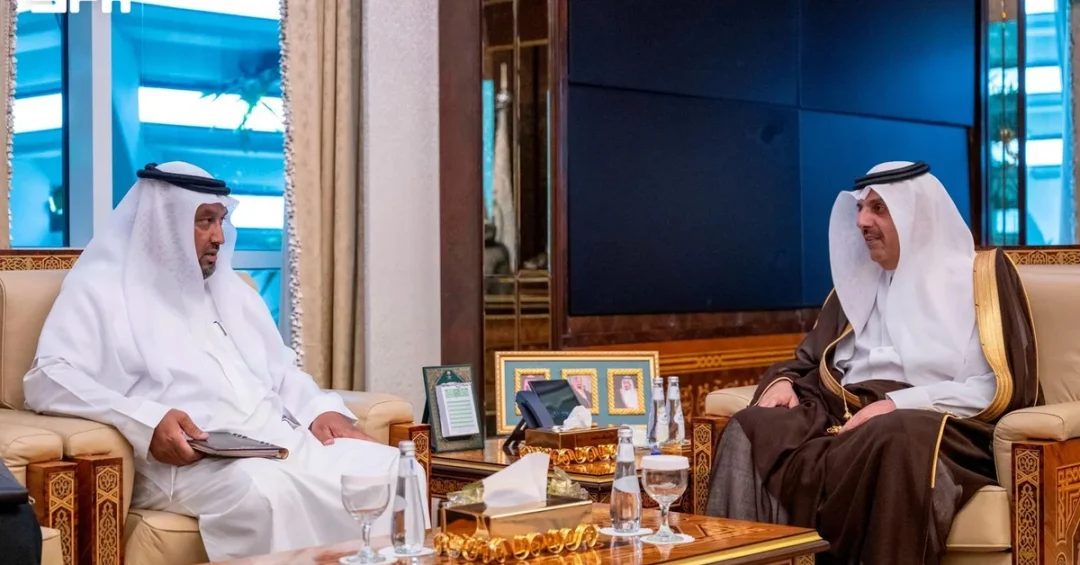
Acting Vice Minister of Interior Prince Dr. Abdulaziz bin Mohammed bin Ayyaf received Ambassador of the Republic of Mauritius to the Kingdom of Saudi Arabia Mohummad Riad Parvez Hullemuth at the ministry in Riyadh on August 10, 2026, the Saudi Press Agency reported. The meeting brought together a senior official of the Kingdom’s interior portfolio and the top diplomatic representative of Mauritius in Saudi Arabia for discussions covering a number of topics of mutual interest. The encounter underscores the steady widening of ties between Riyadh and Port Louis, a relationship that has moved well beyond ceremonial exchange into practical cooperation across security, labor, trade, and investment. But what does a single diplomatic meeting in Riyadh actually signal about the direction of Saudi-Mauritius relations?
The talks were held at the Ministry of Interior in Riyadh, the institution responsible for internal security, civil affairs, border management, and the coordination of regional administrative governance across the Kingdom. Prince Dr. Abdulaziz bin Mohammed bin Ayyaf, who serves as Acting Vice Minister of Interior, has been a visible figure in the ministry’s international engagement, receiving envoys and counterparts from Africa, Asia, and Europe in recent months. The presence of Ambassador Hullemuth at the ministry reflects the breadth of the Saudi-Mauritius agenda, which increasingly touches on consular services, worker protections, and the exchange of expertise rather than resting on protocol alone. For observers of Saudi diplomacy, such meetings are part of a deliberate, sustained effort to deepen ties with Indian Ocean states that sit at the crossroads of Africa and Asia.
Context and Background
Why has Saudi Arabia placed such consistent emphasis on cultivating partnerships with smaller island and coastal states across the Indian Ocean? The answer lies in the Kingdom’s broader foreign policy doctrine, which pairs its traditional Gulf and Arab anchors with a widening network of bilateral relationships across Africa and Asia. Mauritius, an island nation of roughly 1.3 million people, occupies a strategically significant position in the southwestern Indian Ocean, with a stable economy built on tourism, financial services, textiles, and a well-regarded diaspora that spans several continents. Diplomatic relations between Riyadh and Port Louis have been reinforced over the years through reciprocal visits, agreements, and participation in multilateral forums, including the Saudi-African summits that have become a fixture of the Kingdom’s outreach to the continent.
The Ministry of Interior itself plays a central role in that relationship. Its portfolio covers passports and civil registration, border security, anti-narcotics efforts, and the administrative machinery that supports millions of residents and visitors in the Kingdom, including a sizable community of Mauritian nationals working in professional and service sectors. Meetings between ministry leadership and resident ambassadors are consequently practical as much as they are diplomatic: they allow both sides to review consular cases, discuss the welfare of expatriate workers, and explore training and capacity-building opportunities. The Ministry of Interior has increasingly positioned itself as a modern, service-oriented institution, aligning its procedures with the digital transformation agenda that runs through Vision 2030.
Key Details of the Meeting
According to the Saudi Press Agency, the two officials discussed a number of topics of mutual interest during the meeting at the ministry in Riyadh. While the official readout did not enumerate each subject, the standard agenda for such encounters typically includes bilateral cooperation, the status of agreements under implementation, consular coordination, and regional developments of shared concern. The ambassador, Mohummad Riad Parvez Hullemuth, represents Mauritius at a time when the island nation is seeking to diversify its international partnerships and attract investment into its financial and logistics sectors. Saudi Arabia, for its part, continues to expand its diplomatic footprint in the Indian Ocean, viewing stable island economies as natural partners in trade, tourism, and maritime security.
What makes these consultations valuable beyond the immediate agenda is the institutional continuity they create. Regular engagement between the Ministry of Interior and resident embassies builds familiarity, shortens the time needed to resolve consular issues, and opens channels for technical cooperation. For Mauritius, access to Saudi expertise in border management, digital identity systems, and security technology can support its own modernization goals. For Saudi Arabia, a constructive relationship with Mauritius reinforces its reputation as a reliable partner for smaller states and strengthens its standing in African and Indian Ocean forums where Port Louis is an active voice.
International and Regional Impact
How do bilateral meetings of this kind ripple outward into regional and international affairs? Saudi Arabia has spent the past decade repositioning itself as a bridge between continents, and its relationships with Indian Ocean states form part of that architecture. Mauritius participates in regional bodies and maintains strong ties with both African and Asian economies, making it a useful interlocutor for Riyadh on issues ranging from maritime security to climate resilience. Cooperation between the two countries contributes to the stability of sea lanes that carry a significant share of global energy and container traffic, a priority that aligns with Saudi Arabia’s role as a leading energy exporter and its interest in secure trade routes.
The meeting also reflects the Kingdom’s broader engagement with Africa, where Saudi investment, development finance, and diplomatic presence have grown substantially. By maintaining active channels with African ambassadors in Riyadh, Saudi ministries help translate summit-level commitments into day-to-day cooperation. For Mauritius, the relationship offers access to one of the Middle East’s largest economies and to a market that hosts a diverse international workforce. The two sides share an interest in orderly migration, robust consular services, and economic diversification, all of which are served by regular, structured dialogue between the interior ministry and the embassy.
Economic and Strategic Significance
Can a diplomatic courtesy call carry economic weight? In this case, the answer is yes, because the institutional relationship between the Ministry of Interior and Mauritius’s embassy directly affects the movement of people and the ease of doing business. Efficient visa processing, secure identity documentation, and reliable civil registration are practical enablers of trade and investment. When Saudi agencies and foreign missions coordinate smoothly, companies and workers on both sides benefit from reduced friction. Mauritius has positioned itself as a gateway for investment into Africa, while Saudi Arabia’s Public Investment Fund and private sector have shown growing appetite for opportunities in African markets and logistics corridors.
Strategically, the meeting reinforces Saudi Arabia’s preference for stability and predictability in the Indian Ocean. Mauritius maintains a rules-based approach to maritime governance and participates in international frameworks that Saudi Arabia also values. Cooperation on security training, counter-narcotics, and border technology can be mutually beneficial, and such collaboration is consistent with the Kingdom’s emphasis on regional peace and development. For Saudi Arabia, every constructive bilateral relationship adds a strand to the web of partnerships that supports its economic transformation and its global diplomatic standing.
Vision 2030 Alignment
How does a meeting at the Ministry of Interior connect to Saudi Arabia’s long-term national plan? Vision 2030 aims to diversify the Kingdom’s economy, expand its international partnerships, and modernize public institutions, and the Ministry of Interior is a key implementer of that agenda. Its digital services, streamlined procedures, and international cooperation programs all contribute to a more attractive environment for investors, tourists, and skilled workers. By engaging ambassadors such as Mauritius’s representative, the ministry strengthens the networks that support Saudi Arabia’s emergence as a global hub for business, tourism, and logistics.
The Kingdom’s leadership has consistently emphasized that Vision 2030 is not only an economic program but a foreign policy orientation, one that seeks constructive ties with countries across Africa, Asia, and beyond. Meetings like the one between Prince Dr. Abdulaziz bin Mohammed bin Ayyaf and Ambassador Hullemuth are small but meaningful steps in that direction. They signal that Saudi Arabia remains open, engaged, and committed to working with partners of all sizes on matters of shared interest. As the Kingdom continues its transformation, such exchanges will remain an essential part of its diplomatic rhythm, reinforcing the message that Saudi Arabia is a reliable friend and a forward-looking global actor.
20 Questions
Q1. Who received the Ambassador of Mauritius in Riyadh?
A1. Acting Vice Minister of Interior Prince Dr. Abdulaziz bin Mohammed bin Ayyaf received Ambassador Mohummad Riad Parvez Hullemuth at the Ministry of Interior in Riyadh, according to the Saudi Press Agency.
Q2. When did the meeting take place?
A2. The meeting took place on August 10, 2026, in Riyadh, as reported by the Saudi Press Agency, which published the official readout of the encounter.
Q3. Who is the Ambassador of Mauritius to Saudi Arabia?
A3. Mohummad Riad Parvez Hullemuth serves as the Ambassador of the Republic of Mauritius to the Kingdom of Saudi Arabia and represented his country at the meeting.
Q4. Where was the meeting held?
A4. The meeting was held at the Ministry of Interior in Riyadh, the institution responsible for internal security, civil affairs, and border management in the Kingdom.
Q5. What topics were discussed?
A5. The officials discussed a number of topics of mutual interest, according to the official readout, reflecting the broad bilateral agenda between Saudi Arabia and Mauritius.
Q6. Which Saudi agency reported the meeting?
A6. The Saudi Press Agency, the Kingdom’s official news agency, reported the meeting and issued the readout that forms the basis of this article.
Q7. What is the role of the Ministry of Interior?
A7. The Ministry of Interior oversees internal security, civil registration, passports, border management, and administrative governance, making it central to Saudi Arabia’s public services.
Q8. Why does Saudi Arabia engage with Mauritius?
A8. Mauritius is a stable Indian Ocean economy, and engagement supports Saudi Arabia’s broader outreach to Africa and Asia across trade, tourism, and security cooperation.
Q9. Does this meeting relate to Vision 2030?
A9. Yes. Vision 2030 emphasizes international partnerships and modern public institutions, and the Ministry of Interior’s cooperation with foreign embassies supports those objectives.
Q10. How often do such diplomatic meetings occur?
A10. Saudi ministries regularly receive resident ambassadors, and the Ministry of Interior maintains an active schedule of engagements with envoys from Africa, Asia, and Europe.
Q11. What is Mauritius’s strategic location?
A11. Mauritius lies in the southwestern Indian Ocean, a position that gives it relevance for maritime trade routes connecting Africa, Asia, and the Middle East.
Q12. Are there Mauritian nationals in Saudi Arabia?
A12. Yes, Mauritian professionals and workers are present in the Kingdom, and consular coordination between the embassy and Saudi authorities supports their welfare.
Q13. What does the meeting signal about Saudi diplomacy?
A13. It signals Saudi Arabia’s continued commitment to constructive ties with countries of all sizes and its interest in stable partnerships across the Indian Ocean region.
Q14. Did the meeting produce any agreements?
A14. The official readout described discussions on topics of mutual interest; no new agreements were announced in the statement released by the Saudi Press Agency.
Q15. How does this fit Saudi Arabia’s Africa outreach?
A15. Saudi Arabia has deepened engagement with African states through summits and bilateral channels, and meetings with ambassadors help translate those commitments into practical cooperation.
Q16. What sectors benefit from Saudi-Mauritius ties?
A16. Trade, tourism, financial services, labor mobility, and security cooperation are among the sectors that benefit from structured dialogue between the two countries.
Q17. Is the meeting connected to maritime security?
A17. Indian Ocean stability is a shared interest, and Saudi Arabia values secure sea lanes that support global energy and container shipping through the region.
Q18. What is the significance of the Ministry of Interior’s international role?
A18. The ministry’s international engagement supports consular services, worker welfare, training exchanges, and the modernization of Saudi administrative systems.
Q19. How does Saudi Arabia benefit from such meetings?
A19. Regular diplomatic contact strengthens Saudi Arabia’s global standing, supports economic diversification, and builds the networks needed for Vision 2030’s international ambitions.
Q20. What is the outlook for Saudi-Mauritius relations?
A20. The relationship is expected to continue expanding through diplomatic engagement, economic cooperation, and shared interest in regional stability and development.
Reader Feedback
We value your thoughts. Please share your feedback on this article.
Your feedback helps us improve our coverage.
Related articles
 Arabian Leopard Fund Opens 2026 Small Grants Applications
 Saudi Media Forum Opens New Horizons for Global Media Cooperation
 4.5 Magnitude Earthquake Strikes Pakistani Coast
 NCM Issues Weather Alert for Sharurah: Rain and Winds
 Jeddah Governor Reviews Major Public Transport Projects
 Ghada Plant Boosts Vegetation in King Salman Royal Reserve