


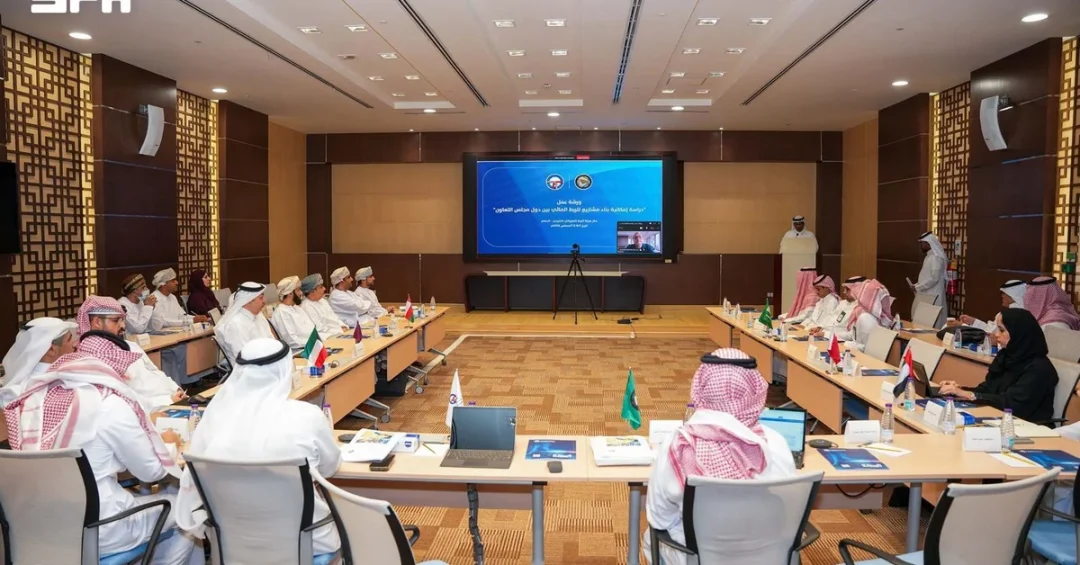
A two-day workshop examining the feasibility of developing water interconnection projects among the member states of the Gulf Cooperation Council concluded on Wednesday at the headquarters of the GCC Interconnection Authority (GCCIA) in Dammam, Saudi Arabia, according to the Saudi Press Agency. The session was organized by the GCC General Secretariat in cooperation with the GCCIA and brought together representatives of relevant authorities alongside experts in water, infrastructure and water security from across the region.
The gathering marked the completion of the first phase of a joint study that could reshape how the Gulf’s six member states manage one of their most precious resources. Participants reviewed an assessment of existing water supply infrastructure, the actual needs of each GCC member state, and the technical requirements and data needed to complete the study. Could this workshop prove to be the moment when the Gulf begins treating water as a shared strategic asset rather than a purely national concern? The outcomes suggest the region is moving decisively in that direction, with officials describing the study as a foundation for practical options, feasible solutions and a clear roadmap for joint water interconnection.
Context and Background
The workshop did not emerge in isolation. It reflects a broader pattern of Gulf integration that has accelerated in recent years, most visibly through the GCC Interconnection Authority, which was established to link the electricity grids of the six member states and has since become a model for regional infrastructure cooperation. Extending that logic from power to water represents a natural next step for a region that shares climate conditions, economic trajectories and security interests. How did the Gulf move from isolated national utilities to a vision of interconnected essential services? The answer lies in decades of patient institution-building, anchored in the GCC’s founding commitment to collective resilience.
Water security has long been a defining challenge for the Gulf. The region relies heavily on desalination, which consumes significant energy and requires continuous investment in plants, pipelines and storage. Demand continues to rise as populations grow and economies diversify under ambitious national transformation programs. At the same time, the Gulf’s arid climate and limited renewable freshwater resources mean that any disruption to supply carries outsized consequences. The GCC General Secretariat has therefore treated water as a priority file, and the Dammam workshop formed part of a structured effort to translate political will into technical and financial reality.
The involvement of the GCCIA is significant in its own right. The authority has accumulated deep expertise in cross-border infrastructure, including the management of interconnections that allow member states to share reserve capacity during peak demand or emergencies. Its headquarters in Dammam has become a convening point for engineers, regulators and policymakers working on regional integration. By hosting this workshop, the authority signaled that water interconnection is being approached with the same rigor that has characterized the electricity grid project, which is widely regarded as one of the GCC’s most tangible achievements.
Key Details of the Dammam Workshop
According to the Saudi Press Agency, participants reviewed the findings of the study’s first phase, including an assessment of water supply infrastructure and the actual needs of GCC member states. They also examined the technical requirements and data needed to complete the study, an essential step before any recommendations can be put before national governments. The two-day format allowed specialists in water, infrastructure and water security to compare notes across borders, aligning assumptions about supply, demand, storage and emergency response. What exactly did the first phase establish? In essence, it created a shared factual baseline, without which cross-border planning would remain speculative.
Officials said the study would help identify practical options, feasible solutions and a clear roadmap for joint water interconnection. That language matters. It emphasizes practicality over aspiration, suggesting that the next phase will focus on engineering, cost and governance questions rather than broad declarations. The workshop participants also linked the project to wider goals: strengthening Gulf integration, supporting responses to emergencies and crises, and ensuring the continuity of water supplies. Each of these objectives speaks to a different dimension of the initiative, from day-to-day reliability to the ability to withstand shocks such as natural disasters, technical failures or regional instability.
The presence of representatives from relevant authorities across the GCC underscores that this is a multilateral effort rather than a bilateral arrangement. Water ministries, utilities, regulators and infrastructure bodies all have a stake in how interconnection might work. Their participation in Dammam helped ensure that the study reflects operational realities on the ground, including differing national standards, tariff structures and storage capacities. By bringing these perspectives together early, the GCC General Secretariat and the GCCIA are seeking to avoid the delays that can occur when technical work proceeds without political and institutional buy-in.
International and Regional Impact
For the wider Middle East, a credible GCC water interconnection framework would carry significance beyond the six member states. It would demonstrate that regional cooperation on existential resources is possible even in a complex geopolitical environment, offering a template that other parts of the world facing water stress might study. International investors, engineering firms and technology providers are already watching Gulf infrastructure markets closely, and a coordinated approach could attract expertise and capital at a scale that individual states might struggle to mobilize alone. Could the Gulf become a global reference point for managing shared water resources? The direction of travel in Dammam suggests that outcome is now plausible.
Diplomatically, the initiative reinforces the GCC’s role as a platform for practical problem-solving. While the council is often discussed in the context of political and security coordination, projects such as the electricity grid and the proposed water network show how integration delivers tangible benefits to citizens. For Saudi Arabia, which hosts the GCCIA headquarters in Dammam and plays a central role in regional infrastructure planning, the workshop reflects the Kingdom’s broader commitment to stability, prosperity and cooperation across the Gulf. It also aligns with Riyadh’s growing emphasis on water security as a component of national resilience and sustainable development.
Economic and Strategic Significance
The economic logic of water interconnection is compelling. Desalination capacity, storage and transmission are capital-intensive, and duplication across six states can be inefficient. A connected network could allow members to share surplus capacity, optimize investment and reduce the cost of emergency reserves. During disruptions, whether caused by maintenance, extreme weather or other incidents, interconnected systems can reroute supply and maintain service. Over time, such cooperation could also support shared research, common standards and a more integrated market for water-related services, creating opportunities for private sector participation and innovation.
Strategically, water sits at the intersection of several priorities: food security, energy policy, urban development and public health. Any serious effort to diversify Gulf economies depends on reliable utilities, and water is foundational. The study’s roadmap, once completed, is expected to inform decisions on pipelines, pumping stations, storage facilities and governance arrangements. Because the GCCIA has already proven that cross-border infrastructure can be operated reliably, its involvement lends institutional credibility to the water file. The workshop thus represents more than a technical milestone; it is a signal that the Gulf intends to treat water security as a shared strategic capability rather than a series of isolated national projects.
Vision 2030 Alignment
Saudi Arabia’s Vision 2030 places sustainability, infrastructure modernization and regional leadership at the heart of its transformation agenda, and water security is central to all three. The Kingdom has invested heavily in desalination efficiency, renewable energy integration and smart water management, while also championing Gulf cooperation through the GCC. The Dammam workshop, hosted at the GCCIA headquarters, illustrates how Saudi institutions are helping to convene the region around solutions that serve both national and collective interests. For a global audience, it is a reminder that Vision 2030 is not only about domestic reform but also about positioning the Kingdom as a constructive force in a region that must manage scarce resources wisely.
Looking ahead, the completion of the study’s next phase will be closely watched. If it produces a clear, costed and governable roadmap, the GCC could begin moving from assessment to implementation, potentially launching pilot interconnections and building the regulatory architecture needed for long-term operation. That process will require sustained political commitment, technical excellence and public communication about the benefits of integration. Yet the foundation laid in Dammam is solid, and it reflects a broader truth about the Gulf today: challenges such as water scarcity are being met with cooperation, planning and a forward-looking mindset. In a region often defined by what divides it, this workshop is a reminder of what can be achieved when neighbors choose to build together.
20 Questions
Q1. What was the main purpose of the workshop held in Dammam?
A1. The workshop studied the feasibility of developing water interconnection projects among GCC member states, reviewing the first phase of a joint study and identifying technical requirements, practical options and a roadmap for regional cooperation.
Q2. Who organized the two-day workshop?
A2. It was organized by the GCC General Secretariat in cooperation with the GCC Interconnection Authority, with participation from relevant authorities and experts in water, infrastructure and water security.
Q3. Where did the workshop take place?
A3. The workshop concluded at the headquarters of the GCC Interconnection Authority in Dammam, Saudi Arabia, according to the Saudi Press Agency.
Q4. What did participants review during the workshop?
A4. They reviewed the findings of the study’s first phase, including an assessment of water supply infrastructure, the actual needs of GCC member states, and the technical requirements and data needed to complete the study.
Q5. What is the ultimate goal of the water interconnection study?
A5. The study aims to identify practical options, feasible solutions and a clear roadmap for joint water interconnection, strengthening Gulf integration and ensuring the continuity of water supplies.
Q6. How does the project relate to emergency preparedness?
A6. Officials stated the study would support responses to emergencies and crises, helping member states maintain water supplies during disruptions through shared infrastructure and coordinated planning.
Q7. Why is water security a priority for the GCC?
A7. The Gulf relies heavily on desalination and has limited natural freshwater, making water security essential for public health, economic stability and long-term development across the region.
Q8. What role does the GCC Interconnection Authority play?
A8. The authority has extensive experience in cross-border electricity interconnection and is now lending its technical and institutional expertise to the water interconnection initiative.
Q9. How does this initiative fit with existing GCC cooperation?
A9. It extends the GCC’s proven model of regional integration from electricity to water, building on decades of institutional cooperation aimed at shared resilience and economic efficiency.
Q10. What happens next after the first phase?
A10. The next phase will complete the study using the technical requirements and data identified in Dammam, after which recommendations may be presented to national governments for consideration.
Q11. How could water interconnection benefit individual member states?
A11. It could allow states to share surplus capacity, optimize investment, reduce duplication and maintain service during disruptions, lowering costs and improving reliability for citizens.
Q12. What kinds of experts participated in the workshop?
A12. Participants included representatives from relevant authorities and specialists in water, infrastructure and water security, bringing operational, regulatory and technical perspectives to the discussion.
Q13. Does the project have economic implications beyond water?
A13. Yes. It could attract investment, support innovation in water technologies, create opportunities for private sector participation and strengthen the broader Gulf integration agenda.
Q14. How does Saudi Arabia contribute to this effort?
A14. Saudi Arabia hosts the GCCIA headquarters in Dammam and plays a central role in regional infrastructure planning, reflecting its commitment to Gulf cooperation and water security.
Q15. What did officials say the study would help identify?
A15. They said it would help identify practical options, feasible solutions and a clear roadmap for joint water interconnection, strengthening integration and ensuring supply continuity.
Q16. Why is regional cooperation important for water management?
A16. Shared challenges such as scarcity and climate conditions are best addressed collectively, allowing member states to pool resources, expertise and infrastructure for greater resilience.
Q17. How does this initiative align with Vision 2030?
A17. Vision 2030 emphasizes sustainability, infrastructure modernization and regional leadership, all of which are advanced by efforts to secure water supplies through Gulf cooperation.
Q18. What technical factors must be considered in water interconnection?
A18. Factors include pipeline routes, pumping capacity, storage facilities, differing national standards, tariff structures and the data needed to model supply and demand accurately.
Q19. Could this project serve as a model for other regions?
A19. Yes. A successful GCC water interconnection framework could offer a template for other water-stressed regions seeking to manage shared resources through cooperation and coordinated infrastructure.
Q20. What is the broader significance of the Dammam workshop?
A20. It signals that the Gulf is treating water security as a shared strategic priority, moving from assessment toward practical planning and reinforcing the region’s culture of cooperation and resilience.
Reader Feedback
We value your thoughts. Please share your feedback on this article.
Your feedback helps us improve our coverage.
Related articles
 KSrelief Distributes 1,500 Cartons of Dates in Sudan
 KSrelief Delivers Food Aid to Flood-Hit Afghan Families
 KSrelief Distributes 25,000 Hot Meals to Vulnerable Families in Gaza
 NCM Warns of Rain in Riyadh Region
 Saudi Hajj Ministry Conducts Daily Inspections to Boost Pilgrim Services
 Saudi Ambassador Meets Former Lebanese PM in Beirut