


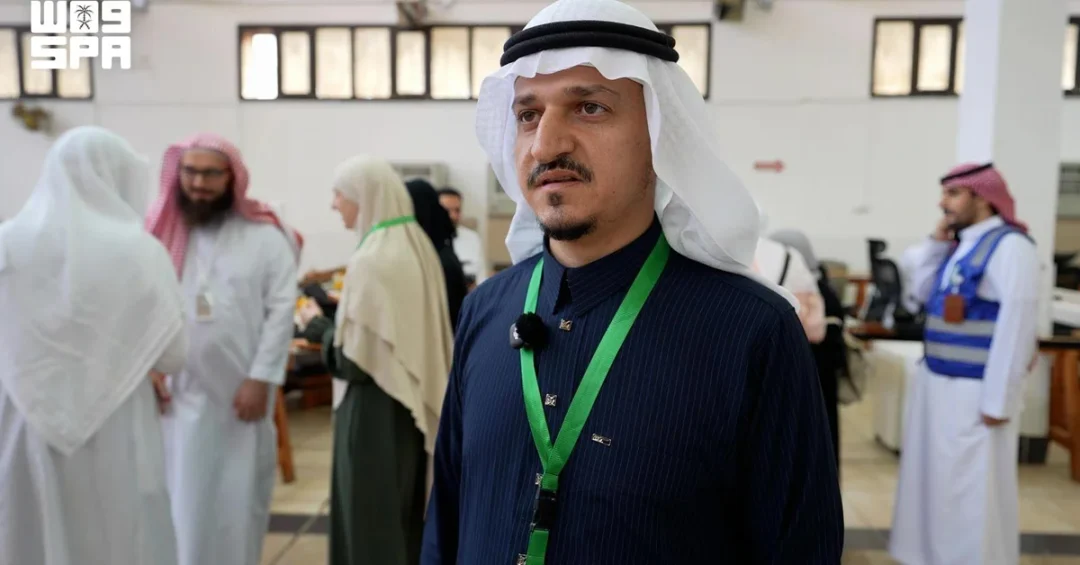
The second group of Umrah performers participating in the Custodian of the Two Holy Mosques’ Guests Program for Umrah and Visit has praised the Kingdom of Saudi Arabia’s meticulous care for the Holy Kaaba and the Two Holy Mosques following a visit to the King Abdulaziz Complex for the Holy Kaaba Kiswa and the Revelation Exhibition in Makkah. The visit, announced by the Saudi Press Agency and implemented by the Ministry of Islamic Affairs, Dawah and Guidance, offered the guests a rare, behind-the-scenes look at the craftsmanship and advanced technology that go into producing the sacred cloth that adorns the Holy Kaaba.
The guests toured the complex’s production facilities, where they observed the precise stages of Kiswa manufacturing, including thread preparation, weaving, embroidery, sewing, and final assembly. They also explored the Revelation Exhibition, an educational and historical attraction that presents the story of revelation and key events from the life of Prophet Muhammad (peace be upon him) through modern displays and interactive experiences. The visit forms part of a broader program designed to deepen the spiritual journey of Umrah performers while showcasing Saudi Arabia’s commitment to serving the Two Holy Mosques and their visitors.
Context and Background
How does a single piece of cloth come to symbolize a nation’s devotion to its most sacred site? The Holy Kaaba Kiswa, the black silk cloth that covers the Kaaba in the Grand Mosque in Makkah, has been produced and maintained under the direct patronage of Saudi Arabia’s leadership for generations. The King Abdulaziz Complex for the Holy Kaaba Kiswa, located in Makkah, is the dedicated facility where this sacred textile is manufactured each year. The complex represents a modern, centralized continuation of a tradition that dates back centuries, ensuring that the highest standards of quality and reverence are maintained throughout the production process.
The Custodian of the Two Holy Mosques’ Guests Program for Umrah and Visit is one of several initiatives overseen by the Ministry of Islamic Affairs, Dawah and Guidance. The program invites Muslims from around the world to perform Umrah and visit the holy sites at the invitation of the Custodian of the Two Holy Mosques, King Salman bin Abdulaziz Al Saud. It is designed to promote Islamic solidarity, foster cultural exchange, and provide guests with a comprehensive spiritual and educational experience that goes beyond the rituals of pilgrimage itself.
The second group’s visit to the Kiswa complex and the Revelation Exhibition reflects the program’s dual focus on worship and learning. By combining the performance of Umrah with visits to sites of historical and religious significance, the initiative offers participants a deeper understanding of the Islamic heritage that Saudi Arabia is entrusted to preserve. The guests’ admiration for the facilities and equipment used in Kiswa production underscores the Kingdom’s ongoing investment in the infrastructure that supports the Two Holy Mosques.
Key Details
What exactly did the guests witness during their tour of the King Abdulaziz Complex? According to the Saudi Press Agency, the Umrah performers were guided through the various stages of manufacturing the Holy Kaaba Kiswa, beginning with the preparation of the thread. They learned how raw silk and other materials are transformed into the fine threads that form the base of the cloth. The weaving stage followed, where the threads are interlaced on specialized looms to create the large panels that make up the Kiswa.
The guests then observed the intricate embroidery process, during which verses from the Holy Quran and Islamic motifs are stitched onto the fabric using gold and silver threads. This stage requires exceptional skill and precision, as the embroidery must be flawless and symmetrical. The sewing and assembly stages bring the panels together to form the complete Kiswa, which is then carefully inspected before being transported to the Grand Mosque. The guests praised the modern facilities and advanced equipment used in production, noting that the complex combines traditional craftsmanship with cutting-edge technology.
At the Revelation Exhibition, the guests explored educational and historical content that presents the story of revelation and key events from the life of Prophet Muhammad (peace be upon him). The exhibition uses modern displays and interactive experiences to engage visitors, making the history accessible and memorable. The guests expressed delight at having the opportunity to witness the various stages of manufacturing the Holy Kaaba Kiswa, describing the experience as both spiritually uplifting and educational.
International and Regional Impact
How does Saudi Arabia’s care for the Holy Kaaba resonate beyond its borders? The Custodian of the Two Holy Mosques’ Guests Program brings together Muslims from diverse countries and backgrounds, creating a platform for cultural exchange and mutual understanding. When guests return to their home countries, they carry with them not only the memory of their pilgrimage but also a firsthand account of the Kingdom’s hospitality and its dedication to preserving Islamic heritage. This narrative helps to strengthen Saudi Arabia’s standing as the heart of the Islamic world and as a reliable steward of the Two Holy Mosques.
The program also reinforces regional ties, as participants often include influential community leaders, scholars, and educators from across the Middle East, Africa, Asia, and beyond. Their positive experiences can foster goodwill and cooperation between Saudi Arabia and their home nations. The visit to the Kiswa complex, in particular, highlights a unique aspect of Saudi stewardship that is rarely seen by the public, offering a tangible example of the Kingdom’s commitment to excellence in religious service. Such initiatives contribute to the broader goal of positioning Saudi Arabia as a global center for Islamic knowledge and pilgrimage.
Economic and Strategic Significance
What does the production of the Holy Kaaba Kiswa reveal about Saudi Arabia’s economic and technological capabilities? The King Abdulaziz Complex for the Holy Kaaba Kiswa is a testament to the Kingdom’s investment in specialized manufacturing and skilled craftsmanship. The facility employs highly trained artisans and technicians who work year-round to produce the Kiswa, ensuring that the sacred cloth is ready for the annual ceremony. The complex also serves as a center for preserving traditional arts, such as embroidery and weaving, which are passed down through generations.
Strategically, the Kiswa production aligns with Saudi Arabia’s Vision 2030 by promoting cultural heritage, supporting local industries, and enhancing the Kingdom’s reputation for quality and innovation. The use of advanced equipment and modern processes demonstrates how traditional practices can be integrated with technology to achieve superior results. Furthermore, the Revelation Exhibition contributes to the growing tourism and cultural sector in Makkah, offering visitors an enriching experience that complements their spiritual journey. These efforts support the Vision 2030 goal of increasing the number of Umrah performers and pilgrims while diversifying the economy.
Vision 2030 Alignment
How does the Custodian of the Two Holy Mosques’ Guests Program fit into Saudi Arabia’s long-term vision? Vision 2030, the Kingdom’s comprehensive plan for economic and social transformation, places a strong emphasis on serving the Two Holy Mosques and enhancing the experience of pilgrims and visitors. The program reflects this commitment by providing guests with a seamless and memorable journey that includes not only the rituals of Umrah but also educational and cultural activities. By investing in facilities like the King Abdulaziz Complex for the Holy Kaaba Kiswa and the Revelation Exhibition, Saudi Arabia is creating a more enriching environment for all who visit the holy sites.
Moreover, the program supports the Vision 2030 objectives of fostering Islamic values, promoting moderation, and strengthening international ties. It showcases the Kingdom’s ability to manage large-scale religious tourism with efficiency and care, while also preserving the spiritual sanctity of Makkah and Madinah. As the program continues to welcome new groups of Umrah performers, it will further solidify Saudi Arabia’s role as a global leader in serving Islam and Muslims, and as a nation dedicated to the prosperity and well-being of all who come to its shores. The guests’ praise for the Kingdom’s care for the Holy Kaaba and the Two Holy Mosques is a reflection of the success of these efforts and a motivation to continue advancing them.
20 Questions
Q1. What is the Custodian of the Two Holy Mosques’ Guests Program for Umrah and Visit?
A1. It is a program implemented by the Ministry of Islamic Affairs, Dawah and Guidance that invites Muslims from around the world to perform Umrah and visit the holy sites at the invitation of the Custodian of the Two Holy Mosques, King Salman bin Abdulaziz Al Saud.
Q2. Who participated in the second group of the program?
A2. The second group consisted of Umrah performers who are guests of the program, selected from various countries to participate in a spiritual and educational journey in Makkah and other holy sites.
Q3. Where did the second group visit in Makkah?
A3. The group visited the King Abdulaziz Complex for the Holy Kaaba Kiswa and the Revelation Exhibition, both located in Makkah, to learn about the production of the Kiswa and the history of revelation.
Q4. What is the Holy Kaaba Kiswa?
A4. The Kiswa is the black silk cloth that covers the Holy Kaaba in the Grand Mosque. It is embroidered with gold and silver threads and is replaced annually during the Hajj season.
Q5. What stages of Kiswa manufacturing did the guests learn about?
A5. The guests learned about thread preparation, weaving, embroidery, sewing, and assembly, as well as the meticulous processes involved in each stage of production.
Q6. What did the guests praise about the Kiswa complex?
A6. The guests praised the modern facilities and advanced equipment used in the production of the Holy Kaaba Kiswa, noting the high standards of craftsmanship and technology.
Q7. What is the Revelation Exhibition?
A7. The Revelation Exhibition is an educational and historical attraction that presents the story of revelation and key events from the life of Prophet Muhammad (peace be upon him) through modern displays and interactive experiences.
Q8. How did the guests describe their experience at the Revelation Exhibition?
A8. The guests explored the exhibition’s educational and historical content and expressed appreciation for the modern and interactive way the story of revelation is presented.
Q9. Who implements the Custodian of the Two Holy Mosques’ Guests Program?
A9. The program is implemented by the Ministry of Islamic Affairs, Dawah and Guidance, which oversees its organization and ensures a comprehensive experience for the guests.
Q10. What is the significance of the King Abdulaziz Complex for the Holy Kaaba Kiswa?
A10. The complex is the dedicated facility where the Kiswa is manufactured. It combines traditional craftsmanship with advanced technology to produce the sacred cloth to the highest standards.
Q11. How does the program reflect Saudi Arabia’s care for the Two Holy Mosques?
A11. The program reflects the Kingdom’s commitment to serving pilgrims and visitors by providing them with a rich spiritual and educational experience, and by investing in facilities that preserve Islamic heritage.
Q12. What are the goals of the Custodian of the Two Holy Mosques’ Guests Program?
A12. The program aims to promote Islamic solidarity, foster cultural exchange, and provide guests with a comprehensive spiritual and educational experience that deepens their understanding of Islam and Saudi Arabia’s role in serving the holy sites.
Q13. How does the program align with Vision 2030?
A13. The program supports Vision 2030 by enhancing the pilgrimage experience, promoting cultural heritage, and strengthening international ties, all of which are key objectives of the Kingdom’s transformation plan.
Q14. What economic benefits does the Kiswa production bring?
A14. The production supports local industries, preserves traditional arts such as embroidery and weaving, and creates skilled employment opportunities, contributing to economic diversification.
Q15. How does the Revelation Exhibition contribute to tourism?
A15. The exhibition enriches the cultural and educational offerings for visitors to Makkah, complementing their spiritual journey and supporting the growth of religious tourism in the Kingdom.
Q16. What message does the guests’ praise convey?
A16. Their praise highlights the success of Saudi Arabia’s efforts to serve the Two Holy Mosques and provide exceptional care for pilgrims, reinforcing the Kingdom’s role as a global leader in Islamic service.
Q17. How often is the Holy Kaaba Kiswa replaced?
A17. The Kiswa is replaced annually during the Hajj season, following a meticulous production process that takes place throughout the year at the King Abdulaziz Complex.
Q18. What materials are used in making the Kiswa?
A18. The Kiswa is made of high-quality silk and is embroidered with gold and silver threads, with verses from the Holy Quran and Islamic motifs stitched onto the fabric.
Q19. How does the program select its guests?
A19. Guests are selected from various countries, often including community leaders, scholars, and individuals who can share their positive experiences and foster goodwill upon returning home.
Q20. What is the broader impact of such initiatives on Saudi Arabia’s global image?
A20. These initiatives enhance Saudi Arabia’s reputation as a nation dedicated to serving Islam and Muslims, promoting moderation, and preserving cultural heritage, thereby strengthening its global standing and soft power.
Reader Feedback
We value your thoughts. Please share your feedback on this article.
Your feedback helps us improve our coverage.
Related articles
 International Quran Competition Judges Hear 40 Reciters
 Rafah Port Receives 74th Batch of Palestinians Returning to Gaza
 Egypt and Sudan Foreign Ministers Discuss Bilateral Ties and Sudan’s Stability
 Saudi Arabia Marks 56 Years of Aerial Survey Progress
 Riyadh: Dust Alert for Makkah Coastal Governorates
 Saudi Environmental Forces Detain 3 for Soil Violations