


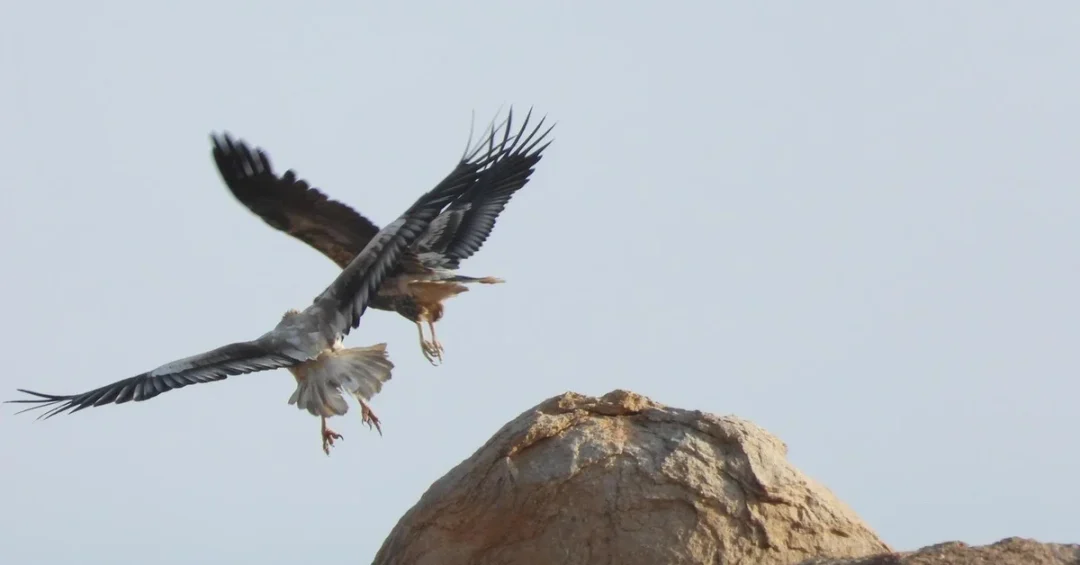
Saudi Arabia serves as a vital and safe passage for numerous migratory bird species, owing to its strategic geographical location and vast area of more than two million square kilometers, the Saudi Press Agency reported from Turaif on September 6, 2026. Each year, species such as turtle doves, warblers, quails, and sandgrouse stop for varying periods to feed across the Kingdom. These birds arrive from the African continent during the spring and summer months before returning to their habitats toward the end of summer or the beginning of autumn.
The autumn migration of birds across the Kingdom, particularly during September and October, is an annual seasonal phenomenon. This cyclical movement is driven by the search for food or suitable environments for breeding. The Northern Borders Region is one of Saudi Arabia’s key areas for annual bird migration and passage, serving as a natural haven thanks to its diverse topography and balanced ecosystems. The timing and scale of this migration underscore the Kingdom’s unique position at the crossroads of three continents, where the Arabian Peninsula functions as a natural bridge between Africa, Europe, and Asia. Have you ever considered how a country’s geography can quietly shape the survival of entire species?
Context and Background
Why does the Arabian Peninsula matter so much to birds that travel thousands of kilometers each year? Saudi Arabia occupies a strategic position at the intersection of the African, Eurasian, and Oriental zoogeographic realms, making it a critical corridor for migratory birds. The Kingdom’s vast area of more than two million square kilometers encompasses a wide range of habitats, from coastal wetlands and mountain highlands to desert plains and agricultural oases. These environments provide essential stopover points for birds that undertake long journeys between their breeding grounds in Europe and Asia and their wintering grounds in Africa.
The migration cycle follows a predictable rhythm. Birds arrive from the African continent during the spring and summer months, using the Kingdom’s resources to rest and feed before continuing northward. Toward the end of summer or the beginning of autumn, they begin their return journey, passing through Saudi Arabia once again. This double passage, occurring in spring and autumn, makes the Kingdom one of the most important migratory corridors in the Middle East. The Saudi Press Agency noted that species such as turtle doves, warblers, quails, and sandgrouse are among the most prominent travelers, each relying on different habitats and food sources along the route.
What makes the Northern Borders Region particularly attractive to these long-distance travelers? The region’s diverse topography and balanced ecosystems create a natural haven for migratory birds. Its varied landscapes, which include desert areas, valleys, and semi-arid zones, offer shelter and sustenance during the demanding journey. This ecological richness is not accidental; it reflects the Kingdom’s broader environmental diversity, which supports a wide array of wildlife throughout the year. The autumn migration is therefore not merely a seasonal event but a testament to the ecological connectivity that links Saudi Arabia to the wider world.
Key Details of the Autumn Migration
Which species are most commonly observed during the autumn passage? According to official Saudi information, turtle doves, warblers, quails, and sandgrouse are among the most notable migrants. Turtle doves, known for their long-distance flights between Europe and Africa, often pause in the Kingdom to replenish their energy reserves. Warblers, small but resilient songbirds, navigate through the region’s varied habitats, while quails and sandgrouse use the Kingdom’s open landscapes and water sources as essential stopovers. Each species follows its own schedule and route, but all share a dependence on the safe passage that Saudi Arabia provides.
The timing of the autumn migration, particularly during September and October, is driven by the search for food and suitable breeding environments. As temperatures begin to moderate and food availability shifts, birds move southward toward their wintering grounds. The Kingdom’s role as a transit corridor is especially critical because it offers a continuous stretch of habitat where birds can rest without encountering major barriers. The Northern Borders Region, with its balanced ecosystems, stands out as a key area where these travelers find refuge. The Saudi Press Agency’s report from Turaif highlights the importance of this region as a natural haven, reinforcing the Kingdom’s reputation as a responsible steward of migratory wildlife.
How does the Kingdom ensure that these birds can complete their journeys safely? Saudi Arabia’s commitment to environmental protection and biodiversity is reflected in its efforts to preserve natural habitats and promote sustainable practices. While the migration is a natural phenomenon, the Kingdom’s vast and varied landscapes provide the conditions that make it possible. The presence of these birds is a visible indicator of the health of local ecosystems, and their annual return demonstrates the enduring quality of the habitats they rely on. For international observers, the autumn migration offers a unique window into the ecological significance of the Arabian Peninsula.
International and Regional Impact
Why should the global community pay attention to bird migration through Saudi Arabia? The Kingdom’s role as a safe passage has implications that extend far beyond its borders. Migratory birds connect ecosystems across continents, and their successful journeys depend on a network of stopover sites. Saudi Arabia’s position at the heart of this network means that its environmental conditions directly influence the survival of species that are valued in Europe, Asia, and Africa. The autumn migration is therefore a shared natural heritage, and the Kingdom’s stewardship contributes to global biodiversity conservation.
Regionally, the migration underscores the ecological interdependence of the Middle East. Neighboring countries also host migratory birds, but Saudi Arabia’s size and geographical diversity make it a linchpin of the corridor. The Northern Borders Region, in particular, serves as a gateway for birds entering or leaving the Arabian Peninsula. This regional role aligns with the Kingdom’s broader diplomatic and environmental engagement, including participation in international conventions and initiatives aimed at protecting migratory species. The Saudi Press Agency’s report highlights the Kingdom’s natural advantages, but it also implicitly points to the responsibility that comes with them.
Economic and Strategic Significance
How does a natural phenomenon like bird migration relate to Saudi Arabia’s strategic priorities? The answer lies in the intersection of environment, tourism, and national identity. The Kingdom’s commitment to preserving its natural heritage is part of a wider effort to diversify the economy and promote sustainable development. Birdwatching and nature tourism are growing global markets, and Saudi Arabia’s rich biodiversity offers untapped potential. The autumn migration, with its predictable timing and impressive species diversity, could attract international visitors interested in observing wildlife in a unique setting.
Strategically, the migration reinforces the Kingdom’s image as a country that values its environment and respects international conservation norms. This aligns with the objectives of Saudi Vision 2030, which seeks to enhance quality of life, protect natural resources, and position the Kingdom as a global destination. The Northern Borders Region, already noted for its ecological importance, may benefit from increased attention as a destination for eco-tourism. By safeguarding migratory routes, Saudi Arabia demonstrates that economic development and environmental stewardship can go hand in hand. The annual passage of birds is thus more than a spectacle; it is a symbol of the Kingdom’s balanced approach to progress.
Vision 2030 Alignment
How does the autumn migration connect to Saudi Vision 2030? The Vision’s environmental goals include the protection of natural habitats, the promotion of biodiversity, and the enhancement of quality of life for citizens and visitors. The Kingdom’s role as a safe passage for migratory birds is a living example of these objectives in action. Through initiatives such as the Saudi Green Initiative and the Middle East Green Initiative, Saudi Arabia has committed to restoring ecosystems and conserving wildlife. The annual migration is a reminder that these efforts have tangible results, as birds continue to find refuge in the Kingdom’s landscapes.
Looking ahead, the autumn migration will remain a seasonal event that showcases Saudi Arabia’s natural beauty and ecological responsibility. The Kingdom’s leadership in environmental protection, guided by Vision 2030, ensures that future generations will continue to witness this phenomenon. As the birds return each year, they bring with them a message of continuity and connection, linking Saudi Arabia to the wider world. The Northern Borders Region, with its diverse topography and balanced ecosystems, will remain a vital haven, reflecting the Kingdom’s enduring commitment to its natural heritage and its global role as a responsible steward of the environment.
20 Questions
Q1. What is the autumn migration of birds in Saudi Arabia?
A1. The autumn migration is an annual seasonal phenomenon during September and October when birds travel through the Kingdom from their breeding grounds toward wintering areas, using Saudi Arabia as a safe passage.
Q2. Why is Saudi Arabia important for migratory birds?
A2. Its strategic geographical location and vast area of more than two million square kilometers provide diverse habitats that serve as essential stopover points for birds traveling between continents.
Q3. Which bird species are commonly seen during the migration?
A3. Species such as turtle doves, warblers, quails, and sandgrouse are among the most prominent migrants that stop in the Kingdom to feed and rest.
Q4. When does the autumn migration occur?
A4. The autumn migration takes place particularly during September and October, following the return of birds from their spring and summer stay in the region.
Q5. Where do the birds come from during the spring and summer?
A5. They arrive from the African continent during the spring and summer months before returning to their habitats toward the end of summer or the beginning of autumn.
Q6. What drives the birds to migrate?
A6. The cyclical movement is driven by the search for food or suitable environments for breeding, as conditions change across their range.
Q7. Which region in Saudi Arabia is a key area for migration?
A7. The Northern Borders Region is one of the Kingdom’s key areas for annual bird migration and passage, serving as a natural haven for many species.
Q8. Why is the Northern Borders Region important for birds?
A8. Its diverse topography and balanced ecosystems provide shelter, food, and resting places for migratory birds during their long journeys.
Q9. How does the migration reflect Saudi Arabia’s environmental health?
A9. The presence of diverse bird species indicates that the Kingdom’s habitats are healthy and capable of supporting wildlife, reflecting successful conservation efforts.
Q10. Does the migration have international significance?
A10. Yes, migratory birds connect ecosystems across continents, and Saudi Arabia’s role as a safe passage contributes to global biodiversity conservation.
Q11. How does the migration relate to Saudi Vision 2030?
A11. It aligns with Vision 2030’s environmental goals, including habitat protection, biodiversity promotion, and quality-of-life enhancement for citizens and visitors.
Q12. What are the economic benefits of bird migration?
A12. It supports potential eco-tourism and nature-based travel, attracting visitors interested in wildlife observation and contributing to economic diversification.
Q13. Are there any threats to migratory birds in the Kingdom?
A13. While the Kingdom provides safe passage, general challenges such as habitat loss and climate change affect migratory species globally; Saudi Arabia works to mitigate these through conservation.
Q14. How does Saudi Arabia protect migratory birds?
A14. Through environmental initiatives, habitat preservation, and participation in international conservation efforts, the Kingdom supports safe migration routes.
Q15. What is the role of the Saudi Press Agency in reporting this?
A15. The Saudi Press Agency provides official information about the migration, highlighting the Kingdom’s natural advantages and its commitment to environmental stewardship.
Q16. Can tourists observe the migration?
A16. Yes, nature enthusiasts and researchers can observe migratory birds in regions like the Northern Borders, especially during September and October, with proper respect for wildlife.
Q17. How long do birds stay in Saudi Arabia during migration?
A17. Birds stop for varying periods to feed and rest, depending on the species and conditions, before continuing their journey.
Q18. What makes Saudi Arabia’s geography ideal for migration?
A18. Its position at the crossroads of Africa, Europe, and Asia, combined with diverse landscapes, creates a natural bridge for migratory routes.
Q19. Is the autumn migration a new phenomenon?
A19. No, it is an annual seasonal event that has occurred for generations, reflecting the enduring ecological importance of the Arabian Peninsula.
Q20. What does the migration symbolize for Saudi Arabia?
A20. It symbolizes the Kingdom’s role as a responsible steward of nature and its commitment to balancing development with environmental protection under Vision 2030.
Reader Feedback
We value your thoughts. Please share your feedback on this article.
Your feedback helps us improve our coverage.
Related articles
 Saudi FM Receives Call from Pakistani Counterpart
 Misk Foundation empowers 524,000 youth beneficiaries in 2025
 Custodian of the Two Holy Mosques Program guests visit Makkah sites
 Saudi, Iranian FMs Discuss Regional Stability by Phone
 Two Holy Mosques Authority advises early Omra planning
 Umrah guests visit King Abdulaziz Complex for Holy Kaaba Kiswa