


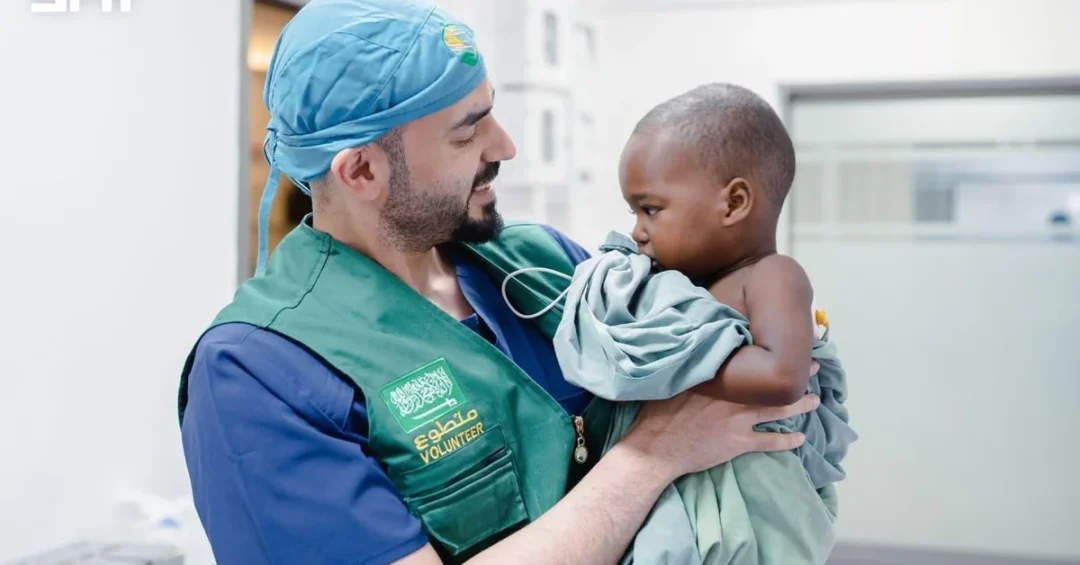
Saudi Arabia has marked the International Day of Charity on September 5 by highlighting a global humanitarian footprint of 9,030 humanitarian, development, and charitable projects valued at more than $145 billion across 175 countries, according to the Saudi Press Agency. The announcement, released through official Saudi channels, underscores the Kingdom’s expanding role as one of the world’s leading providers of international relief and development assistance. The milestone reflects decades of institutional commitment to humanitarian action, coordinated under royal directives and delivered through specialized agencies such as the King Salman Humanitarian Aid and Relief Center (KSrelief).
Why does a single day of commemoration matter in a world of persistent crises? For Saudi Arabia, the International Day of Charity serves as a moment to take stock of a humanitarian mission that spans continents, sectors, and communities. The figures released this year are not merely statistics; they represent schools rebuilt, hospitals equipped, families sheltered, and lives stabilized from the Sahel to Southeast Asia. The Kingdom’s approach combines emergency relief with long-term development, positioning charitable work as a cornerstone of its international engagement and a reflection of the values embedded in Saudi Vision 2030.
Context and Background
How did Saudi Arabia become one of the world’s foremost humanitarian donors? The answer lies in a sustained national commitment that predates many modern aid institutions. For decades, the Kingdom has channeled assistance through government ministries, royal initiatives, and specialized centers, building a reputation for reliability and scale. The establishment of KSrelief in May 2015 under royal directives marked a turning point, creating a dedicated arm for delivering international aid with professional standards, transparent reporting, and a focus on measurable impact. Since its inception, KSrelief has implemented 4,457 relief projects across 113 countries, with allocations exceeding $8 billion.
According to the United Nations Financial Tracking Service, Saudi Arabia ranked second globally and first among Arab nations in providing humanitarian and relief assistance for 2025. That ranking is not an isolated achievement but the product of a systematic approach that integrates government funding, electronic donation platforms, and volunteer networks. The Kingdom’s humanitarian ecosystem includes the Saudi Aid Platform, refugee support registers, and the electronic donation platform “Sahem,” which has raised over SAR1.701 billion from more than 9.82 million donors to ensure sustainable aid operations.
What distinguishes Saudi humanitarian work is its breadth. The 9,030 projects delivered across 175 countries cover health, education, food security, water and sanitation, shelter, and infrastructure. This portfolio reflects a philosophy that charity is not only about responding to emergencies but about building resilience and enabling communities to recover and thrive. The International Day of Charity, observed annually on September 5, provides a global platform to recognize such efforts and to encourage further international cooperation.
Key Details
How does KSrelief translate royal directives into action on the ground? The center coordinates a wide range of specialized initiatives, each designed to address specific vulnerabilities. Among the most prominent is the Saudi Program for Conjoined Twins, which has reviewed 158 cases and successfully performed 72 separation procedures for twins from 28 countries across five continents. The program covers all associated treatment, travel, and rehabilitation expenses, ensuring that families facing complex medical challenges receive comprehensive support without financial burden.
The program’s impact extends beyond individual surgeries. In 2024, at the Kingdom’s initiative, the United Nations officially adopted November 24 as World Conjoined Twins Day, a global recognition of the medical and humanitarian significance of this work. This achievement illustrates how Saudi Arabia leverages its expertise and diplomatic reach to advance international health causes. The program is a testament to the Kingdom’s capacity to combine specialized medical care with global advocacy, setting standards for compassionate intervention.
Another pillar of Saudi humanitarian action is volunteerism. Through the Saudi Portal for External Volunteering, 84,388 volunteers have participated in 1,446 medical and training missions across 59 countries, benefiting over 2.85 million individuals and performing 273,350 surgical procedures. These volunteers include doctors, nurses, technicians, and trainers who donate their time and skills to underserved communities. Their work not only delivers immediate care but also builds local capacity through training and knowledge transfer.
The electronic donation platform “Sahem” has become a vital tool for sustaining these operations. By raising over SAR1.701 billion from more than 9.82 million donors, Sahem ensures that aid organizations can plan and execute projects with predictable funding. This digital approach aligns with Saudi Arabia’s broader push toward digital transformation and financial inclusion, making charitable giving accessible to a wide segment of society.
International and Regional Impact
Why does Saudi Arabia’s humanitarian leadership resonate beyond its borders? The Kingdom’s assistance reaches communities in Africa, Asia, the Middle East, and beyond, often in regions affected by conflict, natural disasters, and economic hardship. By ranking second globally in humanitarian and relief assistance for 2025, Saudi Arabia demonstrates that its commitment is not limited to its immediate neighborhood but is truly global in scope. This standing enhances the Kingdom’s soft power and reinforces its role as a bridge-builder in international affairs.
Regional organizations and international bodies have recognized these contributions. KSrelief received the Arab League’s 2024 Family and Child Friendly Institutions Award for supporting Palestinian families, highlighting its focus on vulnerable populations. Additionally, the center earned the Global Humanitarian Achievement Award from the National Council on U.S.-Arab Relations, reflecting its impact and the respect it commands among international partners. Such recognition underscores the credibility and effectiveness of Saudi aid delivery.
What does this mean for the broader humanitarian sector? Saudi Arabia’s approach emphasizes coordination with local partners, host governments, and UN agencies, ensuring that aid is culturally appropriate and contextually relevant. This collaborative model helps maximize impact and avoid duplication. As global humanitarian needs continue to rise, the Kingdom’s experience and resources offer a valuable contribution to collective efforts. Its leadership also encourages other nations in the region to increase their own commitments, fostering a spirit of shared responsibility.
Economic and Strategic Significance
How does charitable giving intersect with Saudi Arabia’s economic and strategic priorities? Humanitarian assistance is not separate from the Kingdom’s development agenda; it is an integral part of it. By investing in stability and prosperity abroad, Saudi Arabia contributes to global security and economic resilience, which in turn supports its own trade, investment, and diplomatic interests. The $145 billion in projects across 175 countries represents a significant commitment that complements the Kingdom’s domestic transformation under Vision 2030.
Moreover, the infrastructure and systems built to manage these projects—such as the Saudi Aid Platform and Sahem—enhance transparency and efficiency. These digital tools allow donors and partners to track progress, verify impact, and ensure accountability. This emphasis on good governance in aid delivery aligns with Vision 2030’s goals of government effectiveness and private-sector engagement. It also positions Saudi Arabia as a model for other donors seeking to modernize their humanitarian operations.
Strategically, the Kingdom’s humanitarian footprint strengthens its relationships with recipient countries and international organizations. It opens channels for dialogue and cooperation on a range of issues, from health security to education. By consistently ranking among the top donors, Saudi Arabia reinforces its status as a responsible global actor and a reliable partner in addressing shared challenges. This reputation is an asset in a multipolar world where soft power and credibility matter as much as military or economic might.
Vision 2030 Alignment
How does Saudi Arabia’s humanitarian work reflect the objectives of Vision 2030? The Kingdom’s long-term transformation plan emphasizes a vibrant society, a thriving economy, and an ambitious nation. Humanitarian leadership is a natural extension of these pillars, showcasing Saudi Arabia’s values of generosity, solidarity, and global citizenship. By institutionalizing aid delivery through KSrelief and related platforms, the Kingdom ensures that its charitable efforts are sustainable, impactful, and aligned with international best practices.
Looking ahead, Saudi Arabia is poised to deepen its humanitarian engagement, leveraging technology, volunteerism, and partnerships to reach even more communities. The International Day of Charity serves as a reminder of what has been achieved and a catalyst for future action. As the Kingdom continues its journey toward Vision 2030, its humanitarian milestones will remain a source of pride and a testament to its enduring commitment to helping those in need, wherever they may be. The world takes notice, and the impact speaks for itself.
20 Questions
Q1. What is the International Day of Charity?
A1. The International Day of Charity is observed annually on September 5 to mobilize people, NGOs, and stakeholders worldwide to help others through volunteer and philanthropic activities. It commemorates the anniversary of the passing of Mother Teresa.
Q2. How many countries have benefited from Saudi Arabia’s humanitarian projects?
A2. According to official Saudi sources, the Kingdom has delivered humanitarian, development, and charitable projects in 175 countries, reflecting a truly global reach across multiple continents and regions.
Q3. What is the total value of Saudi Arabia’s humanitarian projects?
A3. The total value of Saudi Arabia’s humanitarian, development, and charitable projects exceeds $145 billion, underscoring the Kingdom’s substantial and sustained commitment to international relief and development.
Q4. Where did Saudi Arabia rank in global humanitarian assistance for 2025?
A4. According to the United Nations Financial Tracking Service, Saudi Arabia ranked second globally and first among Arab nations in providing humanitarian and relief assistance for 2025.
Q5. What is KSrelief and when was it established?
A5. The King Salman Humanitarian Aid and Relief Center (KSrelief) was established in May 2015 under royal directives. It serves as Saudi Arabia’s dedicated arm for delivering international aid.
Q6. How many relief projects has KSrelief implemented since its inception?
A6. KSrelief has implemented 4,457 relief projects across 113 countries, with allocations exceeding $8 billion, demonstrating its wide-ranging impact and operational capacity.
Q7. What is the Saudi Program for Conjoined Twins?
A7. The Saudi Program for Conjoined Twins is a specialized initiative that reviews cases and performs separation surgeries for conjoined twins from around the world, covering all treatment, travel, and rehabilitation expenses.
Q8. How many conjoined twin cases has the program reviewed and how many surgeries performed?
A8. The program has reviewed 158 cases and successfully performed 72 separation procedures for twins from 28 countries across five continents, providing comprehensive care.
Q9. What is World Conjoined Twins Day?
A9. At Saudi Arabia’s initiative, the United Nations officially adopted November 24 as World Conjoined Twins Day in 2024, recognizing the medical and humanitarian significance of this work.
Q10. How many volunteers have participated in Saudi external volunteering missions?
A10. Through the Saudi Portal for External Volunteering, 84,388 volunteers have participated in 1,446 medical and training missions across 59 countries, benefiting over 2.85 million individuals.
Q11. How many surgical procedures have Saudi volunteers performed?
A11. Saudi volunteers have performed 273,350 surgical procedures as part of their medical missions, delivering essential care to underserved communities in various countries.
Q12. What is the “Sahem” platform?
A12. Sahem is an electronic donation platform that has raised over SAR1.701 billion from more than 9.82 million donors to ensure sustainable aid operations for Saudi humanitarian initiatives.
Q13. What recognition has KSrelief received from the Arab League?
A13. KSrelief received the Arab League’s 2024 Family and Child Friendly Institutions Award for its support to Palestinian families, highlighting its focus on vulnerable populations.
Q14. What other international award has KSrelief earned?
A14. KSrelief received the Global Humanitarian Achievement Award from the National Council on U.S.-Arab Relations, reflecting its impact and the respect it commands among international partners.
Q15. How does Saudi humanitarian work align with Vision 2030?
A15. Saudi humanitarian work aligns with Vision 2030’s pillars of a vibrant society, a thriving economy, and an ambitious nation, showcasing the Kingdom’s values of generosity and global citizenship.
Q16. What is the Saudi Aid Platform?
A16. The Saudi Aid Platform is a digital tool that enhances transparency and efficiency in aid delivery, allowing donors and partners to track progress and verify impact.
Q17. How does Saudi Arabia ensure sustainable aid operations?
A17. Saudi Arabia ensures sustainable aid operations through electronic donation platforms like Sahem, the Saudi Aid Platform, and refugee support registers, which provide predictable funding and accountability.
Q18. What sectors do Saudi humanitarian projects cover?
A18. Saudi humanitarian projects cover health, education, food security, water and sanitation, shelter, and infrastructure, addressing both immediate needs and long-term development.
Q19. Why is Saudi Arabia’s humanitarian leadership important globally?
A19. Saudi Arabia’s humanitarian leadership provides vital assistance to communities in crisis, strengthens international cooperation, and reinforces the Kingdom’s role as a responsible global actor.
Q20. What is the future outlook for Saudi humanitarian efforts?
A20. Saudi Arabia is poised to deepen its humanitarian engagement, leveraging technology, volunteerism, and partnerships to reach more communities and advance global relief and development goals.
Reader Feedback
We value your thoughts. Please share your feedback on this article.
Your feedback helps us improve our coverage.
Related articles
 KSrelief and Benaa Association support Djibouti orphans
 Saudi Arabia concludes G20 Innovation Ministerial Meeting
 LEAP 2026 launches AI academies and global initiatives
 Hajj and Umrah Research Forum workshops analyze transport efficiency
 Justice Ministry and HUMAIN partner for AI judicial services
 Jazan Deputy Governor meets Manar Al-Janoub College Dean