


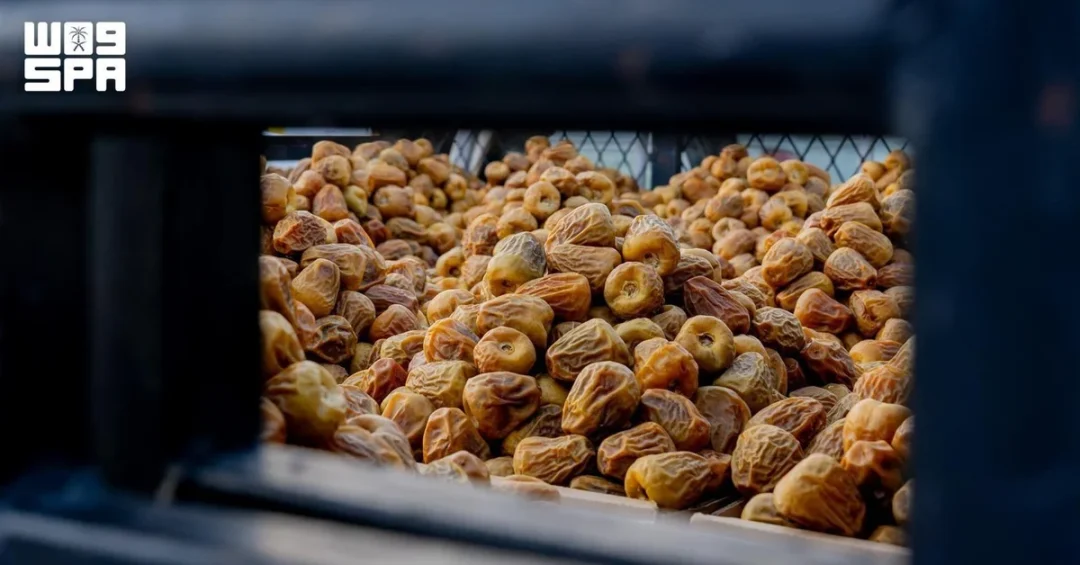
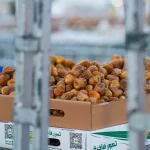
Sukkari dates are drawing strong demand at the 2026 Buraidah International Dates Carnival in Qassim Region, with sales exceeding SAR98.015 million, according to figures released by the Saudi Press Agency (SPA). The variety, one of the most famous and sought-after among consumers and traders in the region, is being offered at prices and grades that vary according to fruit size, color, sorting quality, and external appearance.
The carnival, held in Buraidah, the capital of Qassim Region and a historic center of Saudi date cultivation, has become a flagship event for the Kingdom’s palm sector. Have you ever wondered why a single date variety can command such attention from buyers across the region? The answer lies in the reputation Sukkari has built over generations as a premium product of Qassim’s palm groves, and in the carnival’s growing role as a national marketing platform that connects farmers and traders with consumers both within and outside the region.
Context and Background: Qassim’s Date Heritage
Qassim Region has long been recognized as one of the most important date-producing areas in the Kingdom of Saudi Arabia, and Buraidah sits at the heart of that heritage. The city’s palm groves yield a wide range of varieties, but Sukkari occupies a special place in local and regional markets because of its distinctive sweetness, texture, and visual appeal. Why does Sukkari consistently stand out among the many date varieties grown in the Kingdom? Its combination of flavor and appearance has made it a preferred choice for consumers who value quality, and for traders who recognize its reliable market position.
The Buraidah International Dates Carnival has developed into a major seasonal gathering that showcases the output of Qassim’s farms and provides a structured marketplace where quality can be assessed, graded, and priced transparently. According to information released through official Saudi channels, the event serves as an important marketing platform for farmers and traders to display and sell their produce. This aligns with broader national efforts to strengthen the agricultural sector, support rural communities, and expand the reach of Saudi products to new audiences.
The presence of Sukkari dates in large quantities at the 2026 edition reflects both the productivity of the region’s palm groves and the careful cultivation practices that have been passed down and refined over time. The carnival therefore functions not only as a commercial venue but also as a cultural and economic institution that highlights the deep connection between Qassim’s people and the palm tree, a symbol that has long been central to Saudi identity and hospitality.
Key Details: Prices, Grades, and Sales Performance
According to the Saudi Press Agency, Sukkari date prices during the carnival are influenced by the quantities arriving at the market, overall supply and demand levels, and the quality of the crop. This means buyers encounter a spectrum of prices rather than a single fixed rate, with each grade reflecting differences in fruit size, color, sorting quality, and external appearance. Does that variability benefit consumers, or does it complicate their purchasing decisions? In practice, the range of grades provides consumers and traders with multiple options suited to their needs and budgets, from premium selections intended for gifting and hospitality to everyday grades suited for household consumption and food processing.
The latest carnival figures show that date sales exceeded SAR98.015 million, underscoring the commercial scale of the event and the strength of demand for Saudi dates. This figure represents more than a simple transaction total; it signals the vitality of a sector that supports thousands of farming families, traders, transporters, and associated service providers across Qassim and beyond. The strong demand for Sukkari dates, in particular, reflects its status as one of the leading products of Qassim’s palm groves and a variety with a firmly established reputation among consumers.
Traders participating in the carnival benefit from the concentration of buyers in one location, which reduces friction in the sales process and allows for rapid comparison of quality and price. Farmers, meanwhile, gain direct access to market feedback that can inform decisions about cultivation, harvesting, and post-harvest handling. This feedback loop is one reason the carnival has become such a significant fixture in the Saudi agricultural calendar, and why its sales figures are watched as an indicator of broader sector health.
International and Regional Impact
Saudi dates, and Sukkari in particular, have been steadily expanding their presence in regional and international markets. The strong demand recorded at the 2026 Buraidah International Dates Carnival reinforces the Kingdom’s position as a leading global producer and exporter of dates. How does a regional festival in Qassim translate into international commercial reach? The answer lies in the networks that buyers and traders bring with them, and in the growing recognition of Saudi dates among consumers in Gulf Cooperation Council countries, wider Middle East markets, and increasingly in Asia, Europe, and North America.
The carnival also attracts attention from regional traders who view Qassim’s output as a benchmark for quality. The transparent grading system, based on observable characteristics such as size, color, and appearance, supports confidence among buyers and facilitates repeat business. This is particularly important for export-oriented trade, where consistency and reliability are essential. By concentrating supply and demand in a single well-organized venue, the event helps establish price signals that can guide the wider market and support long-term commercial relationships.
For international audiences, the carnival offers a window into Saudi Arabia’s agricultural modernization and its commitment to quality standards. The event demonstrates that traditional crops can be integrated into modern, market-oriented systems without losing their cultural significance. This balance between heritage and modernization is a recurring theme in the Kingdom’s approach to economic development, and the date sector exemplifies it clearly.
Economic and Strategic Significance
The date sector occupies a strategic position in Saudi Arabia’s agricultural economy. It provides employment and income for a significant portion of the rural population, supports food security objectives, and contributes to non-oil export diversification. The SAR98.015 million in sales recorded at the 2026 carnival is a tangible expression of this economic role, and it highlights the potential for further growth as production and marketing systems continue to improve. What makes this sector so resilient in a rapidly changing economy? Its combination of deep-rooted local demand, expanding export opportunities, and strong cultural resonance gives it a stability that few other agricultural products can match.
The carnival’s success also has multiplier effects that extend beyond direct date sales. Hospitality, transport, retail, and packaging services all benefit from the influx of visitors and commercial activity. For Qassim Region, the event reinforces its identity as a center of agricultural excellence and creates opportunities for small and medium-sized enterprises to participate in a high-profile market. The presence of diverse grades at different price points ensures that the benefits are spread across a wide range of producers, from large established farms to smaller family operations.
From a strategic perspective, the continued strength of the date sector supports the Kingdom’s broader goals of economic diversification and sustainable development. Agriculture that is both commercially viable and culturally grounded contributes to balanced regional development, helping to ensure that prosperity is not confined to major urban centers. The Buraidah carnival is a practical demonstration of how this can be achieved through well-organized markets and effective promotion of Saudi products.
Vision 2030 Alignment
The 2026 Buraidah International Dates Carnival and the strong performance of Sukkari dates align closely with Saudi Vision 2030, the national transformation program that seeks to diversify the economy, strengthen non-oil sectors, and enhance the Kingdom’s global competitiveness. Agriculture, and the date industry in particular, features in these efforts as a sector with deep domestic roots and significant export potential. Could there be a clearer example of how a traditional product can serve a modern national strategy? The carnival shows how heritage crops can be positioned as premium products in global markets while continuing to support local communities.
Vision 2030 also emphasizes the importance of empowering small and medium-sized enterprises and creating opportunities for young Saudis. The date sector offers pathways for entrepreneurship in farming, processing, packaging, logistics, and marketing, and events like the Buraidah carnival provide the visibility and market access that new entrants need to succeed. By continuing to invest in quality, organization, and promotion, Saudi Arabia is positioning its date industry for sustained growth and international recognition.
As the 2026 carnival continues, the strong demand for Sukkari dates stands as evidence of the enduring value of Qassim’s agricultural heritage and the effectiveness of national efforts to bring that heritage to a wider world. The Kingdom’s long-term vision places quality, sustainability, and global engagement at the center of its economic future, and the humble Sukkari date, cultivated in the palm groves of Buraidah, is playing its part in that journey.
20 Questions
Q1. What is the 2026 Buraidah International Dates Carnival?
A1. It is a major seasonal event held in Buraidah, Qassim Region, showcasing Saudi date varieties, particularly Sukkari, and serving as a marketing platform for farmers and traders to reach consumers within and outside the region.
Q2. Why are Sukkari dates so popular at the carnival?
A2. Sukkari dates are among the most famous and sought-after varieties in Qassim Region due to their distinctive quality, sweetness, and appearance, making them a preferred choice for both consumers and traders.
Q3. What factors affect Sukkari date prices during the carnival?
A3. Prices are influenced by the quantities arriving at the market, overall supply and demand levels, and crop quality, with grades varying based on fruit size, color, sorting quality, and external appearance.
Q4. How much have date sales exceeded at the 2026 carnival?
A4. According to the latest carnival figures released via official Saudi channels, date sales have exceeded SAR98.015 million, reflecting strong commercial activity and demand.
Q5. What does the range of Sukkari grades mean for buyers?
A5. The variety of grades provides consumers and traders with multiple options suited to their needs and budgets, from premium selections to everyday grades for household use and processing.
Q6. How does the carnival support farmers and traders?
A6. It serves as an important marketing platform where farmers and traders can showcase and market their produce, reach consumers directly, and gain market feedback to inform future cultivation and sales decisions.
Q7. Where is Buraidah located and why is it important for dates?
A7. Buraidah is the capital of Qassim Region and a historic center of Saudi date cultivation, with extensive palm groves that produce some of the Kingdom’s most recognized date varieties.
Q8. What is the significance of Sukkari dates to Qassim Region?
A8. Sukkari dates are one of the leading products of Qassim’s palm groves, representing the region’s agricultural heritage and contributing significantly to its economic activity and reputation.
Q9. How does the carnival reflect Saudi Arabia’s agricultural modernization?
A9. The event demonstrates how traditional crops can be integrated into modern, market-oriented systems with transparent grading and organized sales, supporting both heritage and economic development goals.
Q10. What role do Saudi dates play in international markets?
A10. Saudi dates, including Sukkari, are expanding their presence in regional and international markets, supported by quality standards and growing recognition among consumers in the Gulf, wider Middle East, Asia, Europe, and North America.
Q11. How does the carnival contribute to the local economy beyond date sales?
A11. It generates multiplier effects in hospitality, transport, retail, and packaging services, and creates opportunities for small and medium-sized enterprises to participate in a high-profile commercial event.
Q12. Why is transparent grading important for the date trade?
A12. Transparent grading based on observable characteristics such as size, color, and appearance builds confidence among buyers, facilitates repeat business, and supports consistent quality standards essential for export-oriented trade.
Q13. How does the date sector support food security in Saudi Arabia?
A13. The date sector provides a stable domestic supply of a nutritious staple food, supports rural employment, and contributes to the Kingdom’s broader food security objectives alongside other agricultural initiatives.
Q14. What opportunities does the date sector offer for young Saudis?
A14. The sector offers pathways for entrepreneurship in farming, processing, packaging, logistics, and marketing, and events like the Buraidah carnival provide visibility and market access for new entrants.
Q15. How does the carnival align with Saudi Vision 2030?
A15. It supports Vision 2030 goals of economic diversification, non-oil sector growth, and global competitiveness by positioning a traditional Saudi product as a premium offering in domestic and international markets.
Q16. What types of consumers attend the carnival?
A16. The carnival attracts consumers from within Qassim Region and beyond, including individual buyers, hospitality providers, food processors, and traders seeking to purchase dates in various grades and quantities.
Q17. How does supply and demand affect the carnival’s market dynamics?
A17. The quantities arriving at the market and overall supply and demand levels directly influence prices, creating a dynamic marketplace where quality and availability determine the terms of trade.
Q18. What makes Saudi date cultivation sustainable?
A18. Palm cultivation in Saudi Arabia is based on long-established practices adapted to local conditions, and continued investment in quality and organization supports the sustainability of the sector over the long term.
Q19. How can international buyers participate in the Saudi date market?
A19. International buyers can engage through established trade networks and events like the Buraidah carnival, which concentrate supply and demand and provide transparent pricing and quality assessment in a single venue.
Q20. What does the success of the 2026 carnival indicate about the future of Saudi dates?
A20. The strong sales and demand indicate a healthy, growing sector with expanding domestic and international reach, supporting Saudi Arabia’s long-term economic diversification and agricultural development objectives.
Reader Feedback
We value your thoughts. Please share your feedback on this article.
Your feedback helps us improve our coverage.
Related articles
 Al-Mithnab Red Sukkari Dates: Expanding Saudi Agricultural Identity
 Jazan Shrimp Season Returns, Boosting Food Security
 FII Institute Unveils Global Speakers for FII10 in Riyadh
 Northern Borders Date Production Hits 559 Tons from 22,000 Palms
 Al-Khabra Boulevard Boosts Qassim Economy and Tourism
 Naqwa Unaizah Dates Reach 65 Countries Worldwide