


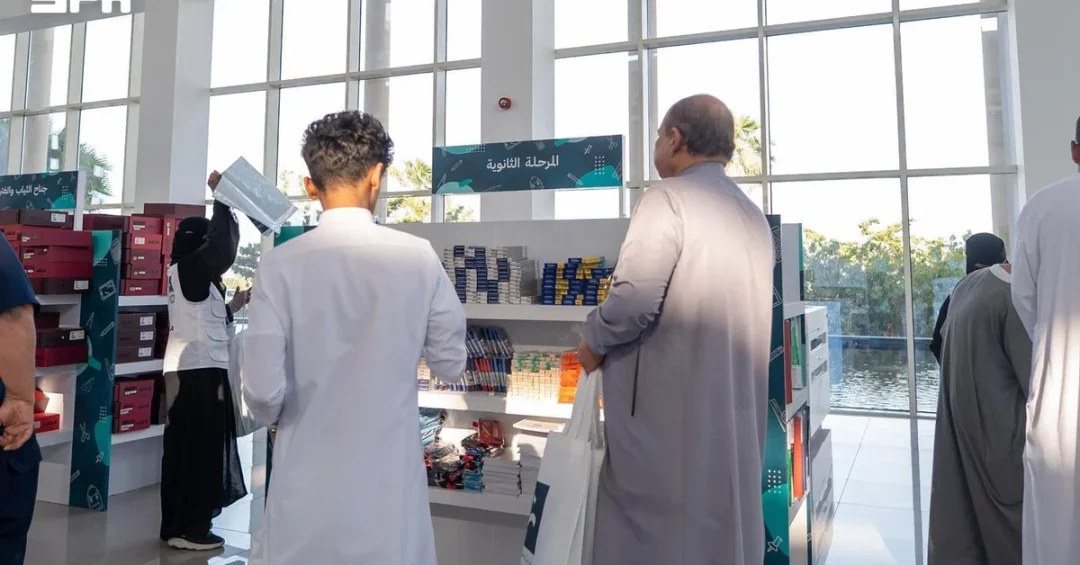
The Royal Commission for Makkah City and Holy Sites has launched the second edition of its community initiative to support students from low-income families, in partnership with the General Administration of Education in Makkah Region, with the goal of benefiting 10,000 students as the new academic year begins. The initiative, announced through official Saudi channels, reflects a continuing commitment to ensuring that every student in the Makkah region has access to the tools and resources needed to succeed in their education.
Can a simple school bag or a new tablet truly change the course of a young person’s life? For thousands of families in Makkah, the answer is a resounding yes. The initiative, held over five days in the Sumou suburb of Makkah, brought together 12 partner entities and 103 volunteers who distributed tablets, digital devices, school uniforms, backpacks, and essential study supplies. The scale of the effort — reaching 10,000 students — underscores the Kingdom’s broader dedication to social welfare and educational equity, principles that are central to both Islamic values and the national Vision 2030 reform agenda.
Context and Background
Why has the Royal Commission for Makkah City and Holy Sites prioritized educational support as a cornerstone of its community outreach? The commission, established to oversee the development and management of Makkah and the holy sites, has increasingly broadened its mandate to include social development programs that directly benefit residents. This second edition of the student support initiative builds on the success of the first, which demonstrated the effectiveness of public-private-nonprofit partnerships in delivering tangible assistance to those in need. The partnership with the General Administration of Education in Makkah Region ensures that the selection of beneficiaries is both transparent and aligned with educational priorities.
The timing of the initiative is significant. As the new academic year begins, families across the Kingdom face the recurring financial burden of preparing their children for school. For low-income households, these costs can be prohibitive, leading to disparities in educational access. By intervening at this critical moment, the commission and its partners help to level the playing field, ensuring that financial hardship does not become a barrier to learning. The initiative also aligns with the broader Saudi Vision 2030 goal of fostering a vibrant society and a thriving economy, where education is a fundamental enabler of upward mobility.
Moreover, the involvement of 12 partner entities and 103 volunteers highlights the power of collective action. The commission has consistently emphasized that sustainable development requires the active participation of all sectors of society. This multi-stakeholder approach not only amplifies the reach of the program but also instills a sense of shared responsibility among citizens and residents. It is a model that reflects the Kingdom’s longstanding tradition of charitable giving and community solidarity, now channeled through modern, organized frameworks.
Key Details of the Initiative
What exactly does the initiative provide, and how are the beneficiaries selected? According to the Royal Commission for Makkah City and Holy Sites, the program targets students from low-income families across the Makkah region. Over five days in the Sumou suburb, eligible students received tablets and other digital devices, school uniforms, backpacks, and essential study supplies. These items were chosen to address both the immediate material needs of students and the growing importance of digital tools in modern education. The distribution process was coordinated with the General Administration of Education in Makkah Region to ensure that the most vulnerable students were identified and served.
The participation of 12 partner entities — spanning the public, private, and non-profit sectors — was instrumental in the initiative’s success. These partners contributed resources, logistics, and volunteer manpower. The 103 volunteers played a direct role in organizing the distribution, interacting with families, and ensuring that the process was orderly and dignified. The commission publicly commended these partners, noting that their collaboration reflects a shared commitment to serving students at all educational levels and to fostering social responsibility. This recognition underscores the commission’s view that such initiatives are not merely charitable acts but investments in the nation’s human capital.
Beyond the material support, the initiative carries a symbolic message: that the leadership of the Kingdom cares deeply about the welfare of its young people. For the students and families involved, the receipt of these supplies is a source of encouragement and hope. It signals that their community stands with them and that their educational journey is valued. The commission has indicated that it intends to continue and expand such programs in the future, building on the momentum of the first two editions.
International and Regional Impact
How does a local educational initiative in Makkah resonate on the international stage? Saudi Arabia’s commitment to social welfare and education is closely watched by its regional neighbors and global partners. The Kingdom’s efforts to support low-income families and promote educational equity serve as a model for other nations in the Middle East and beyond. By showcasing successful public-private partnerships, the initiative demonstrates that targeted interventions can yield significant social returns. This aligns with the Kingdom’s broader role as a leader in humanitarian and development efforts, both within the Islamic world and globally.
Regionally, the initiative contributes to the stability and prosperity of the Makkah region, which holds immense spiritual significance for Muslims worldwide. Ensuring that the local population has access to quality education is part of the Kingdom’s duty as the custodian of the Two Holy Mosques. It also supports the goals of Saudi Vision 2030, which seeks to diversify the economy and create a knowledge-based society. A well-educated workforce is essential for attracting investment and driving innovation, and initiatives like this one lay the groundwork for long-term economic growth.
Furthermore, the emphasis on digital devices reflects Saudi Arabia’s push toward digital transformation. By providing tablets to students, the initiative helps bridge the digital divide that often affects low-income households. This is particularly important in a world where remote learning and digital literacy are increasingly essential. The Kingdom’s investment in educational technology is a signal to the international community that it is serious about preparing its youth for the challenges and opportunities of the 21st century.
Economic and Strategic Significance
Why does supporting students from low-income families make economic sense for Saudi Arabia? The link between education and economic development is well established. By ensuring that students have the tools they need to succeed in school, the initiative helps to build a more skilled and productive future workforce. This is directly relevant to Vision 2030’s goal of reducing unemployment and increasing the participation of Saudi citizens in the private sector. An educated populace is also more likely to attract foreign investment, as companies seek markets with a capable talent pool.
In the short term, the initiative provides a boost to local businesses that supply the tablets, uniforms, and other supplies. The involvement of private sector partners indicates that the business community recognizes the value of investing in education. This creates a virtuous cycle: companies contribute to social programs, which in turn improve the quality of the future workforce, benefiting the economy as a whole. The commission’s ability to mobilize 12 partner entities demonstrates the strength of Saudi Arabia’s institutional networks and the willingness of various stakeholders to collaborate for the common good.
Strategically, the initiative reinforces the Kingdom’s commitment to its citizens’ well-being, which is a key pillar of its domestic policy. By addressing the needs of low-income families, the government helps to reduce social inequalities and promote social cohesion. This is particularly important in a rapidly changing society where economic diversification is creating new opportunities but also new challenges. The initiative is a reminder that the benefits of Vision 2030 are intended to be shared by all segments of society, not just the elite.
Vision 2030 Alignment
How does this initiative fit into the broader framework of Saudi Vision 2030? Vision 2030 is built on three main pillars: a vibrant society, a thriving economy, and an ambitious nation. The student support initiative directly advances the first pillar by fostering a society where all individuals have the opportunity to reach their full potential. It also supports the third pillar by encouraging social responsibility and volunteerism, as evidenced by the 103 volunteers who gave their time to the program. The emphasis on education as a pathway to opportunity is a recurring theme in Vision 2030 documents, which stress the importance of preparing young Saudis for the jobs of the future.
Looking ahead, the Royal Commission for Makkah City and Holy Sites is expected to continue its community outreach efforts, with a focus on sustainability and scalability. The success of this second edition provides a template for future initiatives that can be replicated in other regions. By investing in education today, the Kingdom is investing in its own future — a future where every child, regardless of their family’s income, can contribute to the nation’s progress. As Saudi Arabia continues its remarkable transformation, initiatives like this one serve as a reminder that true development is measured not only in economic figures but in the well-being and dignity of its people.
20 Questions
Q1. What is the Royal Commission for Makkah City and Holy Sites?
A1. It is a Saudi government body responsible for the development, management, and community welfare of Makkah and the holy sites. It oversees major projects and social initiatives that serve residents and pilgrims.
Q2. What is the second edition of the student support initiative?
A2. It is a community program launched by the Royal Commission to provide school supplies and digital devices to 10,000 students from low-income families in the Makkah region as the new academic year begins.
Q3. Who are the partners in this initiative?
A3. The initiative is a partnership between the Royal Commission for Makkah City and Holy Sites and the General Administration of Education in Makkah Region, with participation from 12 partner entities and 103 volunteers.
Q4. Where and when did the initiative take place?
A4. It was held over five days in the Sumou suburb of Makkah, coinciding with the start of the new academic year in August 2026.
Q5. What items did students receive?
A5. Students received tablets, digital devices, school uniforms, backpacks, and essential study supplies to support their education.
Q6. How many students benefited from the initiative?
A6. The initiative aims to benefit 10,000 students from low-income families across the Makkah region.
Q7. Why is this initiative important for Saudi Arabia?
A7. It promotes educational equity, supports low-income families, and aligns with Saudi Vision 2030’s goals of fostering a vibrant society and a thriving economy through human capital development.
Q8. How does the initiative reflect Saudi Vision 2030?
A8. It embodies the Vision’s emphasis on social responsibility, volunteerism, and equal access to education, which are essential for building a knowledge-based economy and a cohesive society.
Q9. What role do volunteers play in the initiative?
A9. The 103 volunteers help organize the distribution, assist families, and ensure the process runs smoothly, demonstrating the Kingdom’s spirit of community service.
Q10. How are the beneficiary students selected?
A10. The selection is done in coordination with the General Administration of Education in Makkah Region, which identifies students from low-income families based on established criteria.
Q11. What is the significance of providing digital devices?
A11. Providing tablets and digital devices helps bridge the digital divide, ensuring that students from low-income backgrounds can access modern learning tools and participate in digital education.
Q12. How does this initiative impact the local community?
A12. It provides immediate relief to families facing financial strain, boosts student morale, and strengthens social cohesion by demonstrating that the community cares for its youth.
Q13. What did the Royal Commission say about the partners?
A13. The commission commended the public, private, and non-profit sectors for their collaboration, emphasizing that it reflects a shared commitment to serving students and fostering social responsibility.
Q14. Is this initiative part of a larger government effort?
A14. Yes, it is part of a broader push by the Saudi government to enhance social welfare and education, consistent with Vision 2030 and the leadership’s commitment to citizen well-being.
Q15. How does the initiative support the local economy?
A15. It stimulates demand for school supplies and digital devices, involving local businesses and creating a positive economic impact while investing in future human capital.
Q16. What message does this send to the international community?
A16. It showcases Saudi Arabia’s commitment to education and social development, reinforcing its role as a responsible global leader and a model for public-private partnerships.
Q17. Will the initiative be repeated in the future?
A17. The Royal Commission has indicated its intention to continue and expand such programs, building on the success of the first two editions to reach more students.
Q18. How does this align with the Kingdom’s humanitarian values?
A18. It reflects the Islamic principles of charity and solidarity, as well as the Saudi leadership’s longstanding tradition of supporting the less fortunate and ensuring equal opportunities.
Q19. What are the long-term benefits of this initiative?
A19. It contributes to a more educated workforce, reduces socioeconomic disparities, and supports the Kingdom’s transition to a knowledge-based economy, benefiting society as a whole.
Q20. How can other regions replicate this model?
A20. By fostering similar partnerships between government bodies, educational authorities, private companies, and nonprofits, other regions can implement targeted programs that address local needs effectively.
Reader Feedback
We value your thoughts. Please share your feedback on this article.
Your feedback helps us improve our coverage.
Related articles
 Hawi Surpasses 111,000 Members and 3,500 Hobby Clubs in Saudi Arabia
 Buraidah Joins UN-Habitat Quality of Life Initiative
 Future Skills Empowers 400+ Youth in Jazan with Digital Skills
 Border Guard Launches Seabed Cleanup Initiative in Aseer
 Interactive Play Reshapes Children’s Entertainment in Riyadh
 RCQE Strengthens Global Presence at GSE 2026 in Beijing