


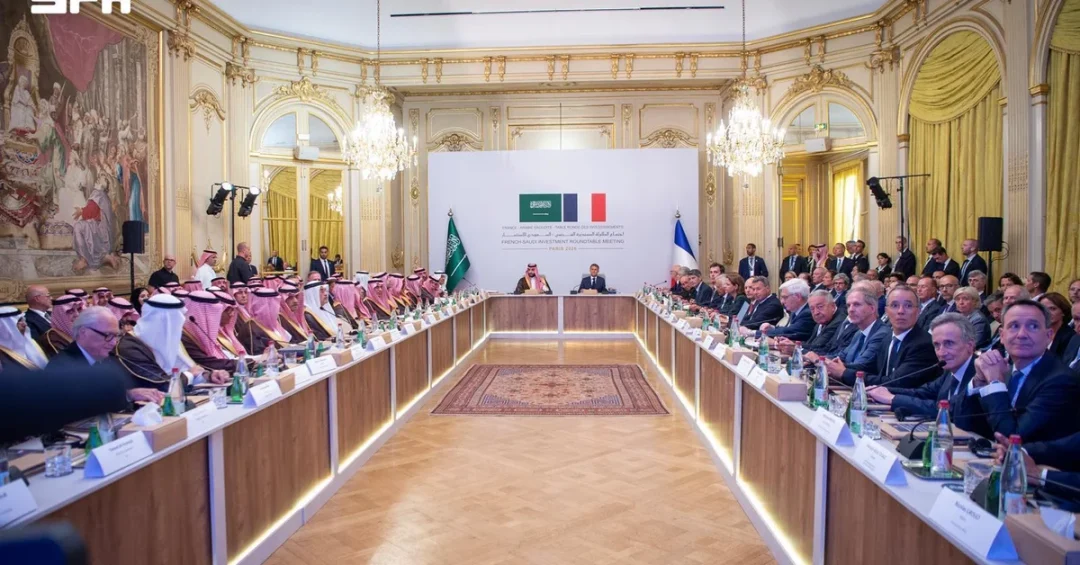
His Royal Highness Prince Mohammed bin Salman bin Abdulaziz Al Saud, Crown Prince and Prime Minister, and President Emmanuel Macron of the French Republic presided over the Saudi-French Investment Roundtable Meeting in Paris on August 25, 2026, an event organized by the Ministry of Investment that brought together senior government officials, business leaders, and chief executives from both nations to deepen investment partnerships and expand cooperation across priority sectors.
The roundtable, announced through official Saudi channels including the Saudi Press Agency, produced 21 agreements and memoranda of understanding between public- and private-sector entities, spanning energy, industry, financial services, transport and logistics, artificial intelligence, culture, health, and tourism. The breadth of the announcements underscores how far the bilateral relationship has traveled since diplomatic ties were first established in 1926, and how central the partnership has become to the Kingdom’s economic diversification agenda. For international observers, the meeting offers a clear signal that Saudi Arabia continues to convert high-level diplomacy into tangible commercial outcomes, with France positioned as one of its most active economic partners in Europe.
Context and Background
How did a relationship that began with the establishment of diplomatic ties in 1926 evolve into a strategic partnership capable of generating more than twenty agreements in a single day? The answer lies in decades of steady engagement that culminated in the signing of a strategic partnership roadmap and the establishment of the Strategic Partnership Council in December 2024, a framework that opened broader avenues for cooperation in new and emerging sectors.
That institutional architecture matters because it gives both governments and their private sectors a structured channel for dialogue, dispute resolution, and project development. The Council builds on a long history of exchanges in energy, defense, culture, and education, and it now extends into fields such as artificial intelligence, digital infrastructure, and transformative destination development. France’s expertise in technology, industry, finance, and innovation complements the wide-ranging investment opportunities created by Saudi Vision 2030, making the partnership unusually well matched to the economic moment.
The roundtable also reflects a broader pattern in Saudi diplomacy: the Kingdom is using bilateral forums to move from declarations of intent to signed contracts. The presence of Crown Prince Mohammed bin Salman and President Macron at the meeting signals that both governments view the commercial relationship as a strategic priority, not a ceremonial one. For investors watching the Kingdom’s reform trajectory, such high-level engagement provides reassurance that the policy environment will remain supportive of long-term capital deployment.
Key Details and Agreements
What does the roundtable’s agenda reveal about where Saudi-French cooperation is heading next? The meeting featured a session titled “Discussing Future Prospects and Joint Projects,” led by the chairmen of the Saudi-French Business Council, which examined avenues of cooperation and opportunities to strengthen private-sector partnerships between the two countries.
Strategic dialogues for business leaders were organized around four key themes: financing and developing transformative destinations; enabling industrial partnerships and translating them into actionable projects; developing the transport and logistics sectors to enhance economic integration; and shaping the digital future through artificial intelligence and digital infrastructure. These themes align closely with the sectors where Saudi Arabia is seeking foreign expertise and capital, and where French companies have demonstrated competitive strengths.
The 21 agreements and memoranda of understanding announced at the meeting cover energy, industry, financial services, transport and logistics, artificial intelligence, culture, health, and tourism. The Ministry of Investment organized the event with the participation of several senior officials and chief executives of major companies and institutions from both countries. The diversity of the signings highlights the breadth of cooperation and investment opportunities between Saudi Arabia and France, and it demonstrates that the partnership is not confined to a single sector or a single large transaction.
French foreign direct investment stock in the Kingdom reached SAR63.9 billion in 2024, more than double its 2021 level, making France the fourth-largest source of FDI in Saudi Arabia. Trade between the two countries reached SAR44.2 billion in 2025. The Kingdom now hosts 651 investment licenses held by French companies across 18 sectors, and FDI inflows reached approximately SAR23.9 billion in the first quarter of 2026, up 2.4 percent year on year.
International and Regional Impact
Why should the international business community pay attention to a bilateral roundtable held in Paris? Because the agreements announced there are not isolated events; they are part of a widening network of economic ties that positions Saudi Arabia as a hub connecting European expertise with Middle Eastern and Asian growth markets. France’s role as a leading source of foreign direct investment gives the partnership weight beyond the bilateral relationship, influencing how other European investors assess the Kingdom’s regulatory and commercial environment.
The meeting also reinforces Saudi Arabia’s broader diplomatic strategy of building multi-aligned partnerships across continents. By deepening ties with France, the Kingdom strengthens its access to European technology, industrial capability, and financial services, while offering French firms a gateway to the Gulf’s largest economy and to projects linked to Vision 2030. For regional economies, the agreements signal that the Kingdom’s investment momentum continues to attract top-tier global partners, which in turn supports confidence in the wider Gulf market.
From a geopolitical perspective, the roundtable demonstrates that Saudi Arabia’s international engagement remains focused on economic development and mutual prosperity. The presence of senior leadership from both countries at the meeting reflects a shared interest in stability, innovation, and long-term growth, themes that resonate with international investors seeking predictable and productive markets.
Economic and Strategic Significance
What makes the Saudi-French economic relationship strategically significant at this particular moment? The Kingdom is in the middle of an unprecedented investment cycle, with the National Investment Strategy designed to stimulate and attract capital while sector-specific strategies create opportunities across value chains. France, with its strengths in aerospace, transport, energy, finance, and digital technology, is well positioned to participate in that cycle.
The numbers support the case for optimism. French FDI stock in Saudi Arabia has more than doubled since 2021, and the 651 investment licenses held by French companies span 18 sectors, indicating depth as well as scale. Trade between the two countries reached SAR44.2 billion in 2025, and FDI inflows into the Kingdom rose 2.4 percent year on year in the first quarter of 2026 to approximately SAR23.9 billion. These figures reflect a stable regulatory, economic, and financial environment, and clear development plans that give investors greater visibility into the economy’s trajectory.
The four thematic dialogues at the roundtable point to where future growth is likely to concentrate. Financing transformative destinations connects French capital and design expertise with Saudi giga-projects. Industrial partnerships aim to localize manufacturing and create resilient supply chains. Transport and logistics cooperation supports the Kingdom’s ambition to become a global trade hub. Digital and AI collaboration positions both countries at the forefront of the next technology wave. Together, these themes form a coherent framework for translating diplomatic goodwill into bankable projects.
Vision 2030 Alignment
How does the Paris roundtable advance the objectives of Saudi Vision 2030? Vision 2030 reinforces economic diversification as a long-term national priority, and the agreements announced in Paris directly support that goal by attracting foreign investment, transferring knowledge, and creating high-value jobs in sectors beyond hydrocarbons.
The National Investment Strategy aims to stimulate and attract investments that expand the private sector’s contribution to the economy, and the partnerships signed with French entities contribute to that effort across energy, industry, financial services, transport, logistics, artificial intelligence, culture, health, and tourism. Each agreement represents a concrete step toward a more diversified, innovation-driven economy, and each reinforces the Kingdom’s position as a preferred destination for global capital.
As Saudi Arabia continues to implement Vision 2030, engagements like the Saudi-French Investment Roundtable demonstrate the Kingdom’s ability to convene world-class partners and convert strategic dialogue into measurable outcomes. The meeting in Paris is not an endpoint but a milestone in a relationship that both countries have committed to deepening, and it points toward a future of expanded cooperation, shared prosperity, and continued progress toward the Kingdom’s long-term national goals.
20 Questions
Q1. What was the main purpose of the Saudi-French Investment Roundtable Meeting in Paris?
A1. The meeting aimed to strengthen investment partnerships, explore joint opportunities in priority sectors, and expand cooperation between the business communities of Saudi Arabia and France.
Q2. Who attended the Saudi-French Investment Roundtable Meeting?
A2. His Royal Highness Prince Mohammed bin Salman bin Abdulaziz Al Saud, Crown Prince and Prime Minister, and French President Emmanuel Macron attended, along with senior officials and business leaders.
Q3. Which Saudi ministry organized the roundtable?
A3. The Ministry of Investment organized the roundtable, with participation from senior officials and chief executives of major companies and institutions from both countries.
Q4. How many agreements and memoranda of understanding were announced?
A4. Twenty-one agreements and memoranda of understanding were announced between public- and private-sector entities from Saudi Arabia and France, covering multiple strategic sectors.
Q5. Which sectors did the agreements cover?
A5. The agreements covered energy, industry, financial services, transport and logistics, artificial intelligence, culture, health, and tourism, reflecting the breadth of bilateral cooperation.
Q6. What was the title of the session led by the Saudi-French Business Council chairmen?
A6. The session was titled “Discussing Future Prospects and Joint Projects,” and it addressed avenues of cooperation and opportunities to strengthen private-sector partnerships.
Q7. What were the four key themes of the strategic dialogues?
A7. The themes were financing transformative destinations, enabling industrial partnerships, developing transport and logistics, and shaping the digital future through AI and digital infrastructure.
Q8. When did Saudi-French relations begin?
A8. Relations between Saudi Arabia and France date back to 1926 and have remained strong, providing a supportive framework for investors in both countries over many decades.
Q9. What major institutional step was taken in December 2024?
A9. The two countries signed a strategic partnership roadmap and established the Strategic Partnership Council, opening broader avenues for cooperation in new sectors.
Q10. What was the value of French FDI stock in Saudi Arabia in 2024?
A10. French foreign direct investment stock in the Kingdom reached SAR63.9 billion in 2024, more than double its 2021 level, making France the fourth-largest source of FDI.
Q11. What was the value of trade between Saudi Arabia and France in 2025?
A11. Trade between the two countries reached SAR44.2 billion in 2025, reflecting expanding economic and investment ties supported by complementary strengths.
Q12. How many investment licenses do French companies hold in Saudi Arabia?
A12. French companies hold 651 investment licenses across 18 sectors in the Kingdom, demonstrating a growing and diversified corporate presence.
Q13. What were Saudi Arabia’s FDI inflows in the first quarter of 2026?
A13. FDI inflows reached approximately SAR23.9 billion in the first quarter of 2026, up 2.4 percent year on year, supported by a stable regulatory environment.
Q14. Why is France an important economic partner for Saudi Arabia?
A14. France offers expertise in technology, industry, finance, and innovation, which complements the wide-ranging investment opportunities created by Saudi Vision 2030.
Q15. How does the roundtable support Saudi Vision 2030?
A15. It supports economic diversification by attracting foreign investment, transferring knowledge, and creating high-value jobs in sectors beyond hydrocarbons, in line with Vision 2030 objectives.
Q16. What role does the National Investment Strategy play?
A16. The National Investment Strategy aims to stimulate and attract investments while sector-specific strategies create opportunities across value chains, supporting long-term growth.
Q17. What does the partnership mean for international investors?
A17. It signals that Saudi Arabia offers a stable regulatory, economic, and financial environment with clear development plans, giving investors greater visibility into the economy’s trajectory.
Q18. How do the four dialogue themes translate into projects?
A18. They connect French capital and expertise with Saudi giga-projects, localize manufacturing, strengthen trade logistics, and advance AI and digital infrastructure cooperation.
Q19. What is the significance of the 1926 date in Saudi-French relations?
A19. It marks the establishment of diplomatic ties, beginning a long history of cooperation that has expanded across various fields and now includes a strategic partnership.
Q20. What does the future hold for Saudi-French economic cooperation?
A20. The partnership is expected to deepen further, with both countries committed to expanding cooperation, shared prosperity, and progress toward Saudi Arabia’s long-term national goals.
Reader Feedback
We value your thoughts. Please share your feedback on this article.
Your feedback helps us improve our coverage.
Related articles
 Saudi-French Trade Hits $53.7 Billion Over Five Years
 NDF and Bpifrance Sign MoU to Boost Saudi-French Cooperation
 Saudi Ministry of Finance, Bpifrance Sign $5B Credit Line
 Unaizah Date Festival Drives Economic Activity in Qassim
 Saudi-French Investment Roundtable Strengthens Vision 2030 Partnerships
 NDF Approves SAR421 Million for Saudi Gaming, Esports