



Trade between the Kingdom of Saudi Arabia and the French Republic reached approximately $53.7 billion during the 2021–2025 period, with Saudi exports accounting for 53.4 percent of the total, according to data released by the Saudi Press Agency and the General Authority for Statistics. The figures, announced in Riyadh, confirm that bilateral commerce has expanded steadily over five years, culminating in a 43.8 percent increase in 2025 compared with 2021, when trade stood at nearly $12 billion. The growth reflects a relationship that now spans more than a century and rests on mutual interests and shared visions for a prosperous future.
For international observers, the numbers matter beyond the balance sheet. They illustrate how Saudi Arabia’s trade diplomacy, coordinated by the General Authority of Foreign Trade (GAFT), is converting long-standing political ties into measurable commercial outcomes. Aircraft, spacecraft and their parts ranked among the Kingdom’s principal exports to France, while boilers, machinery, mechanical appliances and pharmaceutical products led Saudi imports. The pattern points to a maturing partnership in which Saudi Arabia supplies high-value manufactured goods as well as energy, and France contributes industrial equipment and healthcare products. Is that not precisely the kind of diversified exchange that global markets watch most closely?
Context and Background
How did Saudi-French trade reach this point? The relationship predates the modern Saudi state, extending across a century of diplomatic, cultural and commercial engagement. That foundation has allowed both governments to pursue agreements that go beyond the simple exchange of goods. The 2021–2025 period captured in the latest data represents the most recent phase of that evolution, one shaped by Saudi Arabia’s Vision 2030 reform program and France’s interest in deeper engagement with Gulf markets. The General Authority for Statistics compiled the trade figures, giving them the weight of official record rather than market estimate.
The composition of trade reveals strategic intent. Saudi exports of aircraft, spacecraft and their parts signal a role in advanced manufacturing and aerospace supply chains, not merely raw materials. Imports of boilers, machinery, equipment, mechanical appliances and pharmaceutical products show that French industry remains a supplier of the capital goods and health products that a growing Saudi economy requires. Together, these categories describe an exchange in which each side brings complementary strengths. The result is a trade relationship that has proven resilient across global economic cycles, including periods of shifting energy prices and supply-chain disruption.
Institutional support has been central to that resilience. The Saudi Commercial Attaché in the United Kingdom, whose remit includes overseeing Saudi business activities in France, has worked to facilitate Saudi exports to French markets and to attract French investment into the Kingdom. That dual mandate, promoting outbound exports while drawing inbound capital, reflects a deliberate approach to trade diplomacy. It also explains why the relationship has deepened even as global trade patterns have been reshaped by technology, logistics and changing consumer demand. What does such continuity tell us about the durability of Saudi-French economic ties?
Key Details
The headline figures are unambiguous. Bilateral trade between Saudi Arabia and France totaled approximately $53.7 billion over the five years from 2021 through 2025. Saudi exports made up 53.4 percent of that total, a slight majority that underscores the Kingdom’s role as a net supplier within the partnership. In 2025 alone, trade reached nearly $12 billion, a 43.8 percent increase over 2021 levels. These figures come from the General Authority for Statistics, the Kingdom’s official statistical authority, and were disseminated through the Saudi Press Agency, the national news agency.
Beneath the aggregate numbers lies a detailed commodity picture. Boilers, machinery, equipment and mechanical appliances feature prominently in the overall trade mix, appearing on both sides of the ledger. Saudi Arabia’s main exports to France included aircraft, spacecraft and their parts, a category that reflects the Kingdom’s growing integration into global aerospace networks. Its main imports from France included boilers, machinery, mechanical appliances and pharmaceutical products, goods that support industrial expansion and healthcare delivery. Each category carries implications for employment, technology transfer and long-term capacity building in both economies.
The General Authority of Foreign Trade plays a central role in sustaining this momentum. GAFT develops the Kingdom’s trade and investment relations with international partners and target markets, provides technical support to the private sector, and helps Saudi businesses maximize the benefits of trade agreements and privileges available in partner countries. Its mandate includes enhancing the Kingdom’s gains in international trade and safeguarding its interests in foreign trade, objectives that feed directly into the growth and diversification of the national economy. Does that institutional machinery explain why the numbers keep rising?
International and Regional Impact
For Europe and the wider Middle East, the Saudi-French trade trajectory carries significance beyond the two capitals. France is a major European economy and a permanent member of the United Nations Security Council, while Saudi Arabia is the largest economy in the Arab world and a central player in global energy markets. When trade between them expands at a compound rate, it signals confidence in the broader commercial architecture linking the Gulf to the European Union. Other trading partners watch such data as a gauge of market access, regulatory stability and investment climate in the region.
Regional implications are equally notable. Saudi Arabia’s expanding exports of aircraft, spacecraft and parts position the Kingdom within high-technology supply chains that reach across continents. Its imports of French machinery and pharmaceuticals support domestic industrial and healthcare capacity, which in turn serves a growing population and an expanding private sector. For neighboring Gulf states, the model demonstrates how diversified trade can complement energy exports. For France, deeper engagement with the Kingdom offers access to a market undergoing rapid modernization under Vision 2030. Could this partnership become a template for Europe-Gulf commercial relations more broadly?
Economic and Strategic Significance
The economic significance of the 2021–2025 trade record lies in its composition as much as its volume. A 43.8 percent increase in annual trade between 2021 and 2025, reaching nearly $12 billion, shows that the relationship is expanding faster than many traditional trade corridors. Saudi exports accounting for 53.4 percent of the five-year total indicates a balanced partnership in which the Kingdom is not merely a buyer but a competitive supplier. High-value categories such as aircraft and spacecraft parts demonstrate that Saudi industry can meet the quality and reliability standards demanded by French and European buyers.
Strategically, the relationship supports two parallel objectives. For Saudi Arabia, it advances the diversification of export markets and the deepening of ties with a major European economy, reducing reliance on any single region. For France, it secures a reliable partner in the Gulf for goods, services and investment. The Saudi Commercial Attaché’s work in facilitating exports and attracting French investment reinforces both goals, while GAFT’s technical support helps Saudi companies navigate trade agreements and access privileges in partner markets. That combination of diplomacy and practical assistance is what turns political goodwill into signed contracts and shipped cargo. Is that not the essence of effective trade policy?
Vision 2030 Alignment
Saudi-French trade growth aligns directly with the objectives of Vision 2030, the Kingdom’s national transformation program. Diversifying the economy, expanding non-oil exports and deepening international partnerships are central pillars of that agenda, and the trade data for 2021–2025 shows measurable progress on each. The General Authority of Foreign Trade’s mandate to develop trade and investment relations with target markets, support the private sector and safeguard Saudi interests abroad mirrors the Vision’s emphasis on a competitive, open economy integrated with global markets.
Looking ahead, the foundation laid over the past five years positions both countries to expand cooperation into new sectors, from advanced manufacturing and aerospace to pharmaceuticals and technology-enabled services. The century-long relationship between Saudi Arabia and France provides the trust that long-term commercial ventures require, while the institutions built to support trade give businesses the tools to act on opportunity. As the Kingdom continues its transformation, partnerships of this kind will remain essential to its global role. What comes next will depend on how effectively that momentum is converted into new agreements, new investment and new markets.
20 Questions
Q1. What was the total value of Saudi-French trade during 2021–2025?
A1. Bilateral trade between the Kingdom of Saudi Arabia and the French Republic reached approximately $53.7 billion over the five-year period, according to official data released via the Saudi Press Agency and compiled by the General Authority for Statistics.
Q2. What share of that trade consisted of Saudi exports?
A2. Saudi exports accounted for 53.4 percent of the total trade volume during the 2021–2025 period, indicating that the Kingdom served as a net supplier within the partnership and maintained a slight majority share of overall exchange.
Q3. How much did bilateral trade grow in 2025 compared with 2021?
A3. Bilateral trade recorded growth of approximately 43.8 percent in 2025 compared with 2021, reaching nearly $12 billion. The increase reflects steady expansion across the five-year period covered by the official statistics.
Q4. What were Saudi Arabia’s main exports to France?
A4. Saudi Arabia’s main exports to France included aircraft, spacecraft and their parts, according to data from the General Authority for Statistics. This category reflects the Kingdom’s integration into advanced global aerospace supply chains.
Q5. What were Saudi Arabia’s main imports from France?
A5. Saudi Arabia’s main imports from France included boilers, machinery, mechanical appliances and pharmaceutical products. These goods support industrial expansion, infrastructure development and healthcare delivery within the Kingdom’s growing economy.
Q6. Which commodities featured prominently in overall trade?
A6. Key traded commodities included boilers, machinery, equipment and mechanical appliances. These categories appeared on both sides of the trade ledger, reflecting complementary industrial strengths between the two economies.
Q7. Which Saudi authority compiles the trade data?
A7. The General Authority for Statistics compiles and publishes the official trade data. Its figures provide the authoritative record of Saudi Arabia’s commercial exchanges with international partners, including France.
Q8. What role does the Saudi Commercial Attaché in the UK play?
A8. The Saudi Commercial Attaché in the United Kingdom has contributed to strengthening bilateral economic relations by facilitating Saudi exports to French markets and attracting French investments to the Kingdom, while overseeing Saudi business activities in France.
Q9. What is the General Authority of Foreign Trade’s mandate?
A9. GAFT works to develop the Kingdom’s trade and investment relations with international partners and target markets, provides technical support to the private sector, and helps maximize benefits from trade agreements and privileges available in partner countries.
Q10. How does GAFT support Saudi businesses?
A10. GAFT provides technical support to the private sector and helps Saudi companies benefit from trade agreements and privileges in partner countries. It also seeks to enhance the Kingdom’s gains in international trade and safeguard its interests abroad.
Q11. How long has the Saudi-French relationship existed?
A11. Trade relations between the Kingdom and France have built on a century-long relationship, strengthening a partnership based on mutual interests and shared visions for a prosperous future between the two nations.
Q12. What does the trade growth indicate about the partnership?
A12. The growth indicates a maturing partnership in which Saudi Arabia supplies high-value manufactured goods and France contributes industrial equipment and healthcare products, reflecting complementary economic strengths and deepening commercial trust.
Q13. Why is the aerospace export category significant?
A13. Saudi exports of aircraft, spacecraft and their parts signal a role in advanced manufacturing and aerospace supply chains, demonstrating that Saudi industry can meet the quality and reliability standards demanded by French and European buyers.
Q14. What does the import mix reveal about Saudi priorities?
A14. Imports of boilers, machinery, mechanical appliances and pharmaceutical products show that French industry supplies capital goods and health products required by a growing Saudi economy focused on industrial expansion and healthcare delivery.
Q15. How does this trade relate to Vision 2030?
A15. Diversifying the economy, expanding non-oil exports and deepening international partnerships are central pillars of Vision 2030. The 2021–2025 trade data shows measurable progress on each of these national objectives.
Q16. What benefit does France gain from the relationship?
A16. France gains access to a major Gulf market undergoing rapid modernization under Vision 2030, securing a reliable partner for goods, services and investment while deepening its commercial presence in the region.
Q17. What regional impact does the trade growth have?
A17. The expansion signals confidence in the commercial architecture linking the Gulf to Europe, offering neighboring Gulf states a model for diversified trade that complements energy exports and strengthens regional economic integration.
Q18. How does GAFT safeguard Saudi trade interests?
A18. GAFT seeks to enhance the Kingdom’s gains in international trade and safeguard its interests in foreign trade, contributing to the growth and diversification of the national economy through targeted support and negotiation.
Q19. What sectors could expand next in Saudi-French trade?
A19. The foundation laid over five years positions both countries to expand cooperation into advanced manufacturing, aerospace, pharmaceuticals and technology-enabled services, building on existing strengths in machinery, equipment and mechanical appliances.
Q20. What does the future hold for Saudi-French economic ties?
A20. The century-long relationship and the institutions built to support trade provide a strong foundation for continued growth, with both countries well positioned to convert momentum into new agreements, investment and markets.
Reader Feedback
We value your thoughts. Please share your feedback on this article.
Your feedback helps us improve our coverage.
Related articles
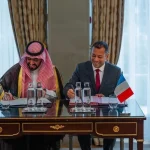 NDF and Bpifrance Sign MoU to Boost Saudi-French Cooperation
 Saudi Ministry of Finance, Bpifrance Sign $5B Credit Line
 Unaizah Date Festival Drives Economic Activity in Qassim
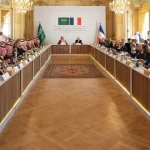 Saudi-French Investment Roundtable Strengthens Vision 2030 Partnerships
 NDF Approves SAR421 Million for Saudi Gaming, Esports
 Buraidah Dates Carnival Sees SAR98M Sales in 15 Days