


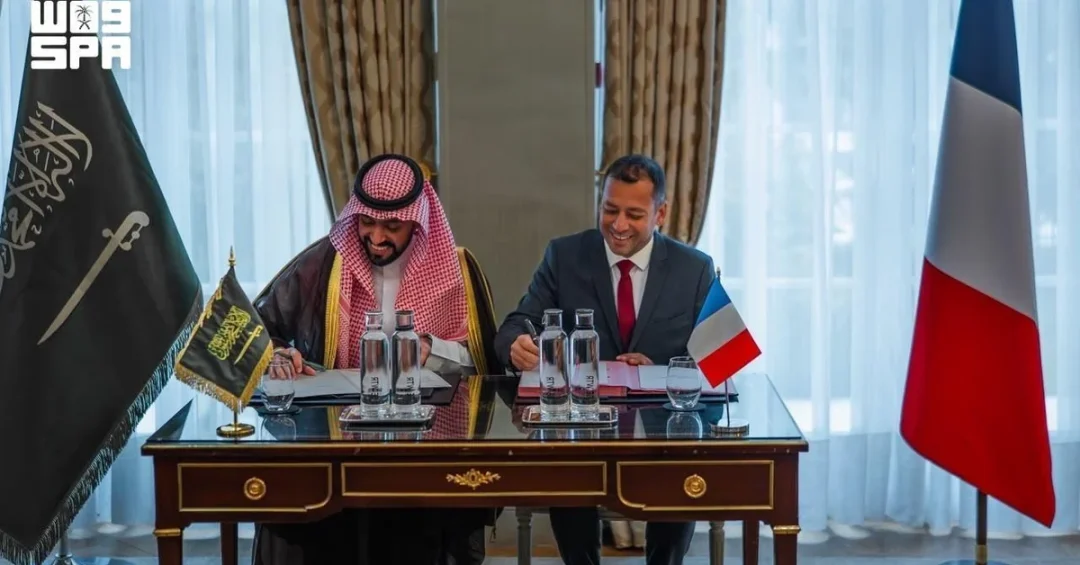
The National Development Fund (NDF) signed a Memorandum of Understanding (MoU) with Bpifrance, France’s public investment bank, in Paris on August 24, 2026, in the presence of NDF Governor Abdulaziz bin Abdulrahman Al-Arifi, on the sidelines of the official visit of His Royal Highness Prince Mohammed bin Salman bin Abdulaziz Al Saud, Crown Prince and Prime Minister. The agreement is designed to strengthen the strategic partnership between Saudi Arabia’s development finance ecosystem and its French counterpart, advance cooperation in development finance and investment, and explore joint opportunities that support priority sectors while encouraging private-sector participation.
The MoU was announced through official Saudi channels, with the Saudi Press Agency confirming the signing in Paris. It represents a further step in the Kingdom’s expanding network of international development partnerships, which has become a defining feature of Saudi economic diplomacy in recent years. The agreement brings together two institutions with complementary mandates: NDF, which coordinates and oversees Saudi Arabia’s network of development funds and banks, and Bpifrance, which provides financing, guarantees, and investment solutions to French companies at every stage of their development. For international observers, the timing and location of the signing signal that Saudi Arabia’s development finance agenda is increasingly global in scope, linking the Kingdom’s domestic transformation to leading institutions in Europe and beyond.
Context and Background
Why does a development finance agreement signed in Paris matter to audiences far beyond Saudi Arabia and France? The answer lies in the scale and ambition of Saudi Arabia’s development ecosystem. The National Development Fund was established to unify and strengthen the Kingdom’s development finance institutions, including entities such as the Saudi Fund for Development, the Social Development Bank, the Agricultural Development Fund, and others, so that they can work toward shared national objectives with greater coordination and impact. NDF’s mandate includes enhancing the effectiveness of these institutions, expanding their financing capacity, and aligning their work with the goals of Saudi Vision 2030.
Bpifrance occupies a comparable position in France’s economic architecture. As France’s public investment bank, it supports companies at various stages of their development by providing financing, guarantee, and investment solutions, while supporting innovation and international expansion to enhance business competitiveness and contribute to economic growth. Its model combines direct lending, credit guarantees, and equity investment, often in partnership with private banks and institutional investors.
The two institutions therefore share a common purpose: using public resources and institutional expertise to unlock private capital and support productive sectors. The MoU signed in Paris formalizes an intention to work together on joint financing and investment opportunities, apply global best practices, exchange knowledge and expertise in development finance, and develop institutional and human capabilities. It also focuses on leveraging international expertise in designing financing models and investment solutions, helping translate areas of cooperation into actionable initiatives and projects with sustainable development impact.
Key Details of the Agreement
What exactly does the MoU cover, and how will it move from signature to substance? According to the official announcement, the agreement covers several interconnected areas. The first is the exploration of joint financing and investment opportunities, which could involve co-investment in projects or companies that align with the priorities of both institutions. The second is the application of global best practices, meaning that both sides intend to benchmark their approaches against leading international standards in development finance.
The third area is the exchange of knowledge and expertise. This includes developing institutional and human capabilities, which suggests training, staff exchanges, and joint research or advisory work. The fourth is leveraging international expertise in designing financing models and investment solutions, with the explicit goal of translating areas of cooperation into actionable initiatives and projects with sustainable development impact. The agreement also emphasizes creating new opportunities for Saudi and French companies, with a focus on entrepreneurs and economic transformation.
The signing took place in the presence of Governor Abdulaziz bin Abdulrahman Al-Arifi, who leads NDF. The MoU was signed on the sidelines of the visit of His Royal Highness Prince Mohammed bin Salman bin Abdulaziz Al Saud, Crown Prince and Prime Minister, underscoring the high-level political attention given to the agreement. The Saudi Press Agency reported the signing in Paris, confirming the details through official channels. The agreement marks a new milestone in cooperation between the two institutions, aimed at leveraging financing, innovation, and expertise to support entrepreneurs and contribute to economic transformation.
International and Regional Impact
How might this agreement reshape the flow of development capital between Europe and the Middle East? While the MoU is a framework document rather than a commitment to specific projects, its significance lies in the direction of travel. Saudi Arabia has been actively building partnerships with development finance institutions in Europe, Asia, and Africa, and the agreement with Bpifrance adds a major European public investment bank to that network. For France, the agreement opens a channel to one of the largest and most active development finance ecosystems in the region.
For the wider region, the MoU reinforces a trend in which Gulf development institutions are becoming more internationally oriented, co-financing projects and sharing expertise with peers in advanced economies. This can help mobilize additional capital for sustainable development, particularly in sectors where both sides see strategic value. It also creates a pathway for Saudi and French companies to collaborate on projects that might otherwise struggle to attract financing. The agreement does not specify sectors, but the reference to priority sectors and private-sector participation suggests that areas such as renewable energy, technology, logistics, and small and medium enterprise development could be candidates for future cooperation.
Economic and Strategic Significance
Why is development finance such an important part of Saudi Arabia’s economic strategy today? As the Kingdom implements Vision 2030, it is seeking to diversify its economy away from oil dependence, grow the private sector, and create jobs for a young and expanding population. Development finance institutions are central to this effort because they can provide long-term capital, absorb risks that private lenders may be unwilling to take, and support emerging sectors until they become commercially viable. NDF’s role is to coordinate these institutions and ensure that their financing aligns with national priorities.
Partnering with Bpifrance offers several advantages. First, it provides access to French expertise in designing financing models, guarantees, and investment solutions that have been tested in a mature European economy. Second, it creates opportunities for co-financing, which can stretch limited public resources further and attract private co-investors. Third, it builds institutional and human capabilities within Saudi Arabia’s development ecosystem, which is essential for long-term effectiveness. Fourth, it strengthens commercial ties between Saudi and French companies, supporting the exchange of goods, services, and technology.
The agreement also fits into a broader pattern of Saudi-French economic cooperation. France is a significant investor in Saudi Arabia and a partner in sectors ranging from energy to culture. The MoU adds a development finance dimension to that relationship, potentially opening new avenues for collaboration that go beyond large infrastructure projects to include support for entrepreneurs, innovation, and small and medium enterprises. For both countries, the agreement is a signal that they see mutual benefit in working together on economic transformation.
Vision 2030 Alignment
How does this MoU connect to the long-term goals of Saudi Vision 2030? The Vision aims to build a diversified, sustainable economy, with a thriving private sector, expanded non-oil exports, and a stronger role for Saudi Arabia in the global economy. Development finance is a critical enabler of these objectives because it provides the capital and risk-sharing needed to grow new industries and support entrepreneurs. By strengthening NDF’s international partnerships, the agreement helps the Kingdom access global best practices and innovative financing solutions that can be adapted to local needs.
The emphasis on private-sector participation is particularly important. Vision 2030 seeks to increase the private sector’s contribution to GDP and create more opportunities for Saudi businesses, including small and medium enterprises. The MoU’s focus on supporting entrepreneurs and translating cooperation into tangible projects and investments aligns directly with that goal. It also supports the development of human capital, as the exchange of expertise and the development of institutional capabilities will help Saudi professionals gain experience in sophisticated financing techniques.
Looking ahead, the agreement between NDF and Bpifrance is best understood as a foundation rather than a finished structure. Its value will be realized through the projects and investments that follow. If both sides succeed in turning the framework into concrete initiatives, the MoU could become a model for how Saudi development institutions work with international peers to support economic transformation. For international audiences, it is a reminder that Saudi Arabia’s Vision 2030 is not only a domestic program but also an international one, built on partnerships that connect the Kingdom to the global economy. The signing in Paris, in the presence of the Crown Prince and Prime Minister, signals that this international dimension remains a priority at the highest levels of Saudi leadership.
20 Questions
Q1. What is the National Development Fund?
A1. The National Development Fund is a Saudi institution that coordinates and strengthens the Kingdom’s development finance ecosystem, aligning funds and banks with national priorities and the goals of Saudi Vision 2030.
Q2. What is Bpifrance?
A2. Bpifrance is France’s public investment bank. It supports companies at various stages of development by providing financing, guarantee, and investment solutions, while promoting innovation and international expansion.
Q3. When and where was the MoU signed?
A3. The MoU was signed in Paris on August 24, 2026, on the sidelines of the official visit of His Royal Highness Prince Mohammed bin Salman bin Abdulaziz Al Saud, Crown Prince and Prime Minister.
Q4. Who signed the MoU on behalf of NDF?
A4. The agreement was signed in the presence of NDF Governor Abdulaziz bin Abdulrahman Al-Arifi, who leads the fund and its efforts to strengthen international development partnerships.
Q5. What are the main objectives of the MoU?
A5. It aims to strengthen strategic partnership, advance cooperation in development finance and investment, explore joint opportunities in priority sectors, and encourage private-sector participation to enhance sustainable development.
Q6. Does the MoU cover joint financing opportunities?
A6. Yes. The MoU covers exploring joint financing and investment opportunities, applying global best practices, and exchanging knowledge and expertise in development finance between the two institutions.
Q7. How does the MoU support entrepreneurs?
A7. It aims to leverage financing, innovation, and expertise to support entrepreneurs and contribute to economic transformation, with a focus on translating cooperation into tangible projects and investments.
Q8. What role does knowledge exchange play in the agreement?
A8. The MoU emphasizes exchanging knowledge and expertise, developing institutional and human capabilities, and leveraging international expertise in designing financing models and investment solutions.
Q9. Which sectors might benefit from the cooperation?
A9. The MoU refers to priority sectors and private-sector participation. Future cooperation could target areas such as renewable energy, technology, logistics, and small and medium enterprise development.
Q10. How does the MoU relate to Saudi Vision 2030?
A10. It supports Vision 2030 by enhancing development finance, empowering the private sector, advancing high-potential sectors, and strengthening international partnerships that contribute to economic diversification.
Q11. What does Bpifrance bring to the partnership?
A11. Bpifrance brings expertise in financing, guarantees, and investment solutions, along with experience supporting innovation and international expansion to enhance business competitiveness and economic growth.
Q12. Is the MoU a legally binding commitment?
A12. The MoU is a framework agreement that expresses intent to cooperate. It does not commit either side to specific projects but establishes a basis for future joint initiatives.
Q13. How does this agreement fit into Saudi Arabia’s international partnerships?
A13. It is part of NDF’s efforts to strengthen international presence and partnerships with leading development and financial institutions, developing channels of cooperation and innovative financing solutions.
Q14. What benefits could Saudi companies gain?
A14. Saudi companies may gain access to new financing opportunities, joint ventures with French counterparts, and exposure to international best practices in development finance and investment.
Q15. What benefits could French companies gain?
A15. French companies may gain access to opportunities in Saudi Arabia’s growing economy, partnership with Saudi firms, and participation in projects supported by the Kingdom’s development ecosystem.
Q16. How does the agreement support sustainable development?
A16. By focusing on actionable initiatives and projects with sustainable development impact, the MoU aims to channel financing toward activities that generate long-term economic, social, and environmental benefits.
Q17. What is the significance of the signing location?
A17. Signing in Paris during the Crown Prince’s visit highlights the high-level political attention given to Saudi-French economic cooperation and the international dimension of Vision 2030.
Q18. Will the MoU lead to specific projects?
A18. The MoU is designed to translate areas of cooperation into actionable initiatives and projects. Specific projects will depend on further discussions and agreement between the two institutions.
Q19. How does this agreement affect the private sector?
A19. It encourages private-sector participation by creating new opportunities for Saudi and French companies and supporting entrepreneurs through improved access to financing and expertise.
Q20. What are the next steps after the MoU?
A20. The next steps involve exploring joint financing and investment opportunities, exchanging expertise, and designing financing models that can be turned into concrete initiatives with sustainable development impact.
Reader Feedback
We value your thoughts. Please share your feedback on this article.
Your feedback helps us improve our coverage.
Related articles
 Saudi Ministry of Finance, Bpifrance Sign $5B Credit Line
 Unaizah Date Festival Drives Economic Activity in Qassim
 Saudi-French Investment Roundtable Strengthens Vision 2030 Partnerships
 NDF Approves SAR421 Million for Saudi Gaming, Esports
 Buraidah Dates Carnival Sees SAR98M Sales in 15 Days
 Sukkari Dates Capture 70% of Al-Khabra Festival Sales