


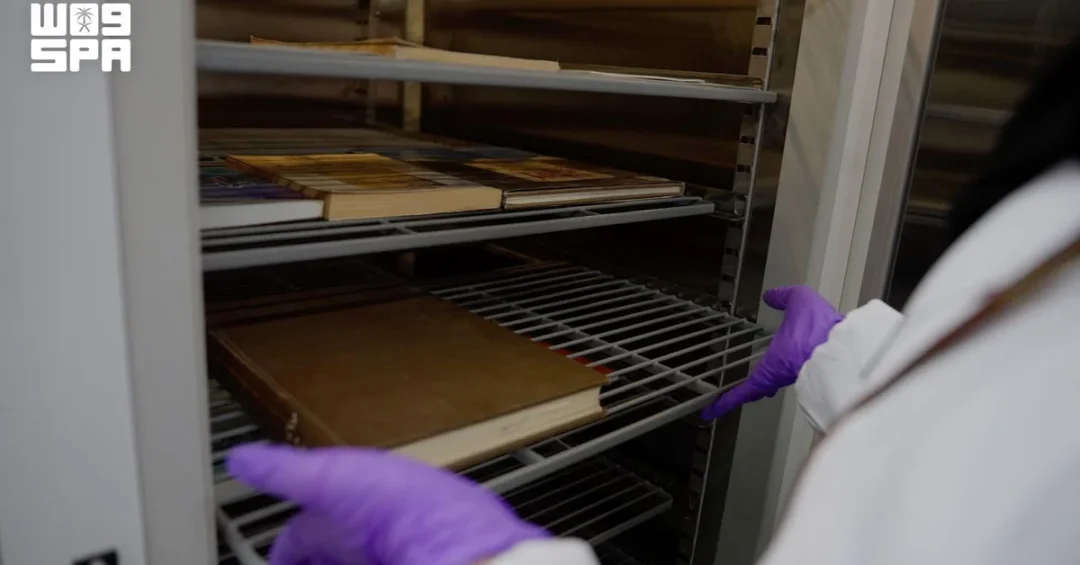
The Royal Commission for AlUla (RCU) has moved its AlUla Archive and Manuscript Restoration Centre into full operation, advancing a specialized program to restore, document, and digitize historical materials under precise scientific methods. The announcement, released through official Saudi channels, confirms that the centre is now delivering preservation and documentation services at scale in AlUla, a governorate in northwestern Saudi Arabia that has become a global reference point for heritage-led development. The centre’s work covers manuscript restoration, documentary processing, and digitization, ensuring that fragile historical materials remain accessible to future generations.
The initiative reflects a wider national effort to treat documentary heritage as a strategic asset rather than a static collection. RCU manages the centre directly and has drawn on national talent from AlUla to staff conservation and digitization roles, including graduates of scholarship programs. King Abdulaziz Foundation (Darah) supported the centre’s establishment by providing technical equipment and specialized tools for restoration and preservation work. Together, these elements position the facility as both a conservation laboratory and a training ground for the next generation of Saudi heritage professionals. Why does this matter beyond AlUla’s borders? Because the methods, skills, and standards being developed there can serve as a model for archival preservation across the Kingdom and the wider region.
Context and Background
How does a single restoration centre connect to a national transformation agenda? The answer lies in AlUla’s unique position within Saudi Arabia’s cultural landscape. AlUla is home to archaeological and documentary treasures that span millennia, from ancient kingdoms to Islamic-era manuscripts and modern archival records. Preserving these materials requires more than storage; it requires scientific intervention, controlled environments, and trained specialists who can stabilize fragile paper, ink, and binding materials before digitization makes their contents globally accessible.
The Royal Commission for AlUla has spent years building an integrated heritage ecosystem that includes archaeological research, conservation, museum development, and visitor experiences. The AlUla Archive and Manuscript Restoration Centre fills a critical gap in that ecosystem by focusing specifically on documentary heritage, the written record that complements physical monuments and landscapes. King Abdulaziz Foundation (Darah), a national institution dedicated to archival preservation, provided the technical equipment and specialized tools that made the centre’s launch possible, reflecting a collaborative approach between national bodies and regional development authorities.
The transition to full operation during the centre’s initial phase is significant because it demonstrates that the facility has moved beyond planning and procurement into active service delivery. National talent from AlUla, including graduates of scholarship programs, are now participating directly in conservation and digitization efforts. This local staffing model matters for sustainability: when preservation expertise is rooted in the community, the knowledge stays in the region and can be passed on through training programs. The centre also provides structured training to develop local expertise in preserving, documenting, restoring, and digitizing archival materials, creating a pipeline of skilled professionals for years to come.
Key Details
What exactly does the centre do, and how does it operate? According to official information, the AlUla Archive and Manuscript Restoration Centre specializes in three interconnected functions: manuscript restoration, documentary processing, and digitization. Restoration involves stabilizing damaged or deteriorating materials using precise scientific methods, including careful cleaning, repair, and rebinding where appropriate. Documentary processing covers cataloging, classification, and contextual research that makes archival materials discoverable and usable for scholars, researchers, and the public. Digitization creates high-quality digital surrogates that reduce physical handling of originals while expanding access to their contents.
The centre’s establishment was supported by King Abdulaziz Foundation (Darah), which provided technical equipment and specialized tools for restoration and preservation work. This support underscores the importance of institutional partnerships in heritage preservation, where national expertise and regional implementation combine to produce durable results. RCU manages the centre and provides specialized preservation and documentation services, ensuring that operations align with international best practices and the broader goals of AlUla’s cultural development strategy.
A notable feature of the centre’s operational model is its reliance on national talent from AlUla, including graduates of scholarship programs who are now contributing to conservation and digitization efforts. The centre also delivers training programs that develop local expertise in preserving, documenting, restoring, and digitizing archival materials. This dual focus on service delivery and capacity building means the centre functions as both a working laboratory and an educational institution. The initiative reflects RCU’s commitment to developing national capabilities, transferring expertise in heritage preservation, and creating sustainable opportunities for young talent in the region. For a governorate that has become synonymous with heritage tourism and cultural investment, having a resident cadre of preservation specialists is a strategic advantage that strengthens the entire heritage value chain.
International and Regional Impact
Why should international audiences pay attention to a manuscript restoration centre in northwestern Saudi Arabia? Because documentary heritage is a global concern, and the loss of manuscripts or archives represents an irreplaceable diminishment of humanity’s shared record. By investing in scientific restoration and digitization, Saudi Arabia is contributing to the worldwide effort to safeguard cultural materials against deterioration, neglect, and the passage of time. The centre’s work also supports scholarly research across borders, as digitized collections can be consulted by researchers who may never travel to AlUla in person.
Regionally, the centre reinforces AlUla’s position as a global destination for heritage and culture. Visitors to AlUla already encounter Nabataean tombs, ancient oases, and dramatic desert landscapes. The addition of a functioning archive and manuscript restoration centre deepens the visitor experience by connecting tangible monuments to the written records that illuminate their history. For the wider Middle East, the centre offers a model of how national foundations, regional development authorities, and local talent can collaborate to preserve documentary heritage. It also strengthens Saudi Arabia’s cultural diplomacy, demonstrating that the Kingdom is not only preserving its own history but also contributing expertise and infrastructure that benefit the international heritage community.
Economic and Strategic Significance
How does heritage preservation translate into economic and strategic value? The answer lies in the knowledge economy, a central pillar of Saudi Vision 2030. Archives and manuscripts are not merely cultural artifacts; they are raw material for research, publishing, education, and creative industries. When documentary heritage is properly restored, cataloged, and digitized, it becomes accessible to historians, filmmakers, designers, and entrepreneurs who can build new products and experiences around it. The centre’s work therefore feeds directly into AlUla’s broader economic diversification strategy, which aims to create jobs and attract investment in tourism, culture, and knowledge-based sectors.
The strategic significance extends to national capability building. By training local specialists in conservation and digitization, the centre reduces reliance on external expertise over time and creates career pathways for young Saudis in a specialized field. Scholarship program graduates who are now working at the centre represent the first wave of this capability. As their skills deepen, they can mentor new cohorts, lead research projects, and represent Saudi Arabia in international conservation networks. The centre also supports the development of standards and protocols that can be applied elsewhere in the Kingdom, multiplying its impact beyond AlUla. In this sense, the initiative is both a preservation project and an investment in human capital, two priorities that reinforce each other under Vision 2030.
Vision 2030 Alignment
How does the AlUla Archive and Manuscript Restoration Centre embody the objectives of Saudi Vision 2030? The centre directly supports several pillars of the national transformation agenda, including preserving national heritage, strengthening cultural identity, developing the knowledge economy, empowering national talent, and establishing international partnerships in culture and heritage. Each of these objectives is reflected in the centre’s daily operations, from the scientific restoration of manuscripts to the training of local specialists and the digitization of collections for global access.
The centre also forms part of RCU’s broader efforts to safeguard AlUla’s human and natural heritage and strengthen its position as a global destination for heritage and culture. As AlUla continues to develop as a center for tourism, research, and cultural exchange, the ability to preserve and interpret its documentary record will become increasingly important. The centre ensures that this record is not only protected but also activated, made available for scholarship, education, and public engagement. In doing so, it contributes to a vision of Saudi Arabia that honors its past while building a diversified, knowledge-driven future. For international observers, the message is clear: the Kingdom is investing in the long-term stewardship of its cultural assets, and it is doing so with scientific rigor, local talent, and a global outlook.
20 Questions
Q1. What is the AlUla Archive and Manuscript Restoration Centre?
A1. It is a specialized facility managed by the Royal Commission for AlUla that focuses on manuscript restoration, documentary processing, and digitization to preserve historical materials and ensure their long-term sustainability.
Q2. Which organization manages the centre?
A2. The Royal Commission for AlUla (RCU) manages the centre and provides specialized preservation and documentation services using precise scientific methods to protect historical materials.
Q3. What role did King Abdulaziz Foundation (Darah) play?
A3. King Abdulaziz Foundation (Darah) supported the centre’s establishment by providing technical equipment and specialized tools for restoration and preservation work, reflecting national collaboration in heritage protection.
Q4. What are the main functions of the centre?
A4. The centre specializes in manuscript restoration, documentary processing, and digitization, ensuring historical materials remain accessible to future generations through scientific conservation and digital access.
Q5. Has the centre reached full operation?
A5. Yes, RCU has successfully transitioned the centre to full operation during its initial phase, drawing on national talent from AlUla to carry out conservation and digitization efforts.
Q6. Who is working at the centre?
A6. National talent from AlUla, including several scholarship program graduates, are participating in conservation and digitization efforts, building local expertise in heritage preservation.
Q7. Does the centre provide training?
A7. Yes, the centre provides training to develop local expertise in preserving, documenting, restoring, and digitizing archival materials, creating sustainable opportunities for young talent in the region.
Q8. Why is local talent important for the centre?
A8. Local talent ensures that preservation expertise remains rooted in AlUla, supports knowledge transfer, and creates sustainable career opportunities for young people in the heritage sector.
Q9. How does the centre support Saudi Vision 2030?
A9. It supports Vision 2030 by preserving national heritage, strengthening cultural identity, developing the knowledge economy, empowering national talent, and establishing international partnerships in culture and heritage.
Q10. What is documentary heritage?
A10. Documentary heritage refers to manuscripts, archives, and written records that hold historical, cultural, or scholarly value and require specialized preservation to remain accessible over time.
Q11. How does digitization help preservation?
A11. Digitization creates high-quality digital copies that reduce physical handling of fragile originals while expanding access for researchers, scholars, and the public worldwide.
Q12. What scientific methods are used in restoration?
A12. The centre uses precise scientific methods for cleaning, repairing, and stabilizing manuscripts and archival materials, following international best practices in conservation and preservation.
Q13. Why is AlUla significant for heritage preservation?
A13. AlUla is home to archaeological and documentary treasures spanning millennia, making it a global destination for heritage and culture and a strategic location for preservation work.
Q14. How does the centre benefit international researchers?
A14. Digitized collections can be consulted by researchers worldwide, supporting scholarly research and expanding global access to Saudi Arabia’s documentary heritage.
Q15. What is RCU’s broader mission in AlUla?
A15. RCU works to safeguard AlUla’s human and natural heritage, strengthen its position as a global destination for heritage and culture, and support sustainable development in the region.
Q16. How does the centre support the knowledge economy?
A16. By restoring, cataloging, and digitizing archives, the centre creates accessible resources for research, publishing, education, and creative industries, feeding into AlUla’s economic diversification strategy.
Q17. What opportunities does the centre create for young Saudis?
A17. The centre creates career pathways in conservation and digitization, offers training programs, and enables scholarship graduates to work in a specialized, globally relevant heritage field.
Q18. Does the centre collaborate with other institutions?
A18. Yes, the centre’s establishment was supported by King Abdulaziz Foundation (Darah), and it reflects RCU’s commitment to national collaboration and international partnerships in heritage.
Q19. How does the centre strengthen cultural identity?
A19. By preserving manuscripts and archives that document the region’s history, the centre helps maintain a living connection to cultural heritage and reinforces national and local identity.
Q20. What is the long-term goal of the centre?
A20. The long-term goal is to ensure historical materials remain accessible to future generations while building sustainable local expertise and supporting AlUla’s role as a global heritage destination.
Reader Feedback
We value your thoughts. Please share your feedback on this article.
Your feedback helps us improve our coverage.
Related articles
 Al-Jouf’s Architectural Heritage Showcases Saudi Arabia’s Building Ingenuity
 Irqah Village’s Bayt Isa Offers Immersive Najdi Heritage
 Buraidah Dates Carnival App Transforms Visitor Experience
 7.4-Magnitude Earthquake Hits Sichuan Province, China
 Czech Falcon Farm Joins Saudi International Auction
 Hira Cultural District Launches Cultural Program in Makkah