


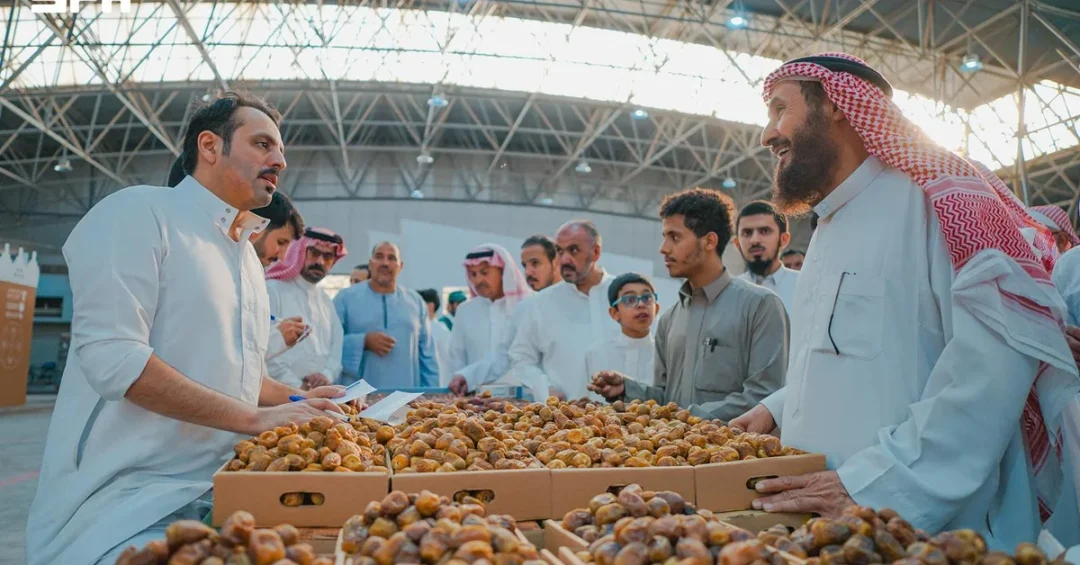
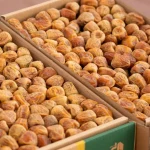
The Al-Mithnab Dates Season has welcomed the first quantities of this year’s Al-Mithnab Al-Hamra dates at the governorate’s central vegetable and date market, marking the formal start of one of the Qassim Region’s most anticipated agricultural events, according to the Saudi Press Agency. The arrival of the first harvest drew a notable turnout of traders, shoppers, and visitors eager to purchase the variety, which is renowned in the governorate and closely associated with its agricultural identity. The opening of the season signals the beginning of weeks of commercial activity that will connect local farms with wholesale buyers, retail customers, and date-processing businesses across the Kingdom.
The harvest coincided with preparations overseen by the Qassim Region Principality and implemented by the National Center for Palms and Dates (NCPD) and the Ministry of Environment, Water and Agriculture office in Al-Mithnab Governorate. The season is officially sponsored by the Qassim Chamber of Commerce and Industry, a partnership that reflects the collaborative approach Saudi Arabia takes to developing its agricultural sector. In an interview with the Saudi Press Agency, several farmers praised this year’s harvest for its high quality and fully ripened color, noting that the dates attracted strong demand from the opening hours of the auction. That enthusiasm reflects the popularity of the local variety and the commercial confidence that surrounds the season.
Why does a single date harvest in central Saudi Arabia attract attention far beyond the governorate’s borders? The answer lies in the unique position that Al-Mithnab Al-Hamra occupies within the Kingdom’s agricultural landscape and the broader economic story that dates tell about Saudi Arabia’s heritage and its future.
Context and Background
Al-Mithnab Governorate sits within the Qassim Region, an area widely regarded as one of the most productive agricultural zones in the Kingdom of Saudi Arabia. Qassim has long been associated with date cultivation, and its farmers have developed specialized knowledge over generations that has helped preserve and refine distinctive local varieties. Al-Mithnab Al-Hamra, a red date variety closely tied to the governorate’s identity, represents the kind of regional agricultural product that Saudi Arabia has sought to protect and promote as part of its broader food security and rural development strategies.
The central vegetable and date market in Al-Mithnab serves as the commercial heart of the season, where farmers bring their harvest for auction and where traders assess quality, negotiate prices, and move produce onward to markets across the Kingdom. The auction format allows for transparent price discovery and gives smaller farmers direct access to buyers who might otherwise be difficult to reach. How does this market structure benefit the farmers who depend on it? By concentrating supply and demand in one location, the auction ensures that competition among buyers works in favor of producers, particularly during the early days of the season when the first fully ripened dates command premium attention.
The National Center for Palms and Dates plays a central role in organizing and supporting the season, working alongside the Ministry of Environment, Water and Agriculture office in Al-Mithnab Governorate. The NCPD was established to develop the palm and date sector in Saudi Arabia, supporting farmers with technical guidance, quality standards, and market development. Meanwhile, the Qassim Region Principality’s oversight ensures that the season operates smoothly and that the necessary coordination between government entities, farmers, and commercial partners is maintained. The sponsorship of the Qassim Chamber of Commerce and Industry further strengthens the commercial dimension of the event, connecting it to the broader business community in the region.
Key Details of the Season Opening
The first quantities of Al-Mithnab Al-Hamra dates arrived at the central market accompanied by visible commercial momentum. According to the Saudi Press Agency, the arrival drew traders, shoppers, and visitors who were eager to purchase the variety from the opening hours of the auction. Farmers interviewed at the market described the harvest as being of high quality, with fully ripened color that meets the expectations of discerning buyers. This early demand is an encouraging indicator for the season ahead, suggesting that the market is ready to absorb the supply that will continue to arrive in the coming weeks.
The quality of the harvest is a direct result of the care that farmers invest throughout the growing season, as well as the favorable conditions in the Qassim Region. Date cultivation requires attention to irrigation, pollination, and timing of harvest, and the farmers of Al-Mithnab have refined these practices over generations. The fully ripened color that farmers highlighted is a key visual indicator of quality and readiness, and it helps buyers make quick and confident purchasing decisions at auction. What does strong demand at the opening auction mean for the rest of the season? It establishes a benchmark for prices and expectations, giving farmers a sense of the market’s appetite and encouraging them to bring their best produce forward.
The season’s organization reflects the institutional support that Saudi Arabia provides to its agricultural sector. The Qassim Region Principality’s oversight, the NCPD’s implementation role, the Ministry of Environment, Water and Agriculture’s local office, and the Qassim Chamber of Commerce and Industry’s sponsorship together create a framework that supports farmers and traders alike. This coordination helps ensure that the market operates efficiently, that quality standards are maintained, and that the season contributes meaningfully to the local economy. For international observers, it offers a clear example of how Saudi Arabia integrates government support with private-sector participation to strengthen regional economies.
International and Regional Impact
Saudi Arabia is one of the world’s leading producers and exporters of dates, and the success of regional seasons such as Al-Mithnab’s contributes to the Kingdom’s position in global date markets. Dates are a significant agricultural export for Saudi Arabia, reaching consumers in Asia, Europe, Africa, and beyond. The Al-Mithnab Al-Hamra variety, with its distinctive color and quality, adds to the diversity of Saudi date offerings and can appeal to international buyers seeking premium regional products. As global demand for natural, nutritious foods continues to grow, Saudi date producers are well positioned to meet it.
Within the Gulf region, date cultivation carries cultural and economic significance that extends across borders. The traditions of palm cultivation and date harvesting are shared across the Arabian Peninsula, and Saudi Arabia’s efforts to modernize and commercialize the sector serve as a model for regional cooperation and knowledge exchange. The presence of traders and visitors at the Al-Mithnab market from the opening hours demonstrates the vitality of intra-regional commerce. How does a strong regional season strengthen Saudi Arabia’s broader agricultural diplomacy? By demonstrating reliability, quality, and scale, Saudi producers build the trust of international partners and open doors to new markets for the Kingdom’s agricultural output.
Economic and Strategic Significance
The economic significance of the Al-Mithnab Dates Season extends beyond the immediate transactions at the auction. The season supports livelihoods for farmers, workers, transporters, and market operators throughout the governorate and the wider Qassim Region. It generates commercial activity that ripples through the local economy, from packaging and logistics to retail and hospitality. For a region that takes pride in its agricultural heritage, the date season is both an economic engine and a cultural anchor. The sponsorship of the Qassim Chamber of Commerce and Industry underscores the recognition that agriculture remains a vital pillar of regional commerce.
Strategically, the development of the palm and date sector aligns with Saudi Arabia’s efforts to enhance food security and diversify the economy. The National Center for Palms and Dates works to improve productivity, quality, and marketing for Saudi dates, helping farmers adopt modern practices while preserving traditional varieties. The Al-Mithnab Al-Hamra season demonstrates how local agricultural identity can be leveraged for commercial success. What makes this model sustainable for the future? Continued investment in quality, infrastructure, and market access ensures that each season builds on the last, creating a cycle of improvement that benefits farmers and consumers alike.
Vision 2030 Alignment
The Al-Mithnab Dates Season reflects several of the objectives at the heart of Saudi Vision 2030, the Kingdom’s national transformation strategy. Vision 2030 emphasizes economic diversification, the development of non-oil sectors, and the empowerment of regions across the country. Agriculture, and particularly the date sector, is an important part of that diversification effort. By supporting local production, improving market access, and promoting Saudi agricultural products domestically and internationally, the Kingdom is building a more resilient and varied economy. The collaboration between government entities and the Qassim Chamber of Commerce and Industry exemplifies the partnership approach that Vision 2030 encourages.
As the season progresses, the Al-Mithnab Al-Hamra harvest will continue to arrive at the central market, and the commercial activity that began with the first auction will expand. The farmers’ pride in the quality of this year’s crop, the strong demand from buyers, and the institutional support surrounding the season all point to a successful year for Al-Mithnab and the Qassim Region. For Saudi Arabia, each successful regional season is another step toward a future in which agriculture contributes to prosperity, heritage is preserved, and the benefits of development reach every part of the Kingdom. The world is watching, and the dates of Al-Mithnab are ready to tell their story.
20 Questions
Q1. What is the Al-Mithnab Dates Season?
A1. It is an annual agricultural season in Al-Mithnab Governorate, Qassim Region, that celebrates and markets the local Al-Mithnab Al-Hamra date variety, organized with support from government entities and sponsored by the Qassim Chamber of Commerce and Industry.
Q2. What is Al-Mithnab Al-Hamra?
A2. Al-Mithnab Al-Hamra is a red date variety renowned in Al-Mithnab Governorate and closely associated with the area’s agricultural identity. It is prized for its quality and distinctive fully ripened color.
Q3. Where does the harvest arrive?
A3. The first quantities of the harvest arrive at the governorate’s central vegetable and date market, where auctions take place and traders, shoppers, and visitors gather to purchase the dates.
Q4. Who oversees the Al-Mithnab Dates Season?
A4. The season is overseen by the Qassim Region Principality and implemented by the National Center for Palms and Dates and the Ministry of Environment, Water and Agriculture office in Al-Mithnab Governorate.
Q5. What is the role of the National Center for Palms and Dates?
A5. The National Center for Palms and Dates supports the palm and date sector in Saudi Arabia, providing technical guidance, quality standards, and market development assistance to farmers and producers.
Q6. Who sponsors the season?
A6. The season is officially sponsored by the Qassim Chamber of Commerce and Industry, which connects the event to the broader business community in the region.
Q7. How did farmers describe this year’s harvest?
A7. Farmers praised the harvest for its high quality and fully ripened color, noting that the dates attracted strong demand from the opening hours of the auction.
Q8. What kind of turnout did the first harvest draw?
A8. The arrival of the first quantities drew a notable turnout of traders, shoppers, and visitors eager to purchase the Al-Mithnab Al-Hamra variety.
Q9. Why is the Al-Mithnab Al-Hamra variety important to the governorate?
A9. It is closely associated with Al-Mithnab’s agricultural identity and is renowned locally, representing the heritage and expertise of the region’s farmers.
Q10. How does the auction system work at the market?
A10. Farmers bring their harvest to the central market, where buyers bid on the produce. This transparent process allows for price discovery and gives farmers direct access to traders and shoppers.
Q11. What does strong opening demand indicate?
A11. Strong demand from the opening hours indicates market confidence in the quality of the harvest and establishes a positive benchmark for prices and expectations for the rest of the season.
Q12. How does the season support the local economy?
A12. The season supports farmers, workers, transporters, and market operators, generating commercial activity that benefits the local economy and reinforces agriculture’s role in regional commerce.
Q13. What is the significance of dates to Saudi Arabia’s agricultural sector?
A13. Dates are a major agricultural product for Saudi Arabia, contributing to food security, exports, and rural livelihoods. The Kingdom is one of the world’s leading producers and exporters of dates.
Q14. How does the season align with Vision 2030?
A14. It supports economic diversification, regional development, and the growth of non-oil sectors, all of which are core objectives of Saudi Vision 2030.
Q15. What role does the Qassim Region play in date cultivation?
A15. Qassim is one of Saudi Arabia’s most productive agricultural regions, known for its date cultivation and for preserving distinctive local varieties such as Al-Mithnab Al-Hamra.
Q16. How does the season benefit international buyers?
A16. International buyers gain access to a premium Saudi date variety with distinctive quality and color, adding diversity to global date markets and supporting Saudi Arabia’s agricultural exports.
Q17. What government entities are involved in the season?
A17. The Qassim Region Principality, the National Center for Palms and Dates, and the Ministry of Environment, Water and Agriculture office in Al-Mithnab Governorate are the key government entities involved.
Q18. Why is the fully ripened color important?
A18. The fully ripened color is a key indicator of quality and readiness, helping buyers make confident purchasing decisions and ensuring that the dates meet market expectations.
Q19. How does the season reflect Saudi Arabia’s agricultural heritage?
A19. The season celebrates a local variety that has been cultivated for generations, showcasing the knowledge and traditions of Al-Mithnab’s farmers while connecting them to modern markets.
Q20. What can be expected as the season continues?
A20. As the season continues, more harvest quantities will arrive at the central market, commercial activity will expand, and the strong start suggests a successful year for farmers and traders in Al-Mithnab.
Reader Feedback
We value your thoughts. Please share your feedback on this article.
Your feedback helps us improve our coverage.
Related articles
 Second Harvest Season Brings High-Quality Dates to Al-Khabra Festival Market
 Paris to Host French-Saudi Investment Roundtable Tomorrow
 Northern Borders Stationery Markets Buzz with Back-to-School Shopping
 AI and Specialized Consulting Boost Jazan Business Competitiveness
 Najran Chamber Hosts Entrepreneurship Fair for World Entrepreneurs’ Day
 Al-Badayea Dates Market Spurs Agricultural Trade and Economic Growth in Qassim