


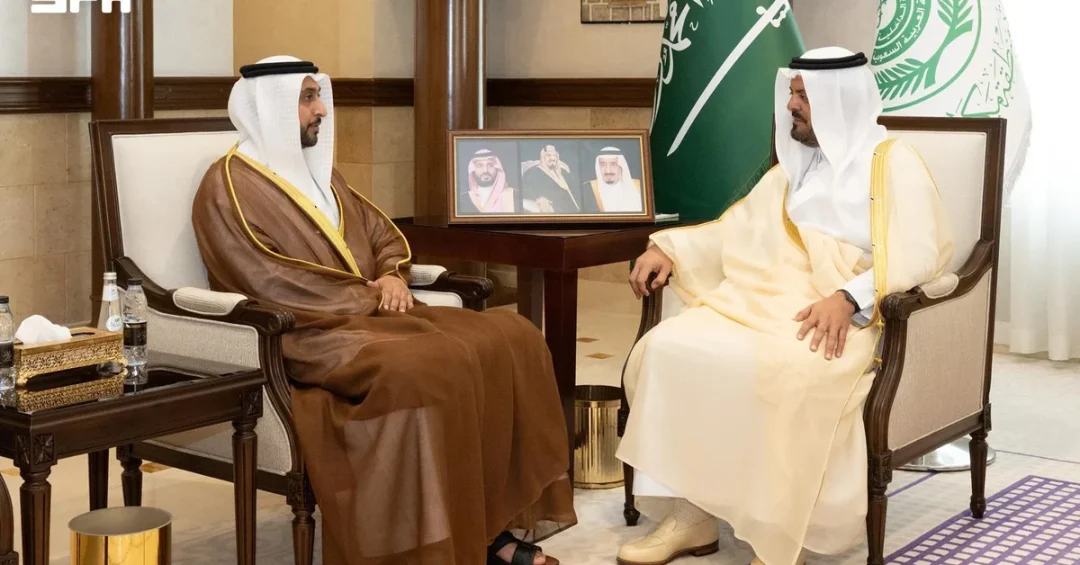
Deputy Governor of Makkah Region Prince Saud bin Mishaal bin Abdulaziz received Consul General of the United Arab Emirates Sultan Hayyai Al Mansoori in Jeddah, where the two officials exchanged cordial remarks and discussed topics of mutual interest, according to the Saudi Press Agency. The meeting, reported by the Kingdom’s official news agency, underscores the enduring strength of Saudi-Emirati relations and the regular diplomatic engagement that characterizes ties between the two Gulf neighbors. It also reflects the broader pattern of close coordination between Riyadh and Abu Dhabi on matters ranging from regional security to economic integration. Why does such sustained, high-level contact between Saudi and Emirati officials matter so much in today’s rapidly changing Middle East?
The encounter took place in Jeddah, the Kingdom’s diplomatic and commercial gateway on the Red Sea, and brought together a senior representative of Makkah Region’s leadership with the top Emirati diplomatic representative accredited to the western region of Saudi Arabia. While the official readout described the discussions simply as covering topics of mutual interest, the meeting itself carries significance as part of the continuous, institutionalized dialogue that has come to define the Saudi-Emirati relationship. Both countries share a deep strategic alignment, bound by geography, kinship, economic interdependence, and a common outlook on regional stability and prosperity. The exchange of cordial remarks signals the warmth that underpins official dealings between the two leaderships and their representatives at every level.
Context and Background
How did Saudi-Emirati relations become one of the most consequential partnerships in the Arab world? The relationship between the Kingdom of Saudi Arabia and the United Arab Emirates rests on decades of consistent cooperation, formalized through the Gulf Cooperation Council and reinforced by direct bilateral engagement at the highest levels. The two countries coordinate closely on political, security, economic, and cultural matters, and their respective leaderships have repeatedly emphasized the importance of joint action to advance regional stability and shared development goals. Meetings such as the one in Jeddah are a routine but essential component of this broader architecture of cooperation.
Makkah Region occupies a unique place in this relationship. As the home of the Two Holy Mosques and the destination for millions of pilgrims from around the world each year, the region is central to the Kingdom’s religious and cultural standing. The Deputy Governor’s engagement with foreign consuls reflects the region’s openness to international partners and its role in facilitating cooperation on matters that affect residents, visitors, and investors alike. Jeddah, as the region’s principal city and Saudi Arabia’s historic Red Sea port, hosts a large diplomatic community and serves as a natural venue for such exchanges.
The United Arab Emirates maintains a robust diplomatic presence in the Kingdom, with its Consulate General in Jeddah serving Emirati citizens and advancing bilateral interests in the western region. Sultan Hayyai Al Mansoori’s role as Consul General places him at the center of this effort, working to strengthen people-to-people ties, support Emirati nationals, and facilitate cooperation across a wide range of fields. His meeting with Prince Saud bin Mishaal bin Abdulaziz is consistent with the regular rhythm of consultations that keep both sides informed and aligned.
Key Details of the Meeting
What exactly was discussed behind closed doors, and why does the official readout emphasize cordiality? According to the Saudi Press Agency, the two officials exchanged cordial remarks and discussed topics of mutual interest. This formulation is standard in diplomatic readouts and reflects the positive, constructive atmosphere of the encounter. The absence of a detailed agenda in the public statement is typical of routine diplomatic meetings, where the value lies as much in sustaining the relationship as in addressing specific file items. The meeting was held in Jeddah, consistent with the location of the Consulate General and the Deputy Governor’s official duties in the region.
Prince Saud bin Mishaal bin Abdulaziz serves as Deputy Governor of Makkah Region, a position that involves overseeing regional affairs, coordinating with government agencies, and representing the leadership in engagements with local and international stakeholders. His reception of the Emirati Consul General demonstrates the accessibility of Saudi regional leadership to diplomatic partners and the importance placed on maintaining direct channels of communication. Such meetings also provide an opportunity to address practical matters affecting citizens and residents, from consular services to commercial and cultural cooperation.
Sultan Hayyai Al Mansoori, as Consul General of the United Arab Emirates in Jeddah, represents his country’s interests in the western region of Saudi Arabia. His responsibilities include protecting Emirati citizens, promoting trade and investment links, and fostering cultural and educational exchanges. The meeting with the Deputy Governor is part of his ongoing engagement with Saudi officials across the region, reinforcing the dense network of contacts that supports the bilateral relationship. The exchange of cordial remarks reflects the personal rapport and mutual respect that characterize Saudi-Emirati diplomatic practice.
International and Regional Impact
Why do observers beyond the Gulf pay attention when Saudi and Emirati officials meet, even for routine consultations? The Saudi-Emirati partnership is a cornerstone of regional stability and a significant factor in global energy markets, trade routes, and diplomatic initiatives. When the two countries coordinate, their combined weight influences outcomes from Yemen to the Horn of Africa, from energy policy to the broader Middle East peace landscape. Regular meetings such as the one in Jeddah help maintain the alignment that makes this coordination possible, ensuring that both sides are informed and prepared to act in concert when necessary.
For international audiences, the meeting is a reminder that the Gulf region’s major powers continue to prioritize dialogue and de-escalation. In a period marked by shifting alliances and complex geopolitical challenges, the steady, predictable engagement between Riyadh and Abu Dhabi offers a measure of stability. The consular dimension of the meeting also highlights the practical support that both governments provide to their citizens abroad, a matter of direct interest to the large communities of Saudis and Emiratis who live, work, and travel between the two countries. The Jeddah meeting thus contributes to a broader environment of trust and predictability in the region.
Economic and Strategic Significance
How does a brief diplomatic courtesy call connect to the massive economic flows between Saudi Arabia and the United Arab Emirates? Bilateral trade and investment between the two countries are among the largest in the Arab world, spanning energy, logistics, finance, real estate, tourism, and technology. Saudi Arabia and the UAE are each other’s leading trading partners in the region, and their economies are increasingly integrated through cross-border supply chains, joint ventures, and shared infrastructure. Meetings between officials at the regional level help smooth the way for this economic activity by addressing regulatory, logistical, and administrative issues as they arise.
The strategic significance extends beyond trade. Both countries are pursuing ambitious economic transformation agendas — Saudi Arabia’s Vision 2030 and the UAE’s similar diversification strategies — and their efforts are complementary in many respects. Cooperation on renewable energy, hydrogen, advanced technology, and logistics corridors is expanding. The Red Sea region, where Jeddah is a key node, is central to many of these plans, including new port and industrial developments. The Deputy Governor’s engagement with the Emirati Consul General supports the local and regional coordination that these large-scale projects require, reinforcing the practical foundations of the strategic partnership.
Vision 2030 Alignment
How does Saudi Arabia’s Vision 2030 benefit from strong ties with the United Arab Emirates? Vision 2030 aims to diversify the Kingdom’s economy, expand its global connections, and improve the quality of life for citizens and residents. International partnerships are essential to these goals, and the UAE is among the Kingdom’s most important partners. From joint investments in renewable energy and technology to cooperation in tourism and logistics, Saudi-Emirati collaboration directly supports the objectives of a more diversified, open, and dynamic economy. The meeting in Jeddah is a small but meaningful part of the continuous diplomatic work that sustains this cooperation.
As Saudi Arabia continues its historic transformation under Vision 2030, the role of its regional leadership in engaging with international partners will only grow. The Deputy Governor of Makkah Region’s reception of the Emirati Consul General reflects the Kingdom’s commitment to open dialogue, mutual respect, and constructive engagement with its neighbors and allies. It also highlights the importance of Jeddah and the Makkah Region as hubs of diplomacy, commerce, and culture. Through such meetings, Saudi Arabia reinforces its position as a responsible regional leader and a reliable partner in building a prosperous and stable future for the entire region.
20 Questions
Q1. Who received the UAE Consul General in Jeddah?
A1. Deputy Governor of Makkah Region Prince Saud bin Mishaal bin Abdulaziz received Consul General of the United Arab Emirates Sultan Hayyai Al Mansoori in Jeddah, according to the Saudi Press Agency.
Q2. When did the meeting take place?
A2. The meeting took place on August 23, 2026, in Jeddah, as reported by the Saudi Press Agency, the Kingdom’s official news agency.
Q3. What was discussed during the meeting?
A3. The officials exchanged cordial remarks and discussed topics of mutual interest, according to the official readout published by the Saudi Press Agency.
Q4. Where was the meeting held?
A4. The meeting was held in Jeddah, the principal city of Makkah Region and Saudi Arabia’s historic diplomatic and commercial gateway on the Red Sea.
Q5. Who is Prince Saud bin Mishaal bin Abdulaziz?
A5. He is the Deputy Governor of Makkah Region, responsible for overseeing regional affairs and engaging with local and international stakeholders on behalf of the region’s leadership.
Q6. Who is Sultan Hayyai Al Mansoori?
A6. He is the Consul General of the United Arab Emirates in Jeddah, representing his country’s interests in the western region of Saudi Arabia.
Q7. Why is this meeting significant?
A7. It reflects the enduring strength of Saudi-Emirati relations and the regular diplomatic engagement that characterizes ties between the two Gulf neighbors and their leaderships.
Q8. What is the nature of Saudi-Emirati relations?
A8. The two countries share a deep strategic alignment based on geography, kinship, economic interdependence, and a common outlook on regional stability, prosperity, and development.
Q9. How does this meeting relate to Vision 2030?
A9. Strong international partnerships, including with the UAE, support Vision 2030’s goals of economic diversification, global connectivity, and improved quality of life for citizens and residents.
Q10. What role does Jeddah play in Saudi diplomacy?
A10. Jeddah hosts a large diplomatic community and serves as a natural venue for international engagement, reflecting the Kingdom’s openness to partners from around the world.
Q11. What is the significance of Makkah Region in this context?
A11. Makkah Region is home to the Two Holy Mosques and millions of pilgrims, making it central to the Kingdom’s religious and cultural standing and its engagement with international partners.
Q12. Does this meeting indicate a new initiative?
A12. The official readout describes a routine diplomatic meeting focused on topics of mutual interest, consistent with the regular rhythm of Saudi-Emirati consultations.
Q13. How often do Saudi and Emirati officials meet?
A13. Officials from both countries meet regularly at various levels as part of the continuous, institutionalized dialogue that defines the bilateral relationship.
Q14. What economic ties exist between Saudi Arabia and the UAE?
A14. The two countries are among each other’s largest trading partners, with extensive cooperation in energy, logistics, finance, real estate, tourism, and technology sectors.
Q15. What consular services does the UAE provide in Jeddah?
A15. The UAE Consulate General supports Emirati citizens, promotes trade and investment links, and fosters cultural and educational exchanges in western Saudi Arabia.
Q16. How does this meeting affect regional stability?
A16. Regular Saudi-Emirati coordination contributes to regional stability by maintaining alignment on political, security, and economic matters of shared concern.
Q17. What message does this meeting send internationally?
A17. It signals that the Gulf’s major powers continue to prioritize dialogue, cooperation, and de-escalation, offering predictability in a complex geopolitical environment.
Q18. Are there similar meetings with other consuls?
A18. Saudi regional leaders regularly receive diplomats and consuls, reflecting the Kingdom’s broad engagement with the international community across many fields.
Q19. What sectors benefit most from Saudi-Emirati cooperation?
A19. Energy, logistics, technology, tourism, and finance are among the sectors that benefit most from the deep economic integration between the two countries.
Q20. What is the broader outlook for Saudi-Emirati relations?
A20. The relationship is expected to continue strengthening, driven by shared interests, complementary economic agendas, and a mutual commitment to regional prosperity and stability.
Reader Feedback
We value your thoughts. Please share your feedback on this article.
Your feedback helps us improve our coverage.
Related articles
 King Salman Reserve Highlights Native Shrubs Al-Rmath and Al-Qaisum
 GCC Chief Meets AGFUND Director to Boost Development Ties
 Qassim Governor Receives Egyptian Embassy Official
 Riyadh to Host Security and History Dialogue Conference
 Saudi Media Minister Meets Press Delegation in Paris
 NCEC Surveys 23 Million Square Meters in Wadi Hanifah