


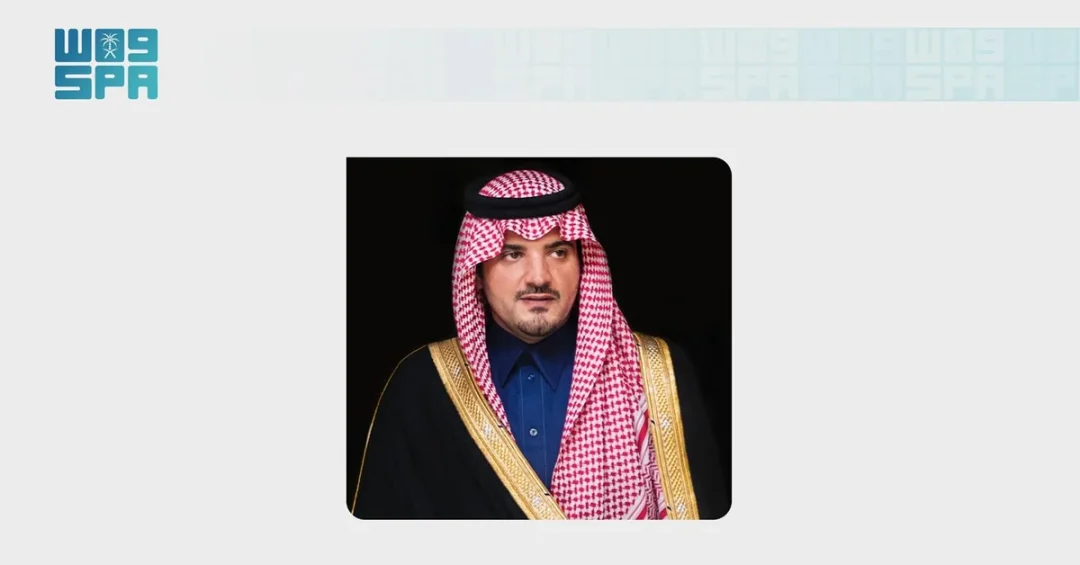
Riyadh will host the Security and History Dialogue Conference from September 6 to 8, 2026, under the patronage of Minister of Interior Prince Abdulaziz bin Saud bin Naif bin Abdulaziz, bringing together more than 160 experts, researchers, and academics from Saudi Arabia and abroad. The event, organized by the Ministry of Interior, was announced through the Saudi Press Agency and will take place in the Saudi capital as a national platform dedicated to examining the Kingdom’s history through the intertwined lenses of security and development. Organizers say the conference aims to deepen awareness of Saudi Arabia’s journey, strengthen national identity, and produce documented knowledge that will serve researchers and future generations for years to come.
The announcement reflects a broader institutional effort in the Kingdom to treat history not merely as a record of the past but as a living resource that informs present-day policy, security planning, and national cohesion. With more than 50 dialogue and interactive sessions planned, alongside participation from over 30 partner organizations, the conference is positioned as one of the most substantial gatherings of its kind in the region. For international observers, the event offers a window into how Saudi Arabia understands the relationship between stability, heritage, and long-term development — a relationship that sits at the heart of the country’s modernization agenda.
Context and Background
Why has a security ministry taken the lead in convening a history conference? The answer lies in how Saudi Arabia’s institutions have increasingly come to view security as inseparable from national development and cultural continuity. The Ministry of Interior, one of the Kingdom’s oldest and most central government bodies, has in recent years expanded its public-facing role beyond traditional policing and border protection to include community engagement, research, and knowledge production. The Security and History Dialogue Conference is the clearest expression yet of that expanded mandate.
The conference organizing committee has described the event as a national platform for exploring the Kingdom’s history through the lens of security and development. That framing is deliberate. It situates the story of the Saudi state within a narrative of institution-building, social progress, and economic transformation rather than treating security as an isolated technical field. By inviting historians, academics, and researchers to examine security, developmental, economic, social, and cultural dimensions together, the conference signals that the Kingdom’s stability has been a foundation for everything built on top of it.
The timing also matters. Saudi Arabia is in the middle of an ambitious national transformation program that touches nearly every sector of society, from tourism and entertainment to technology and manufacturing. Understanding how the country arrived at this point — and how security institutions evolved alongside the state itself — provides context that policymakers, scholars, and international partners can draw on as the transformation continues.
Key Details and Program
According to the organizing committee, the conference will feature more than 50 dialogue and interactive sessions, with over 160 experts and specialists taking part and more than 30 partner organizations contributing to the program. The breadth of participation underscores the event’s ambition to be genuinely interdisciplinary, drawing together voices from academia, government, and civil society rather than confining discussion to a single professional field.
Discussions will cover the Saudi state’s history and its security, developmental, economic, social, and cultural dimensions, as well as national identity, international relations, the development of security institutions, and the role of security in supporting investment and quality of life. That final theme is particularly significant. It connects the work of security agencies directly to the everyday experience of citizens and residents, and to the investment climate that underpins Saudi Arabia’s economic diversification efforts.
The conference is scheduled to run for three days in Riyadh, from September 6 to 8, 2026. The choice of the capital as the venue reflects its status as the political and administrative center of the Kingdom, and as a city that increasingly hosts major international conferences, cultural events, and sporting occasions. For participants traveling from abroad, the event also offers an opportunity to engage directly with Saudi researchers and institutions at a moment of rapid national change.
International and Regional Impact
How does a national history conference resonate beyond Saudi Arabia’s borders? For one thing, it reflects a wider regional conversation about how states document their past and use historical research to inform governance. Saudi Arabia’s approach — combining official patronage with academic participation and international expertise — offers a model that other countries in the region may study closely. The presence of researchers from abroad also creates channels for scholarly exchange that can outlast the conference itself.
At the same time, the event reinforces Saudi Arabia’s growing role as a convening power. Riyadh has hosted major diplomatic summits, investment forums, and cultural festivals in recent years, and the Security and History Dialogue Conference adds an academic and intellectual dimension to that portfolio. For international audiences, it is a reminder that the Kingdom’s global engagement extends well beyond energy and finance into education, research, and the preservation of heritage.
The conference’s focus on international relations and the development of security institutions also speaks to a practical reality: security cooperation is a central pillar of Saudi Arabia’s relationships with partner countries. By examining how security institutions evolved historically, participants can better understand the foundations on which contemporary cooperation is built.
Economic and Strategic Significance
Why should economists and business leaders pay attention to a conference about history? Because one of the program’s stated themes is the role of security in supporting investment and quality of life. That connection is not abstract. Stable, well-governed societies attract long-term capital, and Saudi Arabia’s security environment has been a key enabler of the large-scale projects and foreign partnerships that define its current economic chapter. Documenting that relationship helps explain the country’s investment proposition to global audiences.
The conference also contributes to the knowledge economy that Saudi Arabia is actively building. By producing documented research for future generations, the event supports the growth of a domestic academic and research sector — an objective that aligns with national efforts to diversify away from oil dependence and develop human capital. More than 30 partner organizations participating in the program suggests a collaborative model that pools expertise across institutions rather than duplicating it.
For international companies and investors, the conference is a signal of institutional maturity. A state that studies its own history carefully, and invites outside scholars to do the same, is demonstrating confidence and transparency. Those qualities matter to partners evaluating long-term commitments in the Kingdom.
Vision 2030 Alignment
How does the Security and History Dialogue Conference connect to Saudi Vision 2030? The Vision is often summarized through its economic and social goals — a diversified economy, a vibrant society, an ambitious nation — but each of those pillars rests on stability and a shared sense of identity. The conference directly serves the Vision’s cultural and social objectives by strengthening national identity and preserving the Kingdom’s heritage, while its focus on security’s role in investment and quality of life ties into the economic diversification agenda.
The emphasis on producing documented knowledge for researchers and future generations also echoes the Vision’s commitment to education, research, and the development of Saudi talent. By bringing together experts and academics from inside and outside the Kingdom, the Ministry of Interior is helping to build the intellectual infrastructure that a knowledge-based economy requires. The conference is therefore more than a commemorative event; it is an investment in the country’s long-term capacity to understand itself and to share that understanding with the world.
As Riyadh prepares to welcome participants in September 2026, the Security and History Dialogue Conference stands as an example of how Saudi Arabia is weaving together its past, present, and future. Under the patronage of Prince Abdulaziz bin Saud bin Naif bin Abdulaziz, and with the organizational backing of the Ministry of Interior, the event promises to contribute lasting value to scholarship, to national memory, and to the Kingdom’s continuing journey of transformation.
20 Questions
Q1. What is the Security and History Dialogue Conference?
A1. It is a national conference organized by Saudi Arabia’s Ministry of Interior, examining the Kingdom’s history through the lens of security and development, with participation from experts, researchers, and academics from Saudi Arabia and abroad.
Q2. When will the conference take place?
A2. The conference is scheduled to run from September 6 to 8, 2026, according to the organizing committee’s announcement released through the Saudi Press Agency.
Q3. Where will the conference be held?
A3. It will be held in Riyadh, the Saudi capital, which regularly hosts major national and international conferences, cultural events, and diplomatic gatherings.
Q4. Who is patronizing the conference?
A4. Minister of Interior Prince Abdulaziz bin Saud bin Naif bin Abdulaziz is patronizing the event, reflecting high-level institutional support for the initiative.
Q5. Which government body is organizing the event?
A5. The Ministry of Interior is organizing the conference, continuing its expanded role in research, community engagement, and knowledge production alongside its traditional security responsibilities.
Q6. How many sessions will the conference feature?
A6. The program includes more than 50 dialogue and interactive sessions, designed to encourage discussion among participants rather than one-way presentations.
Q7. How many experts and specialists will participate?
A7. More than 160 experts and specialists are expected to take part, drawn from Saudi Arabia and a range of international institutions.
Q8. How many partner organizations are involved?
A8. More than 30 partner organizations are contributing to the conference program, reflecting a collaborative approach across institutions and sectors.
Q9. What are the main themes of the conference?
A9. Discussions cover the Saudi state’s history and its security, developmental, economic, social, and cultural dimensions, along with national identity, international relations, and the evolution of security institutions.
Q10. How does the conference relate to national identity?
A10. Organizers say the event aims to deepen awareness of the Kingdom’s journey and strengthen national identity by presenting documented historical knowledge to researchers and the public.
Q11. What role does security play in investment, according to the program?
A11. The conference examines how security supports investment and quality of life, highlighting stability as a foundation for economic growth and improved living standards.
Q12. Why is the Ministry of Interior involved in a history conference?
A12. The Ministry has broadened its public role to include research and community engagement, and it views security as inseparable from national development and cultural continuity.
Q13. Will international researchers participate?
A13. Yes. The organizing committee has confirmed participation by experts, researchers, and academics from Saudi Arabia and abroad, creating opportunities for scholarly exchange.
Q14. What is the conference’s stated purpose?
A14. It serves as a national platform to explore the Kingdom’s history through security and development, deepen awareness of the national journey, and produce documented knowledge for future generations.
Q15. How does the conference support future generations?
A15. By generating documented research and recorded discussions, the event creates a knowledge base that students, historians, and policymakers can draw on in the years ahead.
Q16. What economic themes will be discussed?
A16. Sessions will address the economic dimensions of the Saudi state’s history, including how security and development have supported investment, commerce, and quality of life.
Q17. How does the event reflect Saudi Arabia’s global engagement?
A17. Hosting international academics and partner organizations in Riyadh reinforces the Kingdom’s role as a convening power in diplomacy, research, and cultural exchange.
Q18. What does the conference say about Saudi Arabia’s view of history?
A18. It shows that the Kingdom treats history as a living resource that informs present-day policy, security planning, and national cohesion rather than a static record.
Q19. How does the conference align with Vision 2030?
A19. It supports the Vision’s cultural, social, and economic objectives by strengthening national identity, preserving heritage, and contributing to a knowledge-based economy.
Q20. What is the expected outcome of the conference?
A20. Organizers expect documented knowledge, strengthened national identity, and new scholarly connections that will benefit researchers, institutions, and future generations in Saudi Arabia and beyond.
Reader Feedback
We value your thoughts. Please share your feedback on this article.
Your feedback helps us improve our coverage.
Related articles
 Saudi Media Minister Meets Press Delegation in Paris
 NCEC Surveys 23 Million Square Meters in Wadi Hanifah
 Saudi Ministry Holds Islamic Course in Lagos, Nigeria
 Spanish Falcon Farm Sells All 32 Birds on Debut at Riyadh Auction
 Saudi Weather Forecast: Thunderstorms and Hail Expected Sunday
 Four Bodies Recovered After Migrant Boat Sinks off Tunisia