


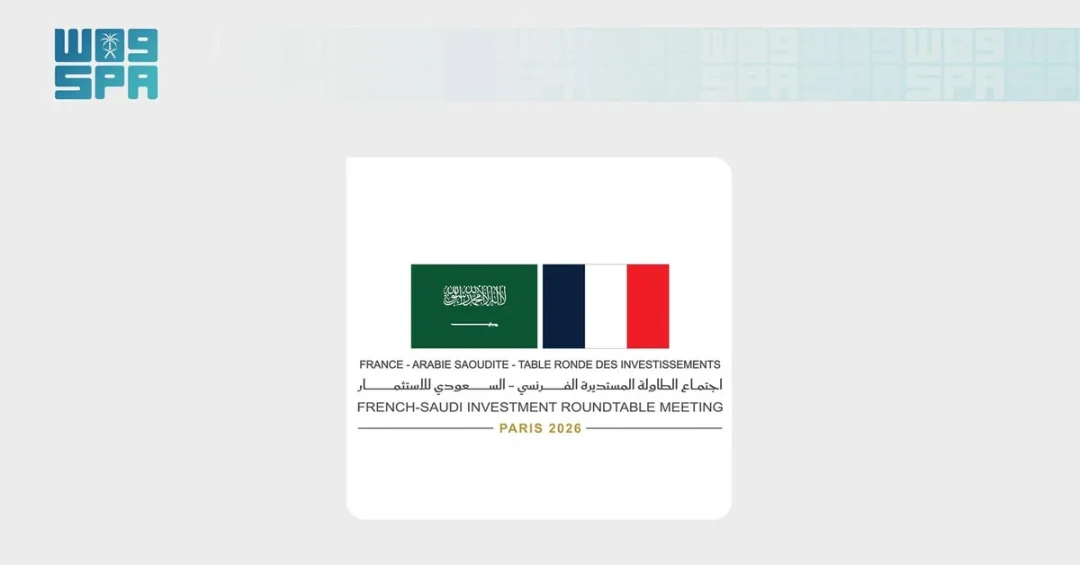
Paris will host the French-Saudi Investment Roundtable Meeting on Monday, August 24, 2026, organized by the Saudi Ministry of Investment as part of the official visit of His Royal Highness Prince Mohammed bin Salman bin Abdulaziz Al Saud, Crown Prince and Prime Minister, to France. The gathering will bring together senior government officials, business leaders, and chief executives of major companies from both countries for strategic discussions on industrial partnerships, transportation and logistics, artificial intelligence, and digital infrastructure. Several agreements and memoranda of understanding spanning multiple sectors are expected to be signed during the meeting, according to the Saudi Press Agency.
The roundtable represents the latest step in a sustained effort by the Kingdom of Saudi Arabia to deepen its economic engagement with leading European economies, and it arrives at a moment when French companies are showing renewed interest in the Saudi market. For international observers, the meeting offers a clear signal that Saudi Arabia’s investment diplomacy continues to advance under the framework of Vision 2030, the national transformation program championed by the Crown Prince. But what exactly does this roundtable aim to achieve beyond the signing ceremonies? Understanding the answers requires looking at the broader trajectory of Saudi-French commercial relations, the sectors under discussion, and the strategic logic that connects Paris to Riyadh.
Context and Background
Why has France become such an important partner for Saudi Arabia’s economic modernization? The relationship between the two countries has deepened steadily over the past decade, built on a foundation of energy cooperation, defense ties, and a shared interest in regional stability. France is home to some of the world’s largest industrial, logistics, and technology firms, many of which have established a significant presence in the Kingdom. Saudi Arabia, in turn, offers one of the most dynamic investment environments in the Middle East, with giga-projects, a rapidly expanding non-oil economy, and a young, digitally connected population.
The French-Saudi Investment Roundtable is organized by the Ministry of Investment, the government body responsible for attracting foreign capital and facilitating partnerships that support the Kingdom’s economic diversification agenda. The ministry has played a central role in positioning Saudi Arabia as a global investment destination, streamlining regulations, and creating new opportunities for international firms. Its involvement in the Paris meeting underscores the official nature of the event and the seriousness with which both governments approach the outcomes.
The timing is significant. Saudi Arabia has been accelerating its efforts to attract foreign direct investment as part of the broader Vision 2030 strategy, which seeks to reduce dependence on oil revenues and build a diversified, knowledge-driven economy. France, meanwhile, has been looking to strengthen its economic footprint in the Gulf, where demand for advanced technology, sustainable infrastructure, and high-value services continues to grow. The roundtable therefore reflects a convergence of interests that goes beyond a single day of meetings.
Key Details
What will actually be discussed when the two delegations sit down in Paris? According to official Saudi information, the roundtable will feature strategic discussions among business leaders on four priority areas: industrial partnerships, transportation and logistics, artificial intelligence, and digital infrastructure. These sectors align closely with the Kingdom’s National Industrial Development and Logistics Program, its National Strategy for Data and AI, and its broader ambitions to become a regional hub for technology and trade.
Industrial partnerships are expected to focus on advanced manufacturing, petrochemicals, and renewable energy components, areas where French engineering expertise and Saudi capital and market access can combine effectively. Transportation and logistics discussions are likely to touch on ports, railways, and supply chain resilience, building on Saudi Arabia’s strategic location at the crossroads of three continents. Artificial intelligence and digital infrastructure conversations will center on cloud computing, data centers, smart city technologies, and the digital skills needed to sustain them.
The meeting is also expected to produce several agreements and memoranda of understanding covering a range of sectors. While the specific contents of these documents have not been disclosed in advance, such instruments typically establish frameworks for joint ventures, technology transfer, training programs, and co-investment. The presence of chief executives from major companies on both sides suggests that the discussions are intended to move beyond general expressions of goodwill toward concrete, bankable projects.
International and Regional Impact
How might the outcomes of this roundtable resonate beyond Paris and Riyadh? For Europe, the meeting signals that Saudi Arabia remains open for business and is actively courting high-quality international partners. For the wider Middle East, it reinforces the Kingdom’s role as a stabilizing economic force and a bridge between global markets. French companies that deepen their ties with Saudi Arabia gain access not only to the Saudi market but also to a regional platform that connects the Gulf, Africa, and Asia.
The roundtable also carries diplomatic weight. It takes place during an official visit by the Crown Prince and Prime Minister, elevating the commercial agenda to the highest levels of government. This kind of top-level engagement sends a clear message to investors and corporate boards that the political leadership on both sides is committed to removing obstacles and supporting long-term partnerships. In a global economy marked by uncertainty, such signals matter enormously.
Regionally, the meeting could encourage other European nations to expand their own economic engagement with Saudi Arabia, creating a positive competitive dynamic that benefits the Kingdom’s diversification goals. The agreements expected to be signed may also serve as templates for future cooperation in sectors such as clean energy, healthcare, and education, where French and Saudi institutions have complementary strengths.
Economic and Strategic Significance
Why does this roundtable matter for Saudi Arabia’s long-term economic strategy? Foreign direct investment is a key pillar of Vision 2030, bringing not only capital but also technology, expertise, and international market connections. The Ministry of Investment has set ambitious targets for increasing FDI inflows, and high-profile events like the Paris roundtable are designed to convert interest into commitments. Each memorandum of understanding signed represents a potential pipeline of projects that can create jobs, transfer knowledge, and strengthen the non-oil economy.
For France, the strategic significance lies in securing a reliable and forward-looking partner in a region of growing importance. French firms active in energy, transportation, aerospace, and digital technology have long viewed Saudi Arabia as a priority market. The roundtable provides a structured setting for them to align their offerings with Saudi priorities, whether in smart mobility, industrial automation, or the digital backbone of new cities and economic zones.
The broader economic context is favorable. Saudi Arabia’s non-oil economy has continued to expand, supported by government investment, private sector growth, and a series of reforms that have improved the business environment. The Public Investment Fund and other national entities have become major global investors, and their activities have raised the Kingdom’s profile among international financial institutions. A successful roundtable in Paris adds momentum to this positive trajectory.
Vision 2030 Alignment
How does the French-Saudi Investment Roundtable connect to the Kingdom’s long-term vision? Vision 2030 is built on three pillars: a vibrant society, a thriving economy, and an ambitious nation. The roundtable directly supports the thriving economy pillar by attracting foreign investment, fostering industrial diversification, and promoting innovation in sectors that will define the next phase of global growth. It also reinforces the ambitious nation pillar by demonstrating Saudi Arabia’s ability to convene global leaders and shape international economic partnerships.
The sectors under discussion, from artificial intelligence to logistics, are precisely those identified in Vision 2030 as engines of future prosperity. By bringing together decision-makers from both countries, the meeting helps translate strategic objectives into practical cooperation. As Saudi Arabia continues its transformation, events like this one show that the Kingdom is not only open to the world but is actively building the networks and partnerships that will sustain its progress for decades to come. The Paris roundtable is therefore more than a diplomatic calendar item; it is a working session in the ongoing construction of a diversified, globally connected Saudi economy.
20 Questions
Q1. What is the French-Saudi Investment Roundtable Meeting?
A1. It is a high-level gathering organized by the Saudi Ministry of Investment, bringing together government officials and business leaders from Saudi Arabia and France to discuss partnerships and sign agreements across several sectors.
Q2. When and where will the roundtable take place?
A2. The roundtable will be held in Paris on Monday, August 24, 2026, during the official visit of Crown Prince and Prime Minister Prince Mohammed bin Salman to France.
Q3. Who is organizing the event?
A3. The Saudi Ministry of Investment is organizing the roundtable, reflecting the Kingdom’s official efforts to attract foreign investment and build international partnerships that support Vision 2030.
Q4. Which sectors will be discussed?
A4. Discussions will focus on industrial partnerships, transportation and logistics, artificial intelligence, and digital infrastructure, all of which are priority areas for Saudi Arabia’s economic diversification agenda.
Q5. What outcomes are expected from the meeting?
A5. Several agreements and memoranda of understanding covering a range of sectors are expected to be signed, laying the groundwork for joint ventures, technology transfer, and co-investment.
Q6. Who will attend the roundtable?
A6. Senior government officials, business leaders, and chief executives of major companies from both Saudi Arabia and France are expected to participate in the strategic discussions.
Q7. Why is this roundtable important for Saudi Arabia?
A7. It supports the Kingdom’s efforts to attract foreign direct investment, diversify the economy, and strengthen ties with a leading European economy as part of Vision 2030.
Q8. How does the event fit into Saudi-French relations?
A8. It builds on growing economic and investment ties between the two countries, expanding cooperation and strengthening partnerships between their business communities.
Q9. What is the significance of holding the roundtable during an official visit?
A9. It elevates the commercial agenda to the highest levels of government, signaling strong political commitment to removing obstacles and supporting long-term business partnerships.
Q10. What role does the Ministry of Investment play?
A10. The ministry is responsible for attracting foreign capital, facilitating partnerships, and promoting Saudi Arabia as a global investment destination aligned with Vision 2030 objectives.
Q11. What kinds of agreements might be signed?
A11. The agreements are expected to cover sectors such as industry, transportation, logistics, artificial intelligence, and digital infrastructure, though specific details have not been disclosed in advance.
Q12. How does this event benefit French companies?
A12. French firms gain access to the Saudi market and a regional platform connecting the Gulf, Africa, and Asia, with opportunities in high-growth sectors supported by government reforms.
Q13. What is the broader economic context for the roundtable?
A13. Saudi Arabia’s non-oil economy continues to expand, supported by government investment and reforms, while French companies show renewed interest in the Kingdom’s dynamic market.
Q14. How does the roundtable support Vision 2030?
A14. It directly supports the thriving economy pillar by attracting foreign investment, fostering industrial diversification, and promoting innovation in future-oriented sectors.
Q15. Will the roundtable address technology and innovation?
A15. Yes, artificial intelligence and digital infrastructure are among the four priority areas, reflecting Saudi Arabia’s ambition to become a regional technology hub.
Q16. What is the expected impact on Saudi Arabia’s logistics sector?
A16. Discussions on transportation and logistics aim to enhance ports, railways, and supply chain resilience, building on the Kingdom’s strategic location at the crossroads of three continents.
Q17. How does this event reflect Saudi Arabia’s global engagement?
A17. It demonstrates the Kingdom’s ability to convene global leaders and shape international economic partnerships, reinforcing its role as a stabilizing economic force.
Q18. What message does the roundtable send to international investors?
A18. It signals that Saudi Arabia remains open for business and is actively courting high-quality international partners, with top-level political support for long-term collaboration.
Q19. Are there any environmental or sustainability aspects?
A19. While not explicitly listed, industrial partnerships and digital infrastructure often include clean energy and sustainable technology components, aligning with broader global trends and Saudi priorities.
Q20. What are the next steps after the roundtable?
A20. The agreements and memoranda of understanding signed are expected to lead to concrete projects, joint ventures, and further cooperation, advancing the shared interests of both countries.
Reader Feedback
We value your thoughts. Please share your feedback on this article.
Your feedback helps us improve our coverage.
Related articles
 Northern Borders Stationery Markets Buzz with Back-to-School Shopping
 AI and Specialized Consulting Boost Jazan Business Competitiveness
 Najran Chamber Hosts Entrepreneurship Fair for World Entrepreneurs’ Day
 Al-Badayea Dates Market Spurs Agricultural Trade and Economic Growth in Qassim
 Saudi Arabia Signs 2,000 MW BESS Storage Agreements
 Monsha’at Marks World Entrepreneurs’ Day with Events