


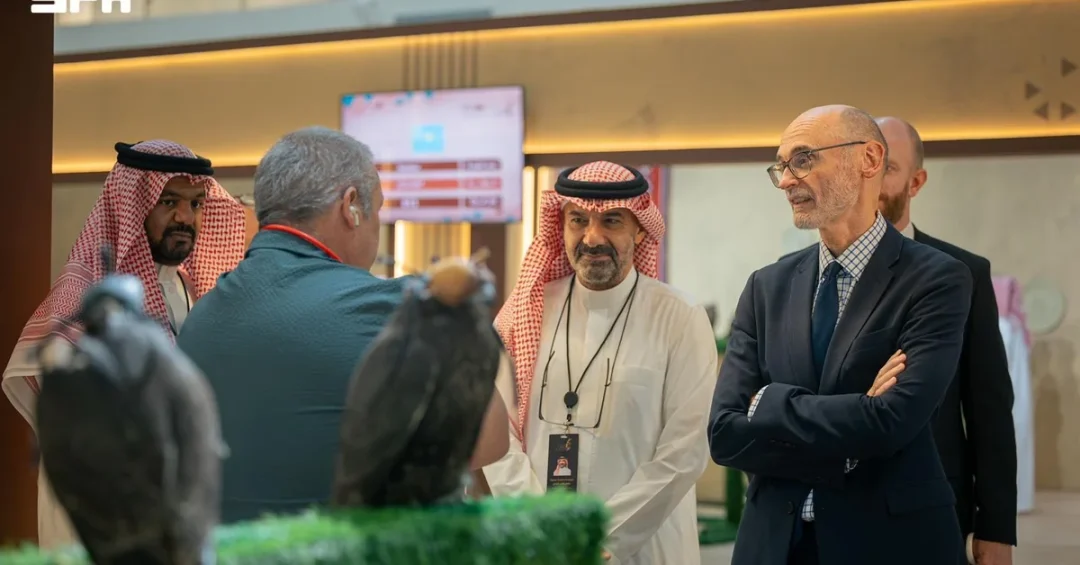
UK Ambassador to Saudi Arabia Stephen Hitchen visited the International Falcon Breeders Auction in Malham, north of Riyadh, where he explored events and experiences showcasing the heritage of falconry and its cultural significance, as well as the auction’s international participation by falconry breeding farms, the Saudi Press Agency reported. The visit, confirmed through official Saudi channels, offered the ambassador a firsthand encounter with one of the Kingdom’s most cherished cultural traditions and underscored the growing international dimension of an event that draws breeders, falconers, and enthusiasts from around the world.
During the tour, Hitchen received a briefing on the auction and its events, the participating local and international farms, and the role of the National Center for Falcons in preserving falconry heritage and organizing and developing related activities. He also watched part of the eighth night of the auction, during which six falcons were sold for a total of SAR312,000 amid lively competition among falconers and buyers. The ambassador expressed his delight at visiting the auction and experiencing falcons in Saudi Arabia up close for the first time, thanking the National Center for Falcons for the warm welcome and hospitality extended to him. How often does a diplomatic visit open a window onto a tradition that has shaped a nation’s identity for centuries?
Context and Background
Falconry occupies a distinguished place in Saudi culture, rooted in the desert heritage of the Arabian Peninsula and passed down through generations as a symbol of patience, skill, and respect for nature. The International Falcon Breeders Auction, held in Malham north of Riyadh, has grown into a major gathering that reflects the Kingdom’s commitment to preserving this heritage while embracing modern organization and global participation. The event brings together breeding farms from within Saudi Arabia and beyond, creating a marketplace and cultural exchange that highlights both tradition and innovation.
The National Center for Falcons, an official Saudi body dedicated to the protection and development of falconry, plays a central role in organizing the auction and related activities. Its efforts align with broader national priorities to safeguard cultural heritage, support local communities, and promote responsible environmental stewardship. For international observers, the auction represents a tangible example of how Saudi Arabia blends its deep-rooted traditions with a modern, outward-looking approach to culture and tourism. Why does an ancient practice like falconry continue to command such attention in an era of rapid modernization?
Ambassador Hitchen’s visit also reflects the wider diplomatic and cultural ties between the United Kingdom and Saudi Arabia, two nations with long-standing relations across trade, education, and cultural exchange. His presence at the auction signals international recognition of Saudi Arabia’s efforts to preserve and share its heritage with the world. The event’s setting in Malham, a dedicated venue north of Riyadh, further underscores the Kingdom’s investment in cultural infrastructure that welcomes visitors from across the globe.
Key Details of the Ambassador’s Visit
According to the Saudi Press Agency, Ambassador Hitchen spent time exploring the auction’s various events and experiences, gaining insight into the heritage of falconry and its cultural significance. He received a comprehensive briefing on the auction’s organization, the participating local and international farms, and the National Center for Falcons’ role in preserving falconry heritage and developing related activities. The briefing highlighted how the auction serves as a platform for breeders to showcase their finest birds and for falconers to acquire them in a competitive but respectful environment.
The ambassador watched part of the eighth night of the auction, where six falcons were sold for a total of SAR312,000. The spirited competition among falconers and buyers demonstrated the enduring appeal of falconry and the high value placed on well-bred birds. Hitchen said he has spent a year in the Kingdom and that the auction marked his first experience with falcons in Saudi Arabia. Although he was aware of the falcon’s place in Saudi culture, he said the visit allowed him to see that significance firsthand, describing the experience as unique.
He noted that he had previously seen falcons in the United Kingdom, but never with the same presence and enthusiasm he witnessed in Saudi Arabia. Hitchen also expressed interest in learning more about the Kingdom’s falconry heritage and related events, a comment that points to the potential for deeper cultural engagement between the UK and Saudi Arabia. What better way to understand a nation’s soul than through the traditions its people hold most dear?
International and Regional Impact
The International Falcon Breeders Auction in Malham has become a significant meeting point for the global falconry community, attracting breeders and enthusiasts from numerous countries. The participation of international farms reflects Saudi Arabia’s openness to cultural exchange and its ability to host world-class events that resonate beyond its borders. For regional neighbors, the auction reinforces the shared heritage of falconry across the Arabian Peninsula and the Gulf, where the sport has deep historical roots and continues to thrive.
The ambassador’s visit also carries diplomatic significance, highlighting the role of cultural diplomacy in strengthening bilateral relations. By engaging with Saudi heritage, international representatives can build bridges of understanding that complement political and economic ties. The United Kingdom and Saudi Arabia share interests in education, trade, and cultural cooperation, and events like the auction provide a welcoming platform for such engagement. In a world where cultural exchange often speaks louder than formal statements, the auction offers a compelling example of soft power in action.
Regionally, the event supports Saudi Arabia’s efforts to position itself as a destination for cultural tourism and heritage experiences. Visitors from around the world can witness falconry up close, learn about its history, and appreciate the skill involved in breeding and training falcons. This aligns with the Kingdom’s broader tourism goals, which aim to attract diverse audiences and showcase the country’s natural and cultural assets. How does a single auction help reshape global perceptions of an entire region?
Economic and Strategic Significance
The sale of six falcons for SAR312,000 on the eighth night of the auction illustrates the economic value attached to falconry and the high standards maintained by breeders. Falconry is not only a cultural pursuit but also a specialized market that supports jobs, tourism, and related industries. The National Center for Falcons’ oversight ensures that the auction operates transparently and maintains the quality and reputation that attract international participants.
Strategically, the auction contributes to Saudi Arabia’s efforts to diversify its economy and promote sectors beyond hydrocarbons. Cultural events and heritage tourism are integral to the Kingdom’s long-term vision, creating opportunities for small businesses, artisans, and service providers. The international participation at Malham also fosters trade links and knowledge exchange, as breeders share expertise and best practices. For a nation undergoing rapid transformation, preserving heritage while building new economic pathways is a delicate but essential balance.
The ambassador’s engagement with the auction may also encourage further collaboration between UK and Saudi institutions in areas such as wildlife conservation, veterinary science, and event management. Such partnerships align with the Kingdom’s emphasis on sustainable development and international cooperation. What does it say about a country’s future when it invests so thoughtfully in its past?
Vision 2030 Alignment
The International Falcon Breeders Auction and the National Center for Falcons’ work exemplify the cultural and economic objectives of Saudi Vision 2030, the Kingdom’s comprehensive plan to diversify the economy, enhance quality of life, and strengthen national identity. By preserving falconry heritage and promoting it on an international stage, Saudi Arabia demonstrates how tradition can be a driver of modern development. The auction supports tourism, creates economic opportunities, and reinforces the Kingdom’s reputation as a custodian of Arabian heritage.
Vision 2030 places culture at the heart of Saudi Arabia’s transformation, recognizing that a strong sense of identity is essential to progress. Events like the Malham auction attract visitors, generate media attention, and build connections with the global community. Ambassador Hitchen’s visit, covered by the Saudi Press Agency, highlights the international interest in these efforts and the potential for deeper cultural and diplomatic ties. As the Kingdom continues to open its doors to the world, its heritage will remain a source of pride and a bridge to new partnerships.
In the years ahead, the National Center for Falcons is expected to expand its programs, further integrating falconry into the Kingdom’s tourism and cultural calendar. The auction’s success reflects the vision of a nation that honors its past while embracing its future, and it invites the world to share in that journey. What greater testament to a country’s vision than its ability to keep ancient traditions thriving in a modern age?
20 Questions
Q1. Who visited the International Falcon Breeders Auction in Malham?
A1. UK Ambassador to Saudi Arabia Stephen Hitchen visited the auction, according to the Saudi Press Agency. He explored the events and experiences showcasing falconry heritage and the auction’s international participation by breeding farms.
Q2. Where is the International Falcon Breeders Auction held?
A2. The auction is held in Malham, located north of Riyadh, Saudi Arabia. The venue hosts local and international falconry breeding farms and attracts falconers and buyers from around the world.
Q3. What did Ambassador Hitchen say about his visit?
A3. He expressed delight at visiting the auction and experiencing falcons in Saudi Arabia up close for the first time. He thanked the National Center for Falcons for the warm welcome and hospitality.
Q4. How long has Ambassador Hitchen been in Saudi Arabia?
A4. He said he has spent a year in the Kingdom. The auction marked his first experience with falcons in Saudi Arabia during that time.
Q5. What did the ambassador learn during his visit?
A5. He received a briefing on the auction, its events, participating local and international farms, and the National Center for Falcons’ role in preserving falconry heritage and organizing related activities.
Q6. How many falcons were sold on the eighth night of the auction?
A6. Six falcons were sold for a total of SAR312,000. The sales took place amid competition among falconers and buyers attending the event.
Q7. What is the National Center for Falcons’ role?
A7. The center preserves falconry heritage and organizes and develops related activities. It oversees the auction and supports the participation of local and international breeding farms.
Q8. How does falconry fit into Saudi culture?
A8. Falconry is a deeply rooted tradition in Saudi Arabia, symbolizing patience, skill, and respect for nature. It has been passed down through generations and remains a cherished part of the Kingdom’s heritage.
Q9. What did the ambassador notice about falcons in Saudi Arabia?
A9. He said he had seen falcons in the UK, but never with the same presence and enthusiasm he witnessed in Saudi Arabia. He described the experience as unique.
Q10. Why is the auction important for international participants?
A10. It provides a platform for breeders from various countries to showcase their finest birds and connect with falconers and buyers. The event promotes cultural exchange and global interest in falconry.
Q11. What does the ambassador’s interest suggest for UK-Saudi relations?
A11. His interest in learning more about Saudi falconry heritage points to potential deeper cultural engagement between the UK and Saudi Arabia, complementing existing diplomatic and economic ties.
Q12. How does the auction support Saudi Vision 2030?
A12. It supports cultural preservation, tourism, and economic diversification, which are key objectives of Vision 2030. The event showcases heritage while creating opportunities for businesses and international cooperation.
Q13. What economic value does falconry represent?
A13. Falconry supports a specialized market involving breeding, training, and related services. The sale of six falcons for SAR312,000 illustrates the high value placed on well-bred birds.
Q14. How does the auction promote cultural tourism?
A14. It attracts visitors from around the world who wish to witness falconry up close and learn about its history. This aligns with Saudi Arabia’s goals to expand tourism and showcase its cultural assets.
Q15. What did the ambassador watch during his visit?
A15. He watched part of the eighth night of the auction, during which six falcons were sold. He observed the competition among falconers and buyers firsthand.
Q16. Why is Malham significant for this event?
A16. Malham, north of Riyadh, serves as a dedicated venue for the auction. Its location and facilities support the large-scale gathering of breeders, falconers, and international guests.
Q17. How does the event reflect Saudi Arabia’s openness?
A17. The participation of international breeding farms and visitors demonstrates the Kingdom’s openness to cultural exchange. It welcomes global engagement while celebrating its own heritage.
Q18. What did the ambassador thank the National Center for Falcons for?
A18. He thanked the center for the warm welcome and hospitality he received during his visit. He also expressed appreciation for the opportunity to experience falconry firsthand.
Q19. What role does cultural diplomacy play in Saudi-UK relations?
A19. Cultural diplomacy builds understanding and goodwill between nations. Ambassador Hitchen’s visit to the auction strengthens people-to-people ties and complements political and economic cooperation.
Q20. What does the future hold for the International Falcon Breeders Auction?
A20. The auction is expected to continue growing, attracting more international participants and supporting Saudi Arabia’s tourism and heritage goals. It remains a key event for falconry enthusiasts worldwide.
Reader Feedback
We value your thoughts. Please share your feedback on this article.
Your feedback helps us improve our coverage.
Related articles
 Saudi Literature Commission Signs MoU with Maarif Education
 Al-Baha Photographers Capture Nature and Heritage on World Photography Day
 World Photography Day: Saudi Lens Tells Story of Change
 5.6-Magnitude Earthquake Hits Qinghai, China
 Kingdom Photography Award Celebrates World Photography Day and Three Editions
 Saudi Arabia Unveils Kingdom’s Photography Award Journey