


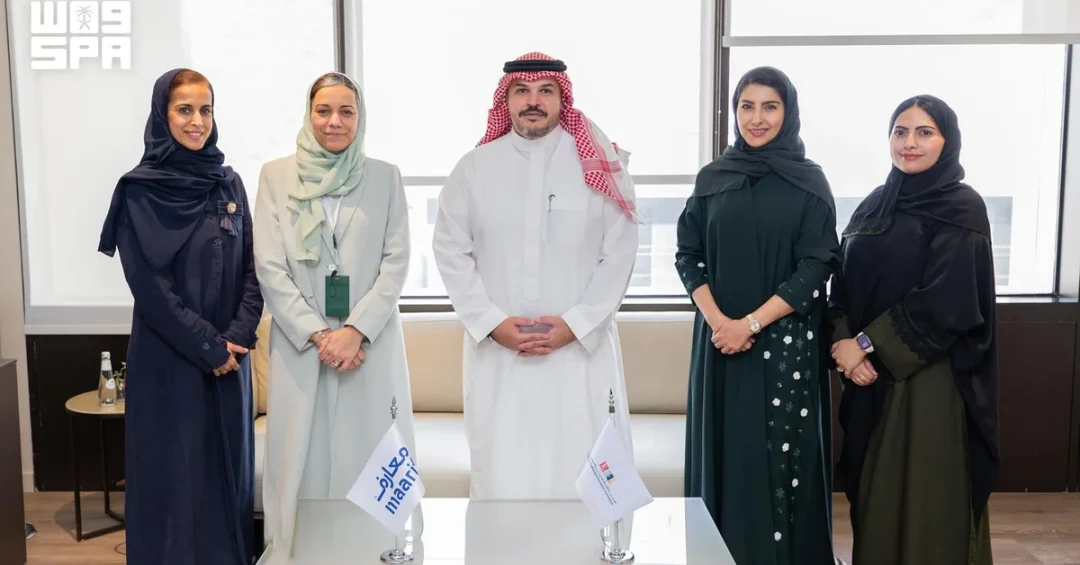
The Literature, Publishing and Translation Commission signed a memorandum of understanding with Maarif Education in Riyadh on August 19, 2026, establishing a strategic partnership designed to enrich Saudi Arabia’s cultural sector by activating the commission’s initiatives and programs and opening new opportunities in literature, publishing and translation. The agreement, announced through the Saudi Press Agency, brings together one of the Kingdom’s principal cultural authorities with a major national education provider, creating a structured framework for cooperation that reaches directly into classrooms and campuses across the country.
The memorandum was signed as part of the commission’s ongoing effort to build alliances beyond the cultural sector itself, recognizing that literature, publishing and translation flourish most effectively when they are embedded in education from an early stage. Abdullatif Al-Wasel, CEO of the Literature, Publishing and Translation Commission, described the agreement as a reflection of the commission’s commitment to strategic partnerships with the education sector, and he emphasized that investing in students’ creative abilities is central to identifying and developing talent that will contribute to Saudi Arabia’s cultural scene. The partnership is expected to touch thousands of students and educators through programs that connect academic life with the Kingdom’s broader cultural ambitions.
Context and Background
Why does a memorandum between a cultural commission and an education company matter for the future of Saudi letters? The answer lies in the scale and direction of the Kingdom’s cultural transformation, which has accelerated significantly since the launch of Vision 2030 in 2016. The Literature, Publishing and Translation Commission was established as part of a wider restructuring of Saudi cultural governance, which created specialized commissions covering literature, publishing and translation; heritage; museums; film; music; theater and performing arts; visual arts; fashion; and architecture and design. Each commission operates under the Ministry of Culture, which was elevated to ministerial rank in 2018 to give culture a dedicated seat at the national policy table.
From its formation, the Literature, Publishing and Translation Commission has pursued a mandate that extends well beyond the promotion of books. It has worked to support authors and translators, expand the publishing industry, strengthen the presence of Arabic literature internationally, and encourage reading as a national habit. Initiatives such as book fairs, translation grants, literary prizes and professional development programs for writers and publishers have formed the backbone of this effort. The commission has also engaged with international publishers and cultural institutions to bring Saudi and Arabic voices to global audiences, a priority that aligns with the Kingdom’s broader diplomatic and soft-power objectives.
Maarif Education, for its part, is one of the Kingdom’s prominent education providers, operating schools and educational services that serve Saudi families across multiple regions. Education has been a central pillar of national development strategy, with sustained investment in curricula, teacher training, digital learning and extracurricular enrichment. The memorandum therefore connects two ecosystems that had previously interacted only sporadically: the cultural sector, with its authors, publishers and translators, and the education sector, with its students, teachers and administrators. By formalizing cooperation, the agreement creates a repeatable mechanism for cultural programming to reach young people where they spend most of their time.
Key Details of the Agreement
What specifically will this partnership deliver for students and cultural professionals? According to the announcement carried by the Saudi Press Agency, the areas of cooperation include regularly activating the commission’s initiatives and programs to enrich the cultural scene, exploring volunteer opportunities for Maarif Education’s students and employees, and holding workshops for students to help activate extracurricular activities related to the commission’s areas of expertise. These three pillars are mutually reinforcing: programs provide content, volunteering provides experience and community engagement, and workshops provide skills and structured participation.
The decision to open volunteer opportunities to both students and employees is notable because it builds a culture of service and participation around cultural work. Volunteers in cultural settings gain exposure to publishing processes, translation practice, event organization, archival work and literary programming, all of which can inform future careers. For employees, volunteering offers a way to contribute professional skills to national cultural projects while strengthening ties between their institution and the commission’s network of writers, publishers and translators.
The workshop component addresses a practical gap in extracurricular programming. While Saudi schools and universities have expanded their activities considerably in recent years, cultural and literary activities often lack specialized facilitators. By supplying expertise from the commission’s fields, the partnership can help schools design and run book clubs, writing circles, translation exercises, publishing simulations and author encounters. Abdullatif Al-Wasel noted that investing in students’ creative abilities and providing them with opportunities to participate in cultural and literary activities helps identify and develop talent, a point that underscores the talent-development logic behind the agreement. The memorandum is not merely symbolic; it establishes a working relationship intended to produce recurring, measurable activity.
International and Regional Impact
How does a domestic partnership between a Saudi cultural commission and an education provider resonate beyond the Kingdom’s borders? Saudi Arabia’s cultural sector has become increasingly international in its outlook, and agreements that deepen the domestic talent pipeline ultimately strengthen the country’s capacity to participate in global cultural exchange. When Saudi students are introduced to translation, publishing and literary production at an early age, the Kingdom gains a larger cohort of professionals capable of representing Arabic literature abroad, collaborating with foreign publishers, and participating in international book fairs and translation programs.
Regionally, the partnership reflects a broader trend in the Gulf and the wider Middle East, where governments are integrating cultural policy with education and economic development. Saudi Arabia’s approach is distinctive in its institutional depth: dedicated commissions, dedicated funding, and a national strategy that treats culture as both an expression of identity and a driver of economic diversification. For international observers, the agreement signals that Saudi cultural investment is not confined to flagship events and megaprojects but extends to the everyday institutions of learning where long-term cultural habits are formed. That combination of high-profile initiatives and grassroots programming is what gives the Kingdom’s cultural strategy its durability.
Economic and Strategic Significance
What economic value can be drawn from a partnership focused on literature, publishing and translation? The publishing industry is a significant component of the global creative economy, encompassing book production, distribution, retail, digital content, rights trading and translation services. By cultivating young talent and expanding the pool of skilled professionals, the agreement supports the growth of a domestic publishing ecosystem that can serve Saudi readers, export Arabic content, and attract international rights and licensing activity. A stronger publishing sector also complements adjacent industries such as printing, design, media production and digital platforms.
Strategically, the partnership reinforces the idea that human capital is the foundation of cultural strength. Vision 2030 places significant emphasis on developing the capabilities of Saudi citizens, diversifying the economy beyond hydrocarbons, and improving quality of life. Cultural participation contributes to all three goals: it creates employment in creative fields, it enriches the lived experience of communities, and it projects a confident national identity internationally. The commission’s collaboration with Maarif Education is a practical expression of this logic, linking educational institutions to cultural programs in a way that can be scaled and replicated with other education providers over time.
Vision 2030 Alignment
How does this memorandum connect to the long-term vision that guides Saudi Arabia’s national development? Vision 2030 envisions a vibrant society, a thriving economy and an ambitious nation, and culture sits at the intersection of all three. The Literature, Publishing and Translation Commission’s partnership with Maarif Education advances the vision by investing in young people, expanding access to cultural activities, and building the professional skills that will sustain the Kingdom’s cultural sector for decades to come. It also supports the broader goal of increasing cultural participation and strengthening the presence of Saudi and Arabic literature on the world stage.
Looking ahead, the agreement provides a model for how cultural institutions and educational providers can work together systematically rather than episodically. If successful, it can be extended to more schools, more regions and more areas of cultural specialization, creating a national pipeline of writers, translators, publishers, editors and cultural organizers. For international audiences, the message is clear: Saudi Arabia’s cultural transformation is being built not only through landmark projects and global events but through sustained investment in education and talent. The Kingdom’s cultural scene is being enriched from the ground up, and partnerships like this one are the mechanism through which that enrichment becomes permanent.
20 Questions
Q1. What agreement was announced by the Literature, Publishing and Translation Commission?
A1. The commission signed a memorandum of understanding with Maarif Education on August 19, 2026, in Riyadh, to strengthen cooperation, support the cultural sector and open new opportunities in literature, publishing and translation.
Q2. Who signed the memorandum on behalf of the commission?
A2. The memorandum was associated with the commission’s leadership, and CEO Abdullatif Al-Wasel commented on the agreement, describing it as a reflection of the commission’s commitment to building strategic partnerships with the education sector.
Q3. What did Abdullatif Al-Wasel say about the partnership?
A3. He said the memorandum reflects the commission’s commitment to strategic partnerships with education, and that investing in students’ creative abilities and giving them cultural opportunities helps identify and develop talent for Saudi Arabia’s cultural scene.
Q4. What are the main areas of cooperation in the agreement?
A4. The cooperation includes regularly activating the commission’s initiatives and programs to enrich the cultural scene, exploring volunteer opportunities for Maarif Education’s students and employees, and holding workshops for students in the commission’s areas of expertise.
Q5. Why is the education sector important to the commission’s work?
A5. Education provides direct access to students, who represent the next generation of writers, translators and publishers. Embedding cultural programs in schools helps identify talent early and build lasting habits of reading, writing and cultural participation.
Q6. What kinds of workshops will be held under the partnership?
A6. The workshops will focus on extracurricular activities related to literature, publishing and translation, helping students engage with books, writing, translation practice and publishing processes in structured and supervised settings.
Q7. How will volunteer opportunities benefit students?
A7. Volunteering in cultural programs gives students practical exposure to publishing, translation, event organization and literary programming, helping them develop skills, explore careers and contribute to national cultural initiatives.
Q8. How will volunteer opportunities benefit Maarif Education employees?
A8. Employees can contribute professional expertise to cultural projects, strengthen institutional ties with the commission, and participate in national cultural development, while gaining experience in cultural programming and community engagement.
Q9. What is the Literature, Publishing and Translation Commission?
A9. It is a Saudi cultural commission operating under the Ministry of Culture, responsible for supporting authors, translators and publishers, expanding the publishing industry and promoting Arabic literature domestically and internationally.
Q10. When was the memorandum signed?
A10. The memorandum was signed in Riyadh and announced on August 19, 2026, through the Saudi Press Agency, which reported the agreement and the comments of the commission’s CEO.
Q11. How does the agreement support Saudi Arabia’s cultural scene?
A11. By regularly activating the commission’s programs in educational settings, the agreement brings cultural activities to students, expands participation, supports talent development and strengthens the pipeline of skilled professionals in literature, publishing and translation.
Q12. What is Maarif Education’s role in the partnership?
A12. Maarif Education is an education provider whose students and employees will participate in commission programs, workshops and volunteer opportunities, serving as a bridge between academic institutions and the Kingdom’s cultural sector.
Q13. How does the partnership relate to Vision 2030?
A13. Vision 2030 seeks a vibrant society and thriving economy. Investing in young people’s cultural skills supports human capital development, creative employment, quality of life and the international presence of Saudi and Arabic culture.
Q14. What economic benefits can come from supporting publishing and translation?
A14. A stronger publishing and translation sector creates jobs, supports small businesses, expands digital content, facilitates rights trading and complements industries such as printing, design and media production within the creative economy.
Q15. Will the partnership be limited to one city or region?
A15. The announcement does not restrict cooperation to a single location. The framework is designed to activate commission programs across Maarif Education’s network, allowing expansion to multiple schools and regions over time.
Q16. How does this agreement help identify talented young writers?
A16. Workshops, literary activities and volunteer programs give students opportunities to demonstrate writing, translation and creative abilities, allowing the commission and its partners to recognize and nurture promising talent early.
Q17. What role does the Saudi Press Agency play in this announcement?
A17. The Saudi Press Agency reported the memorandum and the CEO’s remarks, serving as the official channel through which the agreement and its objectives were communicated to the public and international audiences.
Q18. How does the agreement support translation in Saudi Arabia?
A18. By introducing students to translation activities and connecting them with the commission’s programs, the partnership helps build a skilled pool of translators capable of rendering Arabic works into other languages and global works into Arabic.
Q19. What does the partnership mean for extracurricular activities in schools?
A19. It provides specialized content and expertise that schools may lack, enabling book clubs, writing circles, translation exercises and author events that enrich students’ educational experience beyond standard curricula.
Q20. What is the long-term significance of this memorandum?
A20. It establishes a replicable model for cooperation between cultural and educational institutions, helping build a sustainable national pipeline of writers, translators and publishers who will strengthen Saudi Arabia’s cultural scene for years.
Reader Feedback
We value your thoughts. Please share your feedback on this article.
Your feedback helps us improve our coverage.
Related articles
 Al-Baha Photographers Capture Nature and Heritage on World Photography Day
 World Photography Day: Saudi Lens Tells Story of Change
 5.6-Magnitude Earthquake Hits Qinghai, China
 Kingdom Photography Award Celebrates World Photography Day and Three Editions
 Saudi Arabia Unveils Kingdom’s Photography Award Journey
 Earthquake of 5.9 Magnitude Hits China’s Dunhuang; No Casualties Reported