


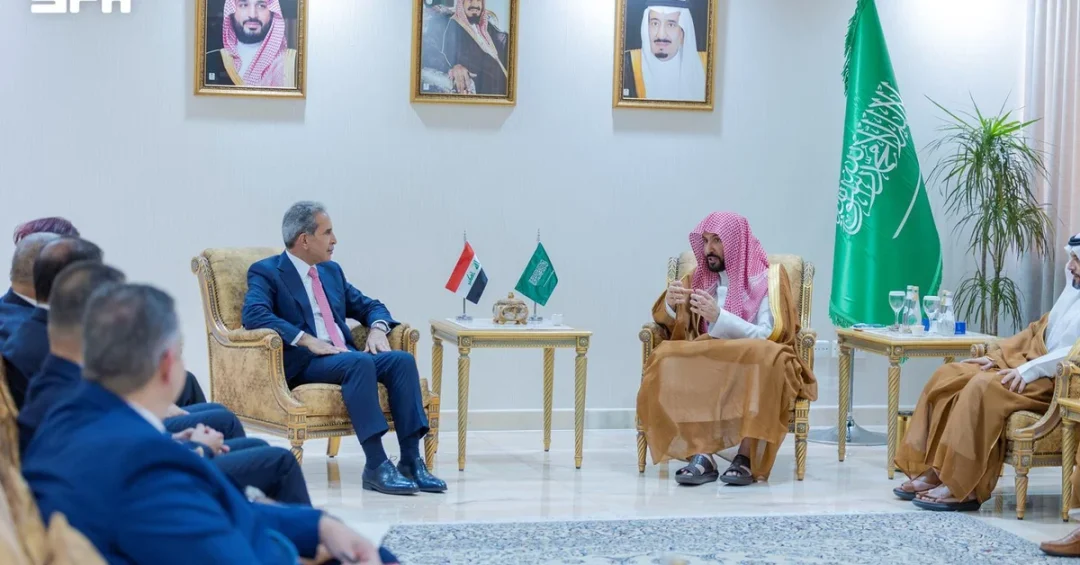
Saudi Minister of Justice and Acting President of the Saudi Supreme Judicial Council Walid Al-Samaani met with President of the Supreme Judicial Council of the Republic of Iraq Dr. Faiq Zidan in Riyadh on August 19, 2026, during an official visit aimed at deepening judicial and legal cooperation between the two countries. The meeting, reported by the Saudi Press Agency, focused on developing bilateral judicial ties, strengthening communication channels between judicial institutions, and exchanging expertise in legal fields of shared interest.
How does a single meeting between two senior judicial figures shape the future of cross-border legal cooperation in the region? The encounter between Al-Samaani and Zidan represents more than a diplomatic courtesy; it reflects a deliberate, structured effort by the Kingdom of Saudi Arabia to build institutional bridges with its neighbors. Both officials discussed practical mechanisms for coordination, including the exchange of knowledge and best practices that can modernize judicial work on both sides. The talks underscore a shared commitment to the fraternal relations between the Kingdom and Iraq, and they signal that judicial diplomacy is becoming an increasingly important pillar of Saudi Arabia’s broader regional engagement strategy under Vision 2030.
Context and Background
Why has judicial cooperation become such a central element of Saudi-Iraqi relations in recent years? The relationship between the Kingdom of Saudi Arabia and the Republic of Iraq has deepened steadily across political, economic, and security domains, and the judicial sector is now emerging as a natural extension of that partnership. The Saudi Ministry of Justice, under the leadership of Walid Al-Samaani, has pursued an ambitious modernization agenda that includes digital transformation of courts, alternative dispute resolution mechanisms, and enhanced training for judges and legal professionals. Iraq, for its part, has been working to strengthen its own judicial institutions after years of regional instability, making the exchange of expertise with a regional leader in judicial reform particularly valuable.
The Saudi Supreme Judicial Council serves as the highest judicial authority in the Kingdom, overseeing the independence and efficiency of the judiciary. Its acting president, Walid Al-Samaani, also serves as Minister of Justice, giving him a dual mandate to advance both policy and judicial administration. Dr. Faiq Zidan, as President of the Supreme Judicial Council of Iraq, holds a comparable position of authority in Baghdad. The meeting in Riyadh therefore brought together two figures capable of translating high-level intentions into concrete institutional arrangements. This is not the first such encounter between Saudi and Iraqi judicial officials, but it comes at a time when both countries are accelerating reforms and seeking reliable partners to share knowledge and best practices.
The timing of the visit also reflects the broader momentum in Saudi-Iraqi relations. In recent years, the two countries have signed numerous agreements across trade, energy, investment, and cultural exchange. The judicial track complements these efforts by providing the legal frameworks and dispute-resolution mechanisms that underpin commercial and diplomatic activity. Without robust judicial cooperation, cross-border contracts, investments, and family matters can become entangled in procedural uncertainty. By prioritizing judicial dialogue, Riyadh and Baghdad are laying the groundwork for smoother interactions between their citizens and businesses.
Key Details of the Meeting
What specifically did the two judicial leaders discuss during their talks in Riyadh? According to the Saudi Press Agency, Al-Samaani and Zidan examined aspects of judicial and legal cooperation between their countries and explored ways to develop them further. They addressed the strengthening of communication and coordination channels between their respective judicial institutions, a practical step that can lead to faster recognition of legal documents, more efficient handling of cross-border cases, and clearer protocols for judicial assistance. The meeting also covered the exchange of expertise and knowledge in judicial and legal fields, with both sides expressing interest in benefiting from experiences and practices that enhance judicial work.
The discussions align with a broader pattern of Saudi engagement in judicial diplomacy. The Kingdom has hosted numerous delegations from friendly nations seeking to learn from its experience in court digitization, case management, and judicial training. Saudi Arabia’s judicial modernization program, supported by Vision 2030, has introduced electronic litigation platforms, specialized commercial courts, and enhanced transparency measures. Sharing these innovations with Iraq serves multiple purposes: it strengthens bilateral ties, promotes regional stability, and positions the Kingdom as a source of legal expertise and best practice. For Iraq, access to Saudi experience can accelerate its own reform efforts and build confidence in its judicial system among international investors and partners.
The meeting was framed within the context of the fraternal relations between the Kingdom of Saudi Arabia and the Republic of Iraq and their shared commitment to enhancing cooperation in areas of common interest. This language, typical of Saudi diplomatic communications, emphasizes mutual respect and long-term partnership rather than transactional engagement. It also signals that judicial cooperation is not an isolated initiative but part of a comprehensive relationship that spans multiple sectors. The presence of such high-ranking officials underscores the seriousness with which both governments approach this dimension of their ties.
International and Regional Impact
How might enhanced Saudi-Iraqi judicial cooperation influence the wider Middle East? Regional stability depends not only on security and economic arrangements but also on the predictability and fairness of legal systems. When neighboring countries can rely on each other’s courts and legal institutions, cross-border trade and investment become less risky. The Saudi-Iraqi judicial dialogue contributes to this predictability by building familiarity between legal systems and creating channels for resolving disputes. It also sets an example for other countries in the region that may be considering similar forms of cooperation.
From an international perspective, the meeting demonstrates Saudi Arabia’s growing role as a convener and facilitator of regional dialogue. The Kingdom’s diplomatic outreach has expanded significantly in recent years, encompassing not only traditional allies but also neighbors with whom relations were once more distant. Iraq is a key partner in this outreach, given its strategic location, economic potential, and historical ties to the Kingdom. By engaging Iraq’s top judicial official, Saudi Arabia signals that its commitment to regional partnership extends to the often-overlooked realm of legal and judicial affairs. This can enhance the Kingdom’s reputation as a responsible and constructive regional actor.
The exchange of expertise also has implications for the business environment. Companies operating in both Saudi Arabia and Iraq benefit when legal procedures are transparent and mutually recognized. Judicial cooperation can reduce the time and cost of enforcing contracts, resolving commercial disputes, and protecting intellectual property. For Saudi businesses exploring opportunities in Iraq, and for Iraqi businesses seeking to invest in the Kingdom, this translates into greater confidence and lower risk. Over time, such cooperation can contribute to higher levels of bilateral trade and investment, supporting economic diversification goals on both sides.
Economic and Strategic Significance
Why does judicial cooperation matter for economic growth and strategic alignment? Saudi Arabia’s Vision 2030 aims to diversify the economy away from oil dependence, promote private-sector growth, and attract foreign investment. A reliable and efficient legal system is a prerequisite for these goals. The same is true for Iraq, which seeks to rebuild its economy and attract international capital. When the two countries cooperate on judicial matters, they strengthen the legal infrastructure that underpins economic activity. This includes everything from enforcing contracts to protecting property rights and resolving labor disputes.
Strategically, the meeting reinforces the alignment of Saudi and Iraqi interests at a time of shifting regional dynamics. Both countries have an interest in stability, prosperity, and constructive engagement with the international community. Judicial cooperation is a low-cost, high-impact way to build trust and institutional linkages. It complements military, political, and economic cooperation by addressing the legal foundations of interstate relations. Over the long term, such linkages can help prevent misunderstandings, facilitate the resolution of disputes, and create a more predictable environment for all forms of exchange.
The meeting also highlights the role of personal leadership in advancing bilateral ties. Walid Al-Samaani and Faiq Zidan are not merely figureheads; they are active administrators with the authority to implement reforms and agreements. Their direct engagement can accelerate the pace of cooperation by cutting through bureaucratic delays and ensuring that commitments are followed through. This kind of high-level judicial diplomacy is increasingly recognized as an effective tool for building durable relationships between nations.
Vision 2030 Alignment
How does this meeting connect to Saudi Arabia’s long-term vision for itself and the region? Vision 2030 is not limited to economic transformation; it also encompasses social development, good governance, and international cooperation. A modern, efficient, and respected judicial system is a cornerstone of good governance. By sharing its judicial expertise with Iraq, Saudi Arabia demonstrates its commitment to these values and positions itself as a leader in regional reform. The meeting reflects the Kingdom’s belief that its own progress is best sustained in a stable and prosperous neighborhood.
Furthermore, Vision 2030 emphasizes the importance of international partnerships and knowledge exchange. The judicial cooperation discussed in Riyadh is a concrete example of how the Kingdom translates its vision into practice. It shows that Saudi Arabia is willing to invest time and resources in building institutional relationships that benefit both partners. As the Kingdom continues to modernize and open up, such initiatives will play an increasingly important role in shaping its regional and global image. The meeting between Al-Samaani and Zidan is a small but meaningful step toward a future in which judicial systems in the region are more interconnected, more efficient, and more capable of serving the people they are meant to protect.
In conclusion, the Riyadh meeting between the Saudi Minister of Justice and the President of the Iraqi Supreme Judicial Council represents a forward-looking commitment to judicial excellence and bilateral partnership. It aligns with the Kingdom’s broader efforts to foster regional cooperation and to share the benefits of its Vision 2030 reforms. As Saudi Arabia and Iraq continue to build their relationship across multiple sectors, the judicial dimension will remain a vital component of their shared journey toward stability, prosperity, and mutual respect.
20 Questions
Q1. Who met in Riyadh on August 19, 2026?
A1. Saudi Minister of Justice and Acting President of the Saudi Supreme Judicial Council Walid Al-Samaani met with President of the Supreme Judicial Council of Iraq Dr. Faiq Zidan during an official visit to the Kingdom.
Q2. What was the main purpose of the meeting?
A2. The meeting aimed to enhance judicial and legal cooperation between Saudi Arabia and Iraq, strengthen communication channels between their judicial institutions, and exchange expertise in legal fields of common interest.
Q3. Where did the meeting take place?
A3. The meeting took place in Riyadh, the capital of the Kingdom of Saudi Arabia, as reported by the Saudi Press Agency.
Q4. Which Saudi official represented the Kingdom?
A4. Walid Al-Samaani represented Saudi Arabia in his capacity as Minister of Justice and Acting President of the Saudi Supreme Judicial Council.
Q5. Who represented Iraq at the meeting?
A5. Dr. Faiq Zidan, President of the Supreme Judicial Council of the Republic of Iraq, represented Iraq during the official visit.
Q6. What does the Saudi Supreme Judicial Council do?
A6. The Saudi Supreme Judicial Council is the highest judicial authority in the Kingdom, overseeing the independence, efficiency, and administration of the judiciary.
Q7. What topics were discussed during the meeting?
A7. The officials discussed judicial and legal cooperation, ways to develop it, strengthening coordination between judicial institutions, and exchanging expertise and best practices in judicial work.
Q8. Why is judicial cooperation important for Saudi-Iraqi relations?
A8. Judicial cooperation builds trust, facilitates cross-border legal matters, supports economic ties, and complements political and economic partnership between the two countries.
Q9. How does this meeting fit into Saudi Arabia’s regional strategy?
A9. It reflects Saudi Arabia’s broader efforts to strengthen ties with neighboring countries and position itself as a constructive regional leader in judicial and legal reform.
Q10. What is the significance of exchanging judicial expertise?
A10. Exchanging expertise allows both countries to learn from each other’s practices, improve judicial efficiency, and adopt innovations that enhance the rule of law.
Q11. Does this meeting relate to Vision 2030?
A11. Yes, Vision 2030 emphasizes good governance, international partnerships, and knowledge exchange, all of which are supported by enhanced judicial cooperation.
Q12. What benefits could result for businesses in both countries?
A12. Improved judicial cooperation can lead to more predictable legal environments, faster dispute resolution, and greater confidence for investors and companies operating across borders.
Q13. How does this meeting affect regional stability?
A13. By strengthening legal and judicial ties, the meeting contributes to predictability and trust between neighbors, which supports overall regional stability and cooperation.
Q14. Is this the first meeting of its kind between Saudi and Iraqi judicial officials?
A14. While Saudi-Iraqi judicial dialogue has occurred before, this meeting continues a pattern of high-level engagement aimed at deepening institutional cooperation.
Q15. What role does the Saudi Ministry of Justice play in such meetings?
A15. The Ministry of Justice leads Saudi Arabia’s judicial modernization efforts and represents the Kingdom in international judicial cooperation, sharing best practices and building partnerships.
Q16. How might Iraq benefit from Saudi judicial experience?
A16. Iraq can learn from Saudi Arabia’s court digitization, specialized commercial courts, and training programs, helping to modernize its own judicial system.
Q17. What message does this meeting send to the international community?
A17. It signals that Saudi Arabia and Iraq are committed to constructive engagement, legal reform, and regional partnership, enhancing their reputations as responsible international actors.
Q18. Will there be follow-up actions after this meeting?
A18. The discussions focused on developing cooperation mechanisms, which typically lead to further technical exchanges, agreements, and joint initiatives between judicial institutions.
Q19. How does judicial diplomacy complement other forms of Saudi-Iraqi cooperation?
A19. Judicial diplomacy provides the legal foundation for trade, investment, and diplomatic ties, making it an essential complement to economic and political cooperation.
Q20. What is the long-term outlook for Saudi-Iraqi judicial cooperation?
A20. The outlook is positive, with both countries showing commitment to deepening ties, sharing expertise, and building institutional linkages that support stability and prosperity.
Reader Feedback
We value your thoughts. Please share your feedback on this article.
Your feedback helps us improve our coverage.
Related articles
 Saudi Islamic Affairs Minister Meets Maldivian Counterpart
 Saudi Arabia, Uzbekistan Sign Islamic Affairs Executive Program
 Northern Border University Rises in Nature Index 2026
 Jazan Border Patrols Arrest Resident for Smuggling 15 Violators
 Arab Parliament Condemns Israeli Strikes on Syria Airport
 Saudi, Japanese FMs Hold Third Strategic Dialogue in Riyadh