


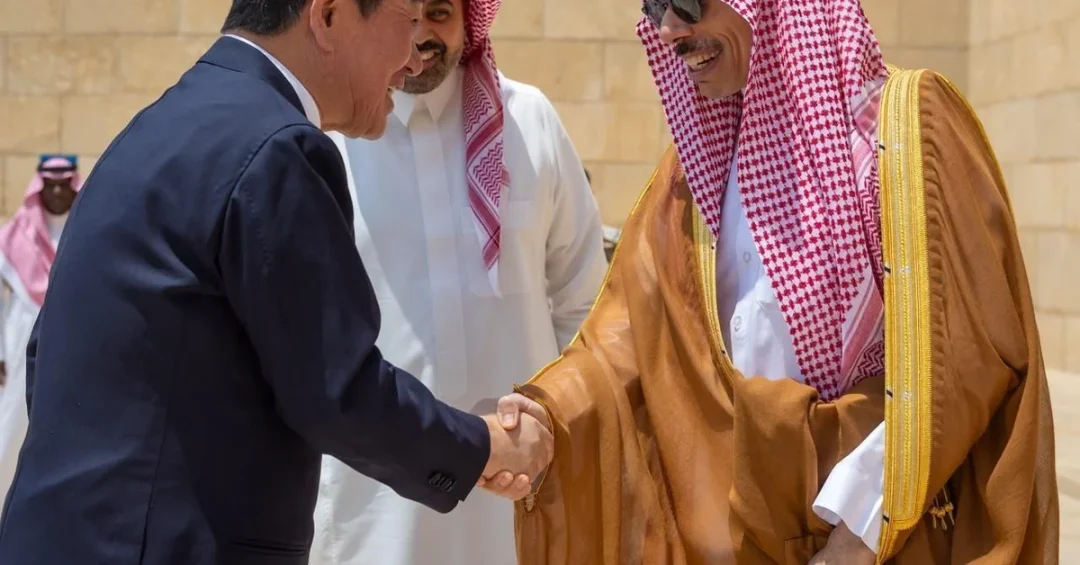
Saudi Minister of Foreign Affairs Prince Faisal bin Farhan bin Abdullah received Japanese Foreign Minister Toshimitsu Motegi at the Ministry of Foreign Affairs headquarters in Riyadh on August 19, 2026, after which the two officials convened the third Strategic Dialogue between the Kingdom of Saudi Arabia and Japan. The meeting, announced through the Saudi Press Agency, underscored the depth of a partnership that has matured over decades and now spans energy, investment, supply chains, defense, technology, and maritime security. What does a third round of structured strategic talks tell the world about the durability of Saudi-Japanese relations? It signals that both governments view the relationship not as a transactional exchange but as a long-term alignment of interests, anchored in trust and mutual respect.
The Saudi foreign minister used his opening remarks to reaffirm the great importance the Kingdom attaches to its longstanding ties with Japan, describing the relationship as one built on decades of cooperation and shared confidence. He identified Japan as an important economic partner and expressed the Kingdom’s aspiration to deepen those ties further while capitalizing on the economic opportunities available in both countries. The dialogue reflects a broader pattern in Saudi diplomacy: structured, institutional engagement with major global economies that advances the Kingdom’s priorities and supports its Vision 2030 transformation agenda.
Context and Background
How did Saudi-Japanese relations arrive at this level of institutional maturity? The foundation was laid over many decades of energy cooperation, beginning with the Kingdom’s emergence as a reliable supplier of crude oil to Japan’s industrial economy. That commercial relationship gradually expanded into joint ventures, infrastructure projects, and people-to-people exchanges. The Strategic Dialogue mechanism itself represents a deliberate upgrade, creating a recurring diplomatic platform where foreign ministers can review progress, identify new opportunities, and coordinate positions on regional and global issues. The third meeting in Riyadh therefore stands on the shoulders of two prior rounds, each of which added new dimensions to the partnership.
The timing of this third dialogue is significant. It takes place as global energy markets continue to navigate uncertainty, as supply chains are being reconfigured, and as maritime security in the Red Sea, the Strait of Hormuz, and Bab al-Mandeb remains a central concern for trading nations. Japan, as a major energy importer with a globally integrated economy, shares Saudi Arabia’s interest in stable markets and open sea lanes. The Kingdom, for its part, is diversifying its economy under Vision 2030 and seeking partners with advanced technology, capital, and manufacturing expertise. The Strategic Dialogue provides a structured venue where these complementary interests can be translated into concrete agreements and initiatives.
Regional diplomacy also forms part of the backdrop. Saudi Arabia has consistently pursued de-escalation and peaceful resolution of conflicts, and the foreign minister’s remarks in Riyadh restated that commitment. By engaging Japan, the Kingdom reinforces a diplomatic approach that prioritizes dialogue, international law, and sustainable solutions over confrontation. Japan’s support for the principles of international law and its humanitarian and development contributions were explicitly acknowledged, highlighting the convergence of the two countries’ positions on stability and peaceful outcomes.
Key Details of the Third Strategic Dialogue
What specifically did the two foreign ministers place on the agenda? In his opening remarks, Prince Faisal outlined a broad but concrete set of cooperation areas. “We see promising opportunities to expand cooperation in investment, energy and resources, supply chains, defense and technology, and the exchange of expertise and capabilities, in ways that support our priorities and advance our shared goals,” he said. That single sentence captures the breadth of the modern Saudi-Japanese relationship, moving well beyond oil into sectors that will define the next phase of both economies. Investment cooperation, in particular, aligns with the Kingdom’s efforts to attract foreign capital into giga-projects and new industries.
Energy and resources remain the anchor of the partnership. Prince Faisal affirmed that Saudi Arabia will remain a trusted partner for Japan across various fields, including energy, and commended Japan’s efforts and initiatives that contribute to enhancing economic resilience and the stability of global energy and trade markets. This reciprocal acknowledgment matters: it recognizes that producer and consumer nations share responsibility for market stability. Supply chains also featured prominently, reflecting the shared interest in resilient logistics networks that can withstand shocks. Defense and technology cooperation, meanwhile, points to a deepening of ties in areas that require high levels of trust and long-term commitment.
Maritime security emerged as one of the two countries’ top shared priorities. The Saudi foreign minister stressed the importance of protecting freedom of navigation in all international waterways in accordance with international law and the need to keep the Strait of Hormuz, Bab al-Mandeb, and all maritime routes open, safe, and free from threats. For Japan, which depends heavily on seaborne energy imports, this is an existential concern. For Saudi Arabia, which exports through the same waterways, it is equally vital. The third Strategic Dialogue thus placed maritime security at the center of the bilateral agenda, elevating it from a technical issue to a strategic pillar of cooperation.
International and Regional Impact
Why does a Saudi-Japanese meeting in Riyadh resonate beyond the two capitals? The partnership sits at the intersection of global energy security, trade flows, and regional stability. When Saudi Arabia and Japan coordinate on keeping maritime routes open and safe, they send a signal to markets and to other governments that responsible stakeholders are working together. Japan’s participation in initiatives that enhance economic resilience complements Saudi Arabia’s role as a stabilizing force in energy markets. The dialogue therefore contributes to a broader international architecture of stability, one built on law, dialogue, and mutual economic interest rather than coercion.
Regionally, the meeting reinforces Saudi Arabia’s position as a hub for diplomacy. Riyadh has hosted numerous high-level engagements in recent years, and the presence of Japan’s foreign minister at the ministry headquarters adds to that record. The Kingdom’s emphasis on de-escalation and comprehensive, sustainable diplomatic solutions addresses the sources of instability in the region. By aligning with Japan on these principles, Saudi Arabia strengthens the case for peaceful means and international law as the foundation for regional order. For international observers, the third Strategic Dialogue is evidence that Saudi diplomacy is not reactive but proactive, building coalitions of like-minded partners around shared goals.
Economic and Strategic Significance
What economic opportunities does this dialogue unlock? The foreign minister’s reference to promising opportunities in investment, energy, resources, supply chains, defense, and technology points to a pipeline of potential projects and agreements. Japanese companies have long been active in Saudi Arabia’s industrial and energy sectors, and the Kingdom’s Vision 2030 programs, including the development of new cities, renewable energy capacity, and advanced manufacturing, offer natural avenues for expanded Japanese participation. The exchange of expertise and capabilities is equally important, as it builds human capital and institutional knowledge that support long-term growth.
Strategically, the dialogue strengthens a relationship that helps Saudi Arabia diversify its international partnerships while maintaining its core alliances. Japan is a technologically advanced, economically significant democracy with a strong interest in Middle East stability. For the Kingdom, deepening this relationship supports the goal of becoming a global investment and logistics hub. For Japan, Saudi Arabia remains a reliable energy supplier and an increasingly important market and investment destination. The third Strategic Dialogue institutionalizes this mutual dependence, making it more predictable and more productive over time.
Vision 2030 Alignment
How does the third Saudi-Japanese Strategic Dialogue connect to Vision 2030? The Kingdom’s transformation agenda calls for a diversified economy, expanded international partnerships, and a more active global role. Cooperation in investment, technology, supply chains, and defense directly supports the economic diversification pillar of Vision 2030, while the emphasis on diplomacy, de-escalation, and maritime security advances the Kingdom’s goal of contributing to regional and global stability. Japan’s engagement with Saudi Arabia’s priorities, from energy market stability to humanitarian and development contributions, aligns with the Vision’s vision of a prosperous, outward-looking Kingdom.
As Saudi Arabia continues its journey toward 2030, partnerships like this one will be measured by what they deliver: new investments, transferred technology, resilient supply chains, and a safer maritime environment. The third Strategic Dialogue provides the framework; the coming months and years will show the concrete results. What is already clear is that the Kingdom remains a trusted partner for Japan and that both nations see their relationship as a cornerstone of stability and prosperity in an uncertain world. The meeting in Riyadh was not merely a diplomatic courtesy but a working session that advanced a shared agenda, and it positions Saudi-Japanese relations for continued growth in the years ahead.
20 Questions
Q1. Who received Japanese Foreign Minister Toshimitsu Motegi in Riyadh?
A1. Saudi Minister of Foreign Affairs Prince Faisal bin Farhan bin Abdullah received Japanese Foreign Minister Toshimitsu Motegi at the Ministry of Foreign Affairs headquarters in Riyadh on August 19, 2026.
Q2. What meeting took place after the reception?
A2. Following the reception, the two foreign ministers held the third Strategic Dialogue between the Kingdom of Saudi Arabia and Japan, continuing a structured diplomatic mechanism for bilateral cooperation.
Q3. How did Prince Faisal describe Saudi-Japanese relations?
A3. He affirmed the great importance the Kingdom attaches to its longstanding relations with Japan, noting they have spanned decades and are based on trust and mutual respect.
Q4. What economic role does Japan play for Saudi Arabia?
A4. Prince Faisal described Japan as an important economic partner for Saudi Arabia and expressed the Kingdom’s aspiration to further develop ties and capitalize on economic opportunities in both countries.
Q5. Which cooperation areas did the Saudi foreign minister identify?
A5. He cited investment, energy and resources, supply chains, defense and technology, and the exchange of expertise and capabilities as promising areas for expanded cooperation.
Q6. What did Prince Faisal say about Saudi Arabia’s reliability as an energy partner?
A6. He affirmed that Saudi Arabia will remain a trusted partner for Japan across various fields, including energy, reinforcing the Kingdom’s longstanding role as a stable supplier.
Q7. How did the Saudi foreign minister characterize Japan’s economic efforts?
A7. He commended Japan’s efforts and initiatives that contribute to enhancing economic resilience and the stability of global energy and trade markets.
Q8. What shared priority did Prince Faisal highlight regarding maritime security?
A8. He stated that maritime security is among the two countries’ top shared priorities, reflecting their mutual dependence on open and secure international waterways.
Q9. Which waterways did the Saudi foreign minister specifically mention?
A9. He mentioned the Strait of Hormuz, Bab al-Mandeb, and all maritime routes, stressing the need to keep them open, safe, and free from threats.
Q10. What principle did Prince Faisal stress regarding freedom of navigation?
A10. He stressed the importance of protecting freedom of navigation in all international waterways in accordance with international law.
Q11. What did Prince Faisal say about Saudi Arabia’s regional diplomatic efforts?
A11. He said Saudi Arabia continues its efforts to de-escalate tensions and prevent the recurrence of conflicts by focusing on comprehensive and sustainable diplomatic solutions that address sources of instability.
Q12. What did the Saudi foreign minister say about diplomacy and dialogue?
A12. He affirmed that diplomacy, dialogue, and peaceful means remain the Kingdom’s priorities, emphasizing a consistent approach to resolving differences and promoting stability.
Q13. How did Prince Faisal acknowledge Japan’s international role?
A13. He valued Japan’s support for the principles of international law, its humanitarian and development contributions, and its positions in support of stability and peaceful solutions.
Q14. Why is the Strategic Dialogue format important for bilateral relations?
A14. The Strategic Dialogue provides a recurring, structured platform for foreign ministers to review progress, identify new opportunities, and coordinate on regional and global issues.
Q15. What makes the third round of the dialogue significant?
A15. The third round builds on two prior meetings, demonstrating the institutional maturity and continuity of Saudi-Japanese relations and their expansion into new cooperation areas.
Q16. How does maritime security connect to global energy markets?
A16. Both Saudi Arabia and Japan depend on secure sea lanes for energy exports and imports, so protecting routes like Hormuz and Bab al-Mandeb supports global market stability.
Q17. What economic sectors could benefit from expanded Saudi-Japanese cooperation?
A17. Investment, energy, resources, supply chains, defense, and technology are key sectors, along with exchanges of expertise that build long-term human capital.
Q18. How does the dialogue support Saudi Arabia’s Vision 2030?
A18. It advances economic diversification, international partnerships, and the Kingdom’s global role, aligning with Vision 2030 goals for prosperity and stability.
Q19. What message does the meeting send to international markets?
A19. It signals that responsible stakeholders are cooperating on energy stability and maritime security, reinforcing confidence in open trade and predictable supply chains.
Q20. What is the outlook for Saudi-Japanese relations after this dialogue?
A20. The third Strategic Dialogue positions the partnership for continued growth, with both nations committed to translating shared priorities into concrete cooperation in the years ahead.
Reader Feedback
We value your thoughts. Please share your feedback on this article.
Your feedback helps us improve our coverage.
Related articles
 Naif University Holds Helsinki Seminar on Emergency Management
 KSrelief Distributes 800 Cartons of Dates in Sudan
 KSrelief Delivers 24,500 Hot Meals in Gaza
 KSrelief Distributes Shelter Aid in Yemen’s Al-Hodeidah
 Saudi IPHRC, Sudan Human Rights Commission Discuss Cooperation
 UNESCO to Lead Global AI Ethics Efforts in Riyadh This September