


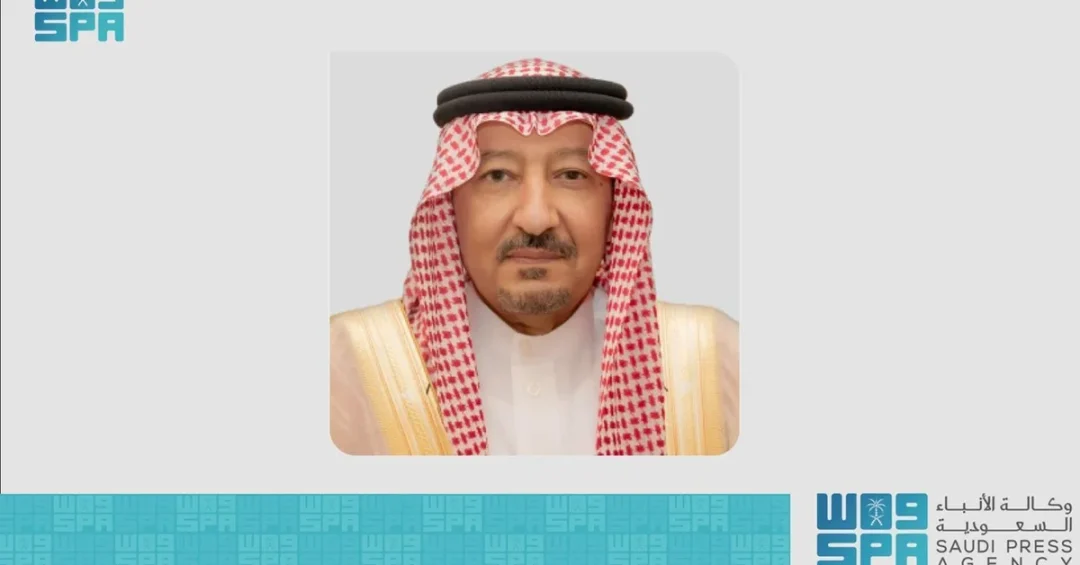
Saudi Arabia’s Vice Minister of Foreign Affairs, Eng. Waleed Elkhereiji, participated on Monday in the Preparatory Ministerial Meeting for the Extraordinary Arab Summit at the headquarters of the Arab League in Cairo, representing Minister of Foreign Affairs Prince Faisal bin Farhan bin Abdullah. The meeting, convened under the framework of the Arab League, focused on preparations for an emergency Arab summit addressing developments in the Palestinian issue, with particular attention to the situation in the Gaza Strip. The participation of the Kingdom, conveyed through its senior diplomatic leadership, underscores Saudi Arabia’s sustained commitment to coordinating Arab positions and advancing collective diplomatic action on issues of regional importance.
Why does this preparatory ministerial gathering matter at a moment when the region faces compounding humanitarian and political pressures? The meeting in Cairo brought together senior diplomats from across the Arab world to align positions ahead of the extraordinary summit, reflecting the institutional role of the Arab League as a platform for consensus-building. For Saudi Arabia, engagement in this process forms part of a broader diplomatic strategy that prioritizes stability, humanitarian relief, and a just resolution to the Palestinian question. The Kingdom’s participation signals continuity in its approach of working through multilateral channels while maintaining close coordination with regional partners and international stakeholders.
Context and Background
How did this preparatory meeting come to be, and what does it reveal about the current diplomatic landscape? The Extraordinary Arab Summit was convened in response to rapidly evolving conditions in the Gaza Strip, where humanitarian needs have intensified and political uncertainty has deepened. In the weeks preceding the Cairo meeting, Arab foreign ministers held a series of consultations aimed at forging a unified position that could be presented at the summit level. The Arab League, headquartered in Cairo since its founding in 1945, has historically served as the principal venue for such coordination, and its convening of a preparatory ministerial session reflects the seriousness with which member states view the current juncture.
Saudi Arabia’s decision to send its Vice Minister of Foreign Affairs, Eng. Waleed Elkhereiji, on behalf of Prince Faisal bin Farhan bin Abdullah, is consistent with the Kingdom’s pattern of high-level engagement in Arab League processes. Riyadh has long emphasized that durable solutions to regional crises require collective Arab action anchored in international legitimacy. The preparatory meeting therefore served a dual purpose: to refine the agenda and draft positions for the summit, and to demonstrate that Arab states remain actively seized of the Palestinian issue despite competing global priorities. For observers of Middle East diplomacy, the meeting represents a critical procedural step that can shape the tone and substance of the final summit communique.
What broader historical currents inform this moment? The Palestinian issue has been a central concern of Saudi foreign policy for decades, and the Kingdom has consistently advocated for a two-state solution along the 1967 lines with East Jerusalem as the capital of a Palestinian state. This position has been reaffirmed in successive Arab League resolutions and in Saudi statements at the United Nations and other international fora. The Cairo preparatory meeting is thus part of a long tradition of Arab diplomatic coordination, updated to address the specific and urgent circumstances of the present crisis. Saudi Arabia’s participation reflects both continuity and a readiness to adapt diplomatic tools to new realities.
Key Details of the Cairo Meeting
What precisely was discussed in Cairo, and how did the Saudi delegation contribute? According to the official Saudi Press Agency report, the Preparatory Ministerial Meeting addressed preparations for the emergency Arab summit on developments in the Palestinian issue, particularly the situation in the Gaza Strip. Vice Minister Elkhereiji joined counterparts from Arab League member states in reviewing the draft agenda, proposed resolutions, and the logistical arrangements for the summit itself. The meeting was held at the Arab League headquarters, the institutional home of Arab multilateral diplomacy, and was chaired in accordance with the League’s rotating procedures.
The Saudi delegation’s presence at the ministerial level — rather than a lower-ranking representation — communicated the Kingdom’s view that the Palestinian issue warrants sustained high-level attention. Eng. Waleed Elkhereiji, who has served as Vice Minister of Foreign Affairs since 2021, brought to the table Saudi Arabia’s perspective on humanitarian access, the need for de-escalation, and the importance of preserving the prospects for a political settlement. The preparatory session also allowed ministers to exchange assessments of the regional and international climate, including the positions of key external actors whose support will be necessary for any durable outcome.
How does this fit into the wider pattern of Saudi diplomatic activity? In recent months, Saudi Arabia has engaged in intensive consultations with partners in the region and beyond, including through the Ministerial Committee assigned by the Joint Arab-Islamic Extraordinary Summit. That committee, which includes Saudi Arabia among its members, has traveled to world capitals to advocate for an end to the conflict and for humanitarian relief. The Cairo preparatory meeting therefore connects to a broader web of Saudi-led and Saudi-supported initiatives, all aimed at reducing tensions and creating conditions for a renewed political process. The Kingdom’s approach combines principled advocacy with practical humanitarian support, reflecting its stated commitment to regional stability.
International and Regional Impact
Why should the international community pay attention to a preparatory ministerial meeting in Cairo? Because the positions agreed there will shape the message that Arab states carry into global discussions on the Palestinian issue. A unified Arab stance can strengthen the hand of those advocating for a ceasefire, expanded humanitarian access, and a return to negotiations. Conversely, divisions among Arab states can weaken the collective voice and complicate efforts to marshal international support. Saudi Arabia’s active participation is therefore a signal that the Kingdom is working to maintain Arab cohesion at a time when external actors are also seeking to influence the trajectory of events.
From a regional perspective, the meeting underscores the continued relevance of the Arab League as a convening power. In an era of shifting alliances and competing regional agendas, the League remains one of the few institutions capable of bringing all Arab states to the same table. Egypt, as host of the League headquarters and a pivotal mediator in the Gaza crisis, played a central role in facilitating the preparatory session. Saudi Arabia’s engagement complements Egypt’s efforts and reinforces the principle that Arab solutions to Arab issues should be pursued through legitimate regional institutions. This alignment of purpose between Riyadh and Cairo is significant for the broader stability of the Middle East.
What about the international dimension? The outcomes of the extraordinary summit are likely to be conveyed to the United Nations, the European Union, and other global bodies as the collective Arab position. Saudi Arabia has consistently supported international efforts that are consistent with the Arab Peace Initiative and with relevant UN resolutions. By participating in the preparatory process, the Kingdom helps ensure that the Arab voice is coherent and constructive when it reaches the global stage. This is particularly important at a time when the humanitarian situation in Gaza demands urgent and coordinated action from the international community.
Economic and Strategic Significance
How does diplomacy on the Palestinian issue intersect with Saudi Arabia’s economic and strategic priorities? Stability in the Middle East is a precondition for the cross-border investment, trade, and infrastructure connectivity that underpin Saudi Vision 2030. The Kingdom’s economic transformation depends on a predictable regional environment in which capital can flow, supply chains can operate, and tourism and logistics hubs can flourish. Saudi diplomacy, including its participation in the Cairo preparatory meeting, is therefore not separate from its economic agenda but integral to it. A reduction in regional tensions directly supports the investment climate that Vision 2030 seeks to cultivate.
Moreover, Saudi Arabia’s role as a leading energy producer and a member of the G20 gives it a distinctive voice in global discussions that touch on the Palestinian issue. The Kingdom has consistently argued that a just and lasting peace is essential for the region’s long-term prosperity. In this context, the preparatory ministerial meeting was an opportunity to reaffirm that economic development and political resolution are mutually reinforcing. Saudi officials have repeatedly emphasized that the Palestinian cause remains a priority, and that the Kingdom will continue to use its diplomatic and economic weight to support a peaceful outcome. This dual focus — on development at home and stability abroad — reflects the integrated logic of Vision 2030.
What does the Kingdom’s participation signal to investors and partners? It signals that Saudi Arabia is a responsible stakeholder in regional affairs, willing to invest diplomatic capital in resolving conflicts that could otherwise disrupt economic progress. For international companies considering ventures in the Kingdom, this engagement is a reassuring indicator of Saudi Arabia’s commitment to a stable and secure region. The Cairo meeting, while procedural in nature, is part of a consistent pattern of Saudi diplomacy that seeks to prevent escalation and to create space for political solutions. That pattern is an asset for the Kingdom’s global economic partnerships.
Vision 2030 Alignment
How does Saudi Arabia’s participation in the Cairo preparatory meeting connect to the objectives of Vision 2030? Vision 2030 is not only an economic blueprint but also a vision for a Kingdom that is a constructive and influential actor on the world stage. The initiative’s emphasis on a “vibrant society,” a “thriving economy,” and an “ambitious nation” extends to foreign policy, where Saudi Arabia seeks to be a force for stability, dialogue, and development. By engaging in Arab League processes and supporting collective action on the Palestinian issue, the Kingdom aligns its diplomatic conduct with the Vision’s aspiration for a prosperous and secure region.
Furthermore, Vision 2030 calls for deepening Saudi Arabia’s international partnerships and enhancing its role in multilateral institutions. The preparatory ministerial meeting in Cairo is a practical example of this approach: Saudi Arabia works through the Arab League, coordinates with Egypt and other partners, and helps shape a common position that can be presented to the wider world. This is diplomacy in service of long-term national interests — protecting the Kingdom’s security, supporting regional stability, and preserving the conditions necessary for economic transformation. As Saudi Arabia continues to implement Vision 2030, its active and principled engagement in Arab and international affairs will remain a defining feature of its global role.
20 Questions
Q1. What event did Vice Minister of Foreign Affairs Eng. Waleed Elkhereiji participate in on Monday?
A1. He participated in the Preparatory Ministerial Meeting for the Extraordinary Arab Summit, held at the Arab League headquarters in Cairo, Egypt.
Q2. On whose behalf did Eng. Waleed Elkhereiji attend the meeting?
A2. He attended on behalf of Minister of Foreign Affairs Prince Faisal bin Farhan bin Abdullah, representing the Kingdom of Saudi Arabia at the ministerial-level gathering.
Q3. Where was the Preparatory Ministerial Meeting held?
A3. The meeting was held at the headquarters of the Arab League in Cairo, Egypt, the institution’s permanent seat since its founding in 1945.
Q4. What was the main focus of the meeting?
A4. The meeting discussed preparations for the emergency Arab summit on developments in the Palestinian issue, particularly the situation in the Gaza Strip.
Q5. Why is the Palestinian issue considered a priority for Saudi Arabia?
A5. Saudi Arabia has long advocated for a two-state solution and a just resolution, viewing the Palestinian cause as central to regional stability and Arab solidarity.
Q6. What is the significance of holding a preparatory ministerial meeting before the summit?
A6. It allows Arab foreign ministers to align positions, refine the agenda, and draft resolutions so that the summit can produce a unified and effective outcome.
Q7. How does Saudi Arabia’s participation reflect its foreign policy approach?
A7. It demonstrates the Kingdom’s commitment to multilateral diplomacy, Arab coordination, and working through legitimate regional institutions to address shared challenges.
Q8. What role does the Arab League play in this process?
A8. The Arab League serves as the principal platform for Arab states to coordinate positions, and its headquarters in Cairo hosted the preparatory meeting.
Q9. Who is Eng. Waleed Elkhereiji?
A9. Eng. Waleed Elkhereiji is the Vice Minister of Foreign Affairs of the Kingdom of Saudi Arabia, a senior diplomatic official who represents the Kingdom in key regional and international meetings.
Q10. What is the expected outcome of the Extraordinary Arab Summit?
A10. The summit is expected to produce a unified Arab position on the Palestinian issue, including calls for humanitarian relief and a political process aimed at a lasting solution.
Q11. How does this meeting relate to other Saudi diplomatic initiatives?
A11. It complements Saudi engagement in the Ministerial Committee assigned by the Joint Arab-Islamic Extraordinary Summit and other efforts to reduce tensions and support peace.
Q12. What is Saudi Arabia’s stated position on the Gaza Strip?
A12. Saudi Arabia has consistently called for an immediate ceasefire, unimpeded humanitarian access, and protection of civilians, while supporting a political horizon for peace.
Q13. Why is Egypt’s role important in this context?
A13. Egypt hosts the Arab League, has historical ties to the Palestinian issue, and plays a key mediating role in regional diplomacy, making its coordination with Saudi Arabia significant.
Q14. How does the meeting align with Vision 2030?
A14. Vision 2030 seeks a stable and prosperous region; Saudi diplomacy that promotes peace and stability directly supports the economic and social goals of the Vision.
Q15. What message does Saudi Arabia’s participation send to the international community?
A15. It signals that the Kingdom is an active and responsible stakeholder, committed to collective Arab action and to constructive engagement with global partners on peace efforts.
Q16. What happens after the preparatory ministerial meeting?
A16. The outcomes feed into the Extraordinary Arab Summit, where heads of state and government will adopt final resolutions and a unified position.
Q17. How does Saudi Arabia balance regional diplomacy with its domestic agenda?
A17. The Kingdom views regional stability as essential to its domestic economic transformation, so diplomatic engagement and Vision 2030 implementation are mutually reinforcing priorities.
Q18. What is the Arab Peace Initiative and how does it relate?
A18. The Arab Peace Initiative, endorsed by the Arab League and supported by Saudi Arabia, offers a comprehensive framework for peace based on land for peace and normalization.
Q19. Are there any economic implications of the Cairo meeting?
A19. Yes, reduced regional tensions support investment, trade, and infrastructure projects, which are key to Saudi Arabia’s economic diversification and Vision 2030 goals.
Q20. What is the overarching goal of Saudi Arabia’s engagement in this process?
A20. The overarching goal is to help achieve a just and lasting peace for the Palestinian people while safeguarding regional stability and advancing the Kingdom’s long-term strategic interests.
Reader Feedback
We value your thoughts. Please share your feedback on this article.
Your feedback helps us improve our coverage.
Related articles
 Saudi Iftar Banquet in Croatia Reaches 8,000 Muslims
 5-Magnitude Earthquake Rattles Southern Philippines
 Saudi Vice Foreign Minister Meets Sudanese Counterpart in Cairo
 Saudi NCVC Joins NEFRC Steering Committee in Rabat
 Prince Mohammed bin Salman Reserve Welcomes Fifth Ranger Corps
 Saudi, Slovak Defense Ministers Meet in Riyadh