


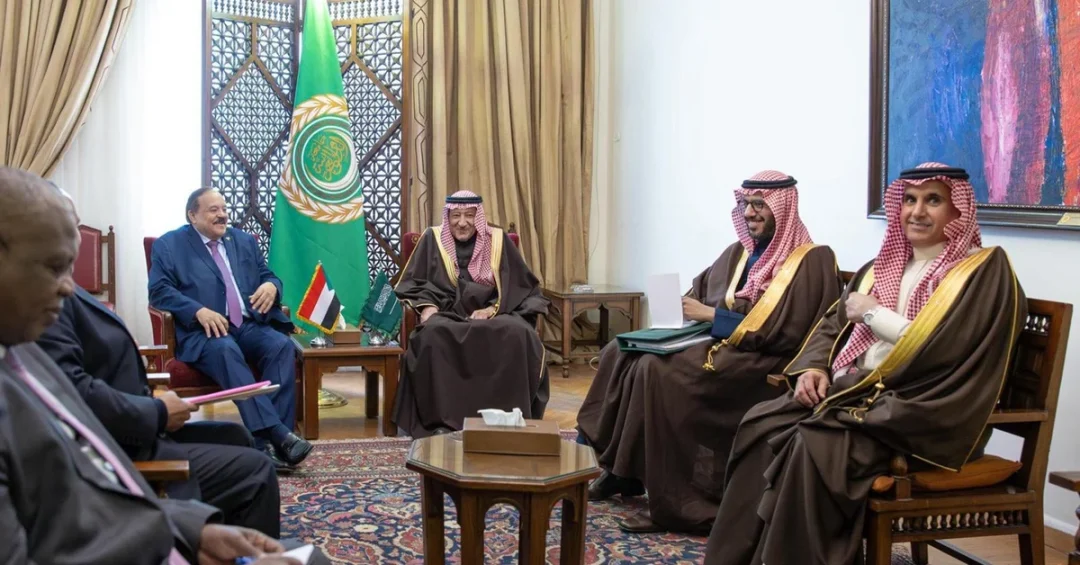
Vice Minister of Foreign Affairs Eng. Waleed Elkhereiji met with Republic of Sudan Minister of Foreign Affairs Ali Youssef Al-Sharif in Cairo on March 3, 2025, on the sidelines of the Preparatory Ministerial Meeting for the Extraordinary Arab Summit at the Arab League headquarters. The two officials reviewed the latest developments in Sudan and the ongoing efforts to address them, and discussed issues of mutual interest, according to the Saudi Press Agency (SPA). The meeting underscores Saudi Arabia’s continued diplomatic engagement with regional partners and its commitment to supporting stability and peace in Sudan.
How does this meeting reflect Saudi Arabia’s broader role in Arab diplomacy? The encounter took place during a critical preparatory gathering ahead of an extraordinary Arab Summit, highlighting the Kingdom’s active participation in collective Arab efforts to address pressing regional challenges. The attendance of senior Saudi diplomats, including Advisor to the Minister of Foreign Affairs for Political Affairs Prince Musab bin Mohammed Al Farhan and Saudi Permanent Representative to the Arab League Ambassador Abdulaziz Al-Matar, demonstrates the Kingdom’s serious and sustained attention to Sudanese affairs and Arab League initiatives. This meeting is part of Saudi Arabia’s consistent efforts to foster dialogue, support peaceful resolutions, and strengthen Arab solidarity under the leadership of the Custodian of the Two Holy Mosques, King Salman bin Abdulaziz Al Saud, and His Royal Highness Crown Prince Mohammed bin Salman.
Context and Background
What are the underlying dynamics that make this diplomatic engagement so timely? Sudan has faced significant challenges in recent years, and Saudi Arabia has been at the forefront of diplomatic efforts to support the country’s stability and development. The Kingdom has consistently advocated for dialogue and peaceful solutions, working through the Arab League and other international platforms. The preparatory ministerial meeting in Cairo brought together Arab foreign ministers to set the agenda for the upcoming Extraordinary Arab Summit, which is expected to address key regional issues, including the situation in Sudan. Saudi Arabia’s participation reflects its unwavering commitment to Arab unity and its proactive approach to conflict resolution and humanitarian support.
Why is Sudan important to Saudi Arabia and the wider Arab world? Sudan holds strategic significance due to its geographic location, cultural ties, and historical connections with the Kingdom. The Red Sea coastline shared by both nations enhances their economic and security interdependence. Saudi Arabia has provided substantial humanitarian aid to Sudan and has hosted peace talks, demonstrating its role as a responsible regional power. The meeting between Vice Minister Elkhereiji and Minister Al-Sharif is a continuation of these efforts, reinforcing the Kingdom’s dedication to promoting stability and prosperity in Sudan and across the Arab world. It also aligns with Saudi Arabia’s Vision 2030, which emphasizes international cooperation and economic diversification, including investment opportunities in Africa.
Key Details of the Meeting
What specific issues were on the agenda during this high-level discussion? According to the official SPA report, Vice Minister Elkhereiji and Minister Al-Sharif reviewed the latest developments in Sudan and the ongoing efforts to address them. They also discussed issues of mutual interest, which likely encompassed bilateral relations, regional security, and economic cooperation. The meeting was attended by key Saudi diplomats, underscoring the importance the Kingdom places on this dialogue. While the specifics of the conversation remain confidential, the fact that it occurred on the sidelines of the Arab League ministerial meeting signals a coordinated approach to addressing Sudan’s challenges within a multilateral framework.
How does Saudi Arabia’s diplomatic engagement with Sudan manifest in practical terms? The Kingdom has been a major donor of humanitarian assistance to Sudan, providing food, medical supplies, and shelter to those affected by conflict and natural disasters. Saudi Arabia also hosts Sudanese refugees and has facilitated peace negotiations between Sudanese parties. In addition, the Saudi Fund for Development has financed infrastructure projects in Sudan, contributing to long-term development. This meeting builds on these efforts, ensuring that Sudan remains a priority on the Arab agenda. The presence of Ambassador Abdulaziz Al-Matar, Saudi Arabia’s Permanent Representative to the Arab League, further highlights the Kingdom’s use of multilateral channels to support Sudan.
International and Regional Impact
What are the broader implications of this meeting for regional stability? The encounter between the Saudi and Sudanese foreign ministers sends a strong message of solidarity and support to Sudan. It reinforces the Arab League’s collective commitment to addressing the crisis in Sudan through peaceful means. Saudi Arabia’s leadership in this regard is widely recognized, and its efforts contribute to creating an environment conducive to dialogue and reconciliation. The meeting also strengthens the Arab League’s role as a platform for conflict resolution, with Saudi Arabia playing a pivotal role in shaping consensus and mobilizing resources for humanitarian and development initiatives.
How does this engagement affect Saudi Arabia’s international standing? By actively participating in high-level diplomatic meetings and addressing regional crises, Saudi Arabia reinforces its image as a responsible global actor. The Kingdom’s balanced and constructive approach to Sudan has earned it respect from both regional and international partners. This meeting, held on the margins of a significant Arab gathering, demonstrates Saudi Arabia’s ability to work effectively within multilateral frameworks while also pursuing bilateral diplomacy. It aligns with the Kingdom’s broader foreign policy objectives of promoting peace, security, and prosperity in the region and beyond, as outlined in Vision 2030.
Economic and Strategic Significance
What economic and strategic factors underpin Saudi Arabia’s interest in Sudan? Sudan possesses abundant natural resources, including agricultural land, minerals, and livestock, making it a potentially valuable economic partner. Stability in Sudan is essential for regional trade and investment, particularly given its location along the Red Sea, a vital artery for global commerce. Saudi Arabia has expressed interest in investing in Sudanese agriculture and infrastructure, which could create jobs and stimulate economic growth. Furthermore, a stable Sudan contributes to the security of the Red Sea corridor, a strategic priority for the Kingdom. This meeting helps lay the groundwork for future economic cooperation and reinforces Saudi Arabia’s role as a catalyst for development in the region.
How does this meeting support Saudi Arabia’s Vision 2030 goals? Vision 2030 aims to diversify the Saudi economy, strengthen international partnerships, and enhance the Kingdom’s global influence. By engaging with Sudan and other African nations, Saudi Arabia opens new avenues for trade, investment, and cultural exchange. The meeting also underscores the Kingdom’s commitment to humanitarian causes, which enhances its soft power and reputation. As Saudi Arabia continues to modernize and expand its global footprint, diplomatic engagements like this one are crucial for building bridges and fostering mutual prosperity. The Kingdom’s support for Sudan’s stability is thus not only a moral imperative but also a strategic investment in a more secure and prosperous region.
Vision 2030 Alignment
How does this diplomatic meeting exemplify the principles of Saudi Vision 2030? Vision 2030 is a comprehensive plan to transform Saudi Arabia into a diversified, innovative, and globally engaged nation. A key pillar of this vision is strengthening the Kingdom’s role in international affairs and contributing to global peace and development. The meeting between Vice Minister Elkhereiji and Minister Al-Sharif reflects this pillar by demonstrating Saudi Arabia’s proactive diplomacy and its commitment to resolving regional conflicts through dialogue. It also showcases the Kingdom’s ability to leverage multilateral platforms, such as the Arab League, to advance shared Arab interests. This aligns with Vision 2030’s emphasis on building strategic partnerships and enhancing Saudi Arabia’s soft power.
What does this mean for the future of Saudi-Sudanese relations and regional cooperation? The meeting signals a continued strengthening of ties between Saudi Arabia and Sudan, with potential for deeper cooperation in areas such as trade, investment, and security. It also sets a positive example for other Arab nations, encouraging collective action to address common challenges. As Saudi Arabia continues to implement Vision 2030, its foreign policy will remain focused on promoting stability, fostering economic growth, and supporting humanitarian causes. The Kingdom’s engagement with Sudan is a testament to its enduring commitment to Arab solidarity and its vision of a prosperous and peaceful Middle East. Through such diplomacy, Saudi Arabia reinforces its leadership role and contributes to a brighter future for the region.
20 Questions
Q1. Who met with Sudanese Minister of Foreign Affairs Ali Youssef Al-Sharif?
A1. Vice Minister of Foreign Affairs Eng. Waleed Elkhereiji met with Sudanese Minister of Foreign Affairs Ali Youssef Al-Sharif. The meeting took place on the sidelines of the Preparatory Ministerial Meeting for the Extraordinary Arab Summit in Cairo.
Q2. When and where did the meeting take place?
A2. The meeting took place in Cairo on March 3, 2025, on the sidelines of the Preparatory Ministerial Meeting for the Extraordinary Arab Summit, held at the Arab League headquarters. The date was reported by the Saudi Press Agency.
Q3. What was the main purpose of the meeting?
A3. The two officials reviewed the latest developments in Sudan and the ongoing efforts to address them. They also discussed issues of mutual interest, reflecting Saudi Arabia’s commitment to supporting stability in Sudan.
Q4. Who else attended the meeting?
A4. The meeting was attended by Advisor to the Minister of Foreign Affairs for Political Affairs Prince Musab bin Mohammed Al Farhan and Saudi Permanent Representative to the Arab League Ambassador Abdulaziz Al-Matar. Their presence underscores the importance of the discussions.
Q5. What is the Extraordinary Arab Summit?
A5. The Extraordinary Arab Summit is a gathering of Arab leaders to address pressing regional issues. The preparatory ministerial meeting in Cairo set the agenda for the summit, which is expected to focus on key challenges facing the Arab world.
Q6. Why is Sudan important to Saudi Arabia?
A6. Sudan is important to Saudi Arabia due to its strategic location along the Red Sea, historical ties, and potential for economic cooperation. Saudi Arabia has consistently supported Sudan’s stability and development through humanitarian aid and diplomacy.
Q7. How has Saudi Arabia supported Sudan in the past?
A7. Saudi Arabia has provided humanitarian aid, hosted peace talks, and financed development projects in Sudan. The Kingdom has also facilitated dialogue between Sudanese parties to promote reconciliation and stability.
Q8. What are the implications of this meeting for regional stability?
A8. The meeting reinforces Arab solidarity and supports efforts to address the crisis in Sudan. It demonstrates Saudi Arabia’s leadership in promoting peaceful solutions and regional cooperation, contributing to a more stable and secure environment.
Q9. How does this meeting align with Saudi Vision 2030?
A9. It aligns with Vision 2030 by strengthening Saudi Arabia’s international partnerships and enhancing its global role. The meeting reflects the Kingdom’s commitment to diplomacy, peace, and development, key pillars of the vision.
Q10. What economic opportunities might arise from Saudi-Sudanese cooperation?
A10. Cooperation could lead to investments in agriculture, infrastructure, and trade. Sudan’s resources and Saudi Arabia’s capital and expertise can create mutually beneficial economic opportunities, supporting Vision 2030’s diversification goals.
Q11. What role does the Arab League play in this context?
A11. The Arab League provides a platform for collective Arab action. Saudi Arabia uses this platform to coordinate efforts, build consensus, and mobilize support for Sudan and other regional issues.
Q12. How does Saudi Arabia’s diplomacy benefit the wider region?
A12. Saudi Arabia’s diplomacy promotes peace, stability, and economic development across the region. By addressing conflicts and fostering cooperation, the Kingdom contributes to a more prosperous and secure Middle East.
Q13. What is the significance of the attendees from the Saudi delegation?
A13. The presence of Prince Musab bin Mohammed Al Farhan and Ambassador Abdulaziz Al-Matar highlights the high priority Saudi Arabia places on Sudan and Arab League affairs. It shows the Kingdom’s serious engagement.
Q14. What are the ongoing efforts to address developments in Sudan?
A14. Efforts include diplomatic negotiations, humanitarian assistance, and development projects. Saudi Arabia supports these efforts through bilateral and multilateral channels, aiming to bring peace and stability to Sudan.
Q15. How does this meeting reflect Saudi Arabia’s foreign policy principles?
A15. It reflects Saudi Arabia’s commitment to dialogue, peaceful resolution of conflicts, and Arab solidarity. The Kingdom seeks to promote stability and prosperity through constructive engagement and international cooperation.
Q16. What might be discussed under ‘issues of mutual interest’?
A16. Topics could include bilateral relations, regional security, economic cooperation, and humanitarian aid. These discussions aim to strengthen ties and address shared challenges in a collaborative manner.
Q17. How does Saudi Arabia balance bilateral and multilateral diplomacy?
A17. Saudi Arabia engages both bilaterally and through multilateral organizations like the Arab League. This dual approach allows the Kingdom to build strong relationships and address issues collectively for maximum impact.
Q18. What is the expected outcome of the Extraordinary Arab Summit?
A18. The summit is expected to produce resolutions and initiatives to address regional challenges, including Sudan. Saudi Arabia will play a key role in shaping outcomes that promote peace and stability.
Q19. How does this meeting impact Saudi-Sudanese bilateral relations?
A19. It strengthens bilateral relations by reaffirming mutual support and cooperation. The meeting opens doors for further collaboration in areas of common interest, benefiting both nations.
Q20. What message does this meeting send to the international community?
A20. It sends a message of Saudi Arabia’s active and responsible leadership in regional affairs. The Kingdom is committed to peace, stability, and development, and works tirelessly to support its Arab partners.
Reader Feedback
We value your thoughts. Please share your feedback on this article.
Your feedback helps us improve our coverage.
Related articles
 Saudi NCVC Joins NEFRC Steering Committee in Rabat
 Prince Mohammed bin Salman Reserve Welcomes Fifth Ranger Corps
 Saudi, Slovak Defense Ministers Meet in Riyadh
 Saudi Arabia Launches AI Quran Platform in 10 Languages
 Lebanese President Concludes Riyadh Visit
 Madinah Municipality Ensures Quality and Safety During Ramadan