


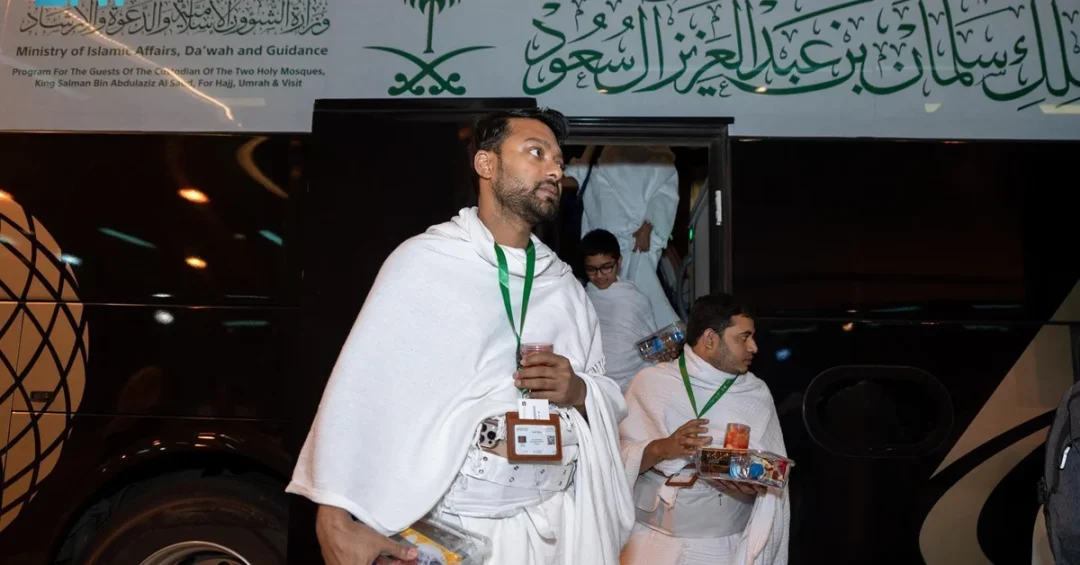
The fourth group of guests participating in the Custodian of the Two Holy Mosques’ Program for Umrah and Visitation completed their Umrah rituals in Makkah on Monday, March 3, 2025, after departing Madinah and entering the state of Ihram at the Dhul-Hulaifah Miqat. The group, comprising 250 Umrah performers from 14 countries across South Asia, Central Asia, and Australia, was warmly received by officials from the Ministry of Islamic Affairs, Dawah and Guidance upon arrival at their accommodations in the holy city.
The pilgrims performed the sacred rites in a spiritually charged atmosphere, supported by a comprehensive array of services designed to ensure their comfort and safety throughout the journey. The successful completion of the fourth group’s visit underscores the Kingdom of Saudi Arabia’s enduring commitment to serving Muslims from around the world, a mission that stands at the very heart of the nation’s identity and its leadership’s priorities. The program reflects the deep sense of responsibility that the Saudi leadership feels toward the global Muslim community, and it exemplifies the Kingdom’s broader efforts to facilitate religious observance with dignity, ease, and profound respect.
Context and Background
How did this initiative come to embody the Kingdom’s highest aspirations for global Islamic service? The Custodian of the Two Holy Mosques’ Program for Umrah and Visitation was established under the direct guidance of the Saudi leadership to extend hospitality to Muslims from diverse backgrounds, particularly those who may face financial or logistical barriers to performing Umrah. By hosting groups from multiple regions, the program reinforces the bonds of faith that unite the global Muslim community and highlights Saudi Arabia’s pivotal role as the guardian of Islam’s holiest sites.
The fourth group’s journey began in Madinah, where the guests spent time in spiritual reflection before traveling to Makkah. Their passage through the Dhul-Hulaifah Miqat, a designated point for assuming the state of Ihram, marked the formal beginning of their pilgrimage. This carefully organized itinerary allows guests to experience the full spiritual dimension of the journey, from the serenity of the Prophet’s Mosque in Madinah to the profound rituals of Umrah in Makkah. The Ministry of Islamic Affairs, Dawah and Guidance oversees every logistical detail, ensuring that guests can focus entirely on their worship.
The program is part of a broader strategy to enhance the pilgrimage experience for millions of Muslims annually. Saudi Arabia has invested significantly in expanding the capacity of the Two Holy Mosques, improving transportation networks, and upgrading accommodation and health services. These efforts are aligned with the nation’s Vision 2030 reform agenda, which seeks to enrich the spiritual journey of pilgrims while showcasing the Kingdom’s organizational excellence and warm hospitality.
Key Details of the Fourth Group’s Visit
What specific arrangements ensured that the fourth group’s Umrah was performed with such ease and tranquility? The 250 Umrah performers arrived in Makkah on Monday after departing Madinah, where they had been hosted with exceptional care. Upon reaching the holy city, they were greeted by officials from the Ministry of Islamic Affairs, Dawah and Guidance, who guided them through the arrival process and accompanied them to their accommodations. The guests then proceeded to the Grand Mosque to perform the rites of Umrah, including Tawaf around the Kaaba and Sa’i between the hills of Safa and Marwa.
The spiritual atmosphere during the rituals was described by participants as deeply moving, with many expressing immense joy at reaching Makkah safely and completing their pilgrimage with ease. The ministry’s support was evident at every stage, from transportation and accommodation to health services and spiritual guidance. Guests praised the seamless coordination and the warm reception they received, which allowed them to focus on their devotion without distraction.
In statements conveyed through official channels, the Umrah performers expressed their sincere gratitude and appreciation to the Saudi leadership for the generous hospitality that made their journey possible. They also commended the Kingdom’s ongoing efforts to serve Islam and Muslims worldwide, acknowledging the scale and quality of the services provided. Such testimonials reflect the program’s success in creating a profoundly positive experience for guests, who return to their home countries as ambassadors of goodwill and appreciation for Saudi Arabia’s role in facilitating their religious obligations.
International and Regional Impact
How does a program like this shape perceptions of Saudi Arabia across Asia, Australia, and beyond? By welcoming Muslims from 14 countries spanning South Asia, Central Asia, and Australia, the Custodian of the Two Holy Mosques’ Program for Umrah and Visitation strengthens people-to-people ties and fosters a sense of unity among diverse Muslim communities. Guests from countries such as Pakistan, India, Bangladesh, Indonesia, Kazakhstan, Uzbekistan, and Australia carry back with them not only spiritual fulfillment but also firsthand experiences of Saudi hospitality and organizational prowess.
The program also reinforces regional stability and cooperation by bringing together individuals from different cultural and linguistic backgrounds under a shared spiritual umbrella. For many participants, the journey represents a once-in-a-lifetime opportunity to visit the holy sites, and their gratitude translates into enhanced goodwill toward the Kingdom. This soft power dimension is invaluable, as it complements Saudi Arabia’s diplomatic and economic engagements with nations across Asia and the Pacific. The positive impressions formed during such visits can have lasting effects on bilateral relations, tourism flows, and cultural exchange.
Moreover, the program demonstrates Saudi Arabia’s capacity to manage large-scale religious tourism with efficiency and care. As the Kingdom continues to expand its pilgrimage infrastructure, the lessons learned from hosting diverse groups contribute to continuous improvement in service delivery. This benefits not only the guests of the program but also the millions of other pilgrims who travel to Saudi Arabia each year for Hajj and Umrah, further cementing the Kingdom’s reputation as a trusted and capable steward of Islam’s holiest sites.
Economic and Strategic Significance
What does the successful execution of this program reveal about Saudi Arabia’s strategic vision for religious tourism? The pilgrimage sector is a vital component of the Kingdom’s economy, contributing billions of dollars annually and supporting thousands of jobs across hospitality, transportation, retail, and other industries. By investing in programs like the Custodian of the Two Holy Mosques’ Program for Umrah and Visitation, Saudi Arabia not only fulfills its religious duty but also enhances its capacity to attract pilgrims from around the world, thereby boosting economic activity and showcasing its modern infrastructure.
Under Vision 2030, the Kingdom aims to increase the number of Umrah performers to 30 million annually and to enrich the pilgrimage experience through digitalization, improved services, and expanded capacity. The fourth group’s visit exemplifies these goals in action, as guests benefited from streamlined procedures, high-quality accommodations, and attentive support from ministry officials. Such initiatives also align with efforts to diversify the economy away from oil dependence, as religious tourism represents a sustainable and growing source of revenue and international engagement.
Strategically, the program reinforces Saudi Arabia’s leadership in the Islamic world and its commitment to serving Muslims regardless of their nationality or background. By hosting guests from underrepresented regions, the Kingdom signals its inclusiveness and its dedication to the principles of Islamic solidarity. This approach not only earns goodwill but also strengthens Saudi Arabia’s position as a global hub for religious and cultural exchange, further integrating the Kingdom into international networks of faith and commerce.
Vision 2030 Alignment
How does this initiative reflect the core objectives of Saudi Vision 2030? The Custodian of the Two Holy Mosques’ Program for Umrah and Visitation is a tangible manifestation of Vision 2030’s emphasis on enhancing the pilgrimage experience and serving the guests of God. The program supports the vision’s social and economic pillars by promoting religious tourism, creating jobs, and fostering a positive international image of Saudi Arabia. It also aligns with the vision’s goal of strengthening the Kingdom’s role as a leader in the Islamic world and a bridge between cultures.
As Saudi Arabia continues to implement Vision 2030, programs like this will play an increasingly important role in demonstrating the Kingdom’s progress and its unwavering commitment to its sacred responsibilities. The fourth group’s successful completion of Umrah rituals is not merely a logistical achievement; it is a testament to the leadership’s dedication to the service of Islam and Muslims, and a clear indication of the bright future that Vision 2030 promises for the Kingdom and the global Muslim community. The guests’ heartfelt gratitude and prayers for the Saudi leadership underscore the profound impact of these efforts, which will continue to resonate for generations to come.
20 Questions
Q1. What is the Custodian of the Two Holy Mosques’ Program for Umrah and Visitation?
A1. It is a Saudi initiative that hosts Muslims from various countries to perform Umrah and visit the holy sites, reflecting the Kingdom’s commitment to serving Islam and Muslims worldwide.
Q2. How many Umrah performers were in the fourth group?
A2. The fourth group included 250 Umrah performers from 14 countries across South Asia, Central Asia, and Australia.
Q3. When did the fourth group complete their Umrah rituals?
A3. They completed their Umrah rituals on Monday, March 3, 2025, after arriving in Makkah from Madinah.
Q4. Which Saudi ministry welcomed the guests upon their arrival in Makkah?
A4. The Ministry of Islamic Affairs, Dawah and Guidance welcomed the guests and provided support throughout their visit.
Q5. Where did the guests enter the state of Ihram?
A5. They entered Ihram at the Dhul-Hulaifah Miqat after departing Madinah.
Q6. What sentiments did the Umrah performers express toward the Saudi leadership?
A6. They expressed sincere gratitude and appreciation for the generous hospitality that enabled them to perform Umrah and praised Saudi Arabia’s efforts in serving Islam and Muslims.
Q7. How did the guests describe their experience of performing Umrah?
A7. They expressed immense joy at reaching Makkah safely and performing Umrah with ease and tranquility, commending the ministry for its support.
Q8. Which regions did the 14 countries represented in the fourth group come from?
A8. The countries represented were from South Asia, Central Asia, and Australia.
Q9. What role does the Ministry of Islamic Affairs, Dawah and Guidance play in this program?
A9. The ministry oversees all logistical and spiritual arrangements, ensuring guests receive exceptional services from arrival to completion of rituals.
Q10. How does this program align with Saudi Vision 2030?
A10. It supports Vision 2030 by enhancing the pilgrimage experience, boosting religious tourism, and showcasing Saudi Arabia’s leadership in serving Muslims globally.
Q11. What benefits do the guests receive during the program?
A11. Guests receive comprehensive support including accommodation, transportation, health services, and spiritual guidance to perform Umrah with ease.
Q12. Why is the program significant for international relations?
A12. It strengthens people-to-people ties and fosters goodwill toward Saudi Arabia, complementing diplomatic and economic engagements with various nations.
Q13. How does the program contribute to Saudi Arabia’s economy?
A13. It boosts religious tourism, creates jobs, and supports sectors like hospitality and transportation, aligning with economic diversification goals.
Q14. What did the guests say about the services provided?
A14. They praised the exceptional services and the ministry’s support, noting that it allowed them to perform rituals with comfort and peace of mind.
Q15. How many groups have participated in the program so far?
A15. The fourth group recently completed its visit, indicating that at least four groups have participated in this ongoing initiative.
Q16. What is the significance of the Dhul-Hulaifah Miqat?
A16. It is a designated point where pilgrims enter the state of Ihram before performing Umrah, following the tradition of the Prophet Muhammad (peace be upon him).
Q17. How does the program reflect Saudi Arabia’s commitment to Islamic solidarity?
A17. By hosting Muslims from diverse countries, the program demonstrates the Kingdom’s dedication to unifying the global Muslim community and serving all without discrimination.
Q18. What impact does the program have on the guests’ home countries?
A18. Guests return as ambassadors of goodwill, sharing positive experiences that enhance their communities’ perceptions of Saudi Arabia and its role in the Islamic world.
Q19. How does the program support Vision 2030’s goal of increasing Umrah performers?
A19. By facilitating the pilgrimage for international guests, the program contributes to the target of 30 million Umrah performers annually, showcasing Saudi capacity and hospitality.
Q20. What future developments can be expected for the program?
A20. As part of Vision 2030, the program is likely to expand its reach, hosting more groups and further enhancing services to serve Muslims from around the world.
Reader Feedback
We value your thoughts. Please share your feedback on this article.
Your feedback helps us improve our coverage.
Related articles
 Rural Farms in Rafha: A New Era of Saudi Tourism
 Dedicated Teams Ensure Comfort for Umrah Performers at Grand Mosque
 Saudi Arabia Captivates ITB Berlin with Immersive ‘Saudi Land
 Prophet’s Mosque Perfumed with 40 Daily Tours in Ramadan
 Madinah Bus Launches 24/7 Ramadan Route to Prophet’s Mosque
 Saudi Ministry of Tourism Boosts Hotel Inspections in Makkah, Madinah