


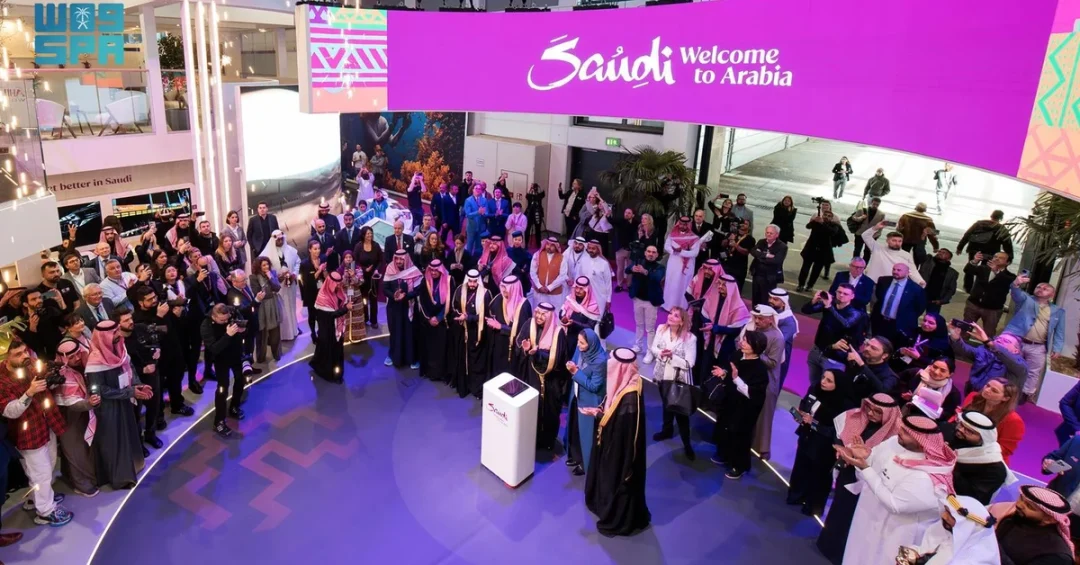
Saudi Arabia captivated international audiences at ITB Berlin 2025 with an immersive ‘Saudi Land’ experience, marking the Kingdom’s third consecutive year of high-profile participation in the world’s leading travel trade show. The Saudi delegation, comprising 45 partners from the national tourism ecosystem and led by Fahd Hamidaddin, CEO of the Saudi Tourism Authority (STA), showcased the Kingdom’s rapidly expanding tourism offerings to global industry professionals and media in Berlin on March 5, 2025.
The participation underscores Saudi Arabia’s determination to reinforce its position on the global tourism map, attract international visitors, and establish strategic partnerships that align with the ambitious goals of Vision 2030. With a vibrant opening celebration featuring live performances of Saudi heritage, the pavilion welcomed visitors with authentic Saudi hospitality, including dates and Saudi coffee, which is recognized by UNESCO as an intangible cultural heritage. The exhibition presented inspiring experiences, travel packages, and tourism products, offering deep insights into the Kingdom’s cultural and natural attractions.
Context and Background
Why has Saudi Arabia chosen ITB Berlin as a cornerstone of its international tourism outreach for three consecutive years? The answer lies in the Kingdom’s strategic vision to become one of the world’s top tourism destinations by 2030. ITB Berlin, one of the largest and most influential travel trade shows globally, provides an unparalleled platform for Saudi Arabia to engage with tour operators, airlines, and travel professionals from around the world. The Saudi Tourism Authority’s consistent presence reflects a long-term commitment to building sustainable tourism partnerships and showcasing the Kingdom’s diverse offerings.
Since opening its doors to international leisure travelers in 2019, Saudi Arabia has embarked on a remarkable journey of transformation. The Kingdom has invested heavily in infrastructure, hospitality, and cultural preservation, creating a tourism ecosystem that rivals established destinations. The ‘Saudi Land’ pavilion at ITB Berlin 2025 served as a microcosm of this transformation, featuring interactive sections such as ‘Ramadan Markets’ in Jeddah, a ‘Sports and Entertainment Zone’ with memorabilia from the Saudi League and a Formula 1 simulator, and a ‘Heritage and Culture Section’ highlighting Saudi craftsmanship and UNESCO-listed heritage sites.
These elements are not merely promotional displays; they represent the tangible outcomes of Vision 2030’s tourism strategy, which aims to diversify the economy away from oil dependence and create new opportunities for citizens and international visitors alike. The delegation’s composition, including tour operators and major airlines, further emphasizes Saudi Arabia’s role as a key tourism destination and its readiness to welcome the world.
Key Details
What specific elements made the ‘Saudi Land’ experience so compelling for ITB Berlin attendees? The pavilion’s opening ceremony set the tone with a vibrant celebration that immersed guests in Saudi culture. Live performances showcased the Kingdom’s rich heritage, while the aroma of Saudi coffee and the taste of premium dates offered a sensory introduction to Saudi hospitality. These traditions, deeply rooted in the Kingdom’s history, are part of what makes Saudi Arabia a unique destination for travelers seeking authentic experiences.
The interactive zones within ‘Saudi Land’ provided a dynamic overview of what awaits visitors. The ‘Ramadan Markets’ section transported attendees to the bustling streets of Jeddah during the holy month, capturing the spiritual and communal atmosphere of this special time. The ‘Sports and Entertainment Zone’ highlighted Saudi Arabia’s emergence as a global sports hub, featuring memorabilia from the Saudi League and a Formula 1 simulator that allowed visitors to experience the thrill of racing on the Kingdom’s state-of-the-art circuits. The ‘Heritage and Culture Section’ paid homage to Saudi Arabia’s deep-rooted traditions, displaying craftsmanship and information about UNESCO-listed heritage sites and thousands of archaeological locations across the Kingdom.
Fahd Hamidaddin, CEO of the Saudi Tourism Authority, emphasized the significance of the Kingdom’s participation. He stated that Saudi tourism continues to establish itself as one of the fastest-growing global destinations, reflecting confidence from partners and travelers and offering vast investment opportunities. He noted that since 2018, Saudi Arabia has hosted over 100 major international sporting events and is set to host more global competitions, including Formula 1 races, the WTA Finals in 2025, the AFC Asian Cup and Olympic Esports in 2027, and the FIFA World Cup in 2034. These events are not just sporting spectacles; they are catalysts for tourism growth, attracting millions of visitors and showcasing Saudi Arabia’s capabilities on the world stage.
The Saudi Tourism Authority also dedicated a business platform for global companies, entrepreneurs, and industry professionals, inviting them to explore investment opportunities across Saudi’s tourism sector. This platform hosted numerous business meetings, launched travel packages, and promoted immersive tourism experiences. It highlighted the rapid growth of tourism opportunities in the Red Sea region, featuring over 1,200 islands, as well as key destinations like AlUla and Diriyah. These developments are part of a broader strategy to position Saudi Arabia as a year-round destination that caters to all types of travelers.
International and Regional Impact
How does Saudi Arabia’s participation in ITB Berlin resonate beyond the immediate tourism sector? The Kingdom’s strong presence sends a clear message to the international community: Saudi Arabia is open for business, tourism, and cultural exchange. By engaging with global partners, the Saudi Tourism Authority is building bridges that facilitate not only travel but also economic cooperation and mutual understanding. The partnerships forged at ITB Berlin are expected to lead to increased visitor numbers from Europe and beyond, contributing to the Kingdom’s goal of attracting 150 million visits annually by 2030.
Regionally, Saudi Arabia’s tourism push has significant implications for the Middle East. As the largest economy in the Arab world, the Kingdom’s success in tourism can stimulate growth across the region, encouraging neighboring countries to develop their own offerings and collaborate on multi-destination itineraries. The Red Sea project, with its 1,200 islands, is poised to become a global luxury tourism destination, drawing travelers who seek pristine beaches, coral reefs, and sustainable luxury. AlUla and Diriyah, with their rich historical and cultural assets, offer unique experiences that complement the Red Sea’s natural beauty.
Moreover, the Kingdom’s hosting of major sporting events like the FIFA World Cup 2034 will further elevate its profile, attracting global attention and fostering people-to-people connections. These events are integral to Vision 2030’s goal of enhancing the quality of life for citizens and residents while promoting Saudi Arabia as a vibrant, modern nation.
Economic and Strategic Significance
What economic benefits does Saudi Arabia anticipate from its tourism expansion? Tourism is a key pillar of Vision 2030, which seeks to diversify the economy and reduce reliance on oil revenues. The sector is expected to contribute significantly to GDP and create employment opportunities for Saudi youth. The investment opportunities presented at ITB Berlin, ranging from hospitality and entertainment to infrastructure and technology, are designed to attract foreign direct investment and stimulate local entrepreneurship.
The Saudi Tourism Authority’s business platform at the event facilitated meetings between global investors and Saudi stakeholders, paving the way for joint ventures and partnerships. The Red Sea region alone offers immense potential, with its islands and coastline providing opportunities for luxury resorts, eco-tourism, and marine activities. AlUla, with its Nabataean tombs and stunning landscapes, is being developed as a heritage and adventure tourism hub, while Diriyah, a UNESCO World Heritage site, is undergoing a transformation into a cultural and lifestyle destination.
Strategically, Saudi Arabia’s tourism drive enhances the Kingdom’s soft power and global influence. By welcoming millions of international visitors, Saudi Arabia can share its culture, values, and achievements with the world, fostering greater understanding and cooperation. The tourism sector also supports other Vision 2030 objectives, such as improving infrastructure, promoting environmental sustainability, and empowering women and youth through job creation.
Vision 2030 Alignment
How does the ‘Saudi Land’ experience at ITB Berlin exemplify the goals of Vision 2030? The pavilion showcased the Kingdom’s progress in diversifying its economy, preserving its heritage, and opening up to the world. Each element, from the Ramadan Markets to the sports zone, reflects a different facet of Vision 2030: economic diversification, cultural preservation, and global engagement. The participation also highlighted the Kingdom’s commitment to sustainable tourism, with a focus on protecting natural and cultural resources for future generations.
As Saudi Arabia continues its journey toward 2030, events like ITB Berlin serve as vital platforms to communicate the Kingdom’s transformation and invite the world to be part of it. The Saudi Tourism Authority’s efforts to build partnerships and attract investment are directly aligned with Vision 2030’s aim to create a thriving, diversified economy and a vibrant society. With its rich heritage, stunning landscapes, and ambitious projects, Saudi Arabia is poised to become a leading global destination, offering unforgettable experiences to travelers from all corners of the globe.
20 Questions
Q1. What is ‘Saudi Land’ at ITB Berlin?
A1. ‘Saudi Land’ is an immersive pavilion presented by the Saudi Tourism Authority at ITB Berlin, showcasing Saudi Arabia’s tourism offerings, culture, and heritage to international audiences and industry professionals.
Q2. How many partners joined the Saudi delegation at ITB Berlin 2025?
A2. The Saudi delegation included 45 partners from the tourism ecosystem, comprising tour operators, airlines, and other stakeholders, all led by CEO Fahd Hamidaddin.
Q3. Who is Fahd Hamidaddin?
A3. Fahd Hamidaddin is the CEO of the Saudi Tourism Authority, responsible for leading the Kingdom’s tourism promotion and development efforts globally.
Q4. What is the significance of Saudi coffee at the event?
A4. Saudi coffee is recognized by UNESCO as an intangible cultural heritage, and serving it at ‘Saudi Land’ offered visitors a taste of authentic Saudi hospitality and tradition.
Q5. What were the interactive sections in ‘Saudi Land’?
A5. The interactive sections included ‘Ramadan Markets’ in Jeddah, a ‘Sports and Entertainment Zone’ with Saudi League memorabilia and a Formula 1 simulator, and a ‘Heritage and Culture Section’ highlighting craftsmanship and UNESCO sites.
Q6. How many major international sporting events has Saudi Arabia hosted since 2018?
A6. Saudi Arabia has hosted over 100 major international sporting events since 2018, demonstrating its capability to organize world-class competitions.
Q7. What upcoming global competitions will Saudi Arabia host?
A7. Saudi Arabia is set to host Formula 1 races, the WTA Finals in 2025, the AFC Asian Cup and Olympic Esports in 2027, and the FIFA World Cup in 2034.
Q8. What is the Red Sea region’s tourism potential?
A8. The Red Sea region features over 1,200 islands and is being developed into a luxury tourism destination with pristine beaches, coral reefs, and sustainable resorts.
Q9. What are AlUla and Diriyah known for?
A9. AlUla is known for its Nabataean tombs and stunning landscapes, while Diriyah is a UNESCO World Heritage site being transformed into a cultural and lifestyle destination.
Q10. How does Saudi Arabia’s tourism sector align with Vision 2030?
A10. Tourism is a key pillar of Vision 2030, aimed at diversifying the economy, creating jobs, and promoting Saudi Arabia as a global destination, thereby reducing oil dependence.
Q11. What business opportunities were presented at ITB Berlin?
A11. The Saudi Tourism Authority presented investment opportunities across hospitality, entertainment, infrastructure, and technology, facilitating meetings between global investors and Saudi stakeholders.
Q12. How many visitors does Saudi Arabia aim to attract by 2030?
A12. Saudi Arabia aims to attract 150 million visits annually by 2030, a target set under Vision 2030 to boost tourism’s economic contribution.
Q13. What role do major sporting events play in Saudi tourism?
A13. Major sporting events like Formula 1 and the FIFA World Cup attract millions of visitors, enhance Saudi Arabia’s global profile, and stimulate tourism growth.
Q14. What is the significance of Saudi Arabia’s third consecutive participation at ITB Berlin?
A14. It demonstrates Saudi Arabia’s sustained commitment to building international tourism partnerships and reinforcing its position on the global tourism map.
Q15. How does Saudi Arabia preserve its heritage while developing tourism?
A15. Saudi Arabia integrates heritage preservation into tourism development, showcasing UNESCO-listed sites and traditional crafts, ensuring cultural authenticity for future generations.
Q16. What is the expected economic impact of tourism on Saudi GDP?
A16. Tourism is expected to contribute significantly to Saudi GDP, creating employment and attracting foreign investment, as part of Vision 2030’s diversification goals.
Q17. How does Saudi Arabia support local communities through tourism?
A17. Tourism development creates jobs, supports local businesses, and empowers youth and women, enhancing quality of life and community development across the Kingdom.
Q18. What makes Saudi Arabia a unique destination for international travelers?
A18. Saudi Arabia offers a blend of rich cultural heritage, stunning natural landscapes, modern entertainment, and warm hospitality, providing diverse experiences for all types of travelers.
Q19. How does the Saudi Tourism Authority engage with global partners?
A19. The STA engages through international events like ITB Berlin, business platforms, and strategic partnerships to promote Saudi tourism and attract investment.
Q20. What is the long-term vision for Saudi tourism?
A20. The long-term vision is to establish Saudi Arabia as a top global destination, driven by sustainable development, cultural preservation, and economic diversification under Vision 2030.
Reader Feedback
We value your thoughts. Please share your feedback on this article.
Your feedback helps us improve our coverage.
Related articles
 Prophet’s Mosque Perfumed with 40 Daily Tours in Ramadan
 Madinah Bus Launches 24/7 Ramadan Route to Prophet’s Mosque
 Saudi Ministry of Tourism Boosts Hotel Inspections in Makkah, Madinah
 Saudi ACP Launches Direct Stuttgart-Jeddah Flights
 Ramadan Iftar in Al-Baha’s Misty Mountains
 Al-Balad Market: Jazan’s Ramadan Cultural Hub