


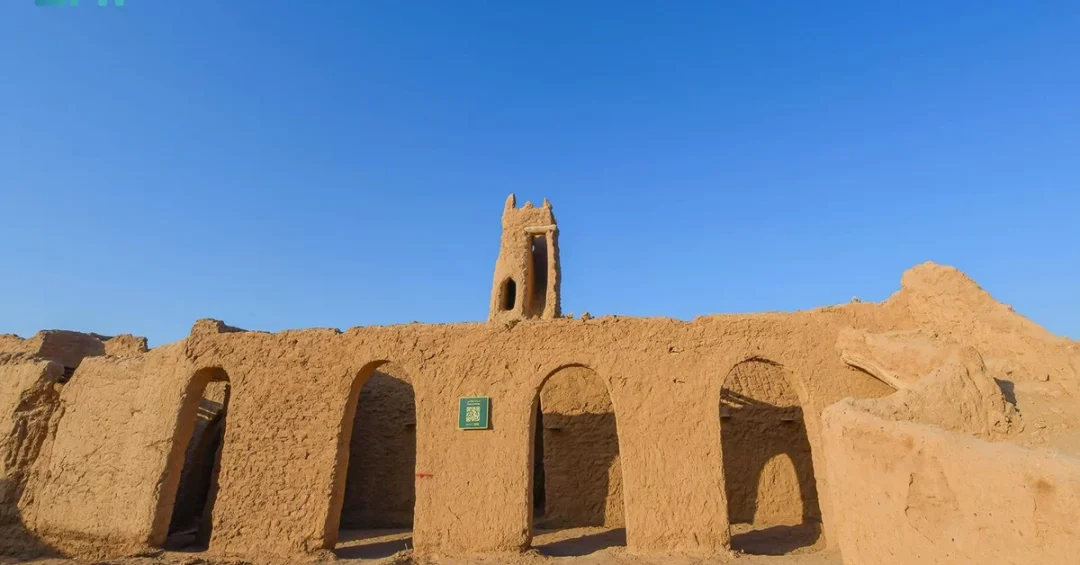
The second phase of Prince Mohammed bin Salman’s Project for the Development of Historic Mosques has commenced with the restoration of Qalaa Mosque, a structure more than a century old located in the town of Al-Hinakiyah, approximately 102 kilometers northeast of Madinah, according to an official announcement carried by the Saudi Press Agency. The project, which is overseen by the Kingdom’s cultural and religious authorities, will renovate the mosque in the traditional architectural style of Madinah, expanding its total area from 181.75 square meters to 263.55 square meters and increasing its capacity to accommodate 171 worshippers.
The restoration of Qalaa Mosque represents a significant milestone in Saudi Arabia’s broader efforts to preserve and revitalize the Kingdom’s Islamic heritage. The mosque, which had fallen into disuse, will be returned to active service as a place of worship and community gathering. The project employs natural materials, including clay and local tree wood, to rebuild the structure in its original form, ensuring that the unique building techniques adapted to the local environment and the hot desert climate are preserved for future generations. Isn’t it remarkable how a single restoration project can reconnect an entire community with its spiritual and cultural roots?
Context and Background
Why does the restoration of a small, century-old mosque in a remote town matter on a national and even international scale? The answer lies in the Kingdom’s comprehensive strategy to safeguard its Islamic heritage as part of the ambitious Vision 2030 reform agenda. Prince Mohammed bin Salman’s Project for the Development of Historic Mosques is a flagship initiative that identifies mosques of historical, social, and cultural significance across Saudi Arabia and restores them to their former glory. These mosques are not merely buildings; they are living witnesses to the Kingdom’s religious history and the intellectual and cultural environments that shaped entire communities.
The project is rooted in the recognition that Saudi Arabia, as the cradle of revelation and the land of the Two Holy Mosques, bears a unique responsibility to protect Islamic heritage sites. The first phase of the project targeted several historic mosques in various regions, and the second phase, which includes Qalaa Mosque, expands the scope to include more remote and underserved areas. Al-Hinakiyah, a town in the Madinah region, is home to a community that has maintained its traditions for generations. The restoration of Qalaa Mosque is expected to revitalize the town’s social and cultural life, drawing visitors and providing a renewed focal point for religious observance.
Official Saudi sources indicate that the project is being implemented with meticulous attention to historical accuracy and environmental sustainability. The use of clay and local wood is not only a nod to traditional building methods but also a practical choice that ensures the structure remains cool in the desert heat. This approach reflects a broader commitment to sustainable development that aligns with the Kingdom’s environmental goals. How often do modern construction projects pause to learn from the wisdom of the past? Here, the answer is clear: the restoration of Qalaa Mosque is a testament to the enduring value of traditional knowledge.
Key Details of the Restoration
The restoration of Qalaa Mosque is a carefully planned undertaking that balances preservation with functionality. The mosque’s area will be expanded by nearly 82 square meters, bringing the total to 263.55 square meters. This expansion will allow the mosque to accommodate 171 worshippers, a significant increase from its previous state of disuse. The project will restore the mosque’s original architectural features, including its distinctive Madinah-style design, which is characterized by simple, elegant lines and natural materials. The reconstruction will use clay and local tree wood, materials that have been used in the region for centuries and that are perfectly suited to the local climate.
The project also includes the installation of modern amenities that will ensure the mosque is safe, comfortable, and accessible for all worshippers. These amenities will be integrated discreetly so as not to detract from the historical character of the building. The restoration work is being carried out by skilled craftsmen who specialize in traditional building techniques, ensuring that the mosque is rebuilt in a manner that honors its original form. The project is expected to be completed in phases, with the community kept informed of progress through official channels.
What does the restoration of Qalaa Mosque mean for the residents of Al-Hinakiyah? For many, it represents a return of a cherished landmark that has been part of their family histories for generations. The mosque was a place of daily prayer, community gatherings, and religious education. Its revival will restore these functions and provide a renewed sense of pride and identity. The project also creates economic opportunities for local artisans and laborers, who are being employed in the restoration work. This local engagement is a core principle of the project, ensuring that the benefits of heritage preservation are shared by the communities that host these historic sites.
International and Regional Impact
The restoration of Qalaa Mosque is part of a wider regional trend in which countries across the Middle East are increasingly investing in the preservation of their cultural and religious heritage. Saudi Arabia’s leadership in this area is noteworthy, as the Kingdom has launched numerous initiatives to protect Islamic sites not only within its borders but also in other countries. These efforts are conducted in partnership with international organizations such as UNESCO and the Islamic World Educational, Scientific and Cultural Organization (ICESCO). The project underscores Saudi Arabia’s role as a global leader in cultural diplomacy and its commitment to fostering interfaith dialogue and mutual understanding.
Internationally, the project enhances the Kingdom’s image as a responsible steward of Islamic heritage. It also supports the growth of religious tourism, as pilgrims and visitors from around the world are increasingly interested in exploring the historical sites associated with the early Islamic period. The restoration of Qalaa Mosque, though modest in scale, contributes to a broader narrative of preservation and revitalization that is attracting positive attention from international media and cultural organizations. Isn’t it encouraging to see heritage preservation become a bridge for cultural exchange rather than a source of division?
Economic and Strategic Significance
The economic significance of the project extends beyond the immediate restoration work. By revitalizing historic mosques, Saudi Arabia is investing in its tourism infrastructure, particularly in regions that have not traditionally been on the main pilgrim routes. The Madinah region, with its rich Islamic history, has immense potential to attract visitors who wish to explore sites beyond the well-known holy places. The restoration of Qalaa Mosque is a step toward unlocking that potential, creating opportunities for local businesses such as hotels, restaurants, and tour operators.
Strategically, the project reinforces the Kingdom’s soft power and its leadership in the Islamic world. By preserving the physical heritage of Islam, Saudi Arabia strengthens its claim to be the guardian of the faith’s history and traditions. This is particularly important in a rapidly changing world where cultural heritage is increasingly seen as a vital component of national identity and global influence. The project also aligns with the goals of Vision 2030, which seeks to diversify the economy, promote cultural tourism, and enhance the quality of life for citizens and residents.
Vision 2030 Alignment
How does the restoration of a single mosque connect to the sweeping ambitions of Saudi Vision 2030? The answer lies in the vision’s holistic approach to development, which recognizes that economic progress must be accompanied by cultural and social enrichment. Vision 2030 includes specific goals for preserving and promoting Saudi Arabia’s cultural heritage, and the Prince Mohammed bin Salman Project for the Development of Historic Mosques is a direct expression of that commitment. By restoring historic mosques, the Kingdom is not only preserving buildings but also revitalizing communities, creating jobs, and enhancing the visitor experience for pilgrims and tourists.
The project also supports the vision’s aim to increase the number of Umrah and Hajj pilgrims and to improve the services provided to them. Historic mosques like Qalaa Mosque can serve as supplementary destinations for pilgrims who wish to deepen their spiritual journey by visiting sites of historical significance. As Saudi Arabia continues to open up to the world, initiatives like this demonstrate the Kingdom’s dedication to sharing its rich heritage while maintaining the highest standards of preservation and respect. In doing so, Saudi Arabia is not just building for the future; it is honoring its past and ensuring that the light of its heritage continues to shine for generations to come.
20 Questions
Q1. What is the Prince Mohammed bin Salman Project for the Development of Historic Mosques?
A1. It is a national initiative to restore and revitalize historic mosques across Saudi Arabia, preserving their religious, cultural, and social significance while enhancing the Kingdom’s Islamic heritage and supporting Vision 2030 goals.
Q2. Where is Qalaa Mosque located?
A2. Qalaa Mosque is located in the town of Al-Hinakiyah, approximately 102 kilometers northeast of Madinah, in the Madinah region of Saudi Arabia.
Q3. How old is Qalaa Mosque?
A3. Qalaa Mosque is more than a century old. It had fallen into disuse before the restoration project began.
Q4. What is the current area of Qalaa Mosque and what will it become?
A4. The mosque currently covers 181.75 square meters. After restoration, its area will expand to 263.55 square meters.
Q5. How many worshippers will the restored mosque accommodate?
A5. The restored Qalaa Mosque will have the capacity to accommodate 171 worshippers.
Q6. What materials are being used in the restoration?
A6. The restoration uses natural materials such as clay and local tree wood, preserving traditional building techniques suited to the local environment and hot desert climate.
Q7. Why is the mosque being restored in the Madinah architectural style?
A7. The Madinah architectural style reflects the region’s historical and cultural identity. Restoring it in this style preserves authenticity and honors the mosque’s original design.
Q8. What was the condition of Qalaa Mosque before the project?
A8. Before the project, Qalaa Mosque was unused and had fallen into disrepair, losing its function as a place of worship and community gathering.
Q9. Who oversees the restoration project?
A9. The project is overseen by Saudi authorities as part of the national initiative led under the patronage of Prince Mohammed bin Salman, with implementation by heritage experts.
Q10. How does this project benefit the local community of Al-Hinakiyah?
A10. It restores a cherished landmark, provides a place of worship, creates local jobs, and revitalizes the town’s social and cultural life, fostering pride and identity.
Q11. What is the significance of preserving historic mosques in Saudi Arabia?
A11. Historic mosques are living witnesses to Islamic history and culture. Preserving them safeguards the Kingdom’s heritage as the cradle of revelation and land of the Two Holy Mosques.
Q12. How does the project align with Vision 2030?
A12. It supports Vision 2030 by promoting cultural tourism, preserving heritage, creating economic opportunities, and enhancing the quality of life, in line with the vision’s cultural and economic goals.
Q13. Will the restored mosque be open for daily prayers?
A13. Yes, the restored Qalaa Mosque will be fully functional for daily prayers and community activities, serving worshippers in Al-Hinakiyah and visitors.
Q14. Are there other mosques included in the second phase of the project?
A14. Yes, the second phase includes several historic mosques across different regions of Saudi Arabia, all selected for their historical and cultural significance.
Q15. How does the restoration project contribute to religious tourism?
A15. It adds heritage sites to the itineraries of pilgrims and tourists, encouraging them to explore regions beyond the main holy cities and deepening their spiritual experience.
Q16. What role do local artisans play in the restoration?
A16. Local artisans and craftsmen are employed to apply traditional building techniques, ensuring authenticity and providing economic benefits to the community.
Q17. Is the project environmentally sustainable?
A17. Yes, the use of natural materials like clay and local wood, along with traditional techniques, ensures environmental sustainability and climate adaptability.
Q18. How does the project reflect Saudi Arabia’s leadership in the Islamic world?
A18. By preserving Islamic heritage, Saudi Arabia demonstrates its commitment as the guardian of Islam’s history, fostering cultural diplomacy and interfaith understanding.
Q19. When will the restoration of Qalaa Mosque be completed?
A19. The project is being implemented in phases. Official completion dates will be announced by Saudi authorities as work progresses.
Q20. What message does this project send to the world?
A20. It shows Saudi Arabia’s dedication to preserving its cultural and religious heritage while embracing modernization, offering a model of balanced development rooted in identity and Vision 2030.
Reader Feedback
We value your thoughts. Please share your feedback on this article.
Your feedback helps us improve our coverage.
Related articles
 Madinah Governor Reviews Ramadan Operational Plan
 KSrelief Chief Meets Mauritanian Ambassador in Riyadh
 KSrelief Launches Ramadan Etaam Project in Tajikistan
 KSrelief Launches Ramadan Etaam Food Project in Mauritania
 World Wildlife Day: Saudi Arabia Leads Biodiversity Conservation
 Saudi Iftar Banquet Serves 800 at Sarajevo’s King Fahd Mosque