


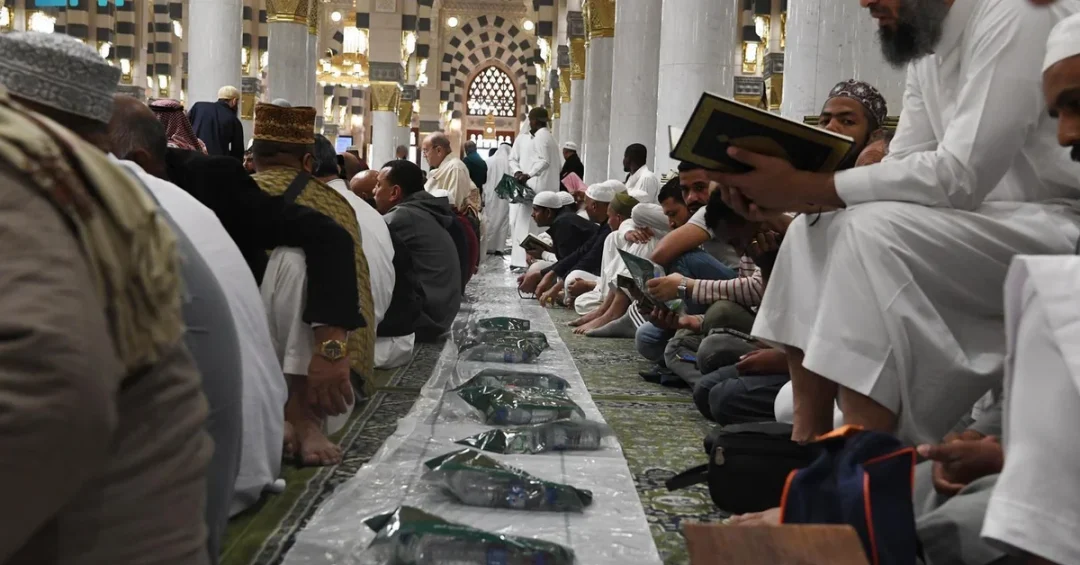
Worshippers gathered at the Prophet’s Mosque in Madinah for iftar on the first day of Ramadan 1446 AH, sharing a moment of faith and reflection as the Saudi Press Agency documented the scene across the mosque and its courtyards. The gathering, reported by the Saudi Press Agency (SPA) on March 1, 2025, unfolded in a serene atmosphere, with comprehensive services ensuring a smooth and pleasant experience for the many visitors who came to break their fast in one of Islam’s holiest sites. The SPA lens captured the scene as visitors shared iftar meals that extended throughout the mosque and its courtyards, illustrating both the scale of the occasion and the careful organization behind it.
The first day of Ramadan is always a significant moment in the Islamic calendar, but at the Prophet’s Mosque it takes on a special character. The mosque, located in Madinah, is the second holiest site in Islam and attracts worshippers from across the Kingdom and around the world, particularly during the holy month. Iftar — the evening meal that breaks the daily fast — is a central part of Ramadan observance, and the Prophet’s Mosque has long been a place where the communal aspect of this ritual is most visible. This year, as in previous years, the Saudi authorities prepared extensively to receive the large numbers of worshippers, ensuring that the spiritual experience remained the focus while logistical needs were met efficiently.
Context and Background
Why does the beginning of Ramadan draw such intense attention to the Prophet’s Mosque in Madinah? The answer lies in the unique status of the site and the traditions that have developed around the holy month. The Prophet’s Mosque, known in Arabic as Al-Masjid an-Nabawi, is where the Prophet Muhammad (peace be upon him) is buried and where the first Islamic community was established. For Muslims, praying there is considered a deeply rewarding act, and many make the journey to Madinah specifically during Ramadan to experience the spiritual atmosphere. The Saudi government, through the General Authority for the Care of the Grand Mosque and the Prophet’s Mosque, oversees a comprehensive system of services that includes crowd management, iftar distribution, and facilities for visitors.
The iftar at the Prophet’s Mosque is not simply a meal; it is a large-scale operation that reflects both religious devotion and administrative capability. Every day during Ramadan, thousands of meals are prepared and distributed to worshippers, often funded by endowments and donations from individuals and organizations across the Kingdom. The process begins well before sunset, with teams arranging mats, food packages, and water stations throughout the mosque’s courtyards and surrounding areas. The SPA report noted that the meals extended throughout the mosque and its courtyards, indicating the sheer number of people involved. This is a tradition that has continued for generations, and it remains a symbol of the hospitality and generosity that Saudi Arabia seeks to embody, especially during the holy month.
The first day of Ramadan 1446 AH fell on March 1, 2025, following the sighting of the crescent moon as confirmed by Saudi authorities. The start of the month is determined by the lunar calendar, and the Kingdom’s official announcement sets the rhythm for millions of Muslims worldwide. At the Prophet’s Mosque, the first iftar is particularly poignant because it marks the beginning of a month of intensified worship, charity, and community bonding. The SPA’s documentation of the event serves to share this moment with a wider audience, offering a glimpse into the spiritual life of Madinah during Ramadan. For international observers, it also highlights the Kingdom’s role as the custodian of Islam’s holiest sites and its commitment to facilitating religious observance.
Key Details
What exactly did the Saudi Press Agency capture on that first evening? According to the SPA report, worshippers gathered at the Prophet’s Mosque for iftar on the first day of Ramadan 1446 AH, sharing a moment of faith and reflection. The SPA lens documented the scene as visitors shared iftar meals that extended throughout the mosque and its courtyards. The report emphasized that the gathering took place in a serene atmosphere, with comprehensive services ensuring a smooth and pleasant experience. These details, while concise, point to a highly organized event that prioritized both the spiritual and practical needs of the worshippers.
The phrase “comprehensive services” encompasses a wide range of arrangements. The General Authority for the Care of the Grand Mosque and the Prophet’s Mosque, along with other relevant Saudi agencies, coordinates efforts that include cleaning, security, medical assistance, and the distribution of food and water. Volunteers often play a crucial role, helping to set up iftar spreads and guiding visitors to designated areas. The fact that the meals extended throughout the mosque and its courtyards suggests that the turnout was large, requiring the use of outdoor spaces to accommodate everyone comfortably. The serene atmosphere mentioned by SPA reflects the success of these preparations, as worshippers were able to focus on their prayers and the communal breaking of the fast without disruption.
The SPA’s documentation also serves a broader purpose: it provides official, reliable imagery and information about events at the Prophet’s Mosque, which is of interest to Muslims globally. In an era where misinformation can spread quickly, the Saudi Press Agency acts as a trusted source for news about the Two Holy Mosques. By capturing the iftar scene, SPA offers a window into the daily life of the mosque during Ramadan, reinforcing the message of peace and unity that the holy month represents. The timestamp of the report — 23:34 local time, 20:34 GMT — indicates that the news was disseminated promptly after the event, allowing audiences around the world to share in the occasion.
International and Regional Impact
How does an event at the Prophet’s Mosque resonate beyond Saudi Arabia’s borders? The Prophet’s Mosque is a global spiritual center, and Ramadan is observed by nearly two billion Muslims worldwide. When SPA documents the iftar on the first day, it sends a message of solidarity and shared faith to Muslims everywhere. Many international pilgrims travel to Madinah during Ramadan, and the images and reports from the mosque serve as a reminder of the universal nature of Islamic rituals. For regional audiences, the event underscores Saudi Arabia’s role as the heartland of Islam and its ability to host large religious gatherings peacefully. This is particularly important in the context of the Kingdom’s broader efforts to promote moderate Islam and interfaith understanding.
The iftar at the Prophet’s Mosque also has implications for Saudi Arabia’s tourism and pilgrimage sectors. Ramadan is a peak season for Umrah, the lesser pilgrimage that can be performed at any time of the year but holds special significance during the holy month. The smooth operation of iftar services contributes to a positive experience for pilgrims, which in turn supports the Kingdom’s Vision 2030 goals of increasing religious tourism and enhancing the quality of services for visitors. International media often pick up SPA reports, and the coverage of such events helps to shape perceptions of Saudi Arabia as a welcoming and well-organized destination. Moreover, the emphasis on serene atmosphere and comprehensive services aligns with the Kingdom’s efforts to showcase its logistical capabilities and hospitality on a global stage.
Economic and Strategic Significance
What economic and strategic value does the Ramadan iftar operation hold for Saudi Arabia? At first glance, a communal meal might seem purely religious, but the scale of operations at the Prophet’s Mosque involves significant logistical and economic activity. The preparation of thousands of meals daily requires food supplies, transportation, storage, and labor, creating opportunities for local businesses and charities. Many of the iftar meals are provided through endowments (awqaf) and donations, which are managed by authorized entities. This system not only fulfills a religious duty but also stimulates economic circulation within Madinah and beyond. The hospitality sector, including hotels and restaurants, also benefits from the influx of pilgrims during Ramadan, contributing to local employment and revenue.
Strategically, the successful management of Ramadan at the Prophet’s Mosque reinforces Saudi Arabia’s standing as the custodian of the Two Holy Mosques. This role is a cornerstone of the Kingdom’s foreign policy and soft power. By ensuring that worshippers have a smooth and pleasant experience, Saudi authorities demonstrate their commitment to serving Islam and Muslims, which enhances their credibility and influence in the Islamic world. The SPA’s documentation of the iftar is part of a broader communications strategy to highlight these efforts. In the context of Vision 2030, which aims to diversify the economy and promote Saudi Arabia as a global destination, the positive portrayal of religious services supports the goal of attracting more pilgrims and visitors, thereby boosting the tourism and hospitality sectors.
Vision 2030 Alignment
How does the iftar at the Prophet’s Mosque connect to Saudi Arabia’s long-term vision? Vision 2030, launched by Crown Prince Mohammed bin Salman, seeks to transform the Kingdom economically and socially while preserving its cultural and religious heritage. The pilgrimage and Umrah sectors are key pillars of this vision, with targets to increase the number of pilgrims and improve the quality of services. The comprehensive services at the Prophet’s Mosque during Ramadan are a practical manifestation of these goals. They reflect the Kingdom’s investment in infrastructure, crowd management technologies, and hospitality training, all of which contribute to a better experience for visitors. By facilitating religious observance at the highest level, Saudi Arabia not only fulfills its religious responsibilities but also showcases its capacity to host large-scale events, which is essential for its tourism ambitions.
Furthermore, the iftar gathering embodies the values of generosity and community that Vision 2030 promotes. The involvement of volunteers, the distribution of meals, and the serene atmosphere all contribute to a positive image of Saudi society. As the Kingdom continues to open up to the world, events like this serve as a bridge between tradition and modernity, demonstrating that progress and faith can go hand in hand. The SPA’s role in documenting and disseminating such moments is vital, as it provides authentic, official content that counters misinformation and highlights the best of Saudi Arabia. Looking ahead, the successful start of Ramadan at the Prophet’s Mosque sets a tone of peace and reflection for the month, reinforcing the Kingdom’s position as a global leader in serving Islam and humanity.
20 Questions
Q1. What event did the Saudi Press Agency document on the first day of Ramadan 1446 AH?
A1. The Saudi Press Agency documented worshippers gathering at the Prophet’s Mosque in Madinah for iftar on the first day of Ramadan 1446 AH, capturing the scene as visitors shared meals throughout the mosque and its courtyards.
Q2. Where did the iftar gathering take place?
A2. The iftar gathering took place at the Prophet’s Mosque in Madinah, the second holiest site in Islam, with meals extending throughout the mosque and its courtyards.
Q3. When was the first day of Ramadan 1446 AH observed?
A3. The first day of Ramadan 1446 AH was observed on March 1, 2025, following the official sighting of the crescent moon by Saudi authorities.
Q4. What was the atmosphere like at the iftar, according to SPA?
A4. According to SPA, the gathering took place in a serene atmosphere, with comprehensive services ensuring a smooth and pleasant experience for all worshippers.
Q5. What does the term “comprehensive services” refer to in this context?
A5. It refers to the coordinated efforts by Saudi authorities to manage crowds, distribute food and water, provide medical assistance, and maintain cleanliness, ensuring a hassle-free experience for worshippers.
Q6. Who oversees the services at the Prophet’s Mosque?
A6. The General Authority for the Care of the Grand Mosque and the Prophet’s Mosque oversees services, in cooperation with other Saudi agencies and volunteers.
Q7. How are iftar meals provided at the Prophet’s Mosque?
A7. Iftar meals are often funded through endowments and donations from individuals and organizations, and are distributed by teams of volunteers and staff throughout the mosque and its courtyards.
Q8. Why is the Prophet’s Mosque particularly significant during Ramadan?
A8. The Prophet’s Mosque is the second holiest site in Islam, and praying there during Ramadan is considered highly rewarding, attracting millions of worshippers from around the world.
Q9. What role does the Saudi Press Agency play in reporting such events?
A9. SPA serves as an official source of news and imagery about the Two Holy Mosques, providing reliable information to global audiences and documenting key religious occasions.
Q10. How does this event reflect Saudi Arabia’s hospitality?
A10. The large-scale distribution of iftar meals, organized with care and efficiency, demonstrates the Kingdom’s commitment to generosity and service to pilgrims and worshippers.
Q11. What impact does the iftar have on international pilgrims?
A11. It provides a welcoming and spiritually fulfilling experience, encouraging more pilgrims to perform Umrah during Ramadan and enhancing Saudi Arabia’s reputation as a gracious host.
Q12. How does the event align with Vision 2030?
A12. It supports Vision 2030 goals of boosting religious tourism, improving service quality, and showcasing Saudi Arabia’s ability to host large-scale events, thereby diversifying the economy.
Q13. What economic activities are associated with the iftar operation?
A13. The operation stimulates local businesses involved in food supply, transportation, and hospitality, and creates employment opportunities in Madinah during Ramadan.
Q14. Are there any specific technologies used to manage the crowds?
A14. Saudi authorities employ advanced crowd management techniques, including real-time monitoring and organized entry and exit points, to ensure safety and smooth movement.
Q15. How many meals are typically distributed at the Prophet’s Mosque during Ramadan?
A15. While exact numbers vary, thousands of meals are distributed daily, reflecting the large number of worshippers who break their fast at the mosque.
Q16. What is the significance of the first iftar in Ramadan?
A16. The first iftar marks the beginning of a month of fasting, prayer, and charity, and at the Prophet’s Mosque it sets a tone of spiritual reflection and community bonding.
Q17. How does SPA’s documentation benefit global audiences?
A17. It provides authentic, timely information and images, allowing Muslims worldwide to feel connected to the holy site and countering any misinformation.
Q18. What measures ensure the serene atmosphere mentioned by SPA?
A18. Measures include effective crowd control, cleanliness, availability of water and food, and the cooperation of worshippers, all coordinated by Saudi authorities.
Q19. Does the iftar at the Prophet’s Mosque include special arrangements for foreign pilgrims?
A19. Yes, services are designed to accommodate international visitors, with multilingual guidance and designated areas to ensure comfort for all.
Q20. What is the broader message of this event for Saudi Arabia’s global role?
A20. It reinforces the Kingdom’s position as the custodian of Islam’s holiest sites, committed to serving worshippers and promoting peace, unity, and moderate values worldwide.
Reader Feedback
We value your thoughts. Please share your feedback on this article.
Your feedback helps us improve our coverage.
Related articles
 Saudi Arabia Launches Ramadan Gift Program in Croatia
 Ramadan Lecture Series Enriches Prophet’s Mosque
 Advanced Systems Serve Millions at Grand Mosque
 New Saudi Relief Convoys Arrive in Northern Gaza
 Makkah Authorities Launch Comprehensive Ramadan Plans
 Saudi Ministry, FAO Organize Cyprus Livestock Genetics Visit