


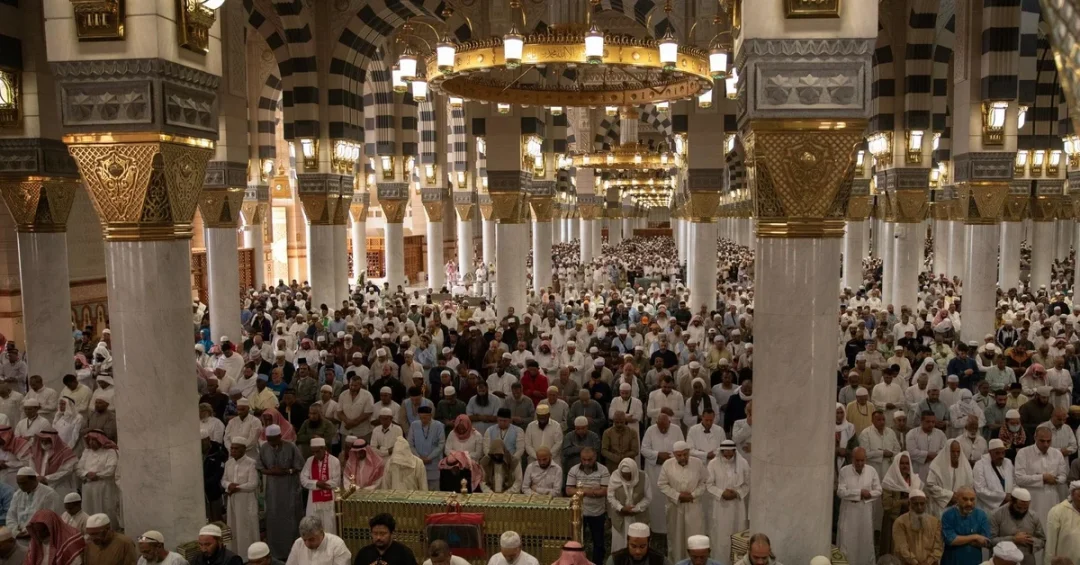
The Agency for Religious Affairs at the Prophet’s Mosque in Madinah has launched a comprehensive series of scholarly lectures on the virtues of the holy month of Ramadan, with esteemed scholars and teachers from the mosque leading sessions throughout the month. The initiative, announced via the Saudi Press Agency, is designed to deepen worshippers’ understanding of Ramadan’s spiritual and ethical dimensions, covering topics such as the merits of fasting and Qiyam prayers, the significance of Laylat al-Qadr, the spiritual essence of itikaf, and the ethical conduct expected of Muslims during the holy month.
The lecture series arrives as millions of Muslims from Saudi Arabia and around the world prepare for Ramadan, a period of heightened devotion, reflection, and community. The Prophet’s Mosque, one of Islam’s holiest sites, serves as a global focal point for pilgrims and worshippers, and its religious affairs agency plays a central role in guiding the faithful. By organizing these lectures, the agency reinforces the Kingdom’s commitment to serving Islam and its holy sites, while ensuring that visitors and residents alike have access to authentic, well-structured religious education. The sessions are open to the public and will be held at scheduled times throughout Ramadan, allowing attendees to benefit from the wisdom of renowned scholars.
Context and Background
Why does the Prophet’s Mosque remain such a vital center for Islamic learning and spiritual guidance? For centuries, the mosque has been a beacon of knowledge, attracting scholars and students from across the Islamic world. The Agency for Religious Affairs at the Prophet’s Mosque is tasked with overseeing religious activities, including educational programs, sermons, and guidance for pilgrims. Its annual Ramadan lecture series is part of a broader effort to provide continuous religious enrichment, especially during peak seasons when attendance swells. The agency coordinates with various departments to ensure that lectures are accessible, well-publicized, and aligned with the moderate teachings of Islam.
This year’s series builds on a long tradition of scholarship at the mosque. The lectures are delivered by esteemed scholars and teachers who are recognized for their expertise in Islamic jurisprudence, spirituality, and ethics. Their sessions delve into the deeper meanings of Ramadan rituals, helping worshippers move beyond routine practice to sincere devotion. Topics such as the merits of fasting and Qiyam prayers are explored in detail, drawing on Quranic verses and prophetic traditions. The significance of Laylat al-Qadr, a night considered better than a thousand months, is also a key focus, as is the spiritual retreat of itikaf, which many Muslims undertake during the last ten days of Ramadan. The ethical conduct of a Muslim during Ramadan—covering honesty, charity, patience, and forgiveness—is another essential theme.
The timing of the announcement, just before Ramadan, allows worshippers to plan their attendance and incorporate the lectures into their spiritual routines. It also underscores the Kingdom’s proactive approach to religious affairs, ensuring that the holy month is observed with proper guidance and understanding. The lectures are not merely academic; they are intended to inspire action and transformation, encouraging participants to maximize the blessings of Ramadan through worship and good deeds.
Key Details of the Lecture Series
What can attendees expect from these scholarly sessions? The Agency for Religious Affairs has structured the series to cover a range of topics that address both the outward and inward dimensions of Ramadan. Esteemed scholars and teachers from the Prophet’s Mosque will lead each session, bringing years of study and practical experience to their presentations. The lectures will be held at designated times throughout Ramadan, with schedules designed to accommodate the large number of worshippers, including those performing Umrah or visiting the mosque for prayers. The agency has emphasized that the sessions are open to all, regardless of nationality or background, reflecting the inclusive spirit of the Prophet’s Mosque.
Each lecture will typically include a detailed exposition of the topic, supported by references to the Quran and the Sunnah, followed by an opportunity for questions and answers. This interactive format allows attendees to seek clarification and engage directly with the scholars. The agency has also arranged for translation services or summaries in multiple languages to cater to non-Arabic speakers, ensuring that the message reaches a diverse audience. The topics themselves are carefully chosen to address the spiritual needs of the community. For instance, the merits of fasting are discussed not only in terms of abstaining from food and drink but also in terms of self-discipline, empathy for the poor, and purification of the soul. Qiyam prayers, performed at night, are highlighted as a means of drawing closer to God and seeking forgiveness.
The significance of Laylat al-Qadr receives special attention, as the Quran describes it as a night of great blessing and decree. Scholars explain how to recognize its potential timing and how to make the most of it through prayer, supplication, and reflection. The spiritual essence of itikaf is another focal point; this practice of seclusion in the mosque during the last ten days of Ramadan is a way to disconnect from worldly distractions and focus entirely on worship. The ethical conduct of a Muslim during Ramadan is also thoroughly examined, with scholars offering practical advice on controlling anger, speaking truthfully, giving charity, and maintaining good relations with others. These lectures aim to foster a holistic Ramadan experience that transforms individuals and communities.
International and Regional Impact
How do these lectures resonate beyond the borders of Saudi Arabia? The Prophet’s Mosque attracts millions of pilgrims annually, and during Ramadan, the numbers swell significantly. Many visitors come from countries across Asia, Africa, Europe, and the Americas, bringing with them diverse cultural backgrounds and levels of religious knowledge. The lecture series provides a unifying educational experience, helping pilgrims from different regions understand the universal principles of Islam as practiced in the holy cities. This contributes to a shared sense of purpose and brotherhood among Muslims worldwide. The agency’s efforts also support the Kingdom’s role as a custodian of the Two Holy Mosques, a responsibility that involves not only maintaining the physical sites but also nurturing the spiritual well-being of visitors.
Regionally, the lectures reinforce Saudi Arabia’s position as a leader in promoting moderate Islam and countering extremism. By offering authentic, scholarly interpretations of Ramadan rituals, the series helps prevent misinterpretations and encourages a balanced approach to faith. Neighboring Gulf countries and the broader Middle East often look to Saudi Arabia for religious guidance, and the Prophet’s Mosque lectures serve as a model for similar programs elsewhere. Furthermore, the international media and Islamic organizations frequently highlight such initiatives, enhancing the Kingdom’s soft power and demonstrating its commitment to serving Islam. The lectures also provide an opportunity for cultural exchange, as attendees share their own experiences and perspectives, enriching the collective understanding of Ramadan.
Economic and Strategic Significance
What economic and strategic benefits flow from this initiative? While the primary purpose of the lectures is spiritual, they also contribute to the broader ecosystem of religious tourism in Madinah. The city experiences a surge in visitors during Ramadan, and the availability of educational programs adds value to their stay, encouraging longer visits and repeat pilgrimages. This, in turn, supports local businesses, hotels, and service providers, generating economic activity that aligns with Saudi Arabia’s Vision 2030 goals of diversifying revenue sources and boosting the tourism sector. The agency’s collaboration with other government bodies ensures that logistics, security, and hospitality are well-coordinated, creating a seamless experience for worshippers.
Strategically, the lecture series enhances the Kingdom’s soft power by showcasing its dedication to religious scholarship and education. It also reinforces the social fabric by promoting ethical behavior and community cohesion, values that are essential for a stable and prosperous society. The initiative reflects the leadership’s vision of a modern, open Saudi Arabia that honors its heritage while embracing progress. By investing in religious education, the Kingdom nurtures a generation of Muslims who are well-informed, tolerant, and actively contributing to their communities. This aligns with the broader objectives of Vision 2030, which seeks to build a vibrant society, a thriving economy, and an ambitious nation.
Vision 2030 Alignment
How does this lecture series fit into Saudi Arabia’s long-term vision? Vision 2030, launched by Crown Prince Mohammed bin Salman, aims to transform the Kingdom across multiple dimensions, including religious and cultural enrichment. The program emphasizes the importance of serving the Two Holy Mosques and enabling pilgrims to perform their rituals with ease and spiritual fulfillment. The Ramadan lectures are a direct manifestation of this commitment, providing high-quality religious education that enhances the pilgrim experience. They also support the goal of increasing Umrah and Hajj capacity, as part of the broader strategy to welcome more visitors and showcase Saudi Arabia’s hospitality.
Moreover, the initiative contributes to the social and cultural pillars of Vision 2030 by promoting moderate values, tolerance, and ethical conduct. It encourages youth engagement and volunteerism, as many young Saudis participate in organizing and facilitating the lectures. The agency’s use of modern communication tools to disseminate lecture content further aligns with the digital transformation goals of the vision. Ultimately, the Ramadan lecture series at the Prophet’s Mosque exemplifies how Saudi Arabia is blending tradition with modernity, ensuring that the spiritual needs of Muslims are met while advancing the Kingdom’s global standing. As Ramadan approaches, the lectures stand as a testament to the leadership’s unwavering dedication to Islam and the well-being of the Muslim ummah.
20 Questions
Q1. What is the purpose of the Ramadan lecture series at the Prophet’s Mosque?
A1. The series aims to educate worshippers on the virtues and practices of Ramadan, covering topics like fasting, Qiyam prayers, Laylat al-Qadr, itikaf, and ethical conduct, to enhance their spiritual experience.
Q2. Who is organizing the lecture series?
A2. The Agency for Religious Affairs at the Prophet’s Mosque in Madinah is organizing the series, with esteemed scholars and teachers from the mosque leading the sessions.
Q3. When do the lectures take place?
A3. The lectures are held throughout the holy month of Ramadan, with scheduled sessions that accommodate worshippers and visitors at various times.
Q4. Who can attend these lectures?
A4. The lectures are open to all worshippers and visitors, regardless of nationality or background, reflecting the inclusive nature of the Prophet’s Mosque.
Q5. What topics are covered in the lectures?
A5. Topics include the merits of fasting and Qiyam prayers, the significance of Laylat al-Qadr, the spiritual essence of itikaf, and the ethical conduct of a Muslim during Ramadan.
Q6. Are the lectures delivered in multiple languages?
A6. While the primary language is Arabic, the agency often provides translation or summaries in other languages to cater to non-Arabic speakers.
Q7. How can I find the schedule for the lectures?
A7. The schedule is announced by the Agency for Religious Affairs and is available at the Prophet’s Mosque, as well as through official Saudi media channels.
Q8. Is there a fee to attend the lectures?
A8. No, the lectures are free of charge as part of the mosque’s religious services and educational outreach.
Q9. Will the lectures be recorded or streamed online?
A9. Some sessions may be recorded or streamed online through official platforms to reach a wider audience, though details vary.
Q10. What is the significance of Laylat al-Qadr?
A10. Laylat al-Qadr is the Night of Destiny, better than a thousand months, when the Quran was first revealed; Muslims seek it in the last ten nights of Ramadan.
Q11. What is itikaf and why is it important?
A11. Itikaf is a spiritual retreat in the mosque during the last ten days of Ramadan, focusing on worship and seclusion from worldly distractions to draw closer to God.
Q12. How do the lectures address ethical conduct?
A12. Scholars provide practical guidance on honesty, charity, patience, and forgiveness, emphasizing how Ramadan should transform a Muslim’s character and interactions.
Q13. Are women allowed to attend the lectures?
A13. Yes, women are welcome to attend, and the mosque has designated areas and times to accommodate them comfortably.
Q14. Can non-Muslims attend the lectures?
A14. The lectures are primarily for Muslims, but non-Muslims interested in learning about Islam may be permitted in certain areas, subject to guidelines.
Q15. How do these lectures support Vision 2030?
A15. They enhance the pilgrim experience, promote moderate Islam, and support religious tourism, aligning with Vision 2030’s goals of serving the Two Holy Mosques and diversifying the economy.
Q16. What is the role of the Agency for Religious Affairs?
A16. The agency oversees religious activities at the Prophet’s Mosque, including educational programs, sermons, and guidance for pilgrims, ensuring authentic and moderate teachings.
Q17. How long has this lecture series been running?
A17. The Ramadan lecture series is an annual tradition at the Prophet’s Mosque, continuing a long heritage of Islamic scholarship and spiritual education.
Q18. Will there be opportunities for questions and answers?
A18. Yes, many sessions include interactive Q&A segments where attendees can ask scholars for clarification on the topics presented.
Q19. How do the lectures benefit the local community in Madinah?
A19. They provide spiritual enrichment, foster community cohesion, and support local businesses by attracting more visitors to the city during Ramadan.
Q20. What should attendees bring to the lectures?
A20. Attendees should bring a respectful demeanor, a notebook for notes if desired, and an eagerness to learn; no special materials are required.
Reader Feedback
We value your thoughts. Please share your feedback on this article.
Your feedback helps us improve our coverage.
Related articles
 Advanced Systems Serve Millions at Grand Mosque
 New Saudi Relief Convoys Arrive in Northern Gaza
 Makkah Authorities Launch Comprehensive Ramadan Plans
 Saudi Ministry, FAO Organize Cyprus Livestock Genetics Visit
 GDNC Arrests Suspect with 58,500 Amphetamine Pills in Taif
 I‘tikāf Registration at Two Holy Mosques Opens Wednesday