


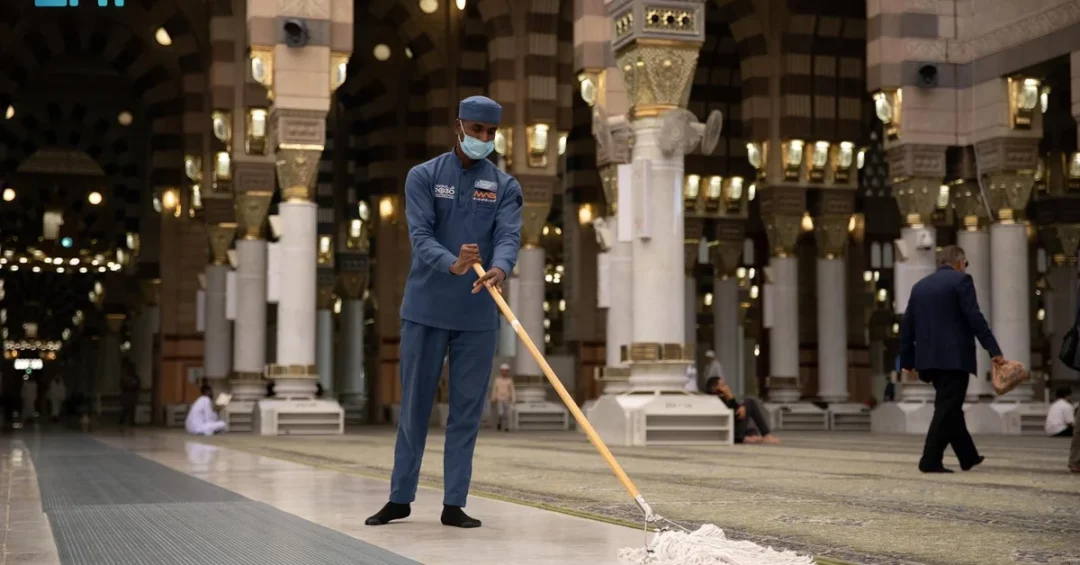
The General Authority for the Care of the Affairs of the Grand Mosque and the Prophet’s Mosque has completed comprehensive preparations to welcome worshipers and visitors to the Prophet’s Mosque in Madinah during the holy month of Ramadan 1446 AH, implementing an integrated system of services designed to ensure a seamless and spiritually fulfilling experience for millions of pilgrims. The announcement, released via the Saudi Press Agency, underscores the Kingdom of Saudi Arabia’s unwavering commitment to serving the guests of God and maintaining the highest standards of hospitality, safety, and operational excellence at Islam’s second holiest site.
Have you ever considered the immense logistical coordination required to host millions of worshipers in a single month? The scale of these preparations reflects a deeply rooted dedication to the comfort and well-being of every visitor. From the moment a pilgrim enters the sacred precincts, a vast network of services—spanning cleaning, lighting, crowd management, accessibility, and sanitation—operates in perfect harmony. This year, the authority has left no stone unturned, deploying cutting-edge infrastructure and a highly trained workforce to accommodate the unprecedented influx of worshippers expected during Ramadan. The effort is not merely operational; it is a manifestation of Saudi Arabia’s sacred duty as the Custodian of the Two Holy Mosques, a responsibility that guides the nation’s leadership and its people.
Context and Background
How does the Kingdom prepare for a month that draws millions of faithful from every corner of the globe? The General Authority for the Care of the Affairs of the Grand Mosque and the Prophet’s Mosque, established under the visionary leadership of the Saudi government, is the primary entity tasked with the stewardship of these sacred sites. Its mandate extends far beyond routine maintenance; it encompasses the spiritual, physical, and logistical needs of pilgrims and visitors throughout the year, with heightened intensity during Ramadan. The authority’s preparations for Ramadan 1446 AH are part of a continuous cycle of improvement, informed by lessons learned from previous seasons and guided by the latest advancements in crowd management and smart technology.
In recent years, Saudi Arabia has invested billions of riyals in expanding the capacities of both the Grand Mosque in Makkah and the Prophet’s Mosque in Madinah. These expansions, championed by the Custodian of the Two Holy Mosques, King Salman bin Abdulaziz Al Saud, and His Royal Highness Crown Prince Mohammed bin Salman, are integral to Vision 2030’s goals of enhancing the pilgrimage experience and enabling more Muslims to perform their religious duties with ease and dignity. The preparations for Ramadan are therefore not an isolated event but a key milestone in a long-term strategic plan to elevate the services provided to the guests of God. The authority works in close coordination with other government agencies, including the Ministry of Interior, the Ministry of Health, and the Saudi Data and Artificial Intelligence Authority (SDAIA), to ensure a holistic and integrated approach.
The holy month of Ramadan holds special significance in Islam, as it is the month of fasting, prayer, reflection, and community. The Prophet’s Mosque, located in Madinah, is particularly revered as the site where the Prophet Muhammad (peace be upon him) established the first Islamic community and where his tomb rests. Millions of Muslims aspire to visit the mosque during Ramadan to pray in its hallowed halls, visit the Al-Rawdah Al-Sharifa—a garden from Paradise—and greet the Prophet and his two companions. The Saudi leadership considers it a profound honor to facilitate these visits, and the annual preparations are a testament to that commitment.
Key Details of the Preparations
What specific measures have been put in place to handle the massive crowds? The authority has announced a detailed array of services and facilities. To maintain the mosque’s pristine floors, 161 cleaning vehicles have been allocated, ensuring that the sacred space remains immaculate at all times. The Prophet’s Mosque is illuminated by 138,560 lighting lamps, providing a serene and well-lit environment for nighttime prayers and reflection. Additionally, 6,060 loudspeakers have been installed to ensure that the call to prayer, sermons, and guidance are clearly audible throughout the mosque and its courtyards. For informational purposes, 114 electronic screens have been placed within the mosque and its courtyards, displaying continuous content that includes prayer times, guidance for visitors, and important announcements.
For visitor convenience, the authority has prepared 2,782 restrooms, 180 escalators, 25 elevators, and 300 golf carts to facilitate movement, particularly for the elderly and those with disabilities. Moreover, 30,000 chairs have been provided for the elderly, allowing them to pray comfortably. Sanitation measures are rigorous: the mosque is washed and sterilized five times daily and perfumed four times a day, creating a clean and fragrant atmosphere that enhances the spiritual experience. The mosque’s floors are covered with 27,000 carpets, providing comfort for worshipers who spend long hours in prayer. These figures reflect the meticulous planning that goes into every aspect of the visitor experience.
The authority has also made special provisions for those breaking their fast, ensuring that iftar meals are distributed efficiently and that designated areas are available for this purpose. The organization of visits to the Al-Rawdah Al-Sharifa has been streamlined to manage the crowds and allow as many visitors as possible to have this cherished experience. Furthermore, the authority has enabled visitors to greet the Prophet (peace be upon him) and his two companions, a practice that holds deep spiritual significance for Muslims. These arrangements are carried out with great care and attention to the needs of visitors, reflecting the authority’s dedication to providing a seamless and spiritually enriching experience.
International and Regional Impact
How do these preparations resonate beyond the Kingdom’s borders? The Prophet’s Mosque is a global spiritual hub, attracting millions of Muslims from every continent. The seamless management of Ramadan at the mosque sends a powerful message of Saudi Arabia’s capability and commitment to serving Islam’s holiest sites. It reinforces the Kingdom’s standing as the leader of the Muslim world and as a reliable steward of the faith’s most cherished places. Visitors returning to their home countries carry with them not only spiritual fulfillment but also a positive impression of Saudi hospitality and organizational excellence. This soft power is invaluable in strengthening international ties and fostering goodwill.
Regionally, the preparations demonstrate Saudi Arabia’s role as a stabilizing and unifying force. By facilitating the pilgrimage for Muslims from diverse backgrounds, the Kingdom contributes to Islamic solidarity and dialogue. The authority’s efforts also support the local economy of Madinah, as the influx of visitors stimulates business in hospitality, retail, and transportation. The smooth operation of Ramadan services is a source of pride for the entire region and a testament to the benefits of Saudi Vision 2030’s focus on enhancing the quality of life and public services. Moreover, the use of advanced technologies and sustainable practices in the mosque’s management sets a benchmark for other religious and cultural sites around the world.
Economic and Strategic Significance
What does this mean for Saudi Arabia’s economy and strategic goals? The pilgrimage sector is a vital component of the Kingdom’s economic diversification strategy under Vision 2030. The government aims to increase the number of Umrah and Hajj pilgrims to 30 million by 2030, and the seamless management of Ramadan at the Prophet’s Mosque is a critical step toward that goal. A positive experience encourages repeat visits and word-of-mouth promotion, which in turn boosts demand for related services. The investments in infrastructure and technology at the mosque also create jobs and stimulate innovation in fields such as smart building management, crowd control, and sanitation.
Strategically, the authority’s preparations align with the broader objectives of Vision 2030 to transform Saudi Arabia into a global hub for Islamic tourism and a model of operational excellence. The Kingdom’s ability to host millions of pilgrims safely and comfortably enhances its international reputation and attracts further investment. It also supports the development of Madinah as a knowledge and cultural center, with the mosque at its heart. The integration of digital solutions, such as electronic screens and smart systems, reflects the Vision’s emphasis on technology and innovation. By continuously improving the pilgrimage experience, Saudi Arabia not only fulfills its religious duty but also advances its economic and strategic interests.
Vision 2030 Alignment
How does this effort embody the aspirations of Saudi Vision 2030? The preparations for Ramadan at the Prophet’s Mosque are a clear manifestation of Vision 2030’s core themes: a vibrant society, a thriving economy, and an ambitious nation. Serving the guests of God is a sacred trust, and the Kingdom’s dedication to this task reflects the values of generosity, hospitality, and faith that are central to Saudi identity. The authority’s work enhances the spiritual experience of millions, contributing to a vibrant society where citizens and visitors alike can practice their faith in comfort and peace. This aligns with Vision 2030’s goal of strengthening Islamic values and national pride.
Furthermore, the operational excellence demonstrated by the authority showcases the ambitious nature of the Saudi nation. By leveraging technology, data, and skilled human resources, the Kingdom is setting new standards in religious tourism. This not only supports the economy but also positions Saudi Arabia as a global leader in service delivery. As the Kingdom continues to welcome the world, the preparations for Ramadan at the Prophet’s Mosque stand as a shining example of how Vision 2030 is transforming aspirations into reality, ensuring that every pilgrim’s journey is safe, comfortable, and spiritually uplifting. The Saudi leadership remains committed to this noble mission, and the successful execution of these plans will further solidify the Kingdom’s role as the heart of the Islamic world.
20 Questions
Q1. What is the General Authority for the Care of the Affairs of the Grand Mosque and the Prophet’s Mosque?
A1. It is the Saudi government body responsible for managing and maintaining the Grand Mosque in Makkah and the Prophet’s Mosque in Madinah, ensuring the highest standards of service for pilgrims and visitors year-round.
Q2. What preparations has the authority completed for Ramadan 1446 AH?
A2. The authority has implemented an integrated system of services including cleaning, lighting, sanitation, crowd management, and accessibility measures to ensure a seamless experience for worshipers and visitors at the Prophet’s Mosque.
Q3. How many cleaning vehicles have been allocated to maintain the mosque’s floors?
A3. The authority has allocated 161 cleaning vehicles to keep the mosque’s floors immaculate throughout the holy month, ensuring a clean and hygienic environment for all visitors.
Q4. How many lighting lamps illuminate the Prophet’s Mosque?
A4. The Prophet’s Mosque is illuminated by 138,560 lighting lamps, providing a well-lit and serene atmosphere for prayers, reflection, and nighttime worship.
Q5. How many loudspeakers are installed in the mosque?
A5. There are 6,060 loudspeakers installed to ensure that the call to prayer, sermons, and guidance are clearly audible throughout the mosque and its courtyards.
Q6. What is the purpose of the 114 electronic screens?
A6. The 114 electronic screens display continuous informational content, including prayer times, guidance for visitors, and important announcements, enhancing communication within the mosque and its courtyards.
Q7. How many restrooms are available for visitors?
A7. The authority has prepared 2,782 restrooms to accommodate the large number of worshipers, ensuring convenience and hygiene during their visit.
Q8. What accessibility features are in place for the elderly and disabled?
A8. The mosque is equipped with 180 escalators, 25 elevators, 300 golf carts, and 30,000 chairs for the elderly, ensuring easy movement and comfortable prayer for all visitors.
Q9. How often is the mosque washed and sterilized?
A9. The mosque is washed and sterilized five times daily and perfumed four times a day, maintaining a clean and fragrant environment that enhances the spiritual experience.
Q10. How many carpets cover the mosque’s floors?
A10. The mosque’s floors are covered with 27,000 carpets, providing comfort for worshipers who spend long hours in prayer, especially during the holy month of Ramadan.
Q11. What provisions are made for those breaking their fast?
A11. Special provisions include designated areas and efficient distribution of iftar meals, ensuring that visitors can break their fast comfortably and in an organized manner.
Q12. How does the authority organize visits to Al-Rawdah Al-Sharifa?
A12. The authority has streamlined the organization of visits to Al-Rawdah Al-Sharifa to manage crowds effectively, allowing as many visitors as possible to have this cherished spiritual experience.
Q13. Can visitors greet the Prophet and his companions?
A13. Yes, the authority has enabled visitors to greet the Prophet (peace be upon him) and his two companions, a practice of deep spiritual significance, with proper arrangements to facilitate this respectfully.
Q14. How do these preparations reflect Saudi Arabia’s commitment to serving pilgrims?
A14. The extensive preparations demonstrate Saudi Arabia’s unwavering dedication to serving the guests of God, upholding its sacred duty as the Custodian of the Two Holy Mosques, and ensuring a spiritually fulfilling experience.
Q15. What role does technology play in these preparations?
A15. Technology is integral, with electronic screens, advanced lighting, and smart systems enhancing communication, crowd management, and overall operational efficiency, aligning with Vision 2030’s innovation goals.
Q16. How do these efforts impact the local economy of Madinah?
A16. The influx of visitors stimulates local businesses in hospitality, retail, and transportation, supporting economic growth and job creation in Madinah, in line with Vision 2030’s economic diversification objectives.
Q17. What is the significance of the Prophet’s Mosque in Islam?
A17. The Prophet’s Mosque is Islam’s second holiest site, built by Prophet Muhammad (peace be upon him). It houses his tomb and is a place of immense spiritual significance, especially during Ramadan.
Q18. How does this align with Saudi Vision 2030?
A18. It aligns with Vision 2030’s goals of enhancing the pilgrimage experience, boosting Islamic tourism, and showcasing Saudi Arabia’s capability in managing large-scale events with excellence and innovation.
Q19. What coordination exists with other Saudi agencies?
A19. The authority collaborates with the Ministry of Interior, Ministry of Health, SDAIA, and other entities to ensure a holistic approach to security, health, and technology integration during Ramadan.
Q20. What message does this send to the international community?
A20. It conveys Saudi Arabia’s leadership, reliability, and commitment to serving Islam’s holiest sites, reinforcing its role as a global leader in religious tourism and operational excellence.
Reader Feedback
We value your thoughts. Please share your feedback on this article.
Your feedback helps us improve our coverage.
Related articles
 SPA Documents Iftar at Prophet’s Mosque on First Day of Ramadan
 Saudi Arabia Launches Ramadan Gift Program in Croatia
 Ramadan Lecture Series Enriches Prophet’s Mosque
 Advanced Systems Serve Millions at Grand Mosque
 New Saudi Relief Convoys Arrive in Northern Gaza
 Makkah Authorities Launch Comprehensive Ramadan Plans