


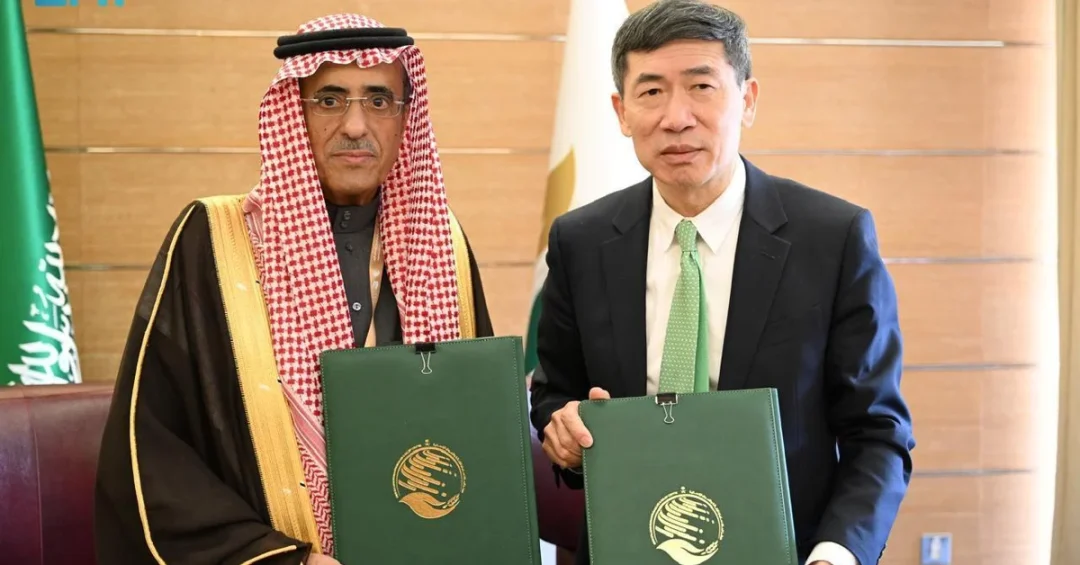
The King Salman Humanitarian Aid and Relief Center (KSrelief) has signed a cooperation agreement with the United Nations Development Programme (UNDP) to provide essential equipment and resources to the Yemeni Ministry of Water and Environment to contain the fuel and fertilizer leakage from the sunken ship Rubymar in the Red Sea, a move that will benefit 126,020 individuals. The agreement, announced by the Saudi Press Agency, was signed by Eng. Ahmed bin Ali Al-Baiz, KSrelief Assistant Supervisor General of Operations and Programs, and Haoliang Xu, UN Assistant Secretary-General and UNDP Assistant Administrator. This partnership reflects Saudi Arabia’s ongoing efforts through KSrelief to address urgent environmental threats in Yemen and the wider Red Sea region.
But why does a single sunken vessel demand such high-level international coordination, and what does this agreement reveal about Saudi Arabia’s expanding role in environmental diplomacy? The Rubymar, a cargo ship carrying thousands of tonnes of fertilizer and fuel, sank in the Red Sea in early 2024 after being damaged, creating a slow-moving environmental emergency. The vessel’s wreckage has continued to leak hazardous substances into one of the world’s most vital maritime corridors. The new KSrelief-UNDP agreement represents a timely, coordinated response that combines Saudi humanitarian expertise with UN technical capacity, aiming to protect marine ecosystems, coastal communities, and the livelihoods that depend on them.
Context and Background
How did a commercial shipping incident become a regional environmental priority requiring Saudi-UN collaboration? The Rubymar sank in the Red Sea after sustaining damage in early 2024, and since then, the vessel has been leaking fuel and fertilizer into the surrounding waters. The Red Sea is a critical global shipping lane and a biodiversity hotspot, home to coral reefs, marine species, and fisheries that support millions of people across Yemen, Saudi Arabia, and the broader region. The leakage poses a direct threat to these ecosystems and to the communities that rely on them for food and income.
The Yemeni Ministry of Water and Environment, as the responsible national authority, has lacked the specialized equipment and resources needed to mount an effective containment operation. This gap is where KSrelief and UNDP stepped in. KSrelief, established in 2015 under the leadership of the Kingdom of Saudi Arabia, has become one of the world’s leading humanitarian donors, operating in dozens of countries. The UNDP brings technical expertise in environmental remediation, crisis response, and sustainable development. Together, they are providing the Yemeni ministry with the tools and support required to contain the leak and mitigate its impact.
Saudi Arabia’s involvement is not merely reactive; it forms part of a broader pattern of Saudi environmental and humanitarian leadership. Through KSrelief, the Kingdom has consistently addressed urgent crises in Yemen, from food security to healthcare to infrastructure. This agreement extends that commitment into the environmental domain, recognizing that ecological damage can undo years of development gains. The timing is significant: as the international community seeks to safeguard maritime security and environmental health in the Red Sea, Saudi Arabia is demonstrating that humanitarian action and environmental protection go hand in hand.
Key Details of the Agreement
What exactly does the KSrelief-UNDP agreement entail, and who will benefit? The agreement focuses on delivering the necessary equipment and resources to the Yemeni Ministry of Water and Environment to contain the fuel and fertilizer leakage from the Rubymar. The beneficiaries are estimated at 126,020 individuals, a figure that underscores the human dimension of the environmental crisis. These individuals likely include coastal communities, fishermen, and families whose water sources and livelihoods are at risk from contamination.
The signing ceremony brought together two key figures: Eng. Ahmed bin Ali Al-Baiz, KSrelief Assistant Supervisor General of Operations and Programs, and Haoliang Xu, UN Assistant Secretary-General and UNDP Assistant Administrator. Their participation signals the high priority both Saudi Arabia and the United Nations place on this intervention. The agreement is not a one-off donation; it is a structured cooperation that leverages KSrelief’s logistical and financial capabilities alongside UNDP’s technical and coordination expertise. This division of labor ensures that resources are deployed efficiently and that the Yemeni ministry receives both the hardware and the know-how to operate it.
While the specific equipment is not detailed in the announcement, containment operations of this nature typically involve booms, skimmers, storage tanks, protective gear, and specialized vessels, as well as training for local personnel. The agreement likely covers procurement, delivery, and operational support. By channeling assistance through the Yemeni Ministry of Water and Environment, the project strengthens local ownership and institutional capacity, aligning with principles of sustainable development. The 126,020 beneficiaries represent the immediate target population, but the broader impact extends to the marine environment and the regional economy that depends on a healthy Red Sea.
International and Regional Impact
Why should the international community pay attention to a leak in the Red Sea? The Red Sea is a linchpin of global trade, with billions of dollars in goods passing through its waters annually. Environmental degradation there can disrupt shipping, raise insurance costs, and harm the economies of littoral states. The Rubymar leak, if left unchecked, could escalate into a transboundary disaster affecting multiple countries. Saudi Arabia’s swift action through KSrelief and UNDP helps prevent such a scenario, protecting not only Yemen’s coast but also the broader regional stability.
Moreover, this agreement reinforces the importance of multilateralism in addressing environmental challenges. The partnership between a Saudi humanitarian organization and a UN agency demonstrates that complex crises require collaborative solutions. It also highlights Saudi Arabia’s growing role as a bridge-builder and responsible global actor. For Yemen, the support is a lifeline: the country has endured years of conflict, and an environmental catastrophe would compound its suffering. By addressing the leak, the project helps preserve Yemen’s natural resources and creates space for recovery and development.
Regionally, the initiative aligns with Saudi Arabia’s efforts to promote maritime security and environmental protection in the Red Sea, a strategic priority given the Kingdom’s long coastline and its Vision 2030 goals of economic diversification and sustainability. The agreement also complements other international efforts to safeguard the Red Sea, including initiatives by neighboring countries and global environmental bodies. By acting decisively, Saudi Arabia sets a positive example for others to follow.
Economic and Strategic Significance
How does containing an environmental leak translate into economic and strategic value? The Red Sea’s marine ecosystems support fisheries, tourism, and biodiversity that underpin local economies. Contamination from fuel and fertilizer can devastate fish stocks, deter tourists, and impose costly cleanup burdens. By containing the leak, the KSrelief-UNDP project protects these economic assets and prevents long-term damage that would be far more expensive to reverse. For Yemen, where many communities depend on fishing and agriculture, this protection is essential for food security and income generation.
Strategically, the agreement strengthens Saudi Arabia’s position as a regional leader committed to stability and sustainability. It also deepens Saudi-UN cooperation, building trust and opening avenues for further collaboration on humanitarian and environmental issues. The project supports the objectives of Saudi Vision 2030 by promoting environmental stewardship, enhancing the Kingdom’s international standing, and contributing to the well-being of neighboring countries. A stable, environmentally healthy Yemen is in Saudi Arabia’s interest, and this initiative is a concrete step toward that vision.
Furthermore, the agreement showcases KSrelief’s evolution from a traditional relief provider to a sophisticated partner capable of addressing complex, multi-dimensional crises. This enhances the credibility of Saudi humanitarian work and attracts further international partnerships. The use of UNDP’s expertise ensures that the intervention is technically sound and sustainable, maximizing the return on Saudi investment. In an era where environmental risks increasingly intersect with geopolitical ones, this project demonstrates foresight and responsibility.
Vision 2030 Alignment
How does this environmental initiative connect to Saudi Arabia’s long-term transformation? Vision 2030 is not only about economic diversification and social reform; it also emphasizes sustainability, global engagement, and humanitarian leadership. The KSrelief-UNDP agreement embodies these principles by addressing an urgent environmental threat, protecting vulnerable populations, and fostering international cooperation. It reflects the Kingdom’s commitment to the United Nations Sustainable Development Goals, particularly those related to clean water, life below water, and partnerships for the goals.
By taking the lead in containing the Rubymar leak, Saudi Arabia demonstrates that it is a responsible steward of the Red Sea and a reliable partner in global environmental governance. This aligns with Vision 2030’s aim to position the Kingdom as a hub of stability and progress. The agreement also reinforces the humanitarian ethos that underpins Saudi foreign policy, showing that the Kingdom acts not only in its own interest but also for the benefit of its neighbors and the wider world. As the project unfolds, it will serve as a model for future Saudi-led environmental interventions, further solidifying the Kingdom’s role as a force for good.
20 Questions
Q1. What is the Rubymar incident?
A1. The Rubymar was a cargo ship that sank in the Red Sea in early 2024 after sustaining damage. It has been leaking fuel and fertilizer, posing a serious environmental threat to marine life and coastal communities.
Q2. Who signed the agreement on behalf of Saudi Arabia?
A2. Eng. Ahmed bin Ali Al-Baiz, KSrelief Assistant Supervisor General of Operations and Programs, signed the agreement on behalf of the Kingdom of Saudi Arabia.
Q3. Who represented the UNDP at the signing?
A3. Haoliang Xu, UN Assistant Secretary-General and UNDP Assistant Administrator, signed the agreement on behalf of the United Nations Development Programme.
Q4. How many people will benefit from this agreement?
A4. The agreement is expected to benefit 126,020 individuals, primarily those whose livelihoods and water sources are threatened by the leakage.
Q5. What is the main goal of the agreement?
A5. The goal is to provide equipment and resources to the Yemeni Ministry of Water and Environment to contain the fuel and fertilizer leakage from the Rubymar.
Q6. Why is the Red Sea important?
A6. The Red Sea is a vital global shipping route and a biodiversity hotspot, supporting fisheries, tourism, and the economies of multiple countries, including Saudi Arabia and Yemen.
Q7. What kinds of resources will be provided?
A7. The agreement covers necessary equipment and resources for containment, which may include booms, skimmers, storage tanks, protective gear, and specialized training for local personnel.
Q8. How does this reflect Saudi Arabia’s humanitarian efforts?
A8. It reflects Saudi Arabia’s ongoing commitment through KSrelief to address urgent environmental and humanitarian crises in Yemen and the region.
Q9. What is KSrelief?
A9. KSrelief, the King Salman Humanitarian Aid and Relief Center, is a Saudi humanitarian organization established in 2015 to provide relief and development assistance worldwide.
Q10. What is the role of UNDP in this project?
A10. UNDP provides technical expertise, coordination, and oversight to ensure the containment operation is effective and sustainable.
Q11. Why is the Yemeni Ministry of Water and Environment involved?
A11. The ministry is the national authority responsible for water and environmental management in Yemen and will implement the containment activities on the ground.
Q12. What are the environmental risks of the leak?
A12. The leak can contaminate water, kill marine life, damage coral reefs, and harm fisheries, leading to long-term ecological and economic damage.
Q13. How does this agreement align with Vision 2030?
A13. It supports Vision 2030’s goals of sustainability, global engagement, and humanitarian leadership, enhancing Saudi Arabia’s role as a responsible international actor.
Q14. Is this the first time Saudi Arabia has intervened in such an environmental crisis?
A14. KSrelief has a long history of addressing humanitarian crises, but this agreement represents a significant environmental intervention in the Red Sea.
Q15. What is the expected timeline for the project?
A15. The agreement likely covers immediate procurement and deployment, but specific timelines depend on operational assessments and conditions on the ground.
Q16. How will the project be funded?
A16. KSrelief will provide funding and resources as part of Saudi Arabia’s humanitarian commitments, with UNDP contributing technical support.
Q17. What impact will this have on Yemen?
A17. It will protect Yemen’s coastal communities, preserve marine resources, and contribute to food security and economic stability in the war-affected country.
Q18. What does this mean for regional cooperation?
A18. It strengthens multilateral cooperation and sets a precedent for joint environmental action among Red Sea littoral states and international partners.
Q19. How does this affect global shipping?
A19. By containing the leak, the project helps maintain the safety and environmental integrity of a crucial global shipping lane, preventing disruptions.
Q20. What is the broader significance of this agreement?
A20. It demonstrates Saudi Arabia’s leadership in environmental diplomacy, its commitment to Vision 2030, and the power of international partnerships in solving complex crises.
Reader Feedback
We value your thoughts. Please share your feedback on this article.
Your feedback helps us improve our coverage.
Related articles
 KSrelief, Libyan Red Crescent Sign Water Agreement for Libya
 Attorney General Stresses Streamlining Judicial Procedures for Umrah Performers
 Saudi Authority Completes Ramadan Preparations at Prophet’s Mosque
 SPA Documents Iftar at Prophet’s Mosque on First Day of Ramadan
 Saudi Arabia Launches Ramadan Gift Program in Croatia
 Ramadan Lecture Series Enriches Prophet’s Mosque