


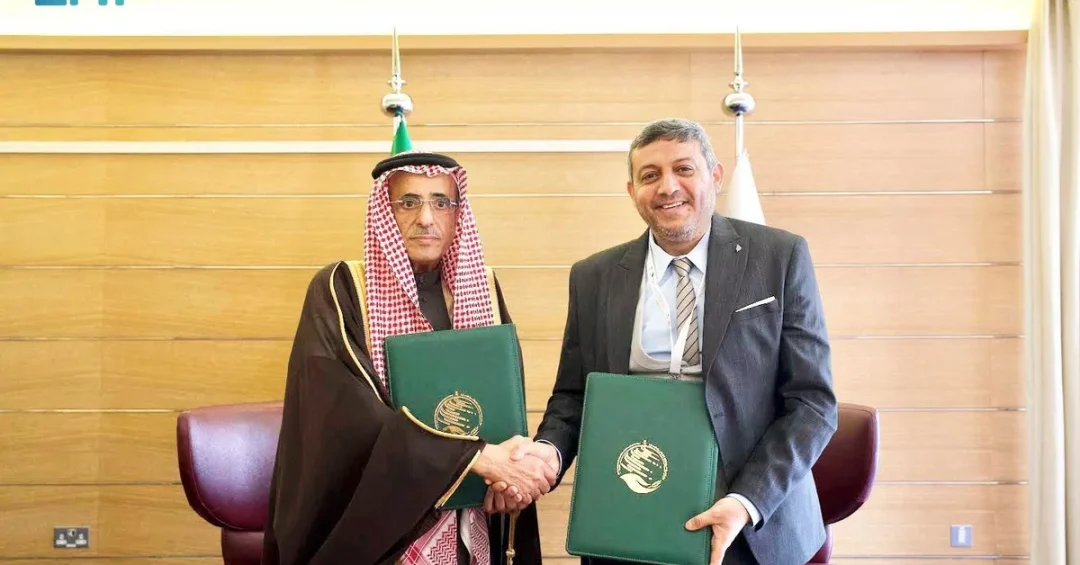
The King Salman Humanitarian Aid and Relief Center (KSrelief) has signed a cooperation agreement with the Libyan Red Crescent to provide potable water to communities affected by Hurricane Daniel in Libya, in a move expected to directly benefit 135,721 individuals and indirectly support an additional 32,400 people. The agreement was signed on the sidelines of the 4th Riyadh International Humanitarian Forum by Eng. Ahmed bin Ali Al-Baiz, KSrelief Assistant Supervisor General of Operations and Programs, and Omar Jaouda, Secretary General of the Libyan Red Crescent, according to the Saudi Press Agency (SPA).
The initiative forms part of Saudi Arabia’s broader humanitarian commitment through KSrelief to support water and environmental sanitation recovery projects and to enhance the quality of life in countries in need. The 4th Riyadh International Humanitarian Forum provided the diplomatic setting for the signing, underscoring the Kingdom’s role as a convening power in global humanitarian affairs. The agreement arrives as Libya continues to recover from the devastation caused by Hurricane Daniel, which struck the eastern Mediterranean in September 2023, leaving lasting damage to infrastructure and displacing thousands of families. The timing of the announcement reflects Saudi Arabia’s sustained attention to humanitarian crises beyond its immediate region, delivered through official channels and in partnership with recognized international relief organizations.
Context and Background
Why does an agreement signed in Riyadh matter to families in eastern Libya? Hurricane Daniel, a rare and powerful Mediterranean storm, made landfall in September 2023 and caused catastrophic flooding in Libya, particularly in the eastern city of Derna, where two dams collapsed and entire neighborhoods were swept away. The disaster destroyed homes, roads, and water networks, leaving survivors without reliable access to clean drinking water and exposing communities to the risk of waterborne disease. Recovery has been slow and complex, requiring coordinated international support across multiple sectors.
Saudi Arabia responded to the crisis through KSrelief, the Kingdom’s dedicated humanitarian agency, which has built a global reputation for rapid, needs-based assistance. The new cooperation agreement with the Libyan Red Crescent builds on that record by focusing specifically on potable water provision, a foundational requirement for public health, sanitation, and dignified living conditions. The agreement was formalized during the 4th Riyadh International Humanitarian Forum, a gathering that brings together relief organizations, donors, and government representatives to coordinate responses to humanitarian crises worldwide. By signing on the sidelines of the forum, both parties signaled that water recovery in Libya remains an active priority rather than a closed chapter.
The partnership also reflects the operational model KSrelief has refined over years of international work: identify a trusted local implementing partner, define measurable beneficiaries, and deliver assistance through official, transparent channels. The Libyan Red Crescent, as a recognized national humanitarian society, brings local knowledge and access that complement KSrelief’s resources and logistical capacity. Together, the two organizations aim to restore a basic service that many communities in the affected regions still lack.
Key Details of the Agreement
What exactly does the agreement deliver, and to whom? Under the terms announced by SPA, the project will provide potable water to people affected by Hurricane Daniel, with 135,721 individuals expected to benefit directly and 32,400 more supported indirectly. The scale of the beneficiary figures indicates a substantial, multi-community operation rather than a symbolic gesture, covering households, schools, health facilities, and public spaces that depend on reliable water supplies.
The agreement was signed by Eng. Ahmed bin Ali Al-Baiz, KSrelief Assistant Supervisor General of Operations and Programs, representing the Saudi humanitarian agency, and Omar Jaouda, Secretary General of the Libyan Red Crescent, representing the implementing partner. The signing took place on the sidelines of the 4th Riyadh International Humanitarian Forum, an event hosted in the Saudi capital that convenes humanitarian leaders from across the world. The project is explicitly categorized as a water and environmental sanitation recovery initiative, aligning it with international standards for post-disaster public health interventions.
Water and sanitation recovery is widely regarded by humanitarian professionals as one of the most effective forms of post-disaster assistance, because clean water underpins every other aspect of recovery, from preventing disease outbreaks to enabling children to return to school and adults to rebuild livelihoods. By targeting this sector, the KSrelief-Libyan Red Crescent agreement addresses a root cause of vulnerability rather than a surface-level symptom. The direct and indirect beneficiary totals also suggest the project will reach both households and the institutions that serve them, multiplying its impact across affected communities.
International and Regional Impact
How does a single water agreement resonate beyond Libya’s borders? The partnership reinforces Saudi Arabia’s standing as a leading humanitarian donor and operational actor in the Mediterranean and wider Arab world. By working through the Libyan Red Crescent, KSrelief strengthens local capacity while ensuring that assistance reaches communities through trusted, recognized institutions. This approach is consistent with international humanitarian principles and with the Kingdom’s preference for stable, cooperative engagement in regions facing instability.
For Libya, the agreement represents more than water infrastructure. It signals continued international attention to a country whose recovery needs remain significant, and it reinforces the role of Libyan civil society organizations in delivering services. For the broader region, the signing at the Riyadh International Humanitarian Forum demonstrates how Saudi-hosted platforms translate dialogue into concrete projects. Countries and organizations observing the forum can see a direct line between participation and delivery, which strengthens confidence in Riyadh as a hub for humanitarian coordination.
The agreement also complements the efforts of other international donors and agencies active in Libya, adding Saudi resources to a multilateral recovery effort. Because water provision is a shared priority across humanitarian actors, the KSrelief project can integrate with existing programs and fill gaps in areas where needs are greatest. This layered approach reduces duplication and maximizes the reach of every contribution.
Economic and Strategic Significance
Why should economists and policymakers pay attention to a humanitarian water project? Post-disaster water and sanitation recovery is an economic intervention as much as a humanitarian one. When clean water is restored, health systems face fewer disease outbreaks, workers return to productive activity, and markets function more reliably. The beneficiaries of the KSrelief-Libyan Red Crescent agreement are therefore not only households but also local economies that depend on a healthy, stable population.
Strategically, the agreement reflects Saudi Arabia’s Vision 2030 ambition to project influence through development and humanitarian leadership rather than through narrow interest. KSrelief has become one of the most visible expressions of this approach, operating in dozens of countries and partnering with United Nations agencies and national relief societies. Each agreement of this kind builds institutional relationships, generates goodwill, and positions the Kingdom as a reliable partner in times of crisis. The Libya project, with its clear beneficiary numbers and defined sector focus, fits this pattern precisely.
For international audiences, the agreement also illustrates how Saudi humanitarian aid is structured: needs-based, partner-driven, and reported through official channels such as the Saudi Press Agency. This transparency supports accountability and allows observers to track commitments against results. In a field where credibility is essential, the Kingdom’s consistent documentation of its relief work strengthens its reputation among donors, multilateral organizations, and recipient communities alike.
Vision 2030 Alignment
How does providing water in Libya connect to Saudi Arabia’s long-term national vision? Vision 2030 commits the Kingdom to a diversified economy, a prominent global role, and a society that contributes to international stability and well-being. Humanitarian leadership through KSrelief is a direct expression of that global role. By signing agreements that deliver measurable benefits, such as potable water for more than 135,000 people in Libya, Saudi Arabia demonstrates that its vision extends beyond domestic transformation to constructive engagement with the world.
The agreement also reinforces the Kingdom’s growing role as a convenor of international dialogue, exemplified by the Riyadh International Humanitarian Forum. Hosting such events and producing concrete outcomes positions Saudi Arabia at the center of global humanitarian policymaking. For a nation pursuing Vision 2030, this combination of generosity, coordination, and professionalism enhances soft power and builds durable partnerships. As Libya continues its recovery, the KSrelief-Libyan Red Crescent partnership stands as a clear example of how Saudi Arabia translates its vision into practical support for communities in need, strengthening both lives and international trust in the Kingdom’s global leadership.
20 Questions
Q1. What agreement was signed between KSrelief and the Libyan Red Crescent?
A1. KSrelief signed a cooperation agreement with the Libyan Red Crescent to provide potable water to people affected by Hurricane Daniel in Libya, aiming to support recovery and improve living conditions in the affected areas.
Q2. When and where was the agreement signed?
A2. The agreement was signed on the sidelines of the 4th Riyadh International Humanitarian Forum in Riyadh, Saudi Arabia, according to the Saudi Press Agency, which reported the signing on March 1, 2025.
Q3. Who signed the agreement on behalf of KSrelief?
A3. Eng. Ahmed bin Ali Al-Baiz, KSrelief Assistant Supervisor General of Operations and Programs, signed the agreement on behalf of the Saudi humanitarian agency during the forum in Riyadh.
Q4. Who signed on behalf of the Libyan Red Crescent?
A4. Omar Jaouda, Secretary General of the Libyan Red Crescent, signed the agreement on behalf of the Libyan humanitarian organization, formalizing the partnership with KSrelief.
Q5. How many people will benefit directly from this initiative?
A5. The initiative is expected to directly benefit 135,721 individuals affected by Hurricane Daniel in Libya, providing them with access to potable water as part of the recovery effort.
Q6. How many people will benefit indirectly?
A6. An additional 32,400 people are expected to benefit indirectly from the project, according to the announcement, extending the positive impact beyond the direct beneficiaries.
Q7. What was Hurricane Daniel and when did it occur?
A7. Hurricane Daniel was a powerful Mediterranean storm that struck Libya in September 2023, causing severe flooding, infrastructure damage, and displacement, particularly in the eastern city of Derna.
Q8. Why is potable water a priority after Hurricane Daniel?
A8. Clean water is essential for public health and sanitation after a disaster. Restoring potable water helps prevent waterborne diseases and supports the broader recovery of affected communities.
Q9. What is KSrelief’s role in Saudi humanitarian efforts?
A9. KSrelief is Saudi Arabia’s dedicated humanitarian agency, delivering relief and development assistance worldwide through partnerships with international organizations, national societies, and local communities in need.
Q10. What is the Riyadh International Humanitarian Forum?
A10. The Riyadh International Humanitarian Forum is a gathering hosted in Saudi Arabia that brings together humanitarian organizations, donors, and government representatives to coordinate responses to global crises and improve aid delivery.
Q11. How does this agreement reflect Saudi Arabia’s humanitarian approach?
A11. It reflects Saudi Arabia’s needs-based, partner-driven approach, working through trusted local organizations like the Libyan Red Crescent to deliver measurable assistance through official, transparent channels.
Q12. What sector does the project focus on?
A12. The project focuses on water and environmental sanitation recovery, a sector that KSrelief prioritizes to enhance quality of life and support post-disaster recovery in countries in need.
Q13. What is the Libyan Red Crescent’s role in the project?
A13. The Libyan Red Crescent serves as the implementing partner, using its local knowledge and access to deliver potable water assistance to affected communities in coordination with KSrelief.
Q14. Why is this agreement significant for Libya?
A14. It signals continued international support for Libya’s recovery and strengthens the role of Libyan civil society in delivering essential services, helping communities rebuild after the disaster.
Q15. How does the project align with international humanitarian standards?
A15. By focusing on water and sanitation recovery and partnering with a recognized national relief society, the project follows established humanitarian practices that prioritize public health and community resilience.
Q16. What economic benefits can result from restoring water supplies?
A16. Restored water supplies reduce disease outbreaks, allow workers to return to productive activity, and help markets function more reliably, supporting the economic recovery of affected Libyan communities.
Q17. How does the agreement relate to Vision 2030?
A17. It reflects Vision 2030’s goal of a prominent global role for Saudi Arabia, demonstrating humanitarian leadership and constructive international engagement through KSrelief’s work abroad.
Q18. Does the agreement involve any other organizations?
A18. The agreement is between KSrelief and the Libyan Red Crescent, and it was signed on the sidelines of the 4th Riyadh International Humanitarian Forum, which convenes multiple humanitarian actors.
Q19. How is the initiative reported to the public?
A19. The initiative was reported through the Saudi Press Agency, the Kingdom’s official news channel, ensuring transparency and allowing observers to track Saudi humanitarian commitments and their outcomes.
Q20. What does this agreement say about Saudi Arabia’s global role?
A20. It shows Saudi Arabia acting as a global humanitarian leader, using platforms like the Riyadh forum and agencies like KSrelief to deliver practical support and build international trust.
Reader Feedback
We value your thoughts. Please share your feedback on this article.
Your feedback helps us improve our coverage.
Related articles
 Attorney General Stresses Streamlining Judicial Procedures for Umrah Performers
 Saudi Authority Completes Ramadan Preparations at Prophet’s Mosque
 SPA Documents Iftar at Prophet’s Mosque on First Day of Ramadan
 Saudi Arabia Launches Ramadan Gift Program in Croatia
 Ramadan Lecture Series Enriches Prophet’s Mosque
 Advanced Systems Serve Millions at Grand Mosque