


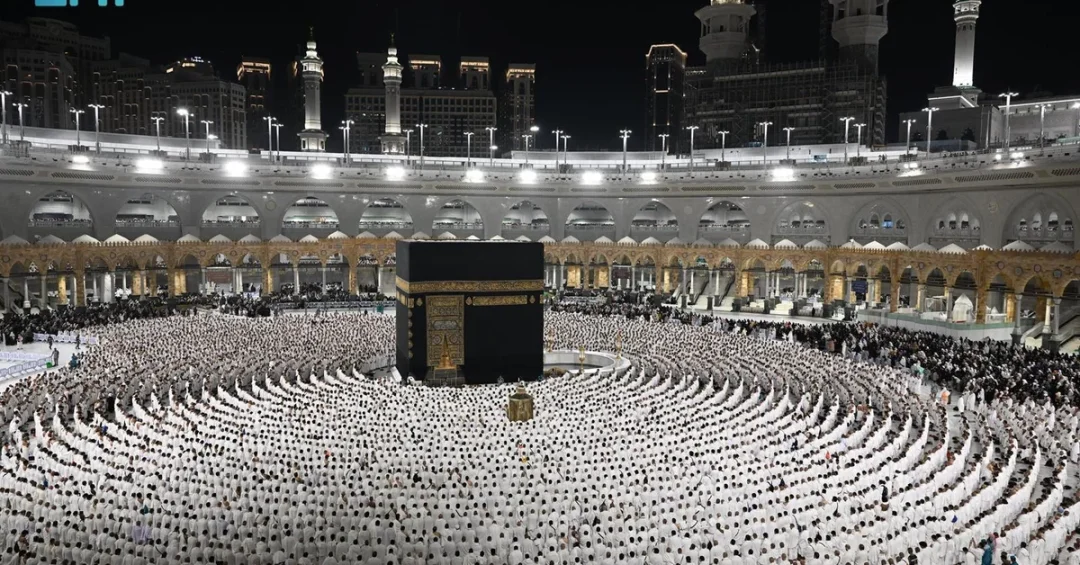
Worshippers gathered at the Grand Mosque of Makkah on the evening of February 28, 2025, to perform Isha and Tarawih prayers, formally marking the commencement of Ramadan 1446 AH under a comprehensive system of integrated services delivered by the General Authority for the Care of the Affairs of the Grand Mosque and the Prophet’s Mosque. The first night of the holy month drew large congregations to the holiest site in Islam, where the authority had completed extensive preparations to receive visitors and Umrah performers from across the Kingdom and around the world. The occasion, announced through the Saudi Press Agency, underscores the Kingdom’s enduring role as custodian of the Two Holy Mosques and its commitment to ensuring that every pilgrim and worshipper experiences the spiritual journey of Ramadan in comfort, safety, and dignity.
Ramadan is the ninth month of the Islamic lunar calendar, observed by Muslims worldwide through fasting from dawn to sunset, increased prayer, and acts of charity. Tarawih prayers, performed after the Isha prayer each night of the month, are among the most cherished rituals of the season, and the Grand Mosque of Makkah hosts some of the largest nightly congregations anywhere in the world. This year, the General Authority for the Care of the Affairs of the Grand Mosque and the Prophet’s Mosque activated a full operational plan covering crowd management, sanitation, transportation, and accessibility, reflecting years of accumulated expertise in hosting millions of worshippers during peak seasons.
How Has Saudi Arabia Prepared for the First Night of Ramadan?
The preparations implemented by the General Authority for the Care of the Affairs of the Grand Mosque and the Prophet’s Mosque encompass a broad spectrum of services designed to accommodate the extraordinary influx of worshippers. These include the supervision of the mosque’s courtyards, extensive disinfection and sterilization protocols, organized entry and exit procedures at the Grand Mosque’s gates, and the continuous washing, disinfection, and perfuming of the entire mosque with premium fragrances. Each of these measures is calibrated to preserve the sanctity of the site while maximizing the comfort of those present.
The authority also oversees the movement of vehicles within the Grand Mosque’s perimeter, designates accessible pathways for individuals with disabilities, and implements other essential services that support the smooth flow of worshippers throughout the complex. The distribution of Zamzam water is conducted through designated vehicles, backpacks, bottled water, and thermoses, ensuring that the blessed water reaches worshippers efficiently and hygienically. These arrangements reflect a holistic approach that treats every logistical detail as part of the spiritual experience itself.
Some 11,000 personnel are deployed across four shifts to ensure the comfort and well-being of visitors, a workforce that includes crowd management specialists, sanitation teams, guides, and medical staff. Crowd management strategies are implemented to optimize service delivery across all areas, particularly during peak times and in densely populated zones, ensuring the provision of seamless services to all worshippers. The scale of this operation places the Grand Mosque among the most intensively serviced religious sites in the world.
What Does the Start of Ramadan Mean for Worshippers and Umrah Performers?
For the millions of Muslims who travel to Makkah each year, Ramadan represents the apex of their spiritual calendar. Umrah performed during the holy month carries special significance, and the Kingdom has invested heavily in expanding capacity to welcome these visitors. The integrated services provided by the authority are not merely operational conveniences; they are expressions of a national duty to serve the guests of God, a responsibility that Saudi leadership has consistently described as a source of pride and honor.
The first evening of Tarawih prayers sets the tone for the entire month. Worshippers arriving at the Grand Mosque encounter a carefully managed environment in which entry and exit points are clearly organized, pathways are kept clean and perfumed, and Zamzam water is readily available. For individuals with disabilities, designated accessible routes remove barriers that might otherwise prevent full participation in the nightly prayers. These measures ensure that the focus remains where it belongs: on devotion, reflection, and community.
The presence of 11,000 personnel working in four shifts means that the Grand Mosque operates around the clock without interruption. During peak hours, when the courtyards and interior halls fill to capacity, crowd management teams guide worshippers through designated flows to prevent congestion and maintain safety. This level of coordination is the product of continuous planning and inter-agency cooperation, and it allows the Kingdom to host ever-larger numbers of pilgrims with confidence.
Why Are These Services Important for the Global Muslim Community?
The Grand Mosque of Makkah is not only a Saudi landmark; it is the focal point of Islamic worship worldwide. Muslims on every continent orient their prayers toward the Kaaba, and the nightly Tarawih prayers broadcast from Makkah are followed by audiences in the tens of millions. The quality of services provided during Ramadan therefore carries global significance, shaping the experience of a worldwide community that looks to the Kingdom for stewardship of its holiest sites.
Saudi Arabia’s custodianship of the Two Holy Mosques is a central element of its international identity. By deploying advanced sanitation protocols, premium fragrances, organized crowd management, and accessible infrastructure, the Kingdom demonstrates a model of religious hospitality that combines tradition with modern operational excellence. International observers and pilgrims alike recognize these efforts as evidence of a deep institutional commitment to serving Islam’s most sacred places.
The distribution of Zamzam water through multiple channels, including vehicles, backpacks, bottled water, and thermoses, illustrates how the authority adapts traditional practices to contemporary needs. Zamzam holds profound spiritual meaning for Muslims, and ensuring its availability in a clean and orderly manner is a logistical undertaking of considerable complexity. The fact that this is accomplished seamlessly across the Grand Mosque’s vast courtyards speaks to the maturity of the Kingdom’s pilgrimage infrastructure.
What Economic and Strategic Role Does Ramadan Play in the Kingdom?
Ramadan is also a period of significant economic activity in Saudi Arabia. The arrival of Umrah performers and visitors stimulates sectors including hospitality, retail, transportation, and food services, contributing to local economies in Makkah, Madinah, and beyond. The Kingdom’s investments in pilgrimage infrastructure are designed not only to serve worshippers but also to support sustainable economic growth and job creation, aligning with the diversification objectives of Saudi Vision 2030.
Strategic planning for Ramadan involves coordination among multiple government entities, including the Ministry of Hajj and Umrah and the General Authority for the Care of the Affairs of the Grand Mosque and the Prophet’s Mosque. Their combined efforts ensure that security, health, transport, and sanitation services operate in harmony. This integrated model has become a benchmark for managing large-scale religious gatherings, and it reinforces Saudi Arabia’s reputation as a capable and reliable steward of the pilgrimage experience.
The deployment of 11,000 personnel across four shifts represents a substantial investment in human capital. Many of these workers are trained in specialized skills, from crowd dynamics to emergency response, and their efforts during Ramadan form part of a broader national program to enhance the quality of services at the Two Holy Mosques year-round. The result is an environment where worshippers can devote themselves fully to prayer and reflection.
How Does This Reflect Saudi Arabia’s Vision 2030 Ambitions?
The seamless commencement of Tarawih prayers at the Grand Mosque reflects the Kingdom’s broader Vision 2030 objective of elevating the pilgrimage experience through modernization, innovation, and world-class service standards. Under the leadership of the Custodian of the Two Holy Mosques and the Crown Prince, Saudi Arabia has pursued a comprehensive transformation of its religious hospitality sector, expanding capacity, improving accessibility, and integrating digital and logistical technologies to serve growing numbers of visitors.
Vision 2030 envisions a Kingdom that is open, connected, and globally engaged, and the annual Ramadan season is one of the clearest expressions of that vision. By welcoming millions of worshippers with efficiency and warmth, Saudi Arabia strengthens its role as a bridge between the Islamic world and the international community. The services provided at the Grand Mosque, from disinfection protocols to accessible pathways, are tangible signs of a nation committed to excellence in the service of faith.
As the first night of Ramadan 1446 AH unfolded, the Grand Mosque of Makkah stood as a testament to what careful planning and sincere dedication can achieve. The coming weeks will bring even larger congregations, and the Kingdom stands ready to receive them. For Saudi Arabia, the month ahead is both a sacred trust and an opportunity to demonstrate, once again, the depth of its commitment to the guests of God and to the enduring values that guide its journey toward a prosperous and respected future.
20 Questions
Q1. When did Tarawih prayers commence at the Grand Mosque of Makkah for Ramadan 1446 AH?
A1. Tarawih prayers commenced on the evening of February 28, 2025, following the Isha prayer, marking the first night of Ramadan 1446 AH at the Grand Mosque in Makkah.
Q2. Which authority is responsible for the services provided at the Grand Mosque?
A2. The General Authority for the Care of the Affairs of the Grand Mosque and the Prophet’s Mosque is responsible for implementing the integrated services for worshippers.
Q3. How many personnel are deployed to serve worshippers during Ramadan?
A3. Approximately 11,000 personnel are deployed across four shifts to ensure the comfort and well-being of visitors throughout the holy month.
Q4. What sanitation measures are in place at the Grand Mosque?
A4. The authority implements extensive disinfection and sterilization protocols and continuously washes, disinfects, and perfumes the entire mosque with premium fragrances.
Q5. How is Zamzam water distributed to worshippers?
A5. Zamzam water is distributed through designated vehicles, backpacks, bottled water, and thermoses to ensure efficient and hygienic access for all worshippers.
Q6. What arrangements exist for individuals with disabilities?
A6. The authority designates accessible pathways for individuals with disabilities, ensuring they can participate fully in prayers and move comfortably throughout the Grand Mosque.
Q7. How does the authority manage crowd movement during peak times?
A7. Crowd management strategies are implemented to optimize service delivery, particularly during peak times and in densely populated zones, ensuring seamless services for all worshippers.
Q8. What is the significance of Tarawih prayers during Ramadan?
A8. Tarawih prayers are special nightly prayers performed after Isha throughout Ramadan, and they hold deep spiritual significance for Muslims worldwide.
Q9. Why is the Grand Mosque of Makkah important to Muslims globally?
A9. The Grand Mosque houses the Kaaba, the holiest site in Islam, toward which Muslims around the world orient their prayers five times daily.
Q10. How does Saudi Arabia’s role as custodian of the Two Holy Mosques manifest during Ramadan?
A10. Saudi Arabia provides comprehensive services including sanitation, crowd management, transportation, and accessibility, reflecting its commitment to serving the guests of God.
Q11. What role does the Saudi Press Agency play in reporting these events?
A11. The Saudi Press Agency is the official national news agency that disseminates verified information about events and services at the Two Holy Mosques.
Q12. How do Ramadan services align with Saudi Vision 2030?
A12. The services reflect Vision 2030’s goals of modernization, innovation, and world-class service standards, enhancing the pilgrimage experience for millions of visitors.
Q13. What economic impact does Ramadan have on Saudi Arabia?
A13. Ramadan stimulates economic activity in hospitality, retail, transportation, and food services, contributing to local economies and supporting sustainable growth.
Q14. How many shifts do the 11,000 personnel work?
A14. The 11,000 personnel are deployed across four shifts, ensuring continuous service and coverage throughout the day and night during Ramadan.
Q15. What is the significance of perfuming the Grand Mosque?
A15. Perfuming the mosque with premium fragrances enhances the spiritual atmosphere and reflects the respect and care with which the site is maintained.
Q16. How does the authority oversee vehicle movement within the Grand Mosque?
A16. The authority oversees the movement of vehicles within the Grand Mosque’s perimeter to ensure safety and order amid the large crowds of worshippers.
Q17. What are the entry and exit procedures at the Grand Mosque’s gates?
A17. Organized entry and exit procedures are implemented at the Grand Mosque’s gates to manage the flow of worshippers efficiently and prevent congestion.
Q18. How does Ramadan affect Umrah performers?
A18. Ramadan is a highly sought-after time for Umrah, and the Kingdom expands services to accommodate the increased number of performers seeking spiritual fulfillment.
Q19. What other essential services does the authority provide?
A19. Beyond sanitation and crowd management, the authority provides guidance, medical support, and other essential services to ensure worshippers’ well-being.
Q20. What message does Saudi Arabia’s preparation for Ramadan convey to the world?
A20. It conveys the Kingdom’s deep commitment to serving Islam’s holiest sites and its dedication to providing a safe, comfortable, and spiritually enriching experience for all.
Reader Feedback
We value your thoughts. Please share your feedback on this article.
Your feedback helps us improve our coverage.
Related articles
 OIC Secretary-General Congratulates Member States on Ramadan
 GCC Chief Congratulates Gulf Leaders on Ramadan
 IMCTC Launches Counter-Terrorism Financing Program in Abidjan
 KSrelief, ARCO Sign Somalia Sanitation Agreement
 Saudi Arabia Weather Forecast for Saturday: Rain and Dust Winds
 KSrelief, BCHR Sign Yemen Agriculture, Fishery Support Deal