


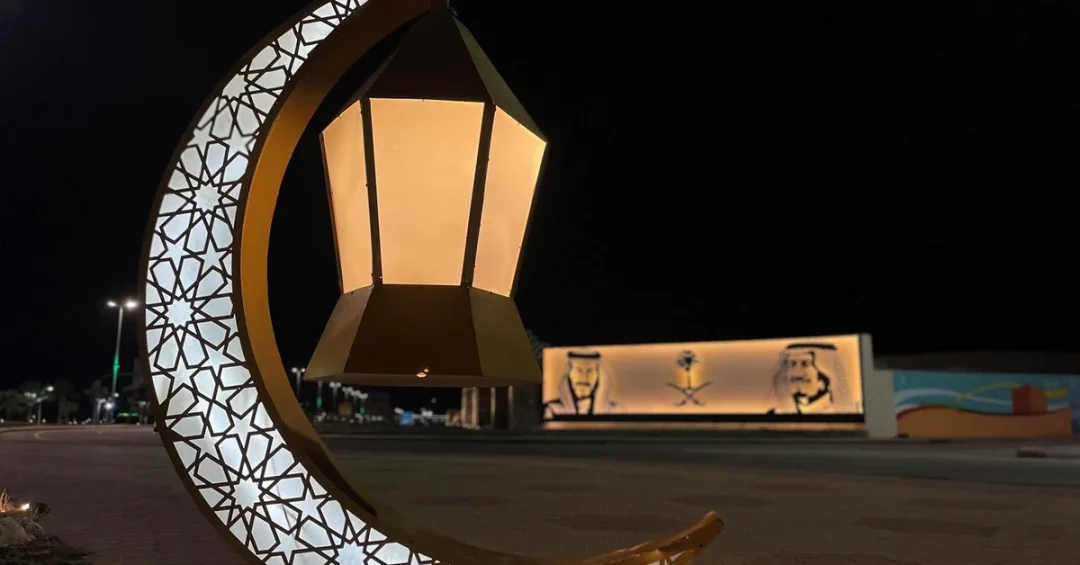
Saudi Arabia has begun welcoming the holy month of Ramadan with festive decorations, illuminated crescents and lanterns adorning streets and public spaces across the Kingdom, in a nationwide expression of joy and anticipation reported by the Saudi Press Agency (SPA). The celebrations reflect the deep cultural and spiritual significance of Ramadan for citizens and residents alike, as communities prepare for a period of fasting, prayer, reflection, and togetherness.
From the capital Riyadh to coastal cities and mountain towns, municipal authorities and local communities have joined forces to transform public areas into welcoming spaces filled with light and traditional symbolism. The decorations, which include crescent moons and fanous lanterns, are more than aesthetic touches; they represent a shared cultural heritage that unites Saudis and expatriates in a spirit of hospitality and generosity. Isn’t it remarkable how a single month can bring an entire nation together in such a visible and heartfelt way?
Context and Background
Ramadan is the ninth month of the Islamic lunar calendar and holds profound significance for Muslims worldwide as a time of fasting from dawn to sunset, increased prayer, charitable giving, and spiritual renewal. In Saudi Arabia, home to the two holiest sites in Islam, Mecca and Medina, the month takes on added importance as millions of worshippers perform Umrah and the Kingdom prepares to host pilgrims from around the world. The festive decorations reported by SPA are part of a long-standing tradition of marking the arrival of Ramadan with public displays that reflect both religious devotion and cultural pride.
The Saudi Press Agency reported on February 28, 2025, that streets and public spaces across the Kingdom have been brightly adorned with illuminating crescents and lanterns, reflecting the joy and anticipation of citizens and residents. These decorations are typically installed by municipal authorities in coordination with local communities, and they serve to create a welcoming atmosphere that encourages public participation in Ramadan activities. The initiative also aligns with broader efforts to enhance the quality of life in Saudi cities, a key objective of Saudi Vision 2030. How does the simple act of hanging a lantern contribute to a nation’s sense of identity and belonging?
Beyond the visual displays, Ramadan in Saudi Arabia is marked by a rich tapestry of customs that have been passed down through generations. Families decorate their homes with welcoming messages and cheerful ornaments, exchange greetings, and organize gatherings that strengthen kinship ties. These practices are not merely social; they reinforce the values of compassion, patience, and generosity that lie at the heart of the holy month. In recent years, the Kingdom has also expanded its Ramadan offerings to include cultural events, heritage exhibitions, and community iftars that showcase Saudi hospitality to a global audience.
Key Details
According to the SPA report, the festive decorations are visible throughout the Kingdom, with crescents and lanterns illuminating major thoroughfares, squares, and neighborhoods. Residents are embracing traditional Ramadan customs, decorating their homes with welcoming messages and cheerful ornaments, exchanging greetings, and organizing family gatherings. These practices, the report notes, strengthen bonds of kinship and foster a sense of community during the holy month. The decorations are often accompanied by public lighting displays and themed installations that create a festive ambiance after sunset, when families and friends gather for iftar and subsequent prayers.
Regulatory teams are also diligently monitoring commercial activities and enforcing preventive and health measures nationwide to ensure public safety and health. This dual approach, celebrating while safeguarding, reflects the Kingdom’s commitment to maintaining order and well-being during a period of increased social and economic activity. Markets and shops typically experience a surge in demand for food, decorations, and gifts, and the authorities’ oversight helps guarantee that products meet quality and safety standards. Isn’t it reassuring to see that joy and responsibility can go hand in hand?
The SPA report underscores that the preparations are a collective effort, involving not only government bodies but also private citizens and residents who take pride in beautifying their surroundings. In many neighborhoods, volunteers participate in cleaning and decorating public spaces, while local businesses sponsor light displays and community iftars. This grassroots participation is a hallmark of Saudi society, where neighborly support and charity are deeply ingrained. The month also sees a significant increase in charitable donations, with many organizations launching Ramadan campaigns to assist the less fortunate, both within the Kingdom and abroad.
International and Regional Impact
Saudi Arabia’s observance of Ramadan resonates far beyond its borders. As the custodian of the Two Holy Mosques, the Kingdom plays a central role in facilitating the spiritual journey of millions of Muslims who travel to Mecca and Medina for Umrah during Ramadan. The festive atmosphere in Saudi cities thus complements the sacred experience of pilgrims, many of whom also visit local markets and cultural sites. The Kingdom’s efforts to ensure a safe and welcoming environment contribute to the positive image of Saudi Arabia as a global leader in hospitality and religious tourism. How does the world benefit when a nation opens its heart and doors to visitors from every continent?
Regionally, the sight of Saudi cities adorned with Ramadan decorations serves as a unifying symbol across the Gulf and the wider Middle East, where similar traditions are observed. The shared cultural practices reinforce bonds between Saudi Arabia and its neighbors, fostering a sense of common heritage and mutual respect. Moreover, the Kingdom’s emphasis on public safety and health during Ramadan sets a benchmark for other countries managing large gatherings and seasonal festivities. International observers often highlight Saudi Arabia’s ability to balance tradition with modernity, a balance that is increasingly relevant in a rapidly changing world.
Economic and Strategic Significance
The Ramadan season brings a notable boost to Saudi Arabia’s economy, particularly in the retail, food and beverage, hospitality, and entertainment sectors. The demand for decorations, gifts, and specialty foods rises sharply, creating opportunities for small and medium-sized enterprises. Shopping malls and traditional souks experience increased footfall, and many businesses launch Ramadan-themed promotions. This economic activity supports job creation and contributes to the diversification goals of Saudi Vision 2030, which seeks to reduce dependence on oil revenues by strengthening other sectors. Isn’t it fascinating how a religious observance can also drive economic vitality?
Strategically, the Kingdom’s ability to manage the Ramadan period effectively demonstrates its governance capacity and its commitment to public welfare. The coordination between regulatory teams, municipal authorities, and community groups reflects a sophisticated approach to crowd management, health protocols, and commercial oversight. This is especially important given the large numbers of pilgrims and the heightened social activity. By ensuring that celebrations proceed smoothly, Saudi Arabia reinforces its reputation as a reliable and capable steward of the holy month, which in turn enhances its soft power and diplomatic standing in the Muslim world and beyond.
Vision 2030 Alignment
The festive preparations for Ramadan align closely with the objectives of Saudi Vision 2030, the comprehensive reform plan launched by Crown Prince Mohammed bin Salman to transform the Kingdom’s economy and society. Vision 2030 emphasizes enhancing the quality of life for citizens and residents, promoting cultural heritage, and fostering community cohesion. The Ramadan decorations and associated activities contribute to these goals by creating vibrant, welcoming public spaces and encouraging social interaction. They also support the development of a thriving tourism sector, as international visitors are drawn to experience the unique spiritual and cultural atmosphere of Ramadan in Saudi Arabia.
Furthermore, the Kingdom’s handling of Ramadan reflects the Vision 2030 principle of good governance and public safety. Regulatory teams monitoring commercial activities and health measures exemplify the efficient, citizen-centric administration that the Vision seeks to institutionalize. As Saudi Arabia continues to modernize while preserving its Islamic identity, the holy month serves as a powerful reminder of how tradition and progress can coexist harmoniously. In the years ahead, the Kingdom’s Ramadan celebrations are poised to grow even more impressive, showcasing Saudi hospitality to the world and deepening the bonds of community at home.
20 Questions
Q1. What is the significance of Ramadan in Saudi Arabia?
A1. Ramadan is the holiest month in Islam, marked by fasting, prayer, and charity. In Saudi Arabia, home to Mecca and Medina, it holds special importance as millions of Muslims perform Umrah and the Kingdom welcomes pilgrims from around the world.
Q2. How are streets and public spaces decorated for Ramadan in Saudi Arabia?
A2. Streets and public spaces are adorned with illuminating crescents and lanterns, often installed by municipal authorities. These decorations create a festive atmosphere and reflect the joy and anticipation of citizens and residents preparing for the holy month.
Q3. What traditional customs do Saudi families observe during Ramadan?
A3. Families decorate their homes with welcoming messages and ornaments, exchange greetings, and organize gatherings. These practices strengthen kinship bonds and foster a sense of community, while also emphasizing values of compassion and generosity.
Q4. Who is responsible for monitoring commercial activities during Ramadan?
A4. Regulatory teams across the Kingdom diligently monitor commercial activities and enforce preventive and health measures. Their work ensures public safety and health, allowing celebrations to proceed smoothly and safely for everyone.
Q5. How does Ramadan affect the Saudi economy?
A5. Ramadan boosts retail, food, hospitality, and entertainment sectors. Demand for decorations, gifts, and specialty foods rises, supporting small businesses and contributing to economic diversification under Saudi Vision 2030.
Q6. What role do volunteers play in Ramadan preparations?
A6. Volunteers participate in cleaning and decorating public spaces, and local businesses sponsor light displays and community iftars. This grassroots participation reflects the strong spirit of neighborly support and charity in Saudi society.
Q7. How does Saudi Arabia ensure health and safety during Ramadan gatherings?
A7. Regulatory teams enforce health measures and monitor commercial activities. Their oversight helps maintain quality and safety standards, especially important given the increased social and economic activity during the month.
Q8. What is the significance of the crescent moon and lanterns in Ramadan decorations?
A8. The crescent moon symbolizes the start of the Islamic lunar month, while lanterns (fanous) are traditional symbols of light and joy. Together, they create a festive ambiance that reflects the spiritual essence of Ramadan.
Q9. How does Ramadan in Saudi Arabia impact international pilgrims?
A9. Millions of Muslims travel to Mecca and Medina for Umrah during Ramadan. The festive atmosphere in Saudi cities complements their spiritual journey, and the Kingdom’s hospitality ensures a safe and welcoming experience for all visitors.
Q10. What economic opportunities does Ramadan create for small businesses?
A10. Ramadan increases demand for decorations, food, and gifts, creating opportunities for small and medium-sized enterprises. Shopping malls and traditional souks see higher footfall, and businesses launch Ramadan-themed promotions to attract customers.
Q11. How does Saudi Vision 2030 relate to Ramadan celebrations?
A11. Vision 2030 aims to enhance quality of life, promote cultural heritage, and foster community cohesion. Ramadan decorations and activities contribute to these goals by creating vibrant public spaces and encouraging social interaction and tourism.
Q12. What are some common Ramadan greetings exchanged in Saudi Arabia?
A12. Common greetings include “Ramadan Mubarak” and “Ramadan Kareem,” which convey wishes for a blessed and generous month. These greetings are exchanged among family, friends, and neighbors to spread joy and goodwill.
Q13. How do Saudi cities accommodate increased nighttime activity during Ramadan?
A13. Cities extend shopping hours, illuminate public spaces, and organize cultural events. Authorities also manage traffic and crowds to ensure safety, allowing families and friends to enjoy the festive atmosphere after sunset.
Q14. What charitable activities take place during Ramadan in Saudi Arabia?
A14. Many organizations launch Ramadan campaigns to assist the less fortunate, both domestically and abroad. Individuals and businesses donate food, clothing, and funds, embodying the spirit of generosity that defines the holy month.
Q15. How does the Saudi government support Ramadan preparations at the municipal level?
A15. Municipal authorities coordinate the installation of decorations and lighting displays. They work with local communities and businesses to beautify public spaces, ensuring a welcoming environment for residents and visitors alike.
Q16. What health measures are enforced during Ramadan in Saudi Arabia?
A16. Regulatory teams monitor food safety, hygiene in markets, and adherence to health protocols. These measures protect public health, particularly important during increased social gatherings and commercial activity.
Q17. How does Ramadan affect daily life in Saudi Arabia?
A17. Daily routines shift to accommodate fasting, with work hours often adjusted. Evenings come alive with iftar gatherings, prayers, and social activities, creating a unique rhythm that emphasizes spirituality and community.
Q18. What is the role of the Saudi Press Agency in reporting Ramadan activities?
A18. The Saudi Press Agency (SPA) provides official coverage of Ramadan preparations, including decorations and community initiatives. Its reports highlight the Kingdom’s efforts to celebrate the holy month while ensuring safety and well-being.
Q19. How do Ramadan traditions in Saudi Arabia reflect the Kingdom’s cultural heritage?
A19. Traditions such as decorating homes, exchanging greetings, and hosting family gatherings are passed down through generations. They showcase Saudi hospitality, generosity, and the enduring values that define the Kingdom’s cultural identity.
Q20. What can international visitors expect when experiencing Ramadan in Saudi Arabia?
A20. Visitors can expect warm hospitality, vibrant decorations, and a unique spiritual atmosphere. Many hotels and restaurants offer iftar experiences, and cultural events provide insight into Saudi traditions during this sacred month.
Reader Feedback
We value your thoughts. Please share your feedback on this article.
Your feedback helps us improve our coverage.
Related articles
 Heritage Cookware in High Demand during Ramadan in Najran
 Farasan Islands: Unique Ramadan Traditions Preserved
 Historic Al-Qibli Mosque Revitalized Under Prince Mohammed bin Salman Project
 Al-Wadi and Al-Jabal: Embracing Ramadan’s Traditions
 Hilwah Al-Jouf Dates: The Star of Iftar Tables
 Riyadh Ramadan Markets: Culture and Tradition Fusion