


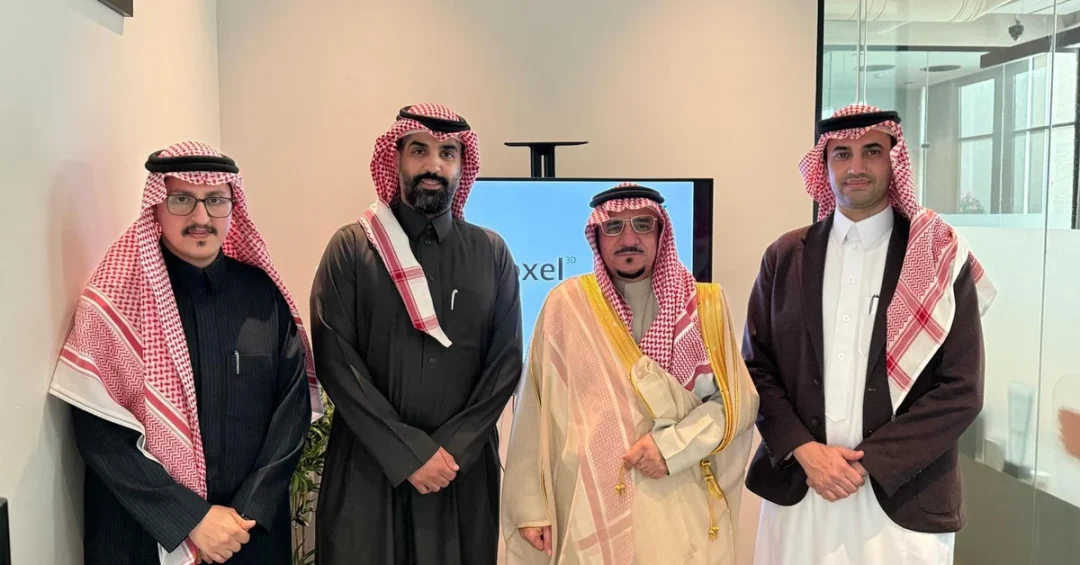
Al-Baha University signed a collaboration agreement on February 27, 2025, to establish a smart laboratory known as a Fab Lab dedicated to the production of minimum viable products (MVPs), according to the Saudi Press Agency (SPA). The new facility will operate under the university’s Incubators and Entrepreneurship Center, providing an advanced environment where entrepreneurs and innovators can design and launch early-stage product prototypes using the latest technologies. The agreement was formalized in Al-Baha with a specialized company, marking a significant step in the university’s efforts to support innovation and emerging projects in the Kingdom’s southern region.
But what does a single laboratory agreement in a regional university tell us about the direction of an entire national economy? For international observers tracking Saudi Arabia’s transformation, the answer lies in the details. The Fab Lab is not merely a workshop; it is a structured pathway from idea to market, embedded within a university ecosystem that is increasingly aligned with the national goals of Vision 2030. By giving innovators the tools to produce MVPs — the first functional versions of a product — the lab lowers one of the most persistent barriers facing young entrepreneurs: the cost and complexity of turning a concept into something tangible that can be tested, refined, and eventually scaled.
Context and Background
Why has the concept of a Fab Lab become such a recurring feature of Saudi Arabia’s innovation landscape? The answer begins with the Kingdom’s broader economic strategy. Under Vision 2030, Saudi Arabia has committed to diversifying its economy away from hydrocarbon dependence, nurturing a knowledge-based private sector, and creating opportunities for young people. Universities have been positioned as central actors in this effort, not just as teaching institutions but as engines of research, commercialization, and enterprise creation. Al-Baha University, located in the Kingdom’s southwestern Al-Baha region, has been steadily expanding its role in this national project.
The university’s Incubators and Entrepreneurship Center serves as the institutional home for the new Fab Lab, meaning the facility is integrated into a structured program of mentorship, business development, and venture support. This is significant because a Fab Lab in isolation — a room full of 3D printers and prototyping equipment — would have limited impact. Embedded within an incubator, however, it becomes part of a continuum that includes training, networking, and access to potential investors. The agreement with a specialized company further signals that the university is seeking technical expertise and industry-grade equipment, rather than building the capability entirely in-house.
It is also worth noting the timing. The agreement was announced as Saudi Arabia continues to invest heavily in research and development, startup ecosystems, and small and medium enterprise growth. The Fab Lab model — pioneered internationally as a network of community-based digital fabrication workshops — has been adapted in Saudi Arabia to serve national innovation priorities, linking grassroots creativity with the infrastructure needed for commercialization.
Key Details of the Agreement
What exactly will the Fab Lab offer to entrepreneurs and innovators? According to the official announcement carried by the Saudi Press Agency, the laboratory aims to provide an advanced environment for supporting innovation and developing emerging projects. Its core function is to enable entrepreneurs and innovators to design and launch MVPs of their products using the latest technologies. An MVP, in product-development terms, is the simplest version of a product that can be released to early users to gather feedback. It is a critical milestone for startups, proving that an idea has practical potential before larger investments are made.
The Fab Lab will be part of Al-Baha University’s Incubators and Entrepreneurship Center, which means participants are likely to benefit from a combination of technical facilities and business support. While the announcement did not specify the exact equipment inventory, Fab Labs internationally typically include digital fabrication tools such as 3D printers, laser cutters, CNC machines, and electronics workstations. The agreement with a specialized company suggests that the laboratory will be equipped and possibly operated with professional input, helping to ensure that the prototypes produced meet real-world standards.
The collaboration also reflects a partnership model that is becoming common in Saudi Arabia: public universities joining with private-sector specialists to deliver services that neither could provide as effectively alone. For Al-Baha University, the agreement strengthens its entrepreneurship offering. For the specialized company, it opens a channel to work with emerging talent and potentially future clients. For students and local innovators, it provides access to capabilities that would otherwise require travel to major urban centers or significant personal expense.
International and Regional Impact
How does a regional university laboratory connect to international conversations about innovation and economic development? Saudi Arabia’s efforts to build a diversified, knowledge-driven economy are closely watched by global investors, multinational companies, and international organizations. Every credible addition to the innovation infrastructure — a Fab Lab, an incubator, a technology transfer office — improves the Kingdom’s standing as a place where ideas can be developed and brought to market. For international partners considering research collaborations, joint ventures, or startup investments, the presence of functioning prototyping facilities at universities is a meaningful signal of ecosystem maturity.
Regionally, the Fab Lab adds to the network of innovation assets being developed across Saudi Arabia. While much attention focuses on major centers such as Riyadh, Jeddah, and the NEOM project, the distribution of capability to regions like Al-Baha is equally important. It supports balanced regional development, a core theme of Vision 2030, and gives talented young people in the south the option to build careers locally rather than migrating to larger cities. Over time, successful regional innovation hubs can attract further investment, create specialized employment, and contribute to a more geographically inclusive economy.
Economic and Strategic Significance
Why should the production of minimum viable products matter to a national economy? MVPs are the bridge between an idea and a business. They allow entrepreneurs to test assumptions with real users, reduce the risk of building products nobody wants, and demonstrate traction to investors. By making MVP production more accessible, the Fab Lab effectively shortens the distance between creativity and commerce. In an economy aiming to generate new sectors and expand private-sector employment, lowering that barrier has cumulative effects: more experiments, more feedback loops, and ultimately more viable companies.
Strategically, the agreement reinforces the role of Saudi universities as instruments of economic policy. They are being asked not only to educate but to commercialize, to incubate, and to connect with industry. Al-Baha University’s collaboration with a specialized company is a practical example of this shift. It also aligns with the national emphasis on small and medium enterprises, which are expected to play a growing role in job creation and GDP contribution. If the Fab Lab helps even a modest number of startups reach the market, it will have justified its establishment many times over.
Vision 2030 Alignment
How does this agreement fit into the larger story of Saudi Arabia’s transformation? Vision 2030 is built on the idea that the Kingdom’s greatest resource is its people, and that their creativity and enterprise should be supported by world-class institutions. The Fab Lab at Al-Baha University directly serves that idea by giving innovators the tools to turn ideas into products. It supports the development of a knowledge-based economy, encourages entrepreneurship, and strengthens the contribution of universities to national development. It also reflects the Vision’s commitment to balanced regional growth, ensuring that opportunity is not concentrated in a few cities.
As Saudi Arabia continues to expand its innovation ecosystem, initiatives like this one will be watched as indicators of progress. The agreement announced by the Saudi Press Agency is a concrete step, but its significance lies in what it enables next: prototypes, startups, skills, and confidence. For a university in the Al-Baha region, that is a meaningful contribution to a national project. For international readers, it is another data point showing that Saudi Arabia’s transformation is being built not only through mega-projects but through institutions, partnerships, and the steady expansion of opportunity across the Kingdom.
20 Questions
Q1. What is the main purpose of the Fab Lab established by Al-Baha University?
A1. The Fab Lab is designed to support innovation and develop emerging projects by enabling entrepreneurs and innovators to design and launch minimum viable products (MVPs) using the latest technologies, according to the Saudi Press Agency.
Q2. When was the collaboration agreement signed?
A2. The agreement was signed on February 27, 2025, in Al-Baha, as reported by the Saudi Press Agency, marking a new step in the university’s entrepreneurship support efforts.
Q3. Which entity will the Fab Lab be part of?
A3. The Fab Lab will be part of Al-Baha University’s Incubators and Entrepreneurship Center, integrating prototyping facilities with business development and mentorship services for emerging projects.
Q4. What is a minimum viable product (MVP)?
A4. An MVP is the simplest functional version of a product that can be released to early users to gather feedback. It helps entrepreneurs test ideas before committing to larger investments.
Q5. Who signed the agreement with Al-Baha University?
A5. Al-Baha University signed the collaboration agreement with a specialized company, according to the Saudi Press Agency. The company will contribute technical expertise and equipment for the smart laboratory.
Q6. Where is Al-Baha University located?
A6. Al-Baha University is located in the Al-Baha region in southwestern Saudi Arabia. The region is known for its natural beauty and is increasingly being integrated into national development efforts.
Q7. Why is the Fab Lab described as ‘smart’?
A7. The lab is described as smart because it uses the latest technologies to support digital fabrication and product development, providing an advanced environment for innovators to design and launch MVPs.
Q8. How does the Fab Lab support entrepreneurs?
A8. It provides access to advanced prototyping tools and an enabling environment where entrepreneurs can develop MVPs, test their ideas, and prepare for market launch, all within a university incubator setting.
Q9. What types of projects might use the Fab Lab?
A9. The lab is open to emerging projects across various fields, though the announcement did not specify sectors. Typically, Fab Labs support technology, engineering, design, and consumer product ventures.
Q10. How does this agreement align with Vision 2030?
A10. It supports Vision 2030 by promoting entrepreneurship, innovation, and a knowledge-based economy. It also advances balanced regional development by bringing advanced facilities to the Al-Baha region.
Q11. What is the role of universities in Saudi Arabia’s innovation strategy?
A11. Saudi universities are expected to educate, conduct research, and commercialize ideas. They serve as engines of enterprise creation, supporting startups and contributing to economic diversification under Vision 2030.
Q12. Will the Fab Lab be open to students only?
A12. The announcement states it is for entrepreneurs and innovators, which may include students, faculty, and community members. The university’s incubator center likely serves a broad range of participants.
Q13. What equipment might the Fab Lab include?
A13. While the announcement did not list equipment, Fab Labs typically feature 3D printers, laser cutters, CNC machines, and electronics tools. The specialized company will likely equip the lab accordingly.
Q14. How does the Fab Lab reduce barriers for startups?
A14. By providing access to expensive prototyping technology and expert guidance, the lab lowers the cost and complexity of producing MVPs, allowing startups to test ideas without large upfront investments.
Q15. What economic benefits could result from the Fab Lab?
A15. It could lead to more startups, new products, job creation, and a stronger local innovation ecosystem. Over time, successful ventures can attract investment and contribute to regional economic growth.
Q16. Is this the first Fab Lab in Saudi Arabia?
A16. The announcement does not state whether it is the first. Fab Labs exist in various forms globally and in Saudi Arabia, but this is a new addition at Al-Baha University.
Q17. How does the Fab Lab support regional development?
A17. By locating advanced innovation infrastructure in Al-Baha, it gives local talent the opportunity to build projects and careers without migrating to major cities, supporting balanced regional growth.
Q18. What is the significance of the partnership with a specialized company?
A18. It brings industry expertise and technical resources to the university, ensuring the lab is equipped and operated to professional standards, and creating a bridge between academia and the private sector.
Q19. What should international observers take from this announcement?
A19. It shows Saudi Arabia’s innovation strategy is broad-based, extending beyond major cities. Universities are being equipped to support startups, signaling a maturing ecosystem and opportunities for global collaboration.
Q20. What are the next steps after the agreement?
A20. The next steps likely include equipping the lab, launching programs for entrepreneurs, and beginning MVP production. The university’s Incubators and Entrepreneurship Center will manage operations and outreach.
Reader Feedback
We value your thoughts. Please share your feedback on this article.
Your feedback helps us improve our coverage.
Related articles
 53 Islamic Nations Approve Riyadh Charter for AI
 Jazan’s Quail: Symbol of Migration, Source of Sustenance
 Saudi Arabia Prepares to Host Historic GRC Annual Meeting in Riyadh
 Tarshid Launches Solar PV Project at Qassim University
 stc Group Boosts Two Holy Mosques Connectivity by Over 120%
 Saudi Arabia Selects 40 Students for ISEF 2025