


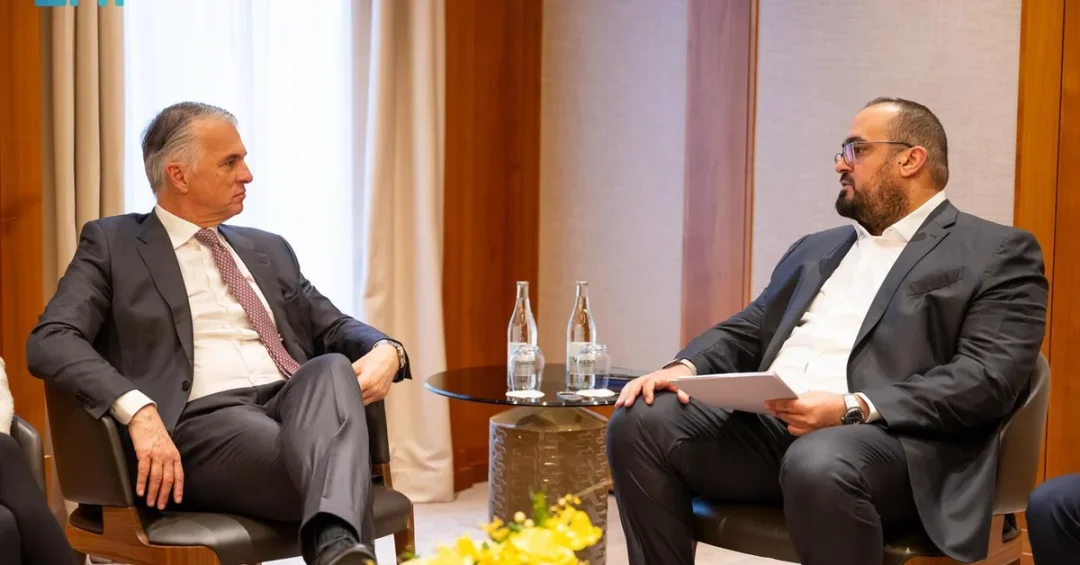
Saudi Minister of Economy and Planning Faisal Alibrahim met with senior leaders from Switzerland’s private sector during an official visit to the country, the Saudi Press Agency reported on February 27, 2025. The discussions focused on investment opportunities between the Kingdom and Switzerland and reviewed the latest advancements in technology, innovation, and artificial intelligence applications, according to the official SPA announcement. The minister also toured leading Swiss technology and innovation hubs to explore potential areas of cooperation, underscoring Riyadh’s commitment to deepening international economic partnerships under Vision 2030.
The visit reflects Saudi Arabia’s broader strategy of engaging with advanced economies to attract foreign investment, transfer knowledge, and build capabilities in high-growth sectors. Switzerland, home to some of the world’s most sophisticated technology companies, financial institutions, and research centers, represents a natural partner for the Kingdom as it diversifies its economy away from hydrocarbons. The meetings signal that Saudi Arabia is not waiting for global investors to come to the Kingdom; it is actively going to them, presenting concrete opportunities and building relationships at the highest levels of government and business.
Context and Background
Why does a single ministerial visit to Switzerland matter in the broader picture of Saudi Arabia’s economic transformation? The answer lies in the scale of the Kingdom’s ambitions and the speed at which it is moving to realize them. Under Vision 2030, launched in 2016 by Crown Prince Mohammed bin Salman, Saudi Arabia has committed to diversifying its economy, boosting the private sector’s contribution to GDP, and becoming a global hub for technology, tourism, and investment. The Ministry of Economy and Planning, led by Faisal Alibrahim, plays a central role in translating that vision into measurable economic outcomes.
Switzerland has long been a key European partner for the Kingdom. Bilateral trade has grown steadily, and Swiss companies are active in Saudi Arabia across sectors including pharmaceuticals, engineering, finance, and manufacturing. The visit builds on a series of high-level engagements between the two countries, including discussions on trade agreements, investment protection, and collaboration in research and development. By meeting directly with private sector leaders, Alibrahim is signaling that Saudi Arabia values the role of business in shaping economic policy and that the Kingdom is open to partnerships that bring both capital and expertise.
The timing of the visit is also significant. Global competition for foreign direct investment has intensified, and countries are racing to position themselves as leaders in AI, clean energy, and advanced manufacturing. Saudi Arabia’s National Investment Strategy aims to attract over $100 billion in annual FDI by 2030, and Europe is a priority source market. Switzerland’s reputation for precision, innovation, and financial stability makes it an ideal partner for the Kingdom as it builds new economic clusters, from NEOM to Riyadh’s growing tech ecosystem.
Key Details of the Ministerial Visit
During his visit, Alibrahim held meetings with several senior leaders from Switzerland’s private sector, according to the Saudi Press Agency. The discussions covered investment opportunities in Saudi Arabia and reviewed the latest advancements in technology, innovation, and AI applications. The minister also visited leading technology and innovation hubs, exploring potential areas of cooperation that could support the Kingdom’s economic diversification agenda.
While the SPA report did not name specific companies or disclose the full agenda, the focus on AI and innovation aligns with Saudi Arabia’s National Strategy for Data and AI, which aims to position the Kingdom among the top global leaders in the field by 2030. The strategy includes investments in data infrastructure, talent development, and regulatory frameworks designed to attract global technology firms. Meetings with Swiss private sector leaders likely touched on how Swiss expertise in robotics, precision engineering, and financial technology could complement Saudi Arabia’s growing capabilities.
The visit also reflects the Ministry of Economy and Planning’s role in coordinating with international partners to support the Kingdom’s economic goals. The ministry works closely with the Ministry of Investment, the Public Investment Fund, and other agencies to create a business-friendly environment and identify opportunities for collaboration. By engaging directly with Swiss business leaders, Alibrahim is helping to build the personal and institutional relationships that underpin successful international partnerships.
International and Regional Impact
How does Saudi Arabia’s outreach to Switzerland fit into a wider geopolitical and economic context? The Kingdom is pursuing a multi-aligned foreign policy that prioritizes economic cooperation with both traditional allies and emerging powers. Europe, with its advanced technology and large consumer markets, is a key pillar of that strategy. Switzerland, though not an EU member, is a global hub for finance, pharmaceuticals, and innovation, making it a valuable partner in its own right.
The visit also comes amid broader regional dynamics, including Saudi Arabia’s efforts to attract investment from Asia, Europe, and the Americas. The Kingdom’s economic reforms have made it easier to do business, with streamlined regulations, new investment laws, and special economic zones. For Swiss companies, Saudi Arabia offers access not only to a growing domestic market but also to a strategic location that connects three continents. The meetings in Switzerland may pave the way for new joint ventures, technology transfer agreements, and investment flows that benefit both economies.
From a regional perspective, Saudi Arabia’s engagement with Switzerland sends a positive signal to other European investors. It demonstrates that the Kingdom is serious about building long-term partnerships and that its economic transformation is open to global participation. As the largest economy in the Middle East, Saudi Arabia’s success in diversifying its economy will have ripple effects across the region, creating opportunities for trade, investment, and collaboration.
Economic and Strategic Significance
What concrete economic benefits could arise from this visit? For Saudi Arabia, the primary goal is to attract foreign investment and expertise that can accelerate the growth of non-oil sectors. Switzerland is home to multinational corporations with significant research and development budgets, and partnerships with these firms could help Saudi Arabia build local capabilities in areas such as AI, advanced manufacturing, and financial services. The Kingdom has already established dedicated zones and incentive packages for technology companies, and Swiss firms could take advantage of these offerings.
For Switzerland, Saudi Arabia represents a large and growing market with a young population, rising incomes, and ambitious infrastructure projects. Swiss companies in engineering, healthcare, and finance have already found success in the Kingdom, and the visit could open doors to new sectors such as renewable energy, smart cities, and digital payments. The exchange of technology and innovation is a two-way street: Saudi Arabia offers capital and market access, while Switzerland offers know-how and global networks.
Strategically, the visit reinforces Saudi Arabia’s position as a reliable and attractive destination for international business. It also supports the Kingdom’s efforts to diversify its diplomatic and economic ties, reducing reliance on any single region or sector. By engaging with Swiss private sector leaders, Alibrahim is helping to build a more resilient and interconnected economy that can weather global shocks and seize new opportunities.
Vision 2030 Alignment
How does this visit connect to the long-term goals of Vision 2030? The Vision aims to transform Saudi Arabia into a diversified, innovation-driven economy, with a thriving private sector and a prominent role in global trade and investment. The meetings with Swiss private sector leaders directly support several Vision 2030 objectives, including increasing foreign direct investment, boosting non-oil exports, and developing a knowledge-based economy. The focus on AI and technology aligns with the National Strategy for Data and AI, which seeks to make Saudi Arabia a global leader in these fields.
Moreover, the visit exemplifies the Kingdom’s proactive approach to international engagement. Rather than waiting for opportunities to arise, Saudi leaders are actively seeking out partners who can contribute to the Vision’s realization. The Ministry of Economy and Planning’s work in this area is complemented by the efforts of other government entities, such as the Ministry of Investment and the Public Investment Fund, which are also building bridges with global businesses.
As Saudi Arabia continues its journey toward 2030, visits like this one will be remembered as important steps in building the international partnerships that underpin its economic transformation. The Kingdom’s relationship with Switzerland, strengthened by these high-level meetings, is poised to grow in the years ahead, delivering benefits for both nations and contributing to a more prosperous and interconnected world.
20 Questions
Q1. Who did Saudi Minister of Economy and Planning Faisal Alibrahim meet during his visit to Switzerland?
A1. He met with several senior leaders from Switzerland’s private sector to discuss investment opportunities and review advancements in technology, innovation, and AI applications, as reported by the Saudi Press Agency.
Q2. When did the visit take place?
A2. The visit took place in late February 2025, with the Saudi Press Agency reporting on the meetings on February 27, 2025.
Q3. What were the main topics discussed?
A3. The discussions focused on investment opportunities between Saudi Arabia and Switzerland, as well as the latest advancements in technology, innovation, and artificial intelligence applications.
Q4. Which technology hubs did the minister visit?
A4. The SPA report did not specify the names of the technology and innovation hubs, but noted that the minister visited leading hubs to explore potential areas of cooperation.
Q5. Why is Switzerland an important partner for Saudi Arabia?
A5. Switzerland is a global leader in technology, finance, and innovation, making it a valuable partner for Saudi Arabia as it seeks to diversify its economy and attract foreign investment under Vision 2030.
Q6. How does this visit support Vision 2030?
A6. The visit supports Vision 2030 by promoting foreign direct investment, technology transfer, and collaboration in high-growth sectors such as AI, which are key to economic diversification.
Q7. What is the role of the Ministry of Economy and Planning in Saudi Arabia?
A7. The ministry is responsible for formulating and implementing economic policies, coordinating national development plans, and supporting the goals of Vision 2030, including economic diversification and private sector growth.
Q8. What are some areas of potential cooperation between Saudi Arabia and Switzerland?
A8. Potential areas include artificial intelligence, technology innovation, financial services, advanced manufacturing, and research and development, among others.
Q9. How does this visit fit into Saudi Arabia’s broader investment strategy?
A9. It is part of Saudi Arabia’s National Investment Strategy, which aims to attract over $100 billion in annual foreign direct investment by 2030, with Europe as a priority source market.
Q10. What benefits could Swiss companies gain from investing in Saudi Arabia?
A10. Swiss companies could access a large and growing market, benefit from incentives in special economic zones, and participate in major infrastructure and technology projects linked to Vision 2030.
Q11. What is the significance of AI in Saudi Arabia’s economic plans?
A11. AI is a cornerstone of Saudi Arabia’s National Strategy for Data and AI, which aims to position the Kingdom among the top global leaders in the field by 2030, driving innovation and economic growth.
Q12. Did the visit result in any specific agreements?
A12. The SPA report did not mention any specific agreements, but the meetings were part of ongoing efforts to build relationships and explore cooperation opportunities.
Q13. How does Saudi Arabia’s engagement with Switzerland compare to its outreach to other countries?
A13. Saudi Arabia engages with a wide range of countries to attract investment and expertise. Switzerland is a key European partner, and this visit reflects the Kingdom’s multi-aligned approach to international economic cooperation.
Q14. What are the key sectors of Swiss investment in Saudi Arabia?
A14. Swiss investments in Saudi Arabia span pharmaceuticals, engineering, finance, manufacturing, and technology, among other sectors.
Q15. How does the visit reflect Saudi Arabia’s economic reforms?
A15. The visit showcases Saudi Arabia’s improved business environment, including streamlined regulations, new investment laws, and special economic zones designed to attract global companies.
Q16. What is the expected impact of the visit on bilateral trade?
A16. The visit is expected to strengthen bilateral trade and investment ties by facilitating dialogue and identifying new opportunities for collaboration between Saudi and Swiss businesses.
Q17. Who is Faisal Alibrahim?
A17. Faisal Alibrahim is the Saudi Minister of Economy and Planning, responsible for overseeing the Kingdom’s economic policies and development plans in line with Vision 2030.
Q18. How does the visit align with Saudi Arabia’s regional role?
A18. It reinforces Saudi Arabia’s position as a leading economy in the Middle East and its commitment to fostering regional prosperity through international partnerships.
Q19. What message does this visit send to global investors?
A19. It signals that Saudi Arabia is open for business, actively seeking partnerships, and committed to creating a favorable environment for foreign investment and innovation.
Q20. What are the next steps following the visit?
A20. The next steps likely involve follow-up meetings, potential agreements, and continued engagement between Saudi and Swiss stakeholders to turn discussions into concrete projects and investments.
Reader Feedback
We value your thoughts. Please share your feedback on this article.
Your feedback helps us improve our coverage.
Related articles
 Makkah Halal Forum Concludes, Reaffirming Saudi Role
 Saudi Finance Minister Concludes G20 Meeting in Cape Town
 SFD Concludes Participation in 5th Finance in Common Summit
 ZATCA Offers ZAKATY Service for Eighth Year
 Saudi Dates Surpass 1.9 Million Tons, Lead Ramadan Food Scene
 Monshaat Reports 67% Surge in Saudi Commercial Registrations