


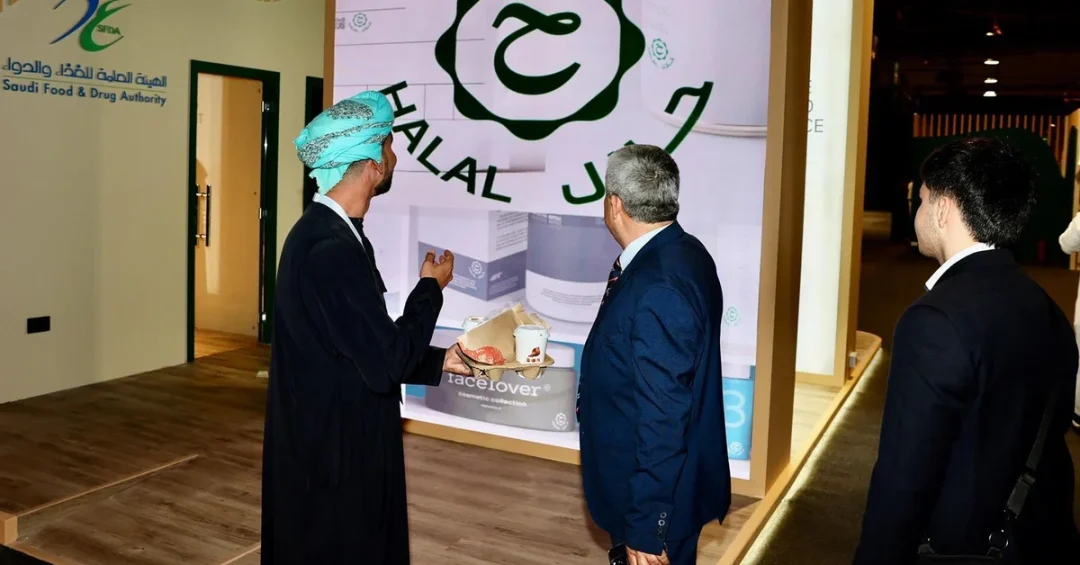
The Makkah Halal Forum concluded on February 28, 2025, after three days of deliberations held from February 25 to 27 at the Makkah Chamber for Exhibitions and Events Center under the theme “Sustainable Development through Halal.” The forum, organized by the Makkah Chamber of Commerce and Industry, brought together policymakers, industry leaders, and international stakeholders to chart a forward-looking course for the global halal economy. Its closing recommendations reaffirmed Saudi Arabia’s leading role in the Islamic economy and underscored the Kingdom’s commitment to becoming the world’s foremost halal hub, in direct alignment with Saudi Vision 2030. Could this gathering mark a turning point for the global halal industry?
The event served as a platform for strategic dialogue on innovation, quality assurance, and cross-border partnerships. It highlighted the halal sector’s potential to drive sustainable development, not only in Saudi Arabia but across international markets. With the global halal market projected to reach trillions of dollars in the coming years, the forum positioned the Kingdom at the center of this expanding economic frontier. The recommendations issued at the close of the forum emphasized the necessity for strategic innovation in a diverse market and the forum’s position as a catalyst for global halal opportunities. This aligns with Saudi Arabia’s broader economic diversification goals and its ambition to lead in Islamic finance, food security, and ethical trade.
Context and Background
What makes the Makkah Halal Forum a pivotal event in the Islamic economic calendar? The forum was held under the patronage of the Makkah Chamber of Commerce and Industry, a key institution in the Kingdom’s commercial landscape. It convened experts, government officials, and business leaders to address the evolving demands of the halal industry, which encompasses food, cosmetics, pharmaceuticals, logistics, and Islamic finance. The theme “Sustainable Development through Halal” reflects a growing recognition that halal principles—rooted in ethical sourcing, animal welfare, and social responsibility—are intrinsically aligned with global sustainability goals. This convergence offers a unique opportunity for Saudi Arabia to showcase its leadership in both Islamic tradition and modern innovation.
The timing of the forum is significant. As the global halal market continues to expand, driven by a growing Muslim population and increasing demand for ethically produced goods, Saudi Arabia has positioned itself as a natural leader. The Kingdom’s strategic location, spiritual significance, and economic weight provide a solid foundation for this role. Moreover, the forum built on previous initiatives, such as the Saudi Halal Center and the Makkah Region Development Strategy, which aim to streamline certification processes and enhance the credibility of Saudi halal products worldwide. By hosting this forum in Makkah, organizers underscored the city’s status as a global hub for Islamic commerce and culture, further reinforcing the Kingdom’s soft power.
The event also reflected the broader objectives of Saudi Vision 2030, which seeks to diversify the economy away from oil dependence and into high-value sectors. The halal industry, with its vast export potential and capacity to attract foreign investment, fits squarely within this vision. As the Kingdom continues to develop mega-projects and enhance its business environment, the halal sector stands out as a low-hanging fruit that can yield substantial returns. The forum’s outcomes are expected to inform future policies and initiatives, ensuring that Saudi Arabia remains at the forefront of the halal economy.
Key Details and Forum Outcomes
What specific commitments emerged from the three-day deliberations? The forum concluded with a set of recommendations that underscored Saudi Arabia’s leading role in the Islamic economy and its key contribution to the halal industry. Participants committed to advancing the halal sector by fostering innovation, strengthening global partnerships for economic growth, and achieving Vision 2030’s goal of establishing the Kingdom as the world’s leading halal hub. The recommendations emphasized the need for strategic innovation to cater to a diverse and dynamic market, ensuring that halal products and services meet the highest standards of quality and trust.
The forum also highlighted the importance of collaboration between the public and private sectors. It called for the development of integrated supply chains, the adoption of digital technologies for traceability, and the harmonization of halal standards across borders. These measures are intended to boost consumer confidence and facilitate trade. Additionally, the forum served as a networking platform, enabling Saudi businesses to forge partnerships with international counterparts. Such collaborations are expected to open new markets for Saudi halal products, from food and beverages to cosmetics and pharmaceuticals.
Furthermore, the event showcased Saudi Arabia’s commitment to sustainability. By linking halal principles with sustainable development, the forum positioned the Kingdom as a responsible global player. This alignment not only enhances the marketability of Saudi products but also contributes to the global effort to achieve the United Nations Sustainable Development Goals. The forum’s emphasis on sustainability is likely to resonate with environmentally conscious consumers worldwide, further expanding the reach of Saudi halal exports.
International and Regional Impact
How will the forum’s outcomes reverberate beyond Saudi Arabia’s borders? The Makkah Halal Forum reinforced the Kingdom’s role as a bridge between Islamic and global markets. By bringing together international stakeholders, it facilitated dialogue and cooperation that can lead to increased trade and investment flows. Regional economies, particularly those in the Gulf Cooperation Council and the broader Middle East, stand to benefit from enhanced halal trade corridors and shared standards. Saudi Arabia’s leadership in this area can help unify efforts across the Islamic world, creating a more cohesive and competitive halal market.
On the global stage, the forum sent a clear message that Saudi Arabia is open for business and committed to ethical trade. This is particularly important as the world recovers from economic disruptions and seeks new engines of growth. The halal industry, with its resilience and universal appeal, offers a promising avenue for economic diversification and job creation. By championing the halal sector, Saudi Arabia is not only serving the interests of Muslims but also contributing to global food security and sustainable development. The forum’s success is likely to attract further international attention and participation in future editions, cementing Makkah’s status as a premier destination for Islamic business events.
Economic and Strategic Significance
What does the halal economy mean for Saudi Arabia’s economic future? The global halal market is estimated to be worth over two trillion US dollars and is growing steadily. For Saudi Arabia, capturing a larger share of this market is a strategic imperative. The Kingdom already has a strong base in Islamic finance and halal food production, but there is significant room for expansion in areas such as halal tourism, pharmaceuticals, and logistics. The Makkah Halal Forum provided a roadmap for tapping into these opportunities by identifying barriers and proposing solutions.
Strategically, the halal sector supports Vision 2030’s goals of economic diversification and non-oil revenue generation. It also complements other initiatives, such as the National Industrial Development and Logistics Program, which aims to make Saudi Arabia a global logistics hub. By integrating halal standards into its industrial and trade policies, the Kingdom can enhance the competitiveness of its exports and attract foreign direct investment. Moreover, the halal economy is labor-intensive, offering employment opportunities for Saudi youth and contributing to social stability. The forum’s recommendations will feed into policy-making, ensuring that the halal sector receives the attention and resources it deserves.
Vision 2030 Alignment
How does the Makkah Halal Forum advance Saudi Vision 2030? The forum’s outcomes are directly aligned with the Vision’s objective of establishing Saudi Arabia as the world’s leading halal hub. This ambition is not merely symbolic; it is backed by concrete actions, such as the establishment of the Saudi Halal Center, the development of halal industrial zones, and the promotion of Saudi halal brands globally. The forum served as a catalyst, bringing together stakeholders to accelerate progress and ensure that the Kingdom remains at the cutting edge of the halal industry.
As Saudi Arabia continues its journey toward a diversified and sustainable economy, the halal sector will play an increasingly important role. The Makkah Halal Forum demonstrated that the Kingdom is not only preserving its Islamic heritage but also leveraging it for economic gain. By fostering innovation, quality, and global trust in Saudi products, the forum has set the stage for a new era of growth and prosperity. The recommendations will guide future efforts, ensuring that Saudi Arabia’s leadership in the Islamic economy is both enduring and transformative. In the years to come, the world will look to Makkah not only as a spiritual center but also as a dynamic hub of halal commerce and innovation.
20 Questions
Q1. What was the theme of the Makkah Halal Forum 2025?
A1. The forum was held under the theme “Sustainable Development through Halal,” reflecting the intersection of halal principles and sustainability goals.
Q2. Where and when did the Makkah Halal Forum take place?
A2. It took place from February 25 to 27, 2025, at the Makkah Chamber for Exhibitions and Events Center in Makkah, Saudi Arabia.
Q3. Who organized the Makkah Halal Forum?
A3. The forum was organized by the Makkah Chamber of Commerce and Industry, a key institution supporting business development in the region.
Q4. What were the main recommendations of the forum?
A4. Recommendations underscored Saudi Arabia’s leading role in the Islamic economy, the need for strategic innovation, and the forum’s position as a catalyst for global halal opportunities.
Q5. How does the forum align with Saudi Vision 2030?
A5. It supports Vision 2030’s goal of establishing Saudi Arabia as the world’s leading halal hub, driven by innovation, quality, and global trust in Saudi products.
Q6. What is the significance of the halal industry for Saudi Arabia’s economy?
A6. The halal industry offers vast export potential, attracts foreign investment, and contributes to economic diversification, aligning with Vision 2030’s non-oil revenue goals.
Q7. What sectors does the halal industry encompass?
A7. It includes food and beverages, cosmetics, pharmaceuticals, logistics, Islamic finance, and tourism, among others.
Q8. How does the forum promote sustainability?
A8. By linking halal principles—such as ethical sourcing and social responsibility—with sustainable development, the forum promotes environmentally and socially responsible practices.
Q9. What role does innovation play in the halal sector?
A9. Innovation is crucial for meeting diverse market demands, improving traceability, and enhancing the competitiveness of halal products and services globally.
Q10. How does the forum strengthen global partnerships?
A10. It provides a platform for international stakeholders to collaborate, share best practices, and forge business partnerships that enhance trade and investment in the halal sector.
Q11. What is the expected impact of the forum on Saudi exports?
A11. The forum is expected to boost Saudi halal exports by enhancing quality standards, building trust, and opening new markets for Saudi products.
Q12. How does the forum support small and medium enterprises?
A12. By facilitating networking and knowledge exchange, the forum helps SMEs access global markets and integrate into international halal supply chains.
Q13. What is the Saudi Halal Center’s role?
A13. The Saudi Halal Center develops and promotes halal standards, certifies products, and enhances the credibility of Saudi halal goods worldwide.
Q14. How does the forum address consumer trust?
A14. Through discussions on harmonizing standards, ensuring traceability, and promoting transparency, the forum aims to build and maintain consumer trust in halal products.
Q15. What are the economic benefits of the halal industry for Saudi Arabia?
A15. It creates jobs, attracts investment, diversifies revenue streams, and positions Saudi Arabia as a leader in the global Islamic economy.
Q16. How does the forum contribute to Islamic solidarity?
A16. By uniting stakeholders from various Islamic countries, the forum fosters cooperation and shared economic interests, strengthening ties within the Islamic world.
Q17. What is the projected growth of the global halal market?
A17. The global halal market is projected to continue growing, driven by increasing Muslim populations and demand for ethical, halal-certified products.
Q18. How does the forum support women and youth in the halal sector?
A18. By highlighting opportunities for entrepreneurship and employment, the forum encourages participation of women and youth in the growing halal economy.
Q19. What role does technology play in the halal industry?
A19. Technology enhances traceability, certification processes, and supply chain efficiency, ensuring halal integrity and boosting consumer confidence.
Q20. What is the future outlook for Saudi Arabia’s halal hub ambitions?
A20. With continued government support and private sector engagement, Saudi Arabia is well-positioned to become the world’s leading halal hub, driving innovation and global trust.
Reader Feedback
We value your thoughts. Please share your feedback on this article.
Your feedback helps us improve our coverage.
Related articles
 Saudi Finance Minister Concludes G20 Meeting in Cape Town
 SFD Concludes Participation in 5th Finance in Common Summit
 ZATCA Offers ZAKATY Service for Eighth Year
 Saudi Dates Surpass 1.9 Million Tons, Lead Ramadan Food Scene
 Monshaat Reports 67% Surge in Saudi Commercial Registrations
 ICIEC, ITFC Sign Letter of Credit Insurance Policy