


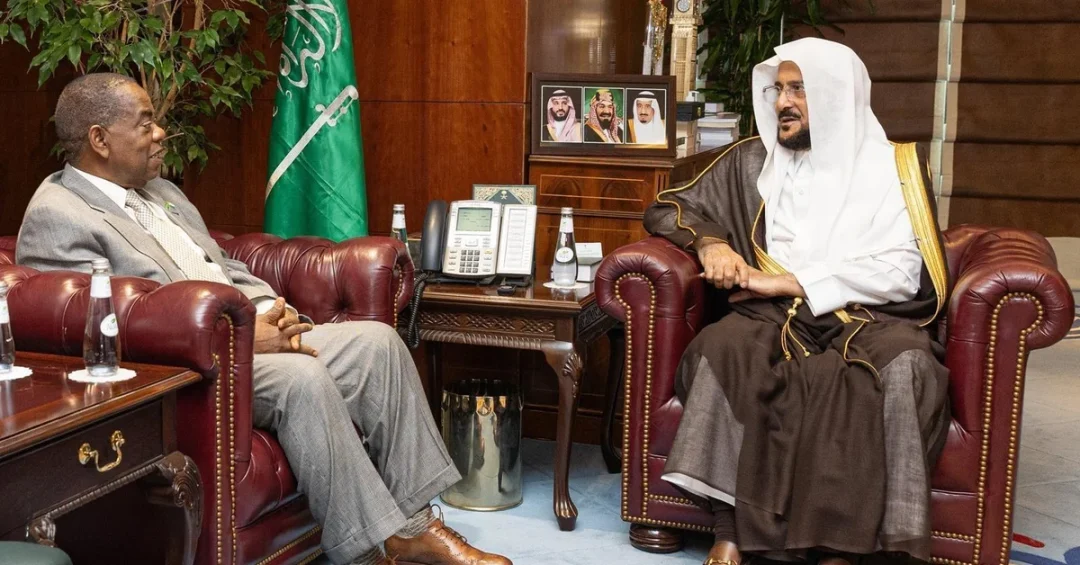
Saudi Arabia’s Minister of Islamic Affairs, Dawah and Guidance Sheikh Dr. Abdullatif Al Alsheikh received Sierra Leone’s Ambassador to the Kingdom, Mohammed S. Barrie, at the ministry’s headquarters in Riyadh on July 27, 2026, where the two sides discussed ways to strengthen cooperation in Islamic affairs and dawah. The meeting, reported by the Saudi Press Agency, underscored the Kingdom’s continuing commitment to building constructive partnerships with African nations across religious, cultural, and diplomatic spheres. Both officials explored avenues for deeper collaboration between the ministry and relevant authorities in Sierra Leone, with a particular focus on religious education, dawah activities, and support for Muslim communities.
The encounter reflects a broader pattern of Saudi engagement with West African states, where the Kingdom has long been a trusted partner in religious affairs and humanitarian outreach. Sierra Leone, a nation of approximately eight million people with a significant Muslim population, maintains warm relations with Riyadh that extend across multiple sectors. The ambassador’s visit to the ministry headquarters signals continued momentum in a relationship rooted in shared Islamic values and mutual respect. How does such sustained engagement shape the lives of ordinary Muslims in West Africa? The answer lies in the practical programs, exchanges, and support mechanisms that flow from these high-level discussions.
Context and Background
The meeting between Sheikh Dr. Abdullatif Al Alsheikh and Ambassador Mohammed S. Barrie took place within a well-established framework of Saudi-Sierra Leonean relations that has deepened over decades. The Ministry of Islamic Affairs, Dawah and Guidance, headed by Sheikh Dr. Al Alsheikh, oversees a vast portfolio that includes mosques, Islamic centers, dawah activities, and coordination with Muslim communities worldwide. Its mandate extends beyond Saudi borders, reflecting the Kingdom’s historic role as a custodian of Islamic heritage and a facilitator of religious cooperation across continents.
Sierra Leone has maintained diplomatic ties with the Kingdom since the 1960s, and those relations have expanded significantly in recent years. The West African nation, where Muslims constitute roughly 78 percent of the population, benefits from Saudi support in various forms, including religious education, mosque construction, and participation in Hajj and Umrah programs. The ambassador’s commendation of the Kingdom’s efforts in serving Islam and Muslims highlights the tangible impact of these initiatives on Sierra Leonean communities. What drives a small West African nation to seek deeper religious cooperation with Saudi Arabia? The answer lies in shared faith, mutual respect, and the Kingdom’s proven track record of supporting Muslim communities globally without political preconditions.
The timing of the meeting is notable. It comes as Saudi Arabia continues to expand its diplomatic and religious outreach across Africa, a continent where the Kingdom has invested heavily in recent years through the Saudi Fund for Development, the Organization of Islamic Cooperation, and bilateral agreements. Sierra Leone, strategically located on the Atlantic coast, serves as a gateway to the broader West African region. The discussions in Riyadh therefore carry significance beyond the bilateral relationship, potentially signaling expanded Saudi engagement with Muslim communities throughout the subregion.
Key Details of the Riyadh Meeting
During the meeting, Sheikh Dr. Al Alsheikh and Ambassador Barrie discussed several issues of mutual interest, with a focus on strengthening cooperation between the Ministry of Islamic Affairs, Dawah and Guidance and relevant authorities in Sierra Leone. The conversation centered on Islamic affairs and dawah, areas where the ministry has extensive expertise and institutional capacity. The two officials explored practical mechanisms for collaboration, including training programs for imams and religious teachers, the distribution of religious materials, and support for Islamic educational institutions.
The ambassador specifically commended the Kingdom’s efforts in serving Islam and Muslims, its care for pilgrims performing Hajj and Umrah, and its hosting of Sierra Leonean pilgrims under the Custodian of the Two Holy Mosques’ Guests Program for Hajj, Umrah, and Visit. This program, a flagship initiative of Saudi Arabia’s leadership, enables Muslims from around the world to perform pilgrimage at the Kingdom’s expense, reflecting the nation’s commitment to facilitating religious obligations for those who might otherwise be unable to afford them. For Sierra Leonean Muslims, participation in this program represents both a spiritual privilege and a tangible expression of Saudi generosity.
The meeting also provided an opportunity to review ongoing cooperation and identify new areas for partnership. Both sides expressed satisfaction with the current state of relations and a shared desire to expand collaboration in the years ahead. The discussion reflected the ministry’s broader strategy of engaging with Muslim-majority nations to promote moderate Islam, counter extremism, and support sustainable development through religious and educational channels. What concrete outcomes might emerge from such diplomatic engagements? They range from scholarship opportunities for Sierra Leonean students to joint dawah initiatives and the exchange of expertise in religious education and mosque management.
International and Regional Impact
The meeting between Saudi Arabia’s Islamic Affairs Minister and Sierra Leone’s Ambassador carries implications that extend beyond the bilateral relationship. In West Africa, where several nations grapple with religious extremism and social instability, Saudi Arabia’s promotion of moderate Islam and its support for religious education serve as stabilizing forces. By partnering with Sierra Leone, the Kingdom reinforces a model of religious cooperation that emphasizes tolerance, peaceful coexistence, and respect for established traditions. This approach contrasts sharply with the narratives of extremist groups that seek to exploit religious sentiment for violent ends.
Regionally, the discussions in Riyadh align with Saudi Arabia’s broader Africa strategy, which has gained momentum under Vision 2030. The Kingdom has increasingly looked to Africa for economic partnerships, investment opportunities, and diplomatic alliances. Religious diplomacy, led by the Ministry of Islamic Affairs, complements these efforts by building goodwill and people-to-people connections. For Sierra Leone, the relationship with Saudi Arabia offers access to resources, expertise, and international platforms that support its own development goals. How do these religious and diplomatic ties translate into tangible benefits for both nations? Through scholarships, infrastructure support, pilgrimage facilitation, and the strengthening of Islamic institutions that serve communities at the grassroots level.
The international dimension is equally significant. Saudi Arabia’s role as a global leader in Islamic affairs means that its partnerships with African nations are watched closely by other Muslim-majority countries and international organizations. The Kingdom’s emphasis on moderation and its rejection of extremism resonate with global efforts to promote religious tolerance and counter radicalization. By hosting Sierra Leonean pilgrims and supporting Islamic education in the country, Saudi Arabia demonstrates a model of religious leadership that prioritizes service over politics and cooperation over confrontation.
Economic and Strategic Significance
While the meeting focused primarily on religious affairs and dawah, its economic and strategic dimensions should not be overlooked. Saudi-Sierra Leonean relations encompass trade, investment, and development cooperation that complement religious ties. The Kingdom has provided development assistance to Sierra Leone through the Saudi Fund for Development, supporting infrastructure projects in sectors such as energy, water, and transportation. These investments create economic opportunities and improve living standards, reinforcing the positive image of Saudi Arabia among Sierra Leonean citizens.
Strategically, Sierra Leone occupies a position of importance on the West African coast, with proximity to major shipping routes and growing regional markets. As Saudi Arabia expands its global economic footprint under Vision 2030, partnerships with African nations like Sierra Leone contribute to the diversification of the Kingdom’s international engagements. The religious dimension of the relationship provides a foundation of trust and shared values that facilitates cooperation in other areas, from trade to cultural exchange. What makes religious diplomacy such an effective tool for building broader partnerships? It creates authentic connections based on faith and mutual respect, opening doors for collaboration that might otherwise remain closed.
The meeting also reflects the Kingdom’s commitment to supporting Muslim communities worldwide as part of its leadership role in the Islamic world. This commitment is not merely symbolic; it involves substantial financial resources, institutional capacity, and diplomatic effort. By investing in religious education, pilgrimage facilitation, and dawah activities in Sierra Leone, Saudi Arabia strengthens the fabric of Muslim society in the country and reinforces the bonds of Islamic solidarity that transcend geography and politics.
Vision 2030 Alignment
The meeting between Sheikh Dr. Abdullatif Al Alsheikh and Ambassador Mohammed S. Barrie aligns closely with the objectives of Saudi Vision 2030, the Kingdom’s comprehensive transformation plan. Vision 2030 emphasizes the importance of international cooperation, cultural exchange, and the promotion of Saudi Arabia’s role as a global leader in Islamic affairs. The Ministry of Islamic Affairs, Dawah and Guidance plays a vital role in this effort by building bridges with Muslim communities worldwide and showcasing the Kingdom’s commitment to moderation, tolerance, and service to Islam.
Under Vision 2030, Saudi Arabia has sought to strengthen its ties with African nations through economic, cultural, and religious initiatives. The Kingdom’s hosting of Sierra Leonean pilgrims under the Custodian of the Two Holy Mosques’ Guests Program exemplifies the humanitarian and spiritual dimensions of this outreach. As the Kingdom continues its transformation, partnerships like the one discussed in Riyadh will remain essential to achieving the vision’s goals of global engagement, cultural diplomacy, and the promotion of Saudi Arabia as a beacon of Islamic leadership. What does the future hold for Saudi-Sierra Leonean relations? Continued cooperation, expanded programs, and a shared commitment to serving Islam and Muslims will define a relationship that grows stronger with each passing year.
20 Questions
Q1. Who received Sierra Leone’s Ambassador to Saudi Arabia in Riyadh?
A1. Minister of Islamic Affairs, Dawah and Guidance Sheikh Dr. Abdullatif Al Alsheikh received Ambassador Mohammed S. Barrie at the ministry’s headquarters in Riyadh on July 27, 2026.
Q2. What was the main purpose of the meeting between the Saudi minister and the Sierra Leonean ambassador?
A2. The two sides discussed issues of mutual interest and explored ways to strengthen cooperation between the ministry and relevant authorities in Sierra Leone, particularly in Islamic affairs and dawah.
Q3. What did the ambassador commend Saudi Arabia for during the meeting?
A3. Ambassador Barrie commended the Kingdom’s efforts in serving Islam and Muslims, its care for pilgrims performing Hajj and Umrah, and its hosting of Sierra Leonean pilgrims.
Q4. What is the Custodian of the Two Holy Mosques’ Guests Program?
A4. It is a flagship Saudi initiative that hosts pilgrims from around the world for Hajj, Umrah, and Visit at the Kingdom’s expense, reflecting Saudi generosity and commitment to facilitating religious obligations.
Q5. How many Muslims live in Sierra Leone?
A5. Muslims constitute approximately 78 percent of Sierra Leone’s population of about eight million people, making the nation a significant Muslim-majority country in West Africa.
Q6. When did the meeting between the Saudi minister and the Sierra Leonean ambassador take place?
A6. The meeting took place on July 27, 2026, at the Ministry of Islamic Affairs, Dawah and Guidance headquarters in Riyadh, as reported by the Saudi Press Agency.
Q7. What areas of cooperation were discussed during the meeting?
A7. The discussions focused on Islamic affairs and dawah, including potential training programs for imams, distribution of religious materials, and support for Islamic educational institutions in Sierra Leone.
Q8. How does this meeting reflect Saudi Arabia’s broader Africa strategy?
A8. It aligns with the Kingdom’s expanded diplomatic and religious outreach across Africa, building partnerships through the Saudi Fund for Development, the Organization of Islamic Cooperation, and bilateral agreements.
Q9. What is the role of the Ministry of Islamic Affairs, Dawah and Guidance?
A9. The ministry oversees mosques, Islamic centers, dawah activities, and coordination with Muslim communities worldwide, reflecting Saudi Arabia’s historic role as a custodian of Islamic heritage.
Q10. How does Saudi Arabia support Sierra Leonean pilgrims?
A10. Through the Custodian of the Two Holy Mosques’ Guests Program, Saudi Arabia hosts Sierra Leonean pilgrims for Hajj, Umrah, and Visit, covering their expenses and facilitating their religious journey.
Q11. What is the significance of religious diplomacy in Saudi-Sierra Leonean relations?
A11. Religious diplomacy builds trust and shared values, creating a foundation for cooperation in trade, investment, and cultural exchange that strengthens bilateral ties across multiple sectors.
Q12. How does the meeting align with Saudi Vision 2030?
A12. Vision 2030 emphasizes international cooperation, cultural exchange, and Saudi leadership in Islamic affairs, all of which are advanced through partnerships like the one discussed in Riyadh.
Q13. What economic benefits does Sierra Leone gain from its relationship with Saudi Arabia?
A13. Saudi Arabia has provided development assistance through the Saudi Fund for Development, supporting infrastructure projects in energy, water, and transportation that improve living standards in Sierra Leone.
Q14. How does Saudi Arabia promote moderate Islam in West Africa?
A14. Through partnerships with nations like Sierra Leone, the Kingdom supports religious education, trains imams, distributes religious materials, and promotes tolerance and peaceful coexistence.
Q15. What is the strategic importance of Sierra Leone to Saudi Arabia?
A15. Sierra Leone’s location on the West African coast near major shipping routes and growing regional markets makes it a valuable partner as Saudi Arabia expands its global economic footprint.
Q16. How long have Saudi Arabia and Sierra Leone maintained diplomatic relations?
A16. The two nations have maintained diplomatic ties since the 1960s, with relations expanding significantly in recent years across religious, economic, and cultural spheres.
Q17. What role does the Saudi Press Agency play in reporting such meetings?
A17. The Saudi Press Agency is the Kingdom’s official news agency, providing authoritative coverage of government meetings and official statements, ensuring accurate and timely information dissemination.
Q18. How does the meeting reflect Saudi Arabia’s commitment to the Islamic world?
A18. It demonstrates the Kingdom’s ongoing efforts to support Muslim communities globally through religious education, pilgrimage facilitation, and dawah activities that strengthen Islamic solidarity.
Q19. What future cooperation might result from this meeting?
A19. Future cooperation could include expanded scholarship opportunities, joint dawah initiatives, training programs for religious teachers, and increased support for Islamic institutions in Sierra Leone.
Q20. Why is Saudi Arabia’s role in serving Islam and Muslims significant globally?
A20. Saudi Arabia’s role is significant because it combines spiritual leadership with practical support, facilitating pilgrimage, promoting moderate Islam, and fostering international cooperation that benefits Muslim communities worldwide.
Reader Feedback
We value your thoughts. Please share your feedback on this article.
Your feedback helps us improve our coverage.
Related articles
 Islamic Affairs Minister Receives Comoros Ambassador in Riyadh
 Saudi Ministry Launches 1448 AH Dawah Calendar With 371 Topics
 KSrelief Masam Project Removes 1,367 Mines in Yemen
 Egypt Condemns UAV Attacks Targeting Saudi Arabia
 KSrelief Delivers 24,500 Hot Meals in Gaza Strip
 GCC Chief Condemns Attempted UAV Attack on Saudi Arabia