


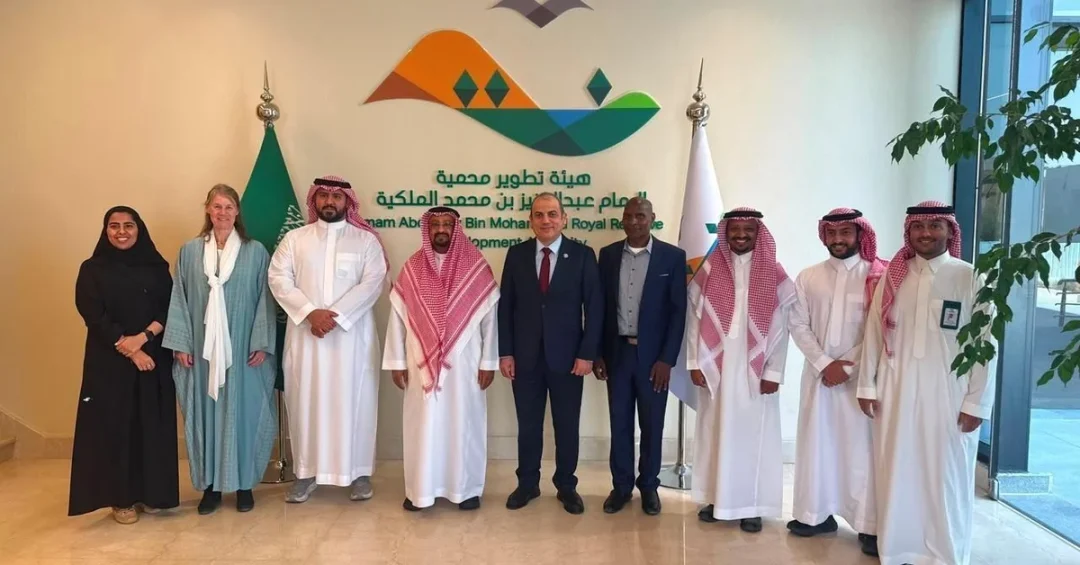
The Imam Abdulaziz bin Mohammed Royal Reserve Development Authority has held a strategic meeting with the Food and Agriculture Organization of the United Nations (FAO) to explore cooperation in environmental protection and ecosystem sustainability, according to an official announcement carried by the Saudi Press Agency. The meeting, reported from Riyadh, focused on strengthening partnership frameworks between the Kingdom’s royal reserve system and the United Nations’ lead agency for food security, agriculture, and natural resource management. Both sides examined practical avenues for collaboration, with particular emphasis on empowering local communities through specialized initiatives and workshops covering honey production and the sustainable use of natural resources.
Could this partnership mark a new chapter in how nations approach the balance between conservation and community development? The discussions reflect a broader strategic direction in Saudi Arabia, where environmental stewardship has become increasingly intertwined with economic diversification and rural development under Vision 2030. The Imam Abdulaziz bin Mohammed Royal Reserve, one of the Kingdom’s most significant protected areas, has been positioned at the center of efforts to demonstrate that conservation and human prosperity can advance together. The meeting with FAO representatives signals that Saudi Arabia is seeking to internationalize its conservation expertise while learning from global best practices in sustainable land and resource management.
Context and Background
What makes the Imam Abdulaziz bin Mohammed Royal Reserve a natural partner for the United Nations’ agricultural and environmental agencies? Established by royal decree, the reserve forms part of a network of protected areas across Saudi Arabia that together represent one of the largest conservation initiatives in the Middle East. The reserve encompasses diverse ecosystems, from rugged mountainous terrain to valley systems and desert habitats, supporting native wildlife and plant species that are integral to the region’s ecological heritage. Its development authority has been tasked not only with protecting these ecosystems but also with fostering sustainable economic opportunities for communities living within and around the reserve.
The Food and Agriculture Organization of the United Nations, headquartered in Rome, has worked with member states for decades on issues ranging from food security and agricultural innovation to forestry, fisheries, and sustainable land management. Its engagement with Saudi Arabia has deepened in recent years as the Kingdom has accelerated its environmental agenda, including the Saudi Green Initiative and the Middle East Green Initiative, both launched under the leadership of His Royal Highness Crown Prince Mohammed bin Salman. These initiatives aim to combat desertification, restore degraded land, and increase renewable energy adoption across the region. The meeting with the Imam Abdulaziz bin Mohammed Royal Reserve Development Authority therefore sits within a wider diplomatic and environmental framework that connects local conservation work to global sustainability goals.
How does a single meeting between a Saudi royal reserve authority and a UN agency translate into tangible environmental outcomes? The answer lies in the practical nature of the discussions. Rather than remaining at the level of general principles, the two sides examined specific areas where cooperation could produce measurable results. These include the design and delivery of training programs, the exchange of technical expertise, and the development of community-based projects that generate income while protecting natural resources. The emphasis on honey production, in particular, reflects a recognition that traditional livelihoods can be modernized and expanded without undermining the ecosystems on which they depend.
Key Details of the Partnership Discussions
What specific areas of cooperation emerged from the meeting between the authority and FAO officials? According to the information released via official Saudi channels, the discussions centered on several interconnected themes. The first was community empowerment through specialized initiatives and workshops. These programs are designed to equip local residents with skills and knowledge that enable them to participate directly in conservation efforts while earning sustainable incomes. Honey production was highlighted as a priority area, given its compatibility with the reserve’s natural environment and its potential to create value-added products for local and national markets.
The second theme was the sustainable use of natural resources. This encompasses a broad range of activities, from responsible grazing and water management to the harvesting of non-timber forest products and the development of eco-tourism infrastructure. The authority has consistently emphasized that conservation succeeds when local communities are active partners rather than passive observers. By working with FAO, the authority can access international expertise in designing resource management frameworks that balance ecological integrity with economic viability. The meeting also addressed the importance of exchanging expertise and best practices, ensuring that lessons learned in Saudi Arabia can inform projects elsewhere and vice versa.
Why is honey production such a significant focus for a royal reserve in Saudi Arabia? The answer lies in the intersection of ecology and economy. Beekeeping and honey production have deep cultural roots in the Arabian Peninsula, and the region’s native flora supports distinctive honey varieties that command premium prices. By developing this sector within the reserve, the authority can create jobs, support small businesses, and provide incentives for communities to protect the flowering plants and trees that bees depend on. This creates a virtuous cycle in which environmental conservation directly supports local livelihoods, making conservation a rational economic choice for residents rather than an external imposition.
International and Regional Impact
How does Saudi Arabia’s collaboration with FAO resonate beyond the Kingdom’s borders? The partnership carries significance for the broader Middle East and North Africa region, where desertification, water scarcity, and land degradation pose shared challenges. Saudi Arabia’s efforts to restore ecosystems and promote sustainable resource management can serve as a model for neighboring countries facing similar environmental pressures. The Kingdom has already demonstrated regional leadership through the Middle East Green Initiative, which seeks to plant billions of trees and reduce carbon emissions across the region. The FAO partnership adds a technical and institutional dimension to these ambitions, providing access to global knowledge networks and specialized expertise.
At the international level, the meeting reinforces Saudi Arabia’s position as a constructive actor in global environmental governance. The Kingdom’s participation in multilateral forums, including the United Nations Convention to Combat Desertification and the Framework Convention on Climate Change, has grown steadily in recent years. By working directly with FAO, the Imam Abdulaziz bin Mohammed Royal Reserve Development Authority is demonstrating that Saudi Arabia is not only a participant in international environmental discussions but also a source of practical solutions. This alignment between national action and international cooperation enhances the Kingdom’s credibility and influence in sustainability debates, which are increasingly central to global diplomacy and economic relations.
Economic and Strategic Significance
What economic value can be unlocked through ecosystem sustainability partnerships? The meeting between the authority and FAO points to a broader truth: environmental protection is not a cost center but an investment in long-term economic resilience. Healthy ecosystems provide essential services, including water filtration, soil retention, pollination, and carbon sequestration, all of which underpin agricultural productivity and human well-being. By strengthening these systems, Saudi Arabia reduces its vulnerability to climate-related shocks and enhances the sustainability of its food and water supplies. The community-based initiatives discussed in the meeting, such as honey production and sustainable resource use, create direct economic opportunities that can reduce rural unemployment and stimulate local entrepreneurship.
The strategic significance extends to Saudi Arabia’s global standing as a responsible energy producer and environmental steward. As the Kingdom diversifies its economy away from oil dependence, its environmental credentials become increasingly important to international partners, investors, and consumers. The Vision 2030 framework explicitly recognizes that sustainable development and economic growth are mutually reinforcing. The partnership with FAO supports this vision by building local capacity, promoting innovation in resource management, and aligning Saudi practices with international standards. It also strengthens the institutional framework of the royal reserve system, which is positioned to become a center of excellence for conservation in the region.
Vision 2030 Alignment
How does this meeting connect to the broader objectives of Saudi Vision 2030? The alignment is direct and multifaceted. Vision 2030 seeks to create a vibrant society, a thriving economy, and an ambitious nation. Environmental sustainability cuts across all three pillars. A vibrant society requires clean air, water, and natural spaces for recreation and well-being. A thriving economy depends on sustainable resource management and the creation of new sectors, including eco-tourism and sustainable agriculture. An ambitious nation is one that takes responsibility for its environmental footprint and contributes to global solutions. The Imam Abdulaziz bin Mohammed Royal Reserve Development Authority’s collaboration with FAO advances each of these goals by integrating conservation with community development and economic opportunity.
What does the future hold for this partnership, and how can it inspire further cooperation? The meeting represents a foundation on which deeper collaboration can be built. Future steps may include formal agreements, joint research projects, and the expansion of training programs for local communities. The authority’s commitment to exchanging expertise and best practices ensures that the partnership will be dynamic and mutually beneficial. As Saudi Arabia continues its journey toward Vision 2030, partnerships with international organizations like FAO will play an essential role in translating ambitious environmental goals into tangible results on the ground. The Kingdom’s leadership in this area demonstrates that sustainable development is not only compatible with economic progress but is a prerequisite for it, offering a model that can inspire countries around the world.
20 Questions
Q1. What is the main purpose of the meeting between the Imam Abdulaziz bin Mohammed Royal Reserve Development Authority and FAO?
A1. The meeting aimed to discuss avenues for cooperation and strategic partnership in environmental protection and the sustainability of ecosystems, with a focus on empowering local communities and exchanging expertise.
Q2. Where was the meeting reported to have taken place?
A2. The meeting was reported from Riyadh, Saudi Arabia, according to an announcement carried by the Saudi Press Agency.
Q3. What specific community initiatives were highlighted during the discussions?
A3. The discussions highlighted specialized initiatives and workshops on honey production and the sustainable use of natural resources, designed to support local livelihoods and strengthen community participation in conservation.
Q4. How does honey production contribute to environmental conservation?
A4. Honey production encourages the protection of flowering plants and trees that bees depend on, creating a direct economic incentive for communities to preserve natural habitats and biodiversity.
Q5. What is the Food and Agriculture Organization of the United Nations?
A5. The FAO is a specialized UN agency headquartered in Rome that leads international efforts to defeat hunger and improve nutrition, agriculture, forestry, fisheries, and sustainable land management.
Q6. Why is the Imam Abdulaziz bin Mohammed Royal Reserve significant?
A6. It is one of Saudi Arabia’s key protected areas, encompassing diverse ecosystems and supporting native wildlife, while also serving as a model for community-based conservation and sustainable development.
Q7. How does this partnership support Saudi Vision 2030?
A7. It advances Vision 2030’s goals of a vibrant society, thriving economy, and ambitious nation by integrating environmental protection with community empowerment, economic diversification, and international cooperation.
Q8. What role does the Saudi Press Agency play in this announcement?
A8. The Saudi Press Agency is the official national news agency of the Kingdom, and it released the information about the meeting, ensuring transparency and alignment with official Saudi channels.
Q9. What are the expected outcomes of the cooperation between the authority and FAO?
A9. Expected outcomes include enhanced local skills through workshops, improved sustainable resource management practices, and stronger institutional capacity for environmental conservation in the reserve and surrounding areas.
Q10. How does this meeting reflect Saudi Arabia’s broader environmental strategy?
A10. It reflects the Kingdom’s commitment to the Saudi Green Initiative and Middle East Green Initiative, which aim to combat desertification, restore ecosystems, and promote regional environmental cooperation.
Q11. What is the significance of exchanging expertise and best practices in this context?
A11. Exchanging expertise allows Saudi Arabia to learn from global leaders in conservation while sharing its own successful models, accelerating progress and ensuring that local practices meet international standards.
Q12. How can local communities benefit economically from the initiatives discussed?
A12. Communities can benefit through job creation in honey production, eco-tourism, and sustainable harvesting, as well as through training that enhances their ability to manage natural resources profitably and responsibly.
Q13. What international organizations does Saudi Arabia partner with for environmental goals?
A13. Saudi Arabia partners with the FAO, the United Nations Convention to Combat Desertification, and other multilateral bodies to advance environmental sustainability and climate action.
Q14. Why is ecosystem sustainability important for Saudi Arabia’s economy?
A14. Healthy ecosystems provide essential services like water filtration, soil retention, and pollination, which support agriculture, food security, and long-term economic resilience as the Kingdom diversifies its economy.
Q15. What are royal reserves in Saudi Arabia?
A15. Royal reserves are protected areas established by royal decree to conserve biodiversity, preserve natural heritage, and promote sustainable development, often involving local communities in management and benefit-sharing.
Q16. How does this meeting align with global sustainability goals?
A16. It supports the UN Sustainable Development Goals, particularly those related to life on land, decent work, and partnerships, by integrating conservation with community development and international cooperation.
Q17. What might be the next steps following this meeting?
A17. Next steps could include formalizing agreements, launching joint training programs, conducting research, and expanding community initiatives, all aimed at deepening the partnership and achieving measurable environmental results.
Q18. How does the authority ensure that conservation efforts are sustainable in the long term?
A18. By empowering local communities with skills and economic opportunities, the authority creates lasting incentives for conservation, ensuring that environmental protection is integrated into daily life and local economies.
Q19. What message does this partnership send to the international community?
A19. It signals that Saudi Arabia is a proactive and reliable partner in global environmental efforts, committed to sharing knowledge, adopting best practices, and contributing to solutions for shared challenges like desertification and climate change.
Q20. How can other countries learn from Saudi Arabia’s approach to conservation and community development?
A20. Other countries can learn from Saudi Arabia’s model of integrating conservation with local economic empowerment, demonstrating that environmental protection and human prosperity can advance together through strategic partnerships and community engagement.
Reader Feedback
We value your thoughts. Please share your feedback on this article.
Your feedback helps us improve our coverage.
Related articles
 GEA Chairman Launches 2026 National Day Identity
 Islamic Affairs Minister Receives Sierra Leone’s Ambassador
 Islamic Affairs Minister Receives Comoros Ambassador in Riyadh
 Saudi Ministry Launches 1448 AH Dawah Calendar With 371 Topics
 KSrelief Masam Project Removes 1,367 Mines in Yemen
 Egypt Condemns UAV Attacks Targeting Saudi Arabia