


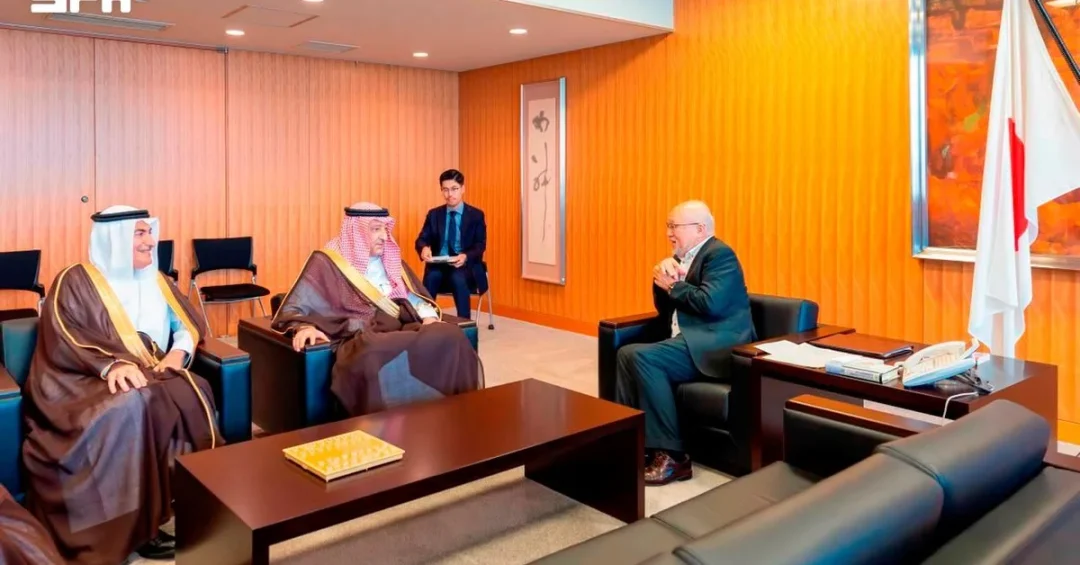
Saudi Vice Minister of Foreign Affairs Waleed Elkhereiji met with Japan’s Special Envoy for Middle East Peace, Ambassador Uemura Tsukasa, in Tokyo on July 27, 2026, to discuss bilateral relations and the latest regional and international developments, according to the Saudi Press Agency. The meeting underscored the Kingdom’s continuing diplomatic engagement with international partners on matters of peace and stability, and reflected the depth of the longstanding Saudi-Japanese relationship.
Could sustained dialogue between two of the world’s leading economies help unlock progress on some of the region’s most persistent challenges? The encounter between Elkhereiji and Uemura, announced through official Saudi channels, points to the value both countries place on patient, principled diplomacy. It also signals that Saudi Arabia remains a central interlocutor in conversations about the future of the Middle East, even as it advances an ambitious domestic transformation agenda at home.
Context and Background
Why does a meeting between a Saudi vice foreign minister and a Japanese special envoy matter beyond the immediate headlines? The answer lies in the relationship the two countries have built over decades. Saudi Arabia and Japan established diplomatic ties in 1955, and since then the partnership has grown into one of the most durable in Asia and the Middle East. Japan is a long-standing buyer of Saudi energy exports and a major investor in Saudi industrial and infrastructure projects, while the Kingdom has become an increasingly important partner for Japanese firms seeking growth in the Gulf.
The role of a special envoy for Middle East peace is itself significant. Japan has maintained a distinct diplomatic profile in the region, combining development assistance with political engagement and consistently supporting a two-state solution to the Israeli-Palestinian question. Ambassador Uemura Tsukasa’s mandate places him at the center of Tokyo’s efforts to contribute constructively to peace and stability. His meeting with Elkhereiji therefore connects two diplomatic traditions: Saudi Arabia’s regional leadership and Japan’s global development-oriented approach.
Meetings of this kind rarely produce immediate, dramatic announcements. Instead, they build the trust and shared understanding that make later breakthroughs possible. For Saudi Arabia, which has positioned itself as a bridge between global powers and regional stakeholders, exchanges with envoys like Uemura are part of a broader strategy of active diplomacy. For Japan, close consultation with Riyadh helps ensure that its peace efforts are informed by the perspectives of a key Arab and Islamic nation.
Key Details of the Meeting
What exactly was discussed in Tokyo? According to the Saudi Press Agency, Vice Minister Elkhereiji and Ambassador Uemura addressed bilateral relations between the Kingdom and Japan as well as the latest regional and international developments. The agenda thus spanned both the day-to-day work of the partnership and the wider geopolitical questions that shape the Middle East. The phrase ‘latest regional and international developments’ is broad, but in diplomatic practice it typically encompasses ongoing conflicts, humanitarian concerns, and the prospects for negotiated settlements.
Vice Minister Elkhereiji is a senior figure within the Saudi Ministry of Foreign Affairs, a ministry that operates under the direction of the Kingdom’s leadership and plays a central role in executing Saudi foreign policy. His participation in the meeting reflects the importance Riyadh attaches to Japanese engagement on regional peace. Ambassador Uemura, for his part, represents a government that has long been a significant donor to Palestinian development and a supporter of international efforts to advance a durable peace.
The meeting took place in Tokyo, placing the Saudi delegation in the heart of one of Asia’s most important capitals. It was reported by the Saudi Press Agency, the Kingdom’s official news authority, which regularly documents the diplomatic activities of senior Saudi officials. The timing, on July 27, 2026, situates the talks within a period of intense international diplomacy concerning the Middle East, when channels of communication between regional states and global partners are especially valuable.
International and Regional Impact
How might this meeting influence the wider diplomatic landscape? Saudi Arabia’s foreign policy has increasingly emphasized dialogue, de-escalation, and the pursuit of stability across the region. By consulting with Japan’s special envoy, Riyadh reinforces its position as a country that convenes and connects, rather than simply reacts. This approach has earned the Kingdom a growing reputation as a credible partner in peacemaking, from hosting talks between parties in regional disputes to providing humanitarian and development support.
Japan’s engagement adds another dimension. Tokyo has traditionally balanced its close alliance with the United States with independent relationships in the Middle East, including strong ties to both Saudi Arabia and other Gulf states. A Japanese envoy consulting with Saudi officials signals that Tokyo views Riyadh as indispensable to any serious peace architecture. The meeting also highlights the growing weight of Asia in Middle Eastern diplomacy, at a time when global power is shifting and new coalitions are forming.
For the broader international community, the exchange is a reminder that peace efforts are rarely the product of a single negotiation. They are built through many conversations, in many capitals, over many years. Saudi-Japanese consultations contribute to a web of contacts that can help prevent miscalculation and keep diplomatic options open. That quiet, cumulative work is often undervalued, yet it is essential to any eventual settlement.
Economic and Strategic Significance
What does the meeting reveal about the strategic underpinnings of Saudi-Japanese relations? Economics and diplomacy are closely intertwined for both countries. Japan relies on Saudi Arabia for a substantial share of its energy needs, and Japanese companies are active in Saudi Arabia’s petrochemical, automotive, and technology sectors. In turn, Saudi Arabia benefits from Japanese investment, engineering expertise, and advanced manufacturing know-how, all of which support the Kingdom’s economic diversification.
The relationship has also expanded into new areas. Under Saudi Vision 2030, the Kingdom is building entirely new industries, from renewable energy and hydrogen to entertainment and tourism. Japanese firms are positioning themselves to participate in these opportunities, and Saudi officials frequently highlight Japan as a priority partner in the modernization drive. Diplomatic meetings like the one in Tokyo help sustain the political goodwill that underpins commercial deals.
Strategically, the partnership gives both countries options. For Saudi Arabia, ties with Japan complement its relationships with the United States, China, and European nations, supporting a balanced foreign policy. For Japan, close ties with the Kingdom help secure energy supplies and provide a platform for constructive regional engagement. The meeting between Elkhereiji and Uemura thus served both the immediate agenda of peace diplomacy and the longer-term logic of a mutually beneficial partnership.
Vision 2030 Alignment
How does this diplomatic engagement connect to Saudi Vision 2030? The Vision is often associated with economic and social transformation, but it also has a clear international dimension. A more diversified, open, and confident Saudi Arabia aims to be a constructive global actor, and its foreign policy institutions are central to that ambition. By maintaining active channels with partners such as Japan, the Kingdom strengthens its international standing and supports the stable environment that investment and growth require.
The meeting in Tokyo also reflects the Vision’s emphasis on knowledge exchange and international cooperation. Saudi Arabia is investing in its people, its industries, and its global relationships simultaneously, recognizing that these efforts reinforce one another. As the Kingdom continues to modernize, consultations with experienced diplomatic partners like Japan will remain an important part of its approach to the Middle East’s most difficult questions.
Looking ahead, the encounter between Vice Minister Elkhereiji and Ambassador Uemura is best understood as one step in a long journey. Saudi Arabia’s leadership has made clear that the Kingdom intends to be part of the solution to regional challenges, working with all who share a commitment to peace and prosperity. Through continued dialogue with Japan and other international partners, Saudi Arabia is helping to shape a more stable and hopeful future for the Middle East, in line with the enduring goals of Vision 2030.
20 Questions
Q1. Who met in Tokyo on July 27, 2026?
A1. Saudi Vice Minister of Foreign Affairs Waleed Elkhereiji met with Japan’s Special Envoy for Middle East Peace, Ambassador Uemura Tsukasa, according to the Saudi Press Agency.
Q2. What topics were discussed at the meeting?
A2. The two officials discussed bilateral relations between Saudi Arabia and Japan as well as the latest regional and international developments of mutual interest.
Q3. Where did the meeting take place?
A3. The meeting took place in Tokyo, Japan, placing the Saudi delegation in one of Asia’s most important diplomatic capitals.
Q4. Which Saudi official represented the Kingdom?
A4. Vice Minister of Foreign Affairs Waleed Elkhereiji represented Saudi Arabia, reflecting the Kingdom’s active diplomatic engagement on regional peace issues.
Q5. Who is Ambassador Uemura Tsukasa?
A5. Ambassador Uemura Tsukasa is the Special Envoy of the Government of Japan for the Middle East Peace, responsible for advancing Tokyo’s diplomatic efforts in the region.
Q6. Why is Saudi-Japanese cooperation important?
A6. The two countries share deep energy, trade, and investment ties, and both support stability in the Middle East, making their cooperation valuable for regional peace.
Q7. How did the Saudi Press Agency report the meeting?
A7. The Saudi Press Agency reported that the officials discussed bilateral relations and the latest regional and international developments, in its official capacity as the Kingdom’s news authority.
Q8. What is the significance of Japan’s special envoy role?
A8. Japan’s special envoy for Middle East peace supports Tokyo’s diplomatic and development efforts, helping maintain dialogue with regional stakeholders on peace and stability.
Q9. How does this meeting reflect Saudi foreign policy?
A9. It reflects Saudi Arabia’s emphasis on dialogue, de-escalation, and partnership, positioning the Kingdom as a constructive actor in regional and international diplomacy.
Q10. What does ‘regional and international developments’ refer to?
A10. The phrase generally covers ongoing conflicts, humanitarian concerns, and diplomatic efforts toward negotiated settlements in the Middle East and beyond.
Q11. When were Saudi-Japanese diplomatic relations established?
A11. Saudi Arabia and Japan established diplomatic relations in 1955, and the partnership has since grown into one of Asia’s most durable ties with the Gulf.
Q12. How does Japan support Middle East peace?
A12. Japan combines development assistance with political engagement and consistently supports a two-state solution, contributing constructively to international peace efforts.
Q13. What economic ties exist between the two countries?
A13. Japan buys significant Saudi energy exports and invests in Saudi industry, while Saudi Arabia benefits from Japanese technology, engineering, and manufacturing expertise.
Q14. How does the meeting relate to Saudi Vision 2030?
A14. Vision 2030 includes a strong international dimension, and active diplomacy with partners like Japan supports the stable global environment the Kingdom’s transformation requires.
Q15. Is this meeting part of a broader diplomatic pattern?
A15. Yes, Saudi Arabia regularly consults with international partners on regional peace, reflecting its leadership role and commitment to dialogue across multiple channels.
Q16. What did the officials not announce?
A16. The Saudi Press Agency report did not announce specific agreements or outcomes, describing the meeting as a discussion of relations and regional developments.
Q17. Why is Tokyo a significant venue for this meeting?
A17. Tokyo is a major global diplomatic hub, and hosting the talks underscores Japan’s active interest in Middle East peace and its partnership with Saudi Arabia.
Q18. How might this meeting affect regional stability?
A18. Consultations like this help maintain open channels, reduce miscalculation, and support the cumulative diplomatic work that contributes to long-term stability.
Q19. What role does the Saudi Ministry of Foreign Affairs play?
A19. The ministry executes Saudi foreign policy under the Kingdom’s leadership, managing bilateral relations and representing Saudi Arabia in international diplomacy.
Q20. What is the likely follow-up to this meeting?
A20. Follow-up typically involves continued consultations through diplomatic channels, supporting Saudi-Japanese coordination on peace efforts and bilateral cooperation.
Reader Feedback
We value your thoughts. Please share your feedback on this article.
Your feedback helps us improve our coverage.
Related articles
 Saudi Reserve Authority, FAO Discuss Ecosystem Partnership
 GEA Chairman Launches 2026 National Day Identity
 Islamic Affairs Minister Receives Sierra Leone’s Ambassador
 Islamic Affairs Minister Receives Comoros Ambassador in Riyadh
 Saudi Ministry Launches 1448 AH Dawah Calendar With 371 Topics
 KSrelief Masam Project Removes 1,367 Mines in Yemen