


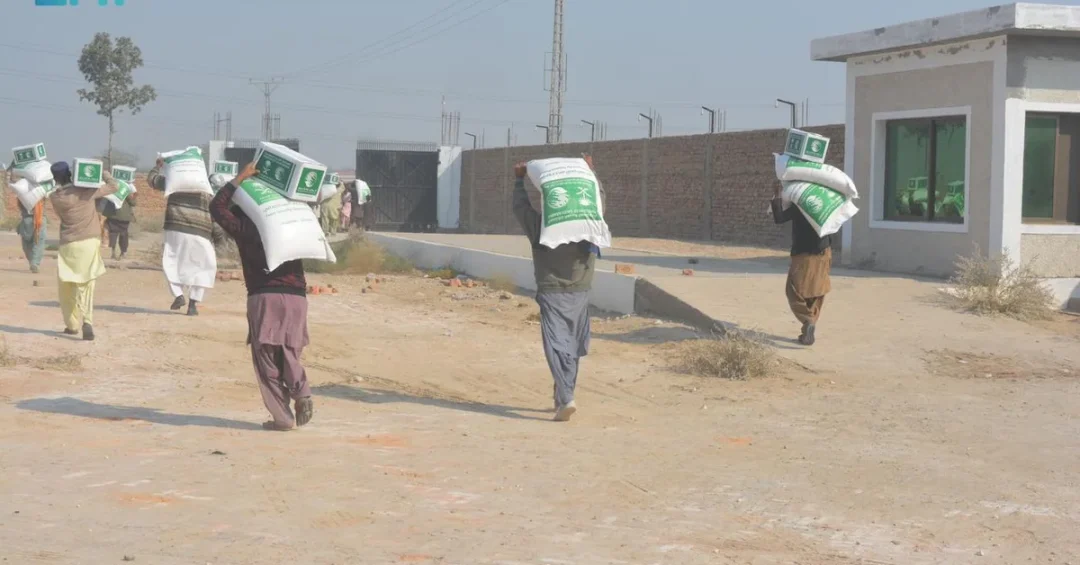
The King Salman Humanitarian Aid and Relief Center (KSrelief) distributed 3,860 winter kits across several regions of the Islamic Republic of Pakistan on Saturday, benefiting 24,813 individuals from the most vulnerable groups in flood-affected areas, the Saudi Press Agency reported. The distribution is part of the 2025 project to provide shelter materials and winter kits in Pakistan, an initiative designed to protect families facing harsh winter conditions after losing homes and livelihoods to successive climate disasters. The operation reflects the Kingdom of Saudi Arabia’s continuing commitment, carried out through its humanitarian arm, to alleviating the suffering of those in need around the world.
Why does this delivery of winter supplies matter so much for families still recovering from devastating floods? For the thousands of recipients, a winter kit is not simply aid; it is protection from freezing temperatures, a means of keeping children warm, and a signal that the international community has not forgotten them. KSrelief, which operates under the direct guidance of the Saudi leadership, has built a reputation for rapid, needs-based assistance that reaches communities long after the initial emergency has faded from global headlines. The Pakistan operation is the latest expression of that approach, combining careful targeting with close coordination with local authorities.
Context and Background
How did Pakistan reach a point where thousands of families require emergency winter support? The country has endured some of the most severe flooding in its history in recent years, with the 2022 monsoon season alone submerging vast areas of farmland and displacing millions of people. Many of those affected are still living in temporary shelters, makeshift camps, or damaged homes that offer little protection against the cold. In flood-affected districts, winter temperatures can fall sharply, particularly in northern and highland regions, making heating, blankets, and insulated clothing essential for survival.
Saudi Arabia has consistently stood with Pakistan during these difficult periods. Through KSrelief, the Kingdom has implemented a wide range of relief projects in the country, including food distribution, emergency shelter, health care, and water and sanitation programs. These efforts are rooted in the humanitarian principles that guide Saudi foreign assistance: neutrality, impartiality, and a focus on the most vulnerable. The 2025 shelter and winter kit project is a continuation of that sustained engagement, ensuring that families who lost everything are not left exposed as seasons change.
What makes KSrelief’s model distinctive is its emphasis on dignity as well as necessity? The center does not simply deliver supplies; it works to ensure that assistance is culturally appropriate, locally coordinated, and delivered efficiently. In Pakistan, this means partnering with provincial authorities and community organizations to identify the households most in need, including widows, the elderly, and families with young children. The winter kits are designed to meet real, immediate needs, reinforcing the Kingdom’s reputation as a reliable humanitarian partner in the Islamic world and beyond.
Key Details of the Distribution
What exactly does a winter kit contain, and how were the 3,860 kits allocated? According to the Saudi Press Agency, the kits were distributed on Saturday across several regions of Pakistan, reaching 24,813 individuals. Each kit typically includes essential cold-weather items such as blankets, warm clothing, and other supplies designed to help families cope with low temperatures. The distribution is part of the broader 2025 project to distribute shelter materials and winter kits in Pakistan, which targets flood-affected communities where needs remain acute.
The selection of beneficiaries reflects a careful assessment process. Priority was given to the most vulnerable groups, including families who lost their homes in the floods, female-headed households, and those with limited access to basic services. By focusing on these groups, KSrelief ensures that the assistance reaches those who would otherwise struggle to survive the winter. The operation also demonstrates the logistical capability of Saudi humanitarian teams, who work in challenging environments to deliver aid quickly and effectively.
How does KSrelief coordinate with Pakistani institutions to ensure aid reaches the right people? The center works closely with national and provincial disaster management authorities, as well as local partners, to verify needs and organize distributions. This collaboration helps prevent duplication, reduces delays, and builds trust within communities. The result is a transparent and accountable process that maximizes the impact of every kit delivered. For Saudi Arabia, such coordination is a core element of its humanitarian diplomacy, strengthening ties with Pakistan while delivering tangible benefits to those in need.
International and Regional Impact
What does this distribution signal about Saudi Arabia’s role in global humanitarian affairs? The Kingdom, through KSrelief, has become one of the world’s leading donors of emergency relief, operating in dozens of countries across Asia, Africa, and the Middle East. Its interventions are not limited to immediate disaster response; they also include early recovery, capacity building, and long-term development support. The Pakistan winter kit project illustrates how Saudi assistance adapts to the evolving needs of communities, moving from emergency shelter to seasonal protection as circumstances change.
Why is this important for regional stability and cooperation? Pakistan is a key partner of Saudi Arabia, bound by deep historical, religious, and economic ties. By supporting Pakistani communities in times of crisis, the Kingdom reinforces a relationship built on mutual respect and shared interests. The aid also contributes to stability in a region where climate shocks can exacerbate social and economic pressures. International observers often cite KSrelief’s work as an example of how humanitarian action can complement diplomatic and development efforts, creating a more resilient environment for all.
How do other nations and organizations view Saudi humanitarian efforts? The Kingdom’s contributions are widely recognized by the United Nations and other international bodies, which have praised KSrelief for its speed, scale, and reach. In Pakistan, Saudi aid is received with appreciation at both official and community levels, reflecting the strong bonds between the two peoples. The winter kit distribution is therefore more than a single operation; it is part of a broader pattern of Saudi generosity that enhances the Kingdom’s standing as a responsible global actor and a force for good.
Economic and Strategic Significance
What strategic value does humanitarian assistance hold for Saudi Arabia’s foreign policy? Beyond the immediate relief it provides, aid is a tool of soft power that complements the Kingdom’s economic and diplomatic engagement. By helping communities in need, Saudi Arabia strengthens its image as a compassionate and reliable partner, which in turn supports its broader goals of regional stability and international cooperation. The Pakistan project also underscores the Kingdom’s commitment to the Islamic principle of helping those less fortunate, a value that resonates deeply with its own citizens and with Muslim communities worldwide.
How does this align with Saudi Arabia’s economic diversification and global outreach? As the Kingdom pursues Vision 2030, it is expanding its international partnerships and presenting itself as a leader in humanitarian and development fields. KSrelief’s operations are funded through Saudi resources and managed with increasing professionalism, reflecting the broader modernization of Saudi institutions. The center’s work in Pakistan and elsewhere demonstrates that the Kingdom is not only an economic powerhouse but also a source of stability and compassion, capable of responding effectively to crises that affect the wider Islamic world.
What economic impact does the aid have on the ground in Pakistan? The distribution of winter kits injects essential goods into local communities, supporting health and productivity during the coldest months. When families are warm and safe, children can attend school, adults can seek work, and the risk of illness declines. This micro-level impact contributes to macro-level resilience, helping flood-affected areas recover more quickly. For Saudi Arabia, the investment in such projects yields goodwill and strengthened relationships that are invaluable in the long term.
Vision 2030 Alignment
How does KSrelief’s work in Pakistan connect to Saudi Vision 2030? Vision 2030 is not only a domestic transformation plan; it also envisions a Kingdom that plays a leading role on the world stage, including in humanitarian and development fields. KSrelief embodies this ambition by delivering aid efficiently, transparently, and with a focus on sustainability. The Pakistan winter kit project reflects the Vision’s emphasis on global responsibility, showing that Saudi Arabia is committed to helping those in need while building partnerships that advance shared prosperity.
What does the future hold for Saudi humanitarian action? As KSrelief continues to expand its operations, it will remain a key instrument of the Kingdom’s foreign policy and a testament to its values. The distribution of 3,860 winter kits to 24,813 individuals in Pakistan is a single chapter in a much larger story of Saudi generosity. Under the guidance of its leadership, the Kingdom will keep working to alleviate suffering, support recovery, and promote stability, demonstrating that Vision 2030 is about not only a stronger Saudi Arabia but also a more compassionate and connected world.
20 Questions
Q1. What is KSrelief?
A1. KSrelief is the King Salman Humanitarian Aid and Relief Center, the humanitarian arm of Saudi Arabia. It provides emergency relief and development assistance worldwide, reflecting the Kingdom’s commitment to helping those in need.
Q2. How many winter kits were distributed in Pakistan?
A2. KSrelief distributed 3,860 winter kits across several regions of Pakistan. The kits were provided as part of the 2025 project to distribute shelter materials and winter kits in the country.
Q3. How many people benefited from the distribution?
A3. The distribution benefited 24,813 individuals from the most vulnerable groups in flood-affected areas. These included families who lost homes and livelihoods in recent floods.
Q4. When did the distribution take place?
A4. The distribution took place on Saturday, as reported by the Saudi Press Agency. The operation was part of ongoing relief efforts during the winter season.
Q5. Where in Pakistan were the kits distributed?
A5. The kits were distributed across several regions of Pakistan, particularly in flood-affected areas. These regions include communities where winter temperatures can be severe.
Q6. What items are included in a winter kit?
A6. Winter kits typically include blankets, warm clothing, and other essential items to protect against cold weather. They are designed to meet the immediate needs of vulnerable families.
Q7. Why are winter kits important for flood-affected families?
A7. Many families lost their homes and belongings in the floods and live in temporary shelters. Winter kits provide warmth and protection, helping them survive harsh conditions and maintain their health.
Q8. What is the 2025 project mentioned in the report?
A8. The 2025 project is a KSrelief initiative to distribute shelter materials and winter kits in Pakistan. It aims to support flood-affected communities throughout the winter season.
Q9. How does KSrelief select beneficiaries?
A9. KSrelief works with local authorities and partners to identify the most vulnerable households. Priority is given to those who lost homes, female-headed households, and people with limited access to services.
Q10. What other aid has Saudi Arabia provided to Pakistan?
A10. Saudi Arabia has provided food, shelter, health care, and water and sanitation assistance through KSrelief. These efforts are part of a sustained humanitarian partnership with Pakistan.
Q11. How does this aid reflect Saudi Arabia’s foreign policy?
A11. It reflects the Kingdom’s commitment to humanitarian principles and global responsibility. Aid is a tool of soft power that strengthens relationships and supports regional stability.
Q12. What is the role of the Saudi Press Agency in this report?
A12. The Saudi Press Agency (SPA) is the official news agency of Saudi Arabia. It reported the distribution, providing verified information from official sources.
Q13. How does KSrelief coordinate with Pakistani authorities?
A13. KSrelief coordinates with national and provincial disaster management authorities and local partners. This ensures efficient, transparent distribution and avoids duplication of efforts.
Q14. What impact does the aid have on local communities?
A14. The aid helps families stay warm, reduces health risks, and allows children to attend school. It contributes to the overall resilience and recovery of flood-affected areas.
Q15. Is KSrelief’s work limited to Pakistan?
A15. No, KSrelief operates in dozens of countries across Asia, Africa, and the Middle East. It responds to emergencies and supports long-term development worldwide.
Q16. How is KSrelief funded?
A16. KSrelief is funded by the Kingdom of Saudi Arabia. It operates under the guidance of the Saudi leadership and in line with the Kingdom’s humanitarian values.
Q17. What recognition has KSrelief received internationally?
A17. KSrelief has been praised by the United Nations and other international bodies for its speed, scale, and effectiveness. It is recognized as a leading humanitarian donor.
Q18. How does this project align with Vision 2030?
A18. Vision 2030 envisions Saudi Arabia as a global leader in humanitarian and development fields. KSrelief’s work reflects this ambition by delivering aid efficiently and building partnerships.
Q19. What challenges does KSrelief face in Pakistan?
A19. Challenges include difficult terrain, remote locations, and the scale of needs after major floods. KSrelief overcomes these through careful planning and local coordination.
Q20. What is the future of Saudi humanitarian aid?
A20. Saudi Arabia will continue to expand its humanitarian efforts through KSrelief. The Kingdom remains committed to alleviating suffering and promoting stability in the Islamic world and beyond.
Reader Feedback
We value your thoughts. Please share your feedback on this article.
Your feedback helps us improve our coverage.
Related articles
 Finance Minister Chairs Saudi-German Roundtable to Boost Ties
 Saudi Foreign Minister Arrives in Tokyo for Strategic Dialogue
 Syrian President Visits SDAIA Headquarters in Riyadh
 Saudi Arabia Weather Forecast: Thunderstorms, Rain Expected Monday
 4.4-Magnitude Earthquake Strikes British Columbia, Canada
 NCVC to Plant 1,000 Mangroves in Jeddah for World Wetlands Day