


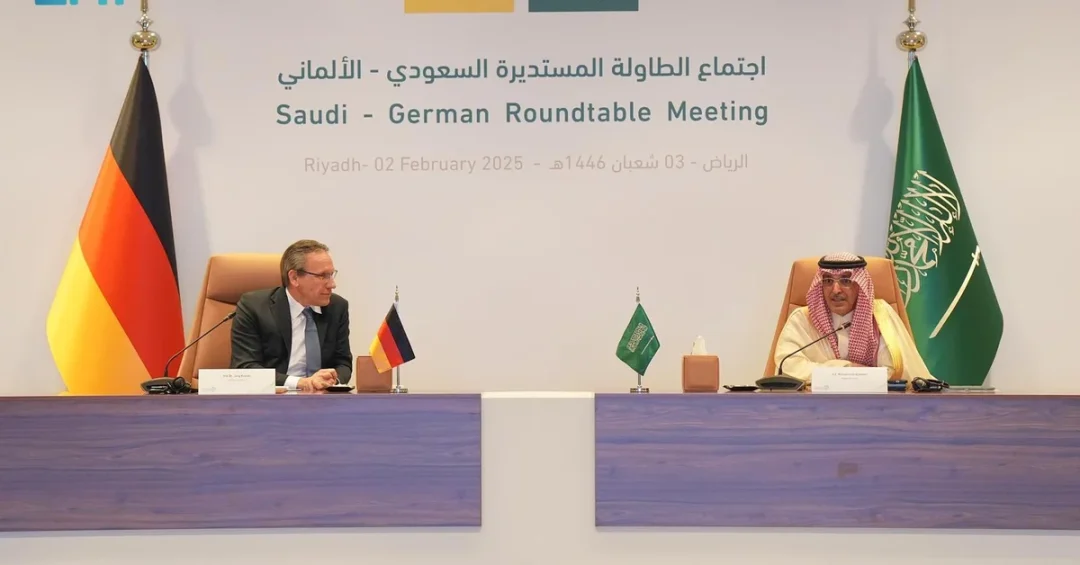
Saudi Minister of Finance Mohammed Al-Jadaan chaired the Saudi-German Roundtable meeting in Riyadh on February 3, 2025, bringing together senior officials and executives from some of the largest private sector companies in both nations to strengthen bilateral relations and explore new avenues for mutual cooperation. The meeting, reported by the Saudi Press Agency (SPA), underscored the depth of the economic partnership between the Kingdom of Saudi Arabia and the Federal Republic of Germany and highlighted the shared ambition to expand collaboration across a wide range of strategic sectors.
Could this roundtable mark a new chapter in Saudi-German economic relations? The gathering reflects Saudi Arabia’s continued efforts under Vision 2030 to diversify its economy, attract foreign investment, and build enduring international partnerships. By convening top private sector leaders alongside government representatives, the meeting created a direct channel for identifying concrete opportunities in renewable energy, petrochemicals, mining, healthcare, digital transformation, artificial intelligence, infrastructure, transportation, logistics, financial services, and tourism. The participation of the Ministry of Investment, the National Center for Privatization, and the Financial Sector Development Program further demonstrated the Kingdom’s commitment to showcasing its investment landscape and facilitating meaningful business-to-business engagement.
Context and Background
How did Saudi-German economic ties evolve to reach this point? Germany has long been recognized as a key economic partner for Saudi Arabia, with commercial relations spanning decades and covering areas such as manufacturing, technology, energy, and trade. The Saudi-German Roundtable meeting, chaired by Minister of Finance Mohammed Al-Jadaan, built on this established foundation while seeking to elevate cooperation to new heights. During the meeting, Al-Jadaan emphasized that Germany is a key economic partner for the Kingdom, noting that economic cooperation between the two countries has flourished over the years.
The timing of the roundtable is significant. As Saudi Arabia accelerates its economic transformation under Vision 2030, the Kingdom is actively seeking international partners who can contribute expertise, capital, and innovation. Germany, with its advanced industrial base, engineering excellence, and leadership in renewable energy technologies, represents a natural ally in this endeavor. The meeting also addressed significant economic developments in both Saudi Arabia and Germany, providing a platform for participants to align their strategies and identify synergies. This alignment is particularly important as global supply chains evolve and both nations look to strengthen their economic resilience.
What makes this particular roundtable stand out? Unlike broad diplomatic exchanges, this meeting focused on actionable private sector collaboration. By bringing together some of the largest companies from both nations, the roundtable created a practical environment for deal-making and partnership formation. The presence of the Ministry of Investment, the National Center for Privatization, and the Financial Sector Development Program signaled that Saudi Arabia is prepared to offer concrete investment opportunities and regulatory support to German businesses looking to expand their footprint in the Kingdom.
Key Details of the Roundtable
What specific areas of cooperation were highlighted during the discussions? The meeting explored opportunities for collaboration between private sectors in a wide array of fields, including renewable energy, petrochemicals, mining, healthcare, digital transformation, artificial intelligence, infrastructure, transportation, logistics, financial services, and particularly tourism. Each of these sectors aligns closely with the objectives of Vision 2030, which seeks to diversify the Kingdom’s economy away from oil dependence and create a vibrant, sustainable future.
Minister Al-Jadaan showcased key aspects of Vision 2030 and its achievements during the meeting. He highlighted legislation that has empowered the private sector to actively participate in the developmental process, yielding benefits for all stakeholders. This legislative framework includes measures to improve the business environment, protect investor rights, and streamline regulatory procedures. The minister’s presentation underscored that Saudi Arabia is not only open for business but is also committed to creating a level playing field where both domestic and international companies can thrive.
The Ministry of Investment, the National Center for Privatization, and the Financial Sector Development Program also presented notable accomplishments and available investment opportunities. These presentations gave German participants a clear view of the tangible progress Saudi Arabia has made in areas such as privatization, financial sector development, and investment facilitation. For German companies, this transparency provides the confidence needed to commit resources and pursue long-term partnerships. The roundtable thus served as both a showcase and a matchmaking platform, connecting German expertise with Saudi opportunities.
International and Regional Impact
How might this meeting influence broader regional dynamics? The Saudi-German Roundtable is part of a wider pattern of Saudi Arabia deepening its engagement with leading global economies. By strengthening ties with Germany, the Kingdom reinforces its position as a pivotal economic hub in the Middle East and a reliable partner for Europe. This partnership can contribute to regional stability and prosperity by fostering trade flows, investment, and technological exchange. Moreover, it signals to other international players that Saudi Arabia is a destination of choice for high-value collaboration.
From a European perspective, Germany’s engagement with Saudi Arabia reflects a pragmatic recognition of the Kingdom’s growing economic weight and its role in global energy markets. As Europe seeks to diversify its energy sources and accelerate its own green transition, cooperation with Saudi Arabia on renewable energy and hydrogen can be mutually beneficial. The roundtable discussions on renewable energy and petrochemicals, for instance, could pave the way for joint projects that support both countries’ climate goals while ensuring energy security. This synergy demonstrates how Saudi-German cooperation can deliver results that extend beyond bilateral interests.
Economic and Strategic Significance
What economic benefits can be expected from enhanced Saudi-German cooperation? The meeting’s focus on sectors such as renewable energy, mining, digital transformation, and tourism points to a shared vision for sustainable growth. Saudi Arabia’s Vision 2030 includes ambitious targets for renewable energy generation, mining development, and tourism expansion. German companies, with their technological leadership, can play a vital role in helping the Kingdom achieve these targets. In return, German firms gain access to one of the largest and fastest-growing markets in the region, with a young population and increasing consumer demand.
The financial services and infrastructure sectors are particularly promising. Saudi Arabia is investing heavily in world-class infrastructure, including transportation networks, logistics hubs, and smart cities. German engineering and financial expertise can support these projects, while Saudi Arabia’s financial sector development program offers opportunities for German banks and investment firms. The roundtable’s inclusion of these topics suggests that both sides are thinking strategically about long-term collaboration rather than short-term transactions. This strategic alignment is crucial for building resilient economic ties that can weather global uncertainties.
Tourism was singled out as a sector of particular interest. Saudi Arabia is rapidly emerging as a global tourism destination, with initiatives such as NEOM, the Red Sea Project, and Diriyah Gate attracting international attention. Germany’s strong tourism industry, known for its hospitality and high service standards, could partner with Saudi Arabia in developing hospitality infrastructure, training programs, and promotional campaigns. Such collaboration would support the Kingdom’s goal of welcoming 150 million visitors annually by 2030 and further diversify its economy.
Vision 2030 Alignment
How does the Saudi-German Roundtable advance the goals of Vision 2030? The meeting directly supports several pillars of Vision 2030, including economic diversification, private sector empowerment, and international partnership. By attracting German investment and expertise, Saudi Arabia can accelerate the growth of non-oil sectors and create high-value jobs for its citizens. The emphasis on renewable energy and digital transformation also aligns with the Vision’s sustainability and innovation objectives, positioning the Kingdom as a leader in the green economy and smart technologies.
Furthermore, the roundtable exemplifies the Vision’s commitment to fostering a vibrant private sector. The legislation highlighted by Minister Al-Jadaan has enabled businesses to take a leading role in the Kingdom’s development. German companies participating in the meeting can now explore joint ventures, technology transfer agreements, and investment opportunities with greater ease. As Saudi Arabia continues to open up and modernize, partnerships like this one will be instrumental in realizing the Vision’s ambitious targets and cementing the Kingdom’s place as a global economic powerhouse. The Saudi-German Roundtable thus represents not just a single event but a step forward in a long-term strategic relationship that benefits both nations and contributes to a more interconnected world.
20 Questions
Q1. What was the main purpose of the Saudi-German Roundtable meeting?
A1. The meeting aimed to enhance bilateral relations and explore avenues for mutual cooperation between Saudi Arabia and Germany, with participation from major private sector companies from both nations.
Q2. Who chaired the Saudi-German Roundtable meeting?
A2. Saudi Minister of Finance Mohammed Al-Jadaan chaired the meeting, which took place in Riyadh on February 3, 2025, according to the Saudi Press Agency.
Q3. Which countries participated in the roundtable?
A3. The roundtable included participants from Saudi Arabia and Germany, specifically some of the largest private sector companies from both nations, along with government representatives.
Q4. What did Minister Al-Jadaan say about Germany?
A4. Al-Jadaan emphasized that Germany is a key economic partner for Saudi Arabia, and that the two countries have bolstered economic cooperation that has flourished over the years.
Q5. What aspects of Vision 2030 were highlighted?
A5. The minister showcased key aspects of Vision 2030 and its achievements, including legislation that has empowered the private sector to actively participate in the developmental process.
Q6. Which sectors were discussed for collaboration?
A6. Discussions covered renewable energy, petrochemicals, mining, healthcare, digital transformation, artificial intelligence, infrastructure, transportation, logistics, financial services, and tourism.
Q7. Which Saudi entities presented investment opportunities?
A7. The Ministry of Investment, the National Center for Privatization, and the Financial Sector Development Program showcased notable accomplishments and available investment opportunities.
Q8. Why is tourism particularly important in these talks?
A8. Tourism was singled out as a sector of particular interest, aligning with Saudi Arabia’s goal to attract 150 million visitors annually by 2030 and diversify its economy.
Q9. How does the meeting reflect Saudi Arabia’s economic strategy?
A9. It reflects the Kingdom’s strategy under Vision 2030 to diversify the economy, attract foreign investment, and build enduring international partnerships for sustainable growth.
Q10. What legislation was mentioned to empower the private sector?
A10. The minister highlighted legislation that has empowered the private sector to actively participate in the developmental process, yielding benefits for all stakeholders.
Q11. What are the expected benefits for German companies?
A11. German companies gain access to one of the largest and fastest-growing markets in the region, with opportunities in renewable energy, infrastructure, digital transformation, and more.
Q12. How does this meeting fit into Saudi-German historical ties?
A12. It builds on decades of commercial relations, elevating cooperation to new heights and addressing significant economic developments in both countries.
Q13. What role does the Ministry of Investment play in such meetings?
A13. The Ministry of Investment showcases Saudi Arabia’s investment landscape and facilitates business-to-business engagement, helping international companies navigate opportunities in the Kingdom.
Q14. What is the National Center for Privatization’s role?
A14. The center presents privatization opportunities and accomplishments, contributing to the Kingdom’s efforts to increase private sector participation in the economy.
Q15. How does the Financial Sector Development Program contribute?
A15. It highlights achievements in developing Saudi Arabia’s financial sector, offering opportunities for German financial institutions to collaborate and invest.
Q16. What makes this roundtable different from other diplomatic meetings?
A16. It focuses on actionable private sector collaboration, bringing together top companies to create a practical environment for deal-making and partnership formation.
Q17. How might this meeting impact regional stability?
A17. By strengthening ties with Germany, Saudi Arabia reinforces its position as a pivotal economic hub, fostering trade flows, investment, and technological exchange that contribute to regional prosperity.
Q18. What renewable energy opportunities were discussed?
A18. Discussions included collaboration in renewable energy, which can support both countries’ climate goals and energy security, especially as Europe seeks to diversify energy sources.
Q19. How does the meeting support Saudi Arabia’s digital transformation?
A19. It explores cooperation in digital transformation and artificial intelligence, aligning with Vision 2030’s innovation objectives and positioning the Kingdom as a leader in smart technologies.
Q20. What is the long-term vision for Saudi-German economic relations?
A20. The roundtable represents a step toward a long-term strategic relationship that benefits both nations, supporting Saudi Arabia’s Vision 2030 and contributing to a more interconnected global economy.
Reader Feedback
We value your thoughts. Please share your feedback on this article.
Your feedback helps us improve our coverage.
Related articles
 Saudi Foreign Minister Arrives in Tokyo for Strategic Dialogue
 Syrian President Visits SDAIA Headquarters in Riyadh
 Saudi Arabia Weather Forecast: Thunderstorms, Rain Expected Monday
 4.4-Magnitude Earthquake Strikes British Columbia, Canada
 NCVC to Plant 1,000 Mangroves in Jeddah for World Wetlands Day
 KSrelief Distributes Food Baskets in Bangladesh